







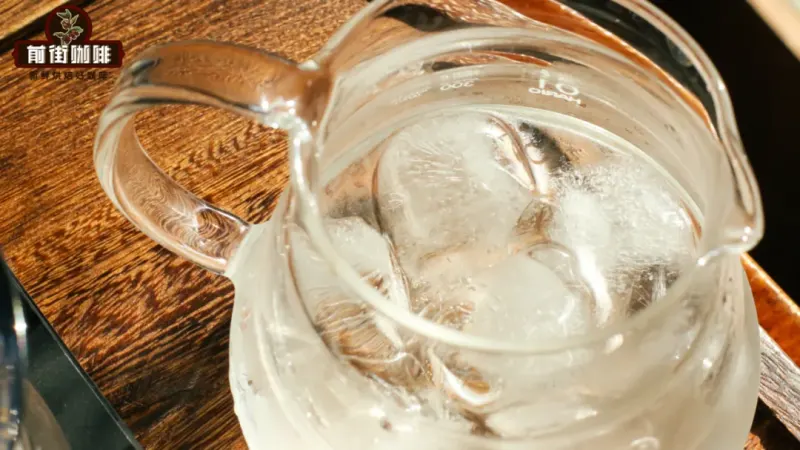
Can Ice Water Work for Coffee Extraction in Pour-Over?
Ice water cannot brew a good cup of pour-over coffee, even when every other variable is pushed to its limit. A test using 4°C water, an extremely fine grind, and continuous agitation on a Front Street Frontera Estate Sidra produced only a faintly coffee-scented cup. Water temperature, grind size, time, agitation, and ratio all shape coffee extraction, and cold water leaves flavor compounds largely undissolved.
The core problem is efficiency: ice water dissolves coffee solids far too slowly, so those parameters cannot compensate. When only ice water is on hand, cold brew and ice drip are the workable routes, since both give ground coffee hours of contact time. For standard hand drip coffee, hot water remains the practical choice for pulling sweetness and acidity into the cup.
In the practice of pour-over coffee, water temperature, grind size, extraction time, agitation intensity, and coffee-to-water ratio together determine the final flavor expression. Coffee enthusiasts often ask: can iced pour-over be brewed directly with ice water? This article, through a comparative experiment with extreme parameters, brews Front Street Frontera Estate · Sidra using 4°C ice water, an extremely fine grind, and continuous agitation throughout, to verify the actual effect of ice-water extraction. The experimental results show that even when other extraction variables are pushed to their limits, ice water still struggles to effectively dissolve the flavor compounds in coffee, and the final result is merely a cup of water with a faint coffee aroma. The article further explains why ice-water extraction is so inefficient and offers more viable cold brew and ice drip solutions when only ice water is available.
At Front Street stores, customers often ask curiously when ordering iced pour-over: "Why can't iced pour-over be brewed directly with ice water? Does it have to be hot water?"
This question is not surprising. For those who have not yet developed a deep understanding of coffee extraction principles, or who are just getting started, using ice water for iced pour-over seems perfectly logical, and many bloggers online have demonstrated methods of brewing coffee with ice water. So the question becomes: can ice water really brew a delicious cup of coffee?
Objectively speaking, ice water can indeed be used to brew coffee. But if the condition "delicious" is added in front of that, then by Front Street's quality control standards, relying solely on ice water cannot achieve it. The cup of coffee brewed with ice water below illustrates the problem.
Water temperature, grind, time, agitation intensity, and ratio are the core variables affecting efficiency in pour-over extraction. Front Street has always emphasized that a good cup of coffee comes from the coordinated interplay of all parameters. Ice water, however, has extremely low extraction efficiency, and if you want to force the coffee's flavor out with it, in theory you can only push the other parameters to their limits—such as the finest grind, stronger agitation, and a longer extraction time. Next, Front Street will use this extreme combination, together with ice water, to brew a pot of pour-over.
The bean chosen for this experiment is Frontera Estate · Sidra from Front Street's bean list. Under regular iced brewing conditions, this bean displays full-bodied grape juice, passion fruit, apricot, and a touch of red wine flavor, with balanced acidity and sweetness, drinking like a glass of grape juice with a vinous aroma. So what will unconventional iced brewing bring? Let's look at the results. The extraction parameters are as follows: Dose 15g; water temperature 4°C; coffee-to-water ratio 1:10; grind size set to 1 on the Q18 espresso grinder, a flour-like fine powder; brewing method is the agitation method.
Considering safety and operability, it is not recommended that everyone replicate this, so the tedious steps are skipped here. Simply put, the pouring is divided into three stages, each accompanied by manual agitation throughout.
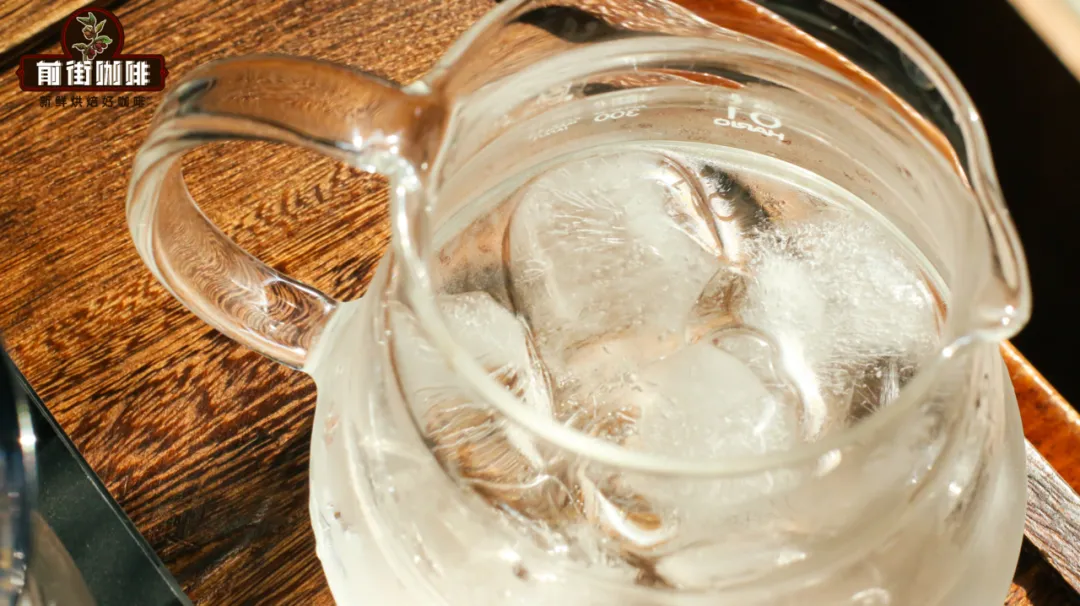
Total extraction time is 5 minutes. In the image below, the right side is the regular pour-over, and the left side is the finished product brewed with ice water.
Judging merely from the lightness of the color, the cup on the left will not be high in concentration. The actual taste confirms this—similar to the previously shared Front Street article "Making Cold Brew with Ice Water in One Minute," there is only a faint coffee aroma and a thin coffee taste, overall like a cup of water with a hint of coffee.
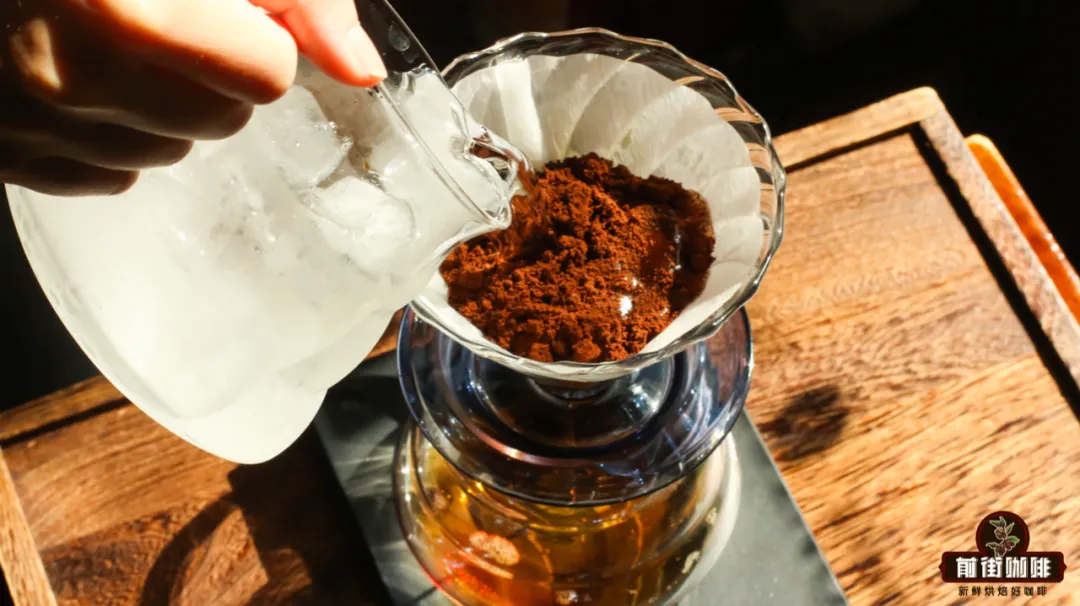
From this experiment, it can be seen that even though Front Street had already adjusted the grind to the finest, agitated throughout, and extended the extraction time to five minutes, ice water still could not effectively dissolve the flavor compounds in the coffee.
This is actually within expectations. Ice-water extraction efficiency is too low to quickly soften the coffee fibers and penetrate into the interior, so the flavor compounds naturally cannot be dissolved out. Front Street also tried pressurized extraction, which likewise could not achieve the desired effect within a short time.
Therefore, Front Street does not recommend short-time extraction with low-temperature water, such as pour-over or espresso. Ice water is too inefficient and cannot rapidly dissolve a large amount of flavor compounds the way hot water does.
If you only have ice water on hand, you can choose methods such as cold brew or ice drip to make coffee. These methods rely on a sufficiently long time to let the ice water penetrate into the interior of the coffee beans and slowly draw out the flavor compounds hidden within them. - END -
The above content is compiled by CoffeeHunters, a coffee news website.


