








Coffee Making Skills: How Much Tamping Pressure for Espresso
Tamping force changes how compact the coffee puck is, but its effect on extraction time is far smaller than most beginners assume. The goal of distributing and tamping is to even out the grounds in the portafilter basket so water passes through uniformly, reducing channeling and stabilizing each shot rather than forcing a specific number on the pressure gauge.
The article walks through even distribution and proper tamping methods and uses experimental data to show how tamping force relates to extraction. Consistent technique, not heavy pressure, is what supports repeatable results. These coffee making skills apply whether the shot is pulled on a home setup or, following the same logic as how to make coffee in a machine, on a commercial espresso machine in a cafe.
In the process of making espresso, distributing and tamping the coffee grounds are key steps to ensuring extraction stability. Many beginners often wonder: how much force is actually needed to tamp the coffee grounds? Does the amount of force really affect extraction time? In this article, Front Street Coffee will combine experimental data to deeply analyze the actual impact of tamping force on extraction, and share a practical set of techniques for even distribution and proper tamping, helping you reduce channeling and making each cup of espresso extract more evenly and stably. Whether you are a beginner or an advanced enthusiast, you can find key points to improve your skills.




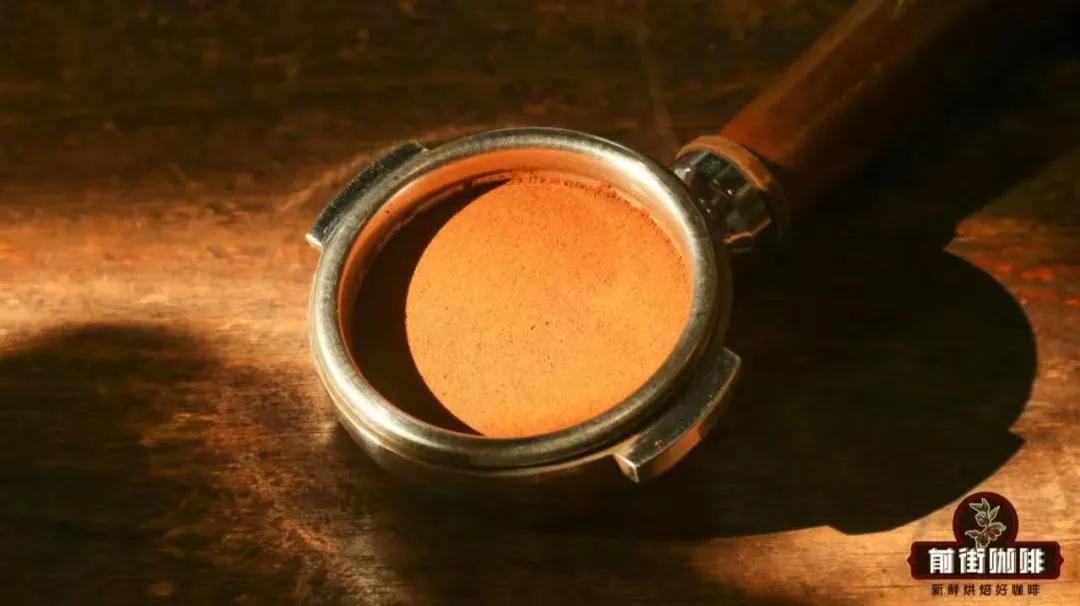
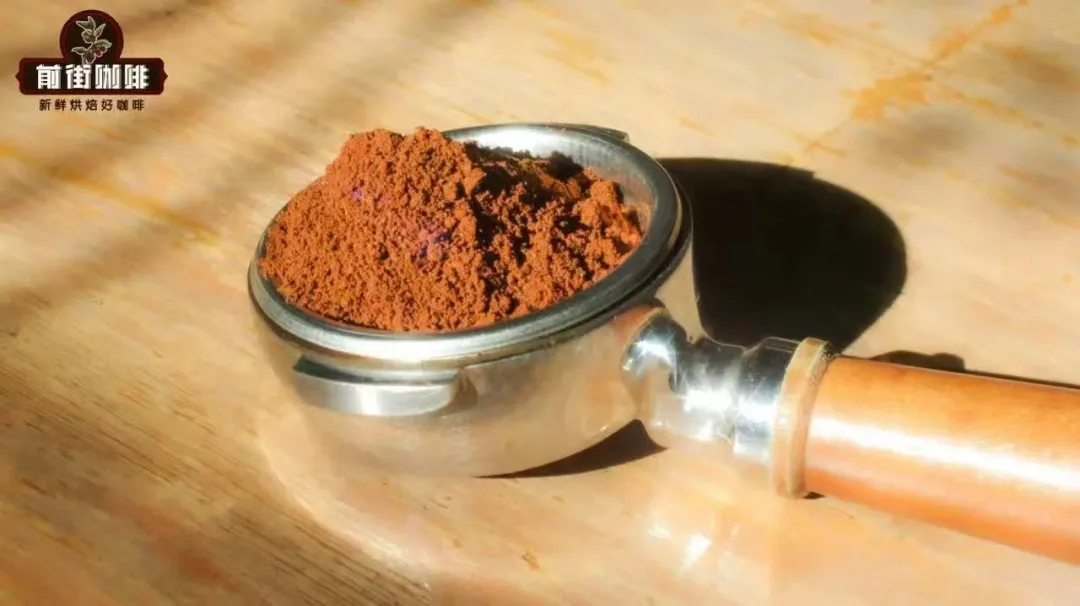
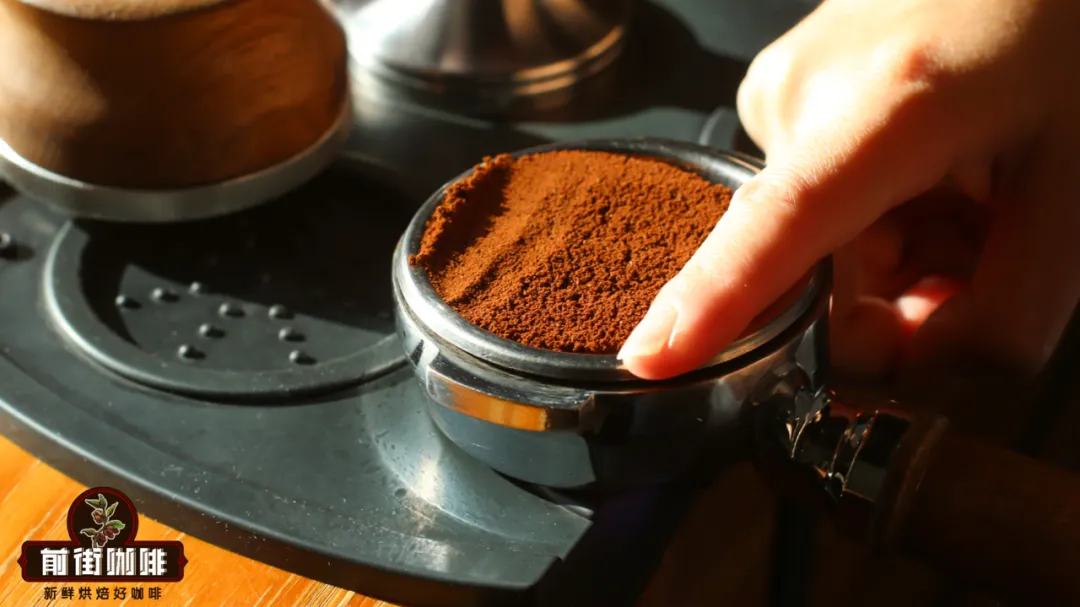
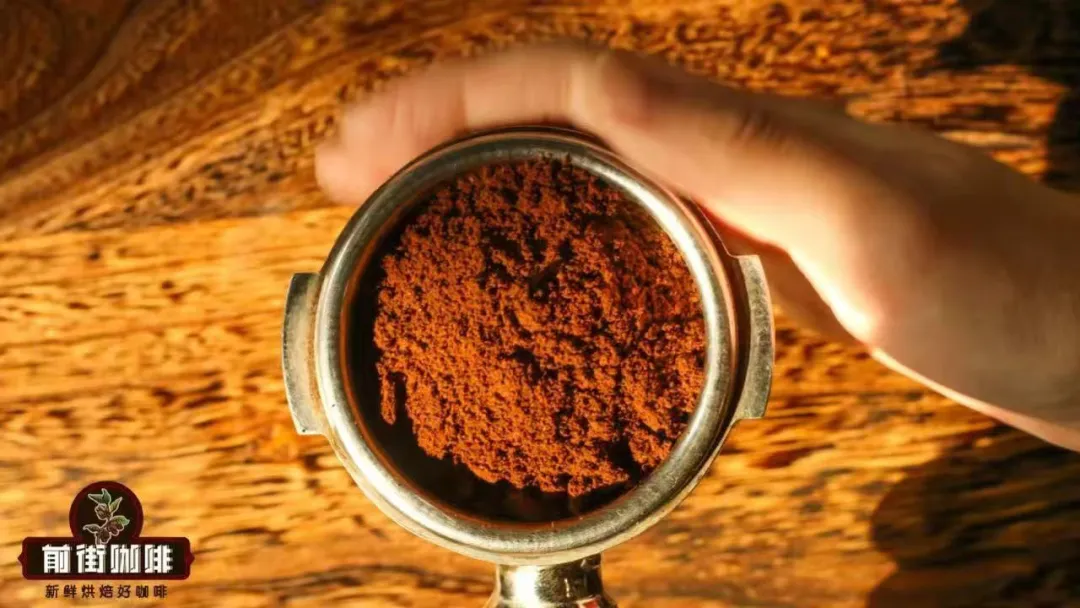
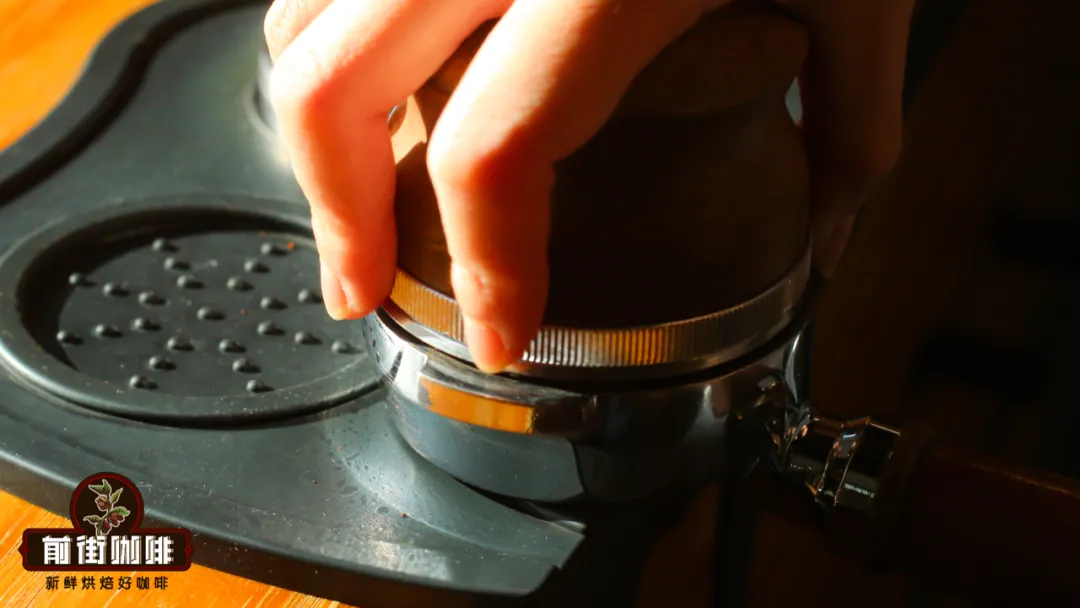
When making espresso, in order to keep the extraction results stable, we usually use two steps—distribution and tamping—to make the coffee grounds more evenly distributed in the portafilter basket. In this way, channeling can be effectively suppressed, and uneven extraction will be reduced accordingly.
Although these two actions may seem simple, there is quite a lot of nuance involved. Especially when it comes to tamping—questions such as "how much force should be used to tamp" and "what counts as the correct tamping method" have always been hot topics in the beginner stage. Therefore, Front Street Coffee is here today to talk with you about: in the process of tamping coffee grounds, how much force do we actually need to apply? And at the same time, how should we do it to achieve proper tamping?
How much force should be used to tamp coffee grounds?
The core purpose of tamping is to use pressure to compact the originally loose coffee grounds in the portafilter basket, so that hot water can pass evenly through the puck, thereby completing a relatively even extraction.
The reason many people are confused about tamping force is mainly that it is widely believed that the more force used when tamping, the longer the extraction time will be.
The logic behind this is: when tamping force increases, the coffee grounds are pressed more tightly. As the gaps between particles become smaller, the paths available for water flow are reduced. With fewer channels, hot water naturally takes longer to pass through the puck. But is this really true?
Obviously, this is not entirely the case. Tamping does change the compactness of the coffee grounds, but this effect is far smaller than most people imagine. You can refer to an experiment Front Street Coffee conducted previously.
Front Street Coffee extracted espresso three times separately. The dose used for each shot and the final yield were kept consistent—each used 20g of coffee to extract 40ml of coffee liquid. The only variable was the force used during tamping: the first shot was not tamped at all, the second applied 2kg (about 20N) of force, and the third used 15kg (about 147N) of force.
Although the difference in force among the three groups was huge, the extraction times were almost the same, at 29 seconds, 30 seconds, and 30 seconds respectively. As for extraction yield and flavor performance, apart from slight differences in the untamped shot, the results of the other two were highly consistent. Why did this happen?
The reason is actually not complicated. During extraction, the pressure a coffee machine applies to the puck is about 9 bar, which is 9 atmospheres. When 9 atmospheres act on a puck with a diameter of 58mm, the pressure generated is about 2380N, equivalent to about 242kg. Compared with this magnitude of 242kg, whether it is 2kg or 15kg, both seem negligible.
In addition, there is one more point worth noting. According to materials consulted by Front Street Coffee, La Marzocco previously conducted dedicated tamping force tests when designing the Swift grinder with an automatic tamping function. The test range went from 2 pounds all the way to 30 pounds. The results found that no matter how much force was used for tamping, the bottom of the puck hardly bore any additional force. A blogger once gave a very vivid analogy: this is like a car crash test, where the deformation and compression of the car body itself absorbs energy.
Therefore, as long as the force applied can ensure the puck is compacted, there is no need to overthink the amount of force. Front Street Coffee recommends paying more attention to how to press the puck flat, that is, how to achieve proper tamping.
How do you achieve proper tamping?
To be honest, what Front Street Coffee means by proper tamping here is not a specific standardized motion, but simply pressing the grounds flat. As long as the coffee grounds in the portafilter basket can be made even and flat, it does not really matter what posture you use to press them. This is because although the hot water dripping from the group head moves vertically downward, as it seeps into the puck, the water flow will preferentially choose the path with the least resistance. If the surface of the puck is not flat, it can easily lead to uneven extraction, which in turn causes channeling.
Of course, tamping without distributing is also not acceptable! If you skip distribution and tamp directly, even if you finally press out a puck with a flat surface, the density in different areas inside it will still differ, and channeling will still easily occur. So the correct order is to distribute first, then tamp. If you are just starting out and are not yet clear on how to achieve even distribution and tamping, you might as well refer to the routine Front Street Coffee shares below; perhaps it can give you some inspiration.
Without using a dosing cup, the coffee grounds received often end up unevenly distributed in the portafilter basket, with some areas piled high and others with very little. In this situation, it is not recommended to distribute directly, because the distribution tool will apply a certain amount of pressure when used, forming a certain degree of tamping. The correct approach is to first gently move the coffee grounds with your finger, pushing the piled-up and overflowing grounds into the areas with less coffee.
Next, gently tap the side of the portafilter basket so that the coffee grounds inside naturally fall into their "places."
Finally, use the distribution tool to complete distribution, and with that, the distribution step is finished.
Next, we need to take out the tamper and tamp. Front Street Coffee mentioned earlier that as long as the force is applied evenly, any distribution posture and grip can be used freely. But if you are currently unable to apply force evenly, you can try replicating the tamping technique below from Front Street Coffee, which is also the method most people use:
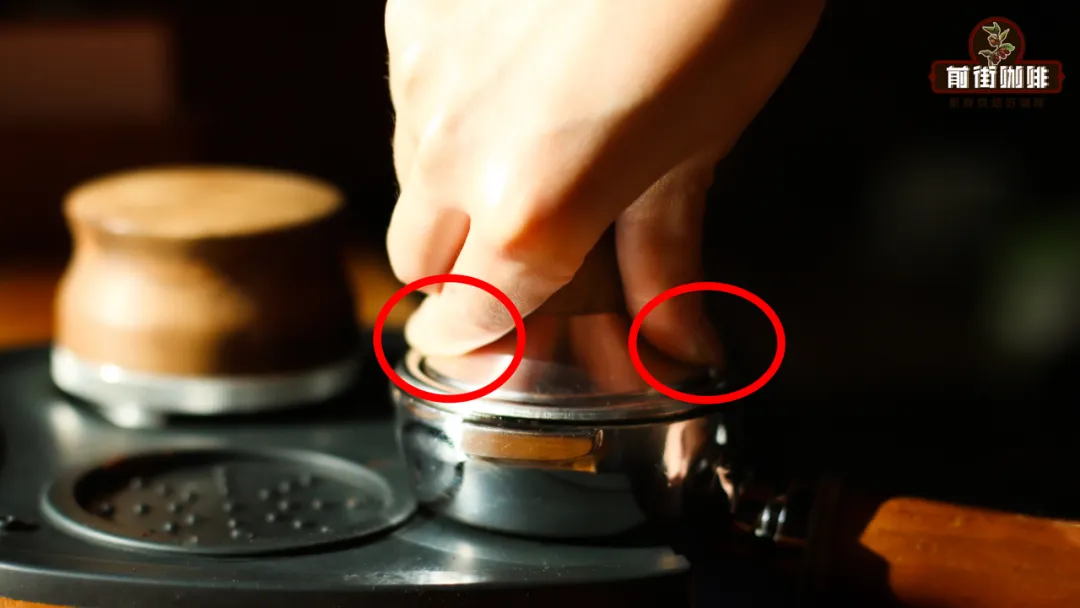
First, place the tamper into the portafilter basket. Hold the handle with your middle finger, ring finger, and little finger, and place your index finger and thumb on two opposite edges of the tamper respectively. When entering the tamping stage, the index finger and thumb need to touch both the portafilter basket and the tamper at the same time, because this can help us apply force evenly. Then concentrate the force in the index finger and thumb and press downward. At this point, the tamping step is complete.
Since most portafilter baskets have scale lines, after tamping you can observe the distance between the puck and the scale lines to see whether the distance is consistent in every area. If it is consistent, congratulations—you have achieved proper tamping; if it is not consistent, you need to recall the details of the tamping just now and the angle at which the puck tilted, and identify what needs improvement in order to achieve even tamping.
- END -
The above content is compiled by CoffeeHunters, a coffee news website.


