








How Do These Arabica Coffee Bean Varieties Differ?
Caturra and Catuai are two arabica coffee bean varieties that appear often on farm and estate lists. Caturra was found in Minas Gerais, Brazil, between 1915 and 1918 as a shorter mutation of Bourbon, while Catuai is a cross of Caturra and Mundo Novo. Their value comes mainly from compact size, high planting density, and reliable yields rather than flavor alone.
The shorter Caturra plant allows denser planting, which raises yield per hectare and helped it spread across Central and South America; nearly half of Colombia's coffee production is linked to it. Catuai keeps that compact habit while adding better disease resistance from Mundo Novo. Together, the two account for about one-third of the beans on the Front Street Coffee list.
Caturra and Catuai are two varieties that appear extremely frequently in the coffee world, and they can be found everywhere from large estates to small production areas. Nearly one-third of the products on Front Street Coffee's bean list are made up of these two varieties, which shows their importance. Caturra originated from a genetic mutation of Bourbon and became a main variety in Central America due to its short stature, high yield, and sun tolerance; Catuai is a cross between Caturra and Mundo Novo, inheriting the former's advantages and improving disease resistance. This article will sort out in detail the origins, agronomic characteristics, and flavor differences of the two, and combine Front Street Coffee's cupping experience to help you understand why these two varieties have won the favor of so many coffee farmers.
Whether it is well-known large estates like La Esmeralda and Elida, or smaller production areas, Caturra and Catuai are almost everywhere. Taking Front Street Coffee's bean list alone as an example, nearly one-third of the products come from these two varieties, showing that their importance in the coffee world cannot be ignored.
Today Front Street Coffee will take everyone to explore what kind of appeal Caturra and Catuai, these two varieties, actually possess that can make so many coffee growers fall for them.

Caturra Caturra was first discovered between 1915 and 1918 in a coffee plantation in Minas Gerais, Brazil. It belongs to a genetic mutation of Bourbon, and due to the mutation, the plant is noticeably much shorter than ordinary Bourbon. As the height gap between it and the surrounding plants became increasingly obvious, this mutated individual was quickly noticed by people.
Because of its petite size, locals used "Caturra" to refer to this new variety. In Guarani, Caturra means "small," and it also has another name, "Nanico." It is precisely because of this short stature that Caturra gained a key advantage, which later made it an indispensable main coffee variety in Central and South America. Especially in Colombia, nearly half of the country's coffee production comes from Caturra.
The advantages that put Caturra in the "main variety" position may sound more practical than everyone imagines. Although the flavor is excellent, it is not the primary factor. The real core reason lies in high yield and ease of cultivation. Short plants mean a higher planting density can be accommodated on the same piece of land, and higher density directly brings higher productivity, so yield rises accordingly.
At the same time, Caturra's secondary branches have very short spacing and can bear more fruit in the same space, though this also causes its branches to often break under the weight of the fruit. Higher planting density plus shorter fruiting intervals makes Caturra's yield generally higher than that of conventional varieties. For most coffee farmers, compared with coffee flavor, yield is a more important consideration, and this is exactly why they are willing to plant Caturra.

Now let's talk about Caturra being "easy to grow." Everyone knows that the vast majority of Arabica varieties are rather delicate, not tolerant of sun exposure, and more suitable for growing in shaded environments.
Caturra, however, is an exception. It can withstand direct sunlight, and even when the whole plant is exposed to the sun, it can still grow robustly and bear fruit. Therefore, compared with most other Arabica varieties, Caturra has a wider suitable growing area. It is also for this reason that this type of coffee, which can withstand direct sunlight, received a special name—"Sun Coffee."
Combining the above two points, plus Caturra's own excellent flavor, it naturally became a variety most coffee farmers are happy to plant, and it is also one of the main cultivated varieties in Central American production areas. Because of this, it is often used as a "benchmark" for testing new varieties. Caturra's only shortcoming is relatively weak disease resistance, making it prone to infection and withering. It is also worth mentioning that, like Bourbon, Caturra has multiple colors, including "red," "yellow," and "purple."
Just over a decade after Caturra was discovered, the Instituto Agronômico de Campinas (Instituto Agronômico, abbreviated as IAC) in São Paulo launched a crossbreeding project to cultivate better coffee varieties, and Caturra was one of the main experimental subjects. After years of research and trials, a series of ideal varieties were finally created, and among them was the other protagonist Front Street Coffee will introduce in this article—Catuai.
Catuai Catuai is a variety produced by crossing Caturra with Mundo Novo and was officially released in Brazil in 1972. (Mundo Novo is the result of natural hybridization between the two ancient varieties Bourbon and Typica, and was first discovered in 1943 in Tietê, São Paulo, Brazil.)
At first, this variety was numbered "H-2077," and later people named it "Catuai." In Guarani, Catuai means "very good," and the facts indeed prove so.
As a hybrid offspring, Catuai not only inherited Caturra's excellent traits such as short stature, high yield, and tolerance to direct sunlight, but also possesses relatively stronger disease resistance. Therefore, after its release in Brazil, Catuai quickly spread locally and became one of the main varieties.
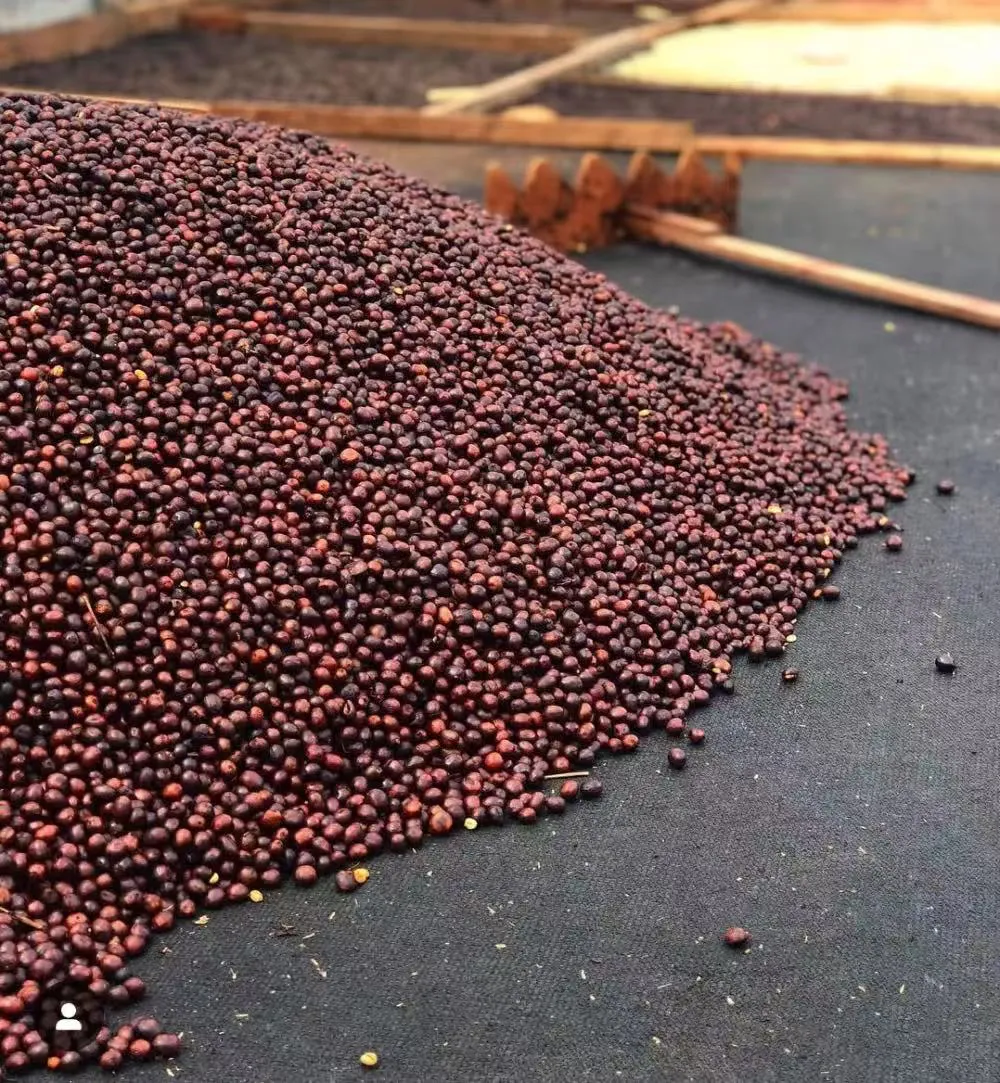
Afterward, Catuai spread outward from Brazil, and is planted in Guatemala, Costa Rica, Panama, and other places. For example, the Front Street Coffee Elida Estate natural bean on Front Street Coffee's bean list uses the Catuai variety. Likewise, Catuai also has "red" and "yellow" types.
What are the flavors of Caturra and Catuai like? Both varieties perform well in flavor, but they have relatively clear requirements for growing altitude. At lower altitudes, their flavor is slightly inferior to other Arabica varieties at the same altitude; while at higher growing altitudes, their flavor can be fully released and performs better than most varieties.
Therefore, the Caturra and Catuai that performed excellently in Front Street Coffee's cupping and successfully made it onto the bean list all come from higher-altitude growing areas. For example, Front Street Coffee Elida Estate · Catuai, Front Street Coffee everyday drink Colombia · Huila (Caturra), Front Street Coffee La Esmeralda Estate · Diamond Mountain, and so on. Among them, Front Street Coffee is especially partial to La Esmeralda Estate's Diamond Mountain. This bean is a blend of Caturra and Catuai and has a very soft acidity as well as a slight fermented aroma brought by the natural process.
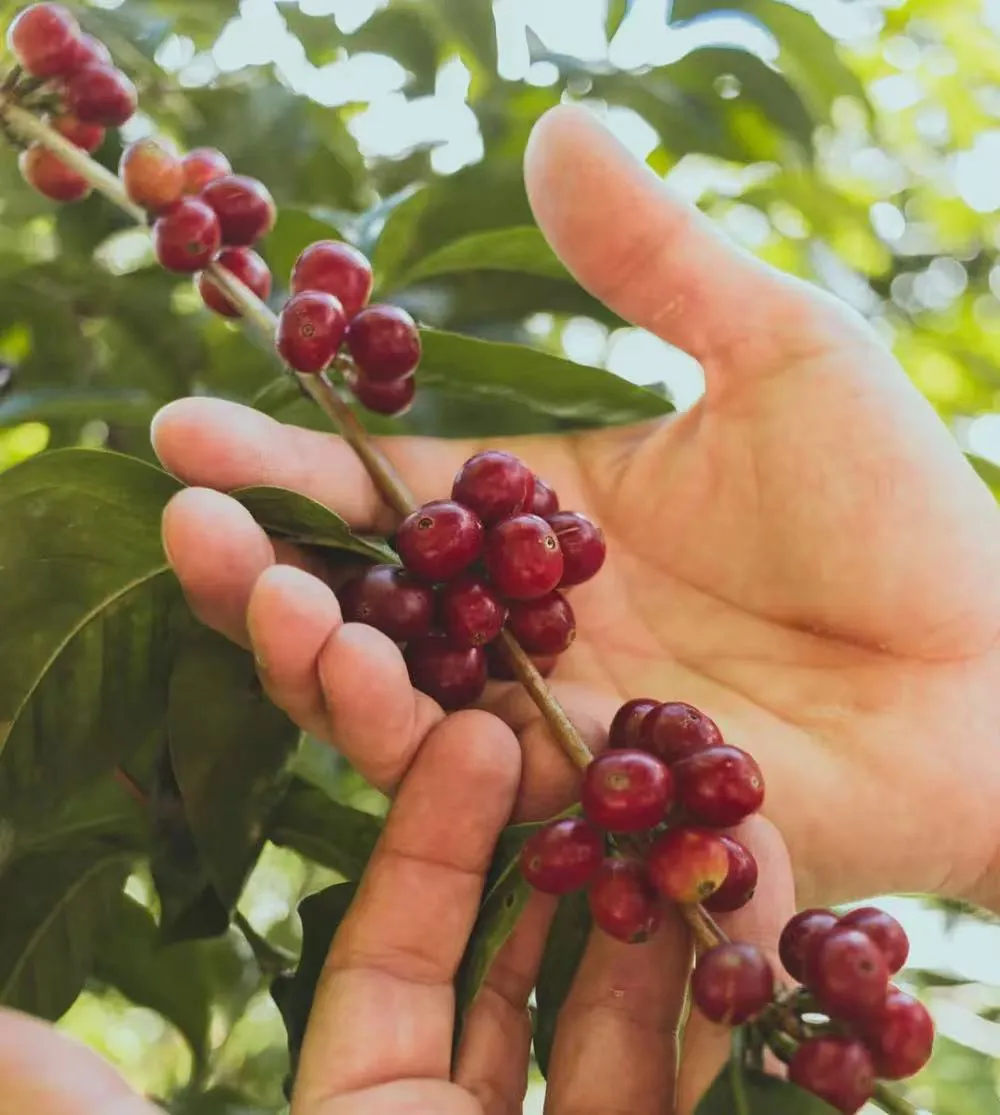
Front Street Coffee: La Esmeralda Estate · Diamond Mountain Country: Panama Region: Boquete Altitude: 1500-1600 meters Varieties: Caturra, Catuai Processing method: Natural Brewing flavor: Citrus, honey, cocoa, fermented aroma
In the cupping, Front Street Coffee sensed from this bean the rounded sweet acidity of citrus and berries, a honey-like texture, a hint of cocoa and fermented aroma, and a finish similar to oolong tea. The overall performance was quite outstanding.
- END -
The above content is compiled by CoffeeHunters, a coffee news website.


