







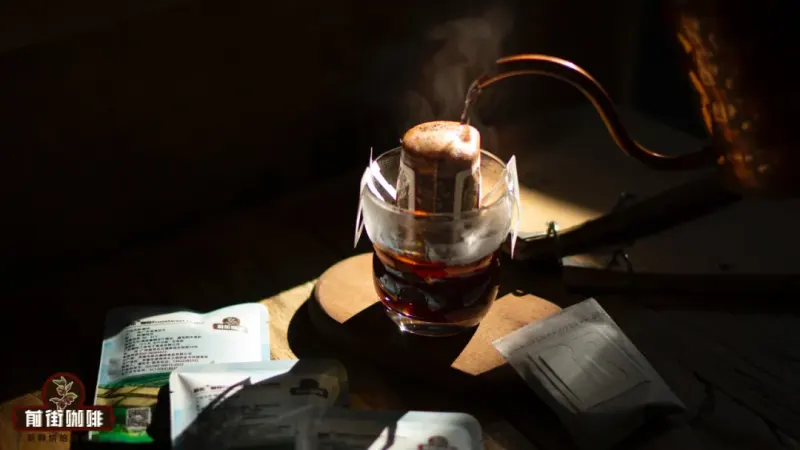
Can you brew in the bag coffee as a hot latte?
Drip bag coffee can make more than plain black coffee. Besides standard drip brewing, the bags work for immersion and cold brew, and the same grounds can be extracted into a stronger concentrate that mixes with milk for a smooth milk coffee. The trade-off is that pre-ground coffee loses some aroma compared with fresh grounds, so method and parameters matter more than equipment.
Using Huakui and Golden Mandheling drip bags as examples, the methods differ mainly in water temperature, brew time and ratio. Drip brewing is the classic short, layered option, while immersion and cold brew extract slower for a rounder cup. Making a concentrate for milk coffee calls for a tighter ratio, and each approach can be adjusted to taste without professional gear.
Drip bag coffee has become a daily choice for many coffee lovers thanks to its portability and ease of use. Although pre-ground coffee's aroma is not as good as freshly ground, as long as you master the right brewing method, it can still deliver a satisfying flavor. Besides regular drip brewing, drip bags can also be used with immersion, cold brew, and other methods to produce completely different tastes, and can even be used to make a concentrated base, which can be mixed with milk to create a rich and smooth milk coffee. In this article, Front Street will focus on sharing various "cooking" methods for drip bag coffee, and using Huakui and Golden Mandheling drip bags as examples, it will break down in detail the specific parameters and steps for drip brewing, immersion, cold brew, and milk coffee, helping everyone easily enjoy a good cup of coffee even without professional equipment.
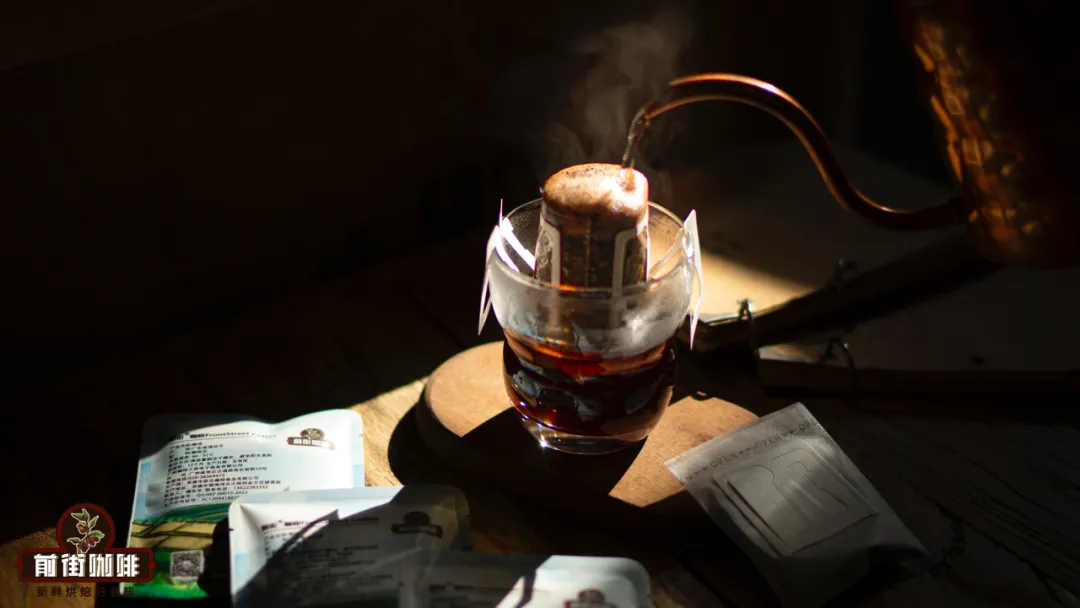
Drip bag coffee has won many people's favor for its portability and the advantage of making a tasty black coffee without cumbersome operations. Although because it uses pre-ground coffee, its aroma is not as full as freshly ground coffee, as long as the brewing method is appropriate, drip bags can still show quite excellent flavor. For this reason, people often jokingly call it the "instant noodles" of the coffee world—both convenient and delicious. But did you know? Just as instant noodles have all kinds of ways to be eaten, drip bag coffee can also be played with in many ways. Besides traditional drip brewing, we can also use immersion, cold brew, and other different methods to make black coffees of various styles. Furthermore, you can even use drip bags to extract a higher-concentration coffee liquid, then mix it with milk to make a rich and smooth milk coffee.
Front Street has previously published separate articles explaining these "recipes" in detail, but recently many friends have said it is not very convenient to look them up, so today Front Street has organized them together and will share all kinds of "cooking" methods for drip bag coffee at once.
1. Brewing
The first thing to introduce is drip brewing, which means extracting coffee by pouring water manually. This is the most classic way to brew drip bag coffee.
The advantage of drip brewing is that it can brew a layered and vividly flavored drip bag coffee in a relatively short time, but there is a prerequisite: the parameters must be well controlled. The water temperature must be high enough, the extraction time long enough, and the amount of hot water appropriate; otherwise it is easy to fail to extract flavor, and what you end up with will most likely be a cup of water with coffee flavor.
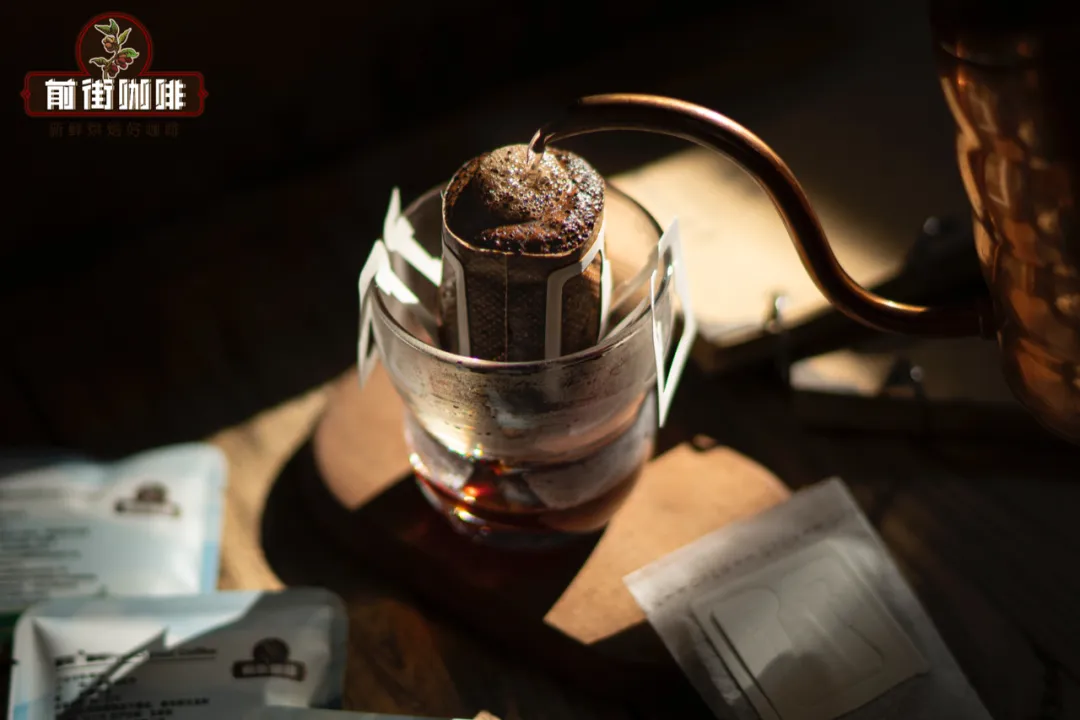
It looks quite complicated, but the actual operation is not that difficult. Because the grind size of drip bag coffee is fixed, a basically stable set of parameters can be used to brew all drip bags, and you only need to adjust the water temperature according to the roast level of the coffee beans. This is exactly where the convenience of drip bags lies.
In this article, Front Street will use Front Street Ethiopia Huakui drip bags to demonstrate most brewing methods for drip bags. When using drip brewing for this Huakui, control the water temperature between 90–93°C (if it is a dark-roasted coffee bean, you can use 88–90°C water); the coffee-to-water ratio is 1:15; the extraction time is two minutes, that is, the total time the water is in contact with the coffee grounds.
Each bag of Front Street drip coffee is 10g, so according to the 1:15 ratio, 150ml of hot water needs to be poured. This 150ml of water is poured in five stages, about 30ml per stage on average, in order to allow the water and coffee grounds to have fuller contact time, and the final brewed coffee will taste richer.
After many tests by Front Street, if a 10g drip bag is filled with water to half the height of the drip bag each time, the amount of water is about 30–40ml. In other words, when the water is poured to half of the drip bag, the amount is just close to the target amount for each stage. Through this visual estimation method, even without a scale, you can estimate the total amount of water poured.
Next, Front Street will share how to brew a good cup of drip bag coffee.
① First pour one stage of hot water, filling to half of the drip bag, about 30ml, then wait 20–30 seconds before pouring the next stage. This is to release the gas inside the coffee grounds and make it easier for us to brew a delicious cup of drip bag coffee.
② Then pour four more stages of hot water according to the planned amounts. For each stage, pour to half of the drip bag, and wait until all the hot water has dripped through before pouring the next stage.
③ After the last stage of hot water is poured, remove the drip bag and you can enjoy the delicious drip bag coffee.
Total time: 2 minutes 05 seconds. The Front Street Huakui drip bag coffee brewed this way, just as Front Street said, is very layered and has a prominent flavor performance. You can clearly taste the sweet and sour aromas of citrus, cream, strawberry, and berries. The body is light, and the aftertaste is oolong tea aroma.
2. Immersion
Compared with drip brewing, the second method is much simpler. It belongs to immersion extraction: simply put the coffee grounds from the drip bag and hot water into the same cup, let it steep for a period of time, and you can get a cup of drip bag coffee with a rich body and balanced taste.
When making drip bag coffee this way, there are only two extraction parameters to pay attention to: time and water amount. For water temperature, just use boiled water directly. Because immersion extraction has a higher fault tolerance and will not easily dissolve the bitterness from the coffee grounds, the requirements for water temperature are not so strict; anything above 94°C is fine.
If you want a stronger cup, you can use a 1:14 or 1:15 coffee-to-water ratio, that is, for a 10g bag of drip coffee, brew with 140ml or 150ml of hot water; if you do not want the taste to be too strong, you can use a 1:16–17 coffee-to-water ratio, that is, 10g of coffee with 160–170ml of hot water. The extraction time is 7–9 minutes, depending on the water temperature: the higher the water temperature, the shorter the time, and vice versa.
① First tear open the drip bag and pour the coffee grounds into a prepared container (preferably one with a spout), and set the drip bag aside for later use.
② Then pour in hot water and mix with the coffee grounds. The ratio used here by Front Street is 1:15, so pour in 150ml of water.
③ After pouring the water, use any tool to stir the coffee 10 times and start timing.
④ At 5 minutes, stir 10 more times, then continue waiting.
⑤ When the time reaches 8 minutes, take out the drip bag and place it over another cup.
⑥ Finally, pour the brewed coffee into the drip bag to filter out the coffee grounds. After filtering is complete, remove the drip bag, and a cup of drip bag coffee is ready.
Compared with the brewed version, the steeped drip bag coffee is not as layered, but its body and balance are higher. This cup of Front Street Huakui coffee has more sweetness and a longer aftertaste. Because it uses Front Street Huakui drip bags, the flavor performance is still mainly the aromas of citrus, berries, strawberry, and cream, which is very good.
3. Cold Brew
Everyone is probably fairly familiar with the cold brew method; Front Street just shared it not long ago. You only need to prepare a sealable bottle, pour the coffee grounds from the drip bag and room-temperature water into it, seal it well, put it in the refrigerator to chill overnight, and the next morning you can get a pot of delicious cold brew coffee.
Similarly, the coffee beans used in the drip bags are Front Street Huakui, and the extraction parameters are as follows: 30g of coffee, coffee-to-water ratio 1:10, refrigeration time more than 8 hours. Because cold brew coffee uses a relatively large coffee-to-water ratio, at least 30g of coffee grounds is needed to make a cup of cold brew. You can also decide how much coffee to use according to your own needs.
Step 1: Take out the drip bags and pour the coffee grounds into a sealed bottle. Remember to definitely keep the drip bag packets.
Step 2: Pour in an appropriate amount of room-temperature water. Front Street used 3 drip bags, totaling 30g of coffee, and according to the 1:10 ratio, the amount of water poured is 300ml.
Step 3: Use any tool to stir the coffee grounds and water until all the coffee grounds can fully contact the water.
Step 4: Seal the bottle well and place it in the refrigerator for 8–12 hours. The longer, the stronger.
Step 5: After the time is up, take out the coffee and prop the drip bag packet kept from yesterday over a cup.
Step 6: Pour the coffee into the drip bag to filter out the coffee grounds. After filtering is complete, put it back in the refrigerator to ferment for 2 hours (this can also be omitted), and the cold brew coffee is done.
The Huakui coffee extracted by cold brew tastes completely different from the previous two, both in flavor and mouthfeel. Besides the flavors of citrus, strawberry, and berries, the cold brew version also has a fascinating fermented wine aroma, which combines with Huakui's original fruity charm, as if you are tasting a cup of rich fruity wine. The mouthfeel is very icy and refreshing, and the aftertaste has both oolong tea and wine aroma. Very good.
4. Milk Coffee
Finally, let's share how to use drip bags to make a rich cup of milk coffee. This "dish" has two preparation methods. The first is the cold brew above, except that the water used in cold brewing is replaced with milk, and all other parameters and steps are exactly the same. It is very simple. Because Front Street shared it not long ago, it will not repeat it here.
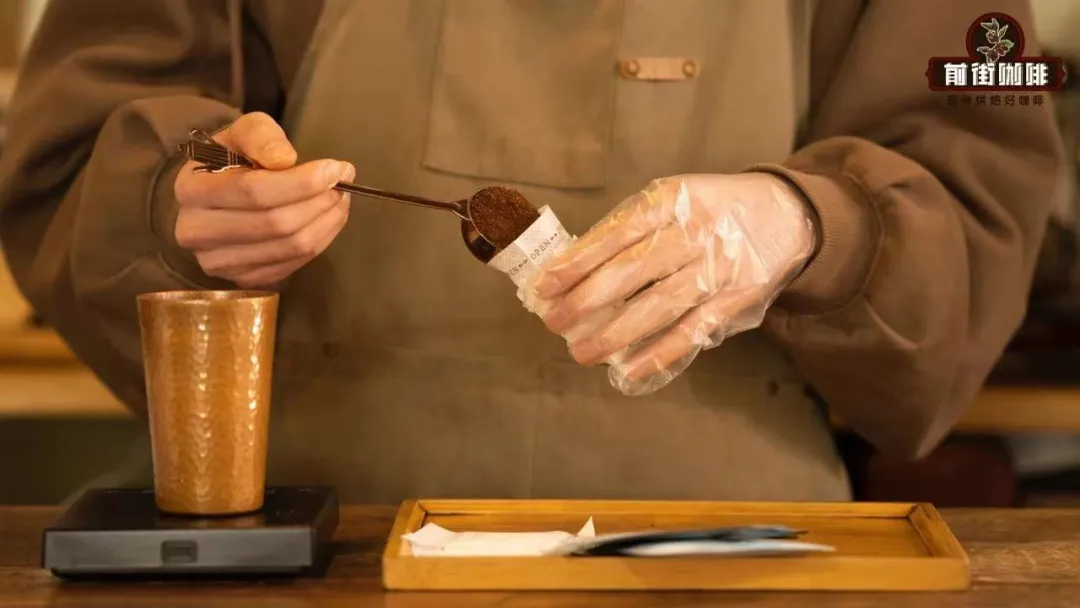
The other method is to first brew a higher-concentration black coffee with hot water, then mix in milk. Although the operation is a bit more complicated than the former, it can produce a cup of milk coffee faster.
This method uses the second method shared in this article—immersion. The only difference is that the water amount, coffee amount, and water temperature all have very strict requirements; otherwise it is difficult to brew the coffee strong, and the resulting milk coffee will taste rather watery.
The coffee is best dark-roasted, so that the coffee flavor is not easily masked by the milk. Therefore, this time Front Street will use Front Street PWN Golden Mandheling drip bags for preparation, two bags in total, that is, 20g of coffee grounds, then a coffee-to-water ratio of 1:5, water temperature 100°C, and extraction time 2 minutes. The preparation steps are as follows:
① Pour the coffee grounds from 2 drip bags into the same container.
② Then pour in 100ml of 100°C boiling water and start timing.
③ Take out a spoon or another stirring tool and stir the coffee in the container for 30 seconds. The purpose of stirring is to speed up the dissolution of flavor substances, so that a rich cup of black coffee can be made in a short time.
④ After stirring is complete, let it sit for 1.5 to 2 minutes. When the time is up, take out the drip bag and place it over a cup.
⑤ Pour all the coffee from the container into it. After filtering out the coffee grounds, you get a cup of higher-concentration drip bag coffee.
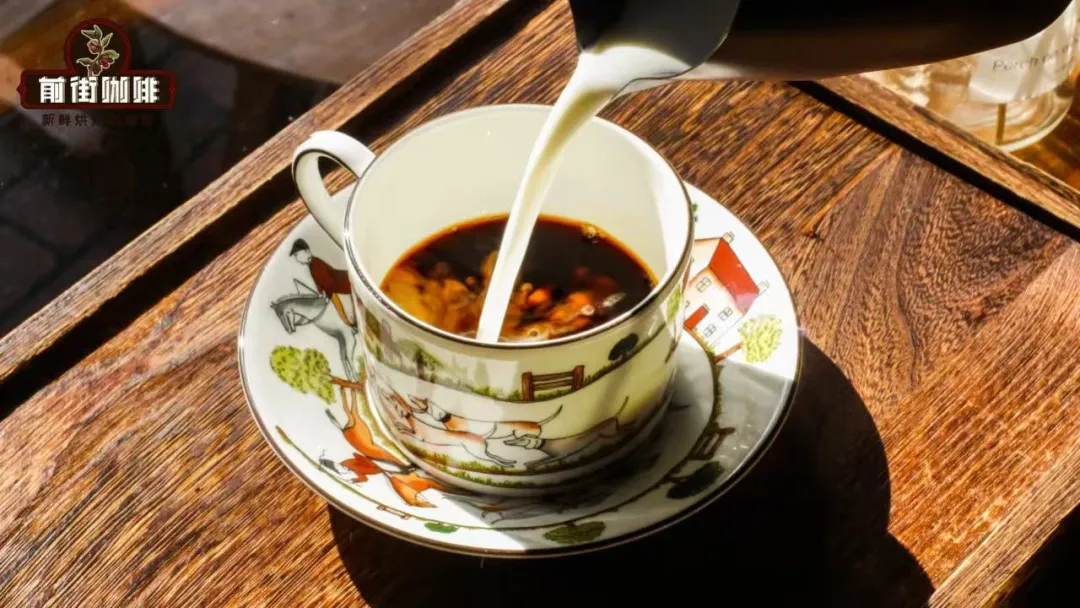
⑥ Finally, add an appropriate amount of milk to the coffee, and a rich and delicious cup of milk coffee is complete. Front Street added 180ml of hot milk here, for a ratio of 1:3. If using light-roasted beans, the ratio can be larger.
Although the milk coffee made this way is not as rich and mellow as espresso, it is still quite good. When drinking it, you can not only clearly taste coffee flavors such as chocolate and nuts, but the mouthfeel is also quite silky. Under limited conditions, it can be considered a pretty good cup of milk coffee.
The above content is compiled by CoffeeHunters, a coffee news website.


