








Why the Coffee-to-Water Ratio Shifts When the Dose Changes
A pour-over coffee-to-water ratio is the weight of ground coffee compared with the weight of water. With a fixed 225ml of hot water, a 15g dose gives 1:15, while 14g gives roughly 1:16 and 16g gives about 1:14. Keeping the pour volume the same after a small dose change therefore moves the ratio, extraction yield and concentration.
A test brewing 14g, 15g and 16g of Yirgacheffe Red Cherry with the same 225ml showed measurable concentration and flavor differences, so a coffee enthusiast should adjust water alongside the dose. Once the dose shifts by more than 5g, grind size, pouring technique and dripper also need changes to keep the cup balanced.
Many coffee enthusiasts habitually use a safe coffee-to-water ratio like 1:15 or 1:16 for their daily pour-over. Front Street Coffee also often recommends such parameters to beginners. However, once a fixed brewing pattern of fixed coffee dose paired with fixed water volume is established, even if the dose differs by just one or two grams, the pouring amount is often locked in by inertia, causing the actual coffee-to-water ratio to quietly shift. The coffee-to-water ratio directly affects extraction yield and concentration, and these two in turn determine the coffee's flavor and mouthfeel. This article uses a clever cup immersion extraction experiment, brewing 14g, 15g, and 16g of Front Street Yirgacheffe Red Cherry with the same 225ml hot water, measuring concentration and tasting flavor differences, to illustrate the importance of adjusting water volume in sync when fine-tuning the coffee dose, and to remind that when the dose difference exceeds 5g, grinding, brewing technique, and dripper also need to be adjusted in tandem.
For instance, Front Street Coffee often suggests that beginners choose a relatively safe coffee-to-water ratio like 1:15 or 1:16 to brew coffee. Over time, once we get used to extracting with a certain dose paired with a certain ratio, the pouring amount easily becomes a "default value"—even when the dose has changed, we still habitually pour the same amount of water as before.
Take the 15g dose that Front Street Coffee commonly uses as an example. At a 1:15 coffee-to-water ratio, the pouring amount would naturally be 225ml. But if one day there aren't enough beans, or there's a bit extra, and the dose becomes 14g or 16g, logically the water amount should also increase or decrease accordingly. Yet in actual brewing, we very likely still habitually pour to 225ml. What consequences does this situation cause?

Exactly! The brewed coffee will show a certain degree of change in flavor and texture. Even if the dose differs by only 1g, as long as the water amount stays the same, the coffee-to-water ratio is already different. The coffee-to-water ratio refers to the ratio of coffee grounds to water. This parameter affects the coffee's extraction yield and concentration. With all other conditions unchanged, the larger the coffee-to-water ratio, the lower the extraction yield and the higher the concentration; conversely, the smaller the coffee-to-water ratio, the higher the extraction yield and the lower the concentration.
And the coffee's extraction yield and concentration precisely determine its flavor and texture. So once the coffee-to-water ratio changes, the coffee's taste changes along with it. As for just how big the change is, Front Street Coffee will demonstrate with an experiment below. Brewing comparison In this experiment, Front Street Coffee uniformly used 225ml hot water to brew 14g, 15g, and 16g of coffee beans respectively, which converts to coffee-to-water ratios of approximately 1:16, 1:15, and 1:14. Then, through concentration measurement and actual tasting, the differences in taste and concentration were compared.

To reduce human interference during brewing, Front Street Coffee chose the Switch clever cup this time. Immersion extraction not only reduces human influence but also allows the coffee to extract more evenly. The beans used in the experiment were Front Street Yirgacheffe Red Cherry from the Front Street Coffee bean list. The extraction parameters were: water 225ml, water temperature 100°C, time 9 minutes, grind setting of 10 on the Ek43, 75% passing rate through a No. 20 sieve, caster sugar grind, C40 24–26 clicks.
Because the brewing process is relatively complex, Front Street Coffee has already shared it in a previous article, so it will be skipped here. Those interested can search for it themselves.
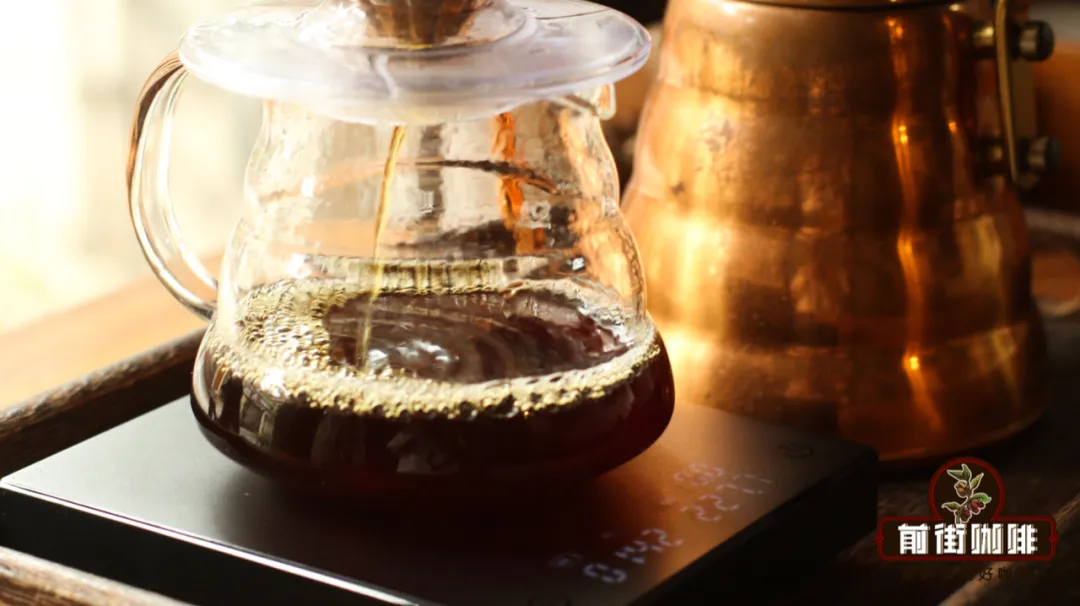
After each pot of coffee was brewed, Front Street Coffee immediately tasted it and measured the concentration. The final results were as follows: 14g: concentration 1.40%, extraction yield 20.83%; flavor notes of strawberry, citrus, floral, oolong tea. The overall aroma was relatively flat, with low body. 15g: concentration 1.47%, extraction yield 20.22%; flavor notes of citrus, strawberry, apricot, berries, white floral, oolong tea. The overall aroma was clear, the body appropriate, and the acidity, sweetness, and bitterness balanced. 16g: concentration 1.53%, extraction yield 19.55%; flavor notes of lemon, berries, white floral, and an oolong tea finish. The overall aroma and finish were relatively heavy, but the acidity was slightly high.
It can be seen that with a dose difference of only 1g, the taste, flavor, and mouthfeel already showed obvious changes, and this difference can be clearly distinguished by people. The larger the dose, the smaller the coffee-to-water ratio, and the heavier the coffee's mouthfeel and the more concentrated the flavor—this is the impact brought by changing the coffee-to-water ratio. So, if you want the brewed coffee to maintain its original performance when increasing or decreasing the dose, it's best to remind yourself during brewing that the pouring amount must be adjusted accordingly too. (If you remember…)
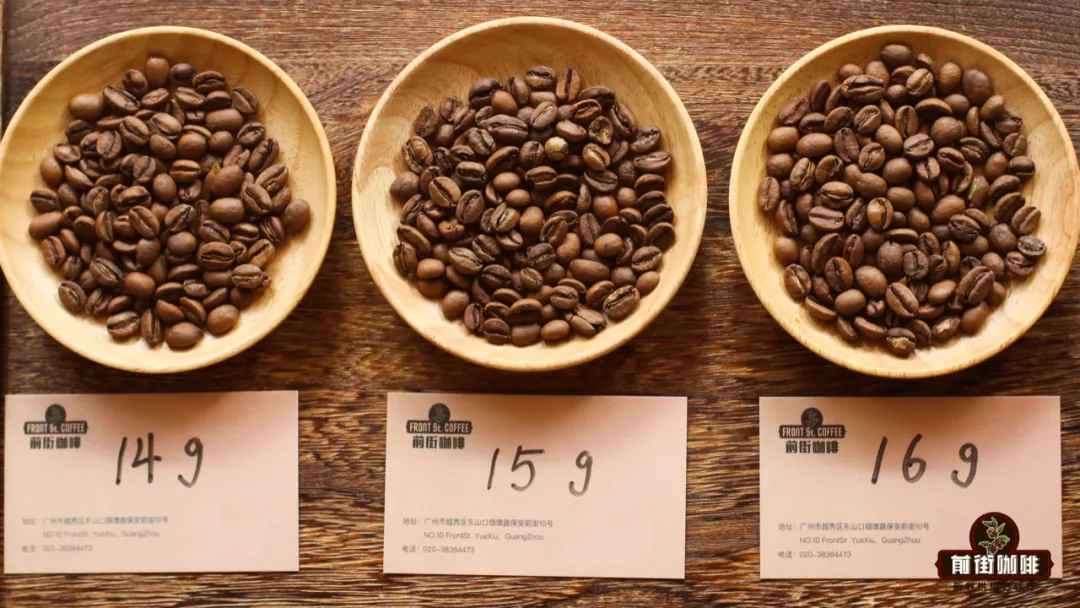
It should be noted that in the example given here by Front Street Coffee, the dose difference was only 1g, so the impact on extraction and taste was not too great. But if the dose difference is too large, for example more than 5g from the original, then in addition to adjusting the pouring amount, the grind size of the coffee grounds, the brewing method, and the dripper used may all need to be adjusted as well. Because the larger the dose, the more water needs to be poured, and vice versa. And the amount of water directly affects the brewing time, which likewise impacts the extraction yield and concentration. So when the dose differs too much from the original, other parameters may also need to change accordingly, and everyone should pay close attention. - END -
The above content is compiled by CoffeeHunters, a coffee news website.


