







What Happened in This Coffee Culture Dispute in Qingdao?
A newly opened seaside coffee shop in Qingdao was accused of misleading customers after a recommendation image showing a lemon tree and blue sea outside the window turned out to be a decorative painting on the shop wall. The post circulated on Xiaohongshu, and several accounts used similar images and text to recommend the shop, raising speculation of staged marketing. The owner said the post was published by a customer voluntarily and reported cyberbullying to the police.
Lawyers noted that if the shop took part in or instigated the publication of false scenes for promotion, it could count as false advertising and carry liability; if a customer posted it independently, there is no legal violation. The case reflects a broader boundary question for specialty coffee shops: how much authenticity shop-visit content on social platforms should carry when recommendation posts drive real visits.
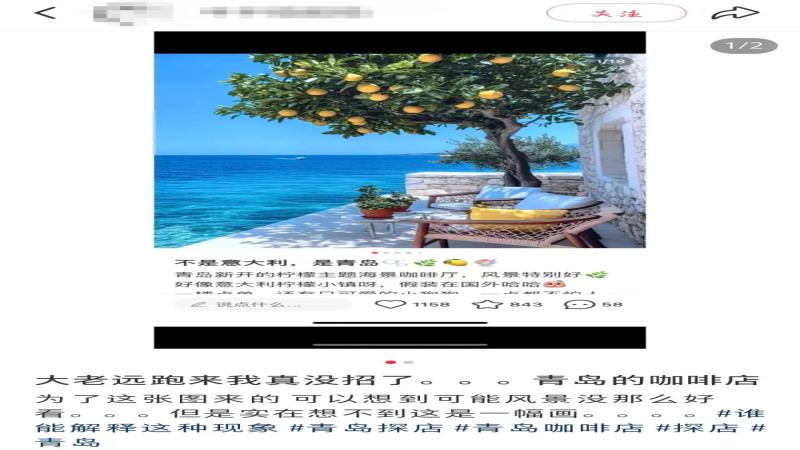
Recently, a newly opened seaside coffee shop in Qingdao sparked controversy over a recommendation image showing "a lemon tree and azure sea outside the window." Some netizens who visited the shop after seeing the recommendation discovered that the alluring seaside photo was actually a decorative painting hanging on the shop's wall. The recommendation post was accused of misleading consumers, and multiple accounts on social platforms used similar images and text to recommend the shop, fueling speculation of a "self-staged marketing stunt by the shop owner." The owner responded that the recommendation post was published by a customer voluntarily, that the painting was merely ordinary decoration, that they had never instructed anyone to take photos for promotion, and that they had decided to call the police after being subjected to cyberbullying. Lawyers pointed out that if the shop participated in or instigated the publication of false scenes for promotion, it would constitute false advertising and entail liability; if the post was published independently by a customer without the shop's involvement, it would not constitute a legal violation. The incident reflects the boundary issue of authenticity in shop-visit content on social platforms.
▲
Click to follow | Daily specialty coffee culture magazine Coffee Workshop
Recently, according to Upstream News, a netizen in Qingdao came across a post on Xiaohongshu recommending a local "seaside coffee shop," took a taxi specifically to visit it, and found that the actual situation was vastly different from the pictures.
From the images shared by the poster, outside the coffee shop window stood a lemon tree laden with fruit, with three chairs placed beneath it where customers could sit and gaze at the azure sea while drinking coffee — a very pleasant scene and an excellent photo spot for those who love taking pictures.
Attracted by the first image in the recommendation post, the netizen decided to take a taxi there. Although they had mentally prepared themselves that the actual scene might differ from the photos, they never expected that the eye-catching seaside image was actually a painting hanging on the coffee shop's wall. The netizen said the recommendation post did not indicate at all that the first image was a poster, and combined with text descriptions like "lemon-themed seaside coffee shop," it was easy to cause misunderstanding.
The post quickly sparked heated discussion among netizens. Many were shocked by the poster's experience, exclaiming that the recommendation image was too far removed from the actual scene — even absurd. Those who had originally put this shop on their must-visit list felt fortunate to have seen the real situation in advance, saving themselves the taxi fare for a special trip.
Meanwhile, some netizens pointed out that the controversial seaside photo appeared to be an AI-generated landscape image, but multiple accounts on social platforms used this image and similar captions to recommend the coffee shop, leading to suspicions that the coffee shop owner might have staged it themselves, accusing the shop of "using a painting to trick customers." As the post gained traction, the blogger who posted the recommendation deleted the post and hid their profile.
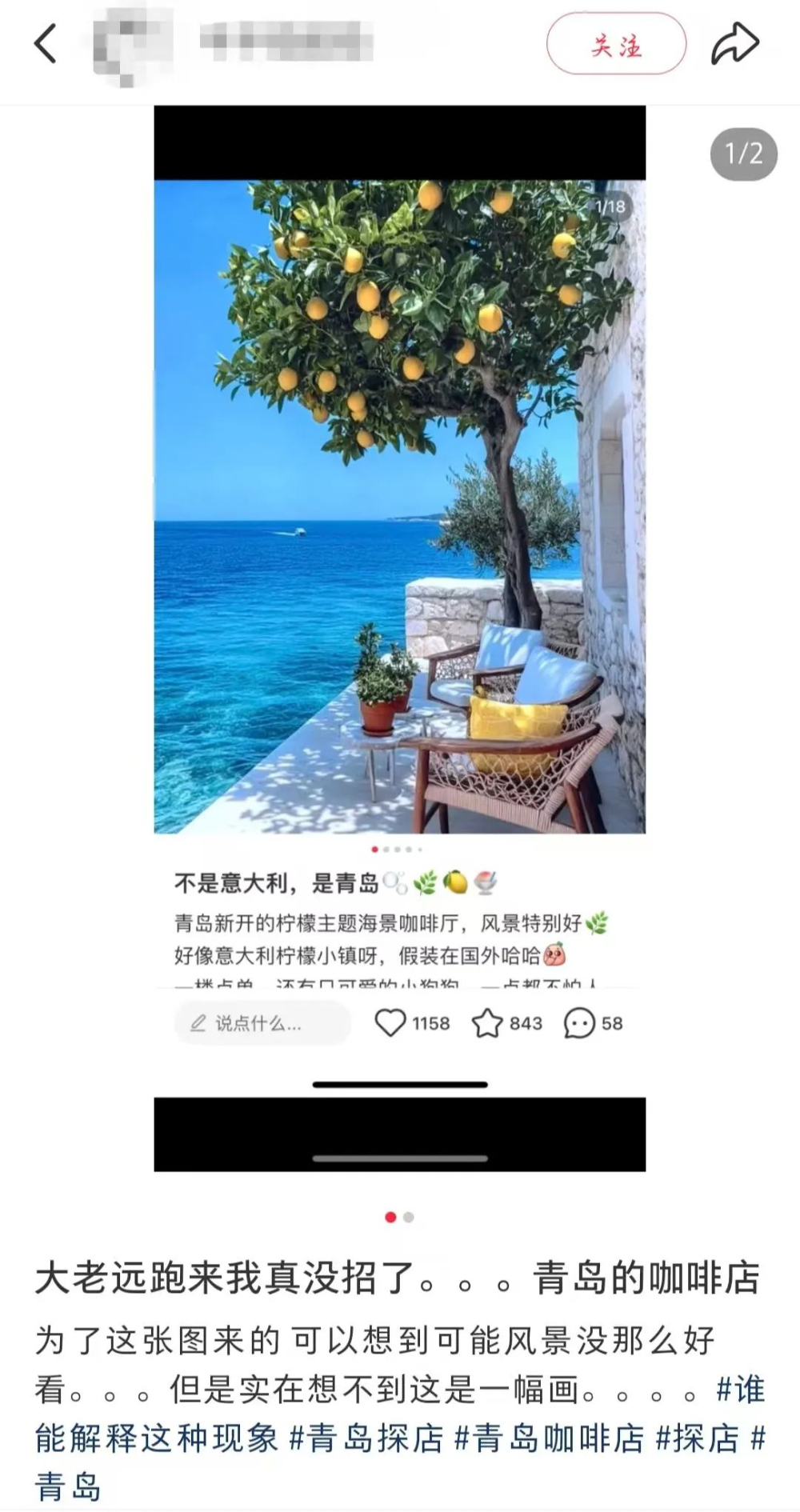
Facing netizens' speculation and this incident, the coffee shop owner said in an interview with reporters that they felt wronged. According to the owner, the coffee shop had only been open for two weeks, and the recommendation post on social media was published independently by a customer, not by the shop. "At first the post only had 10 likes. We neither paid for promotion nor had the right to interfere with the images and content posted by customers."
(Unfiltered actual photo of the coffee shop, provided by the coffee shop)
As for the seaside image that sparked widespread discussion, the owner explained that the painting was a popular landscape poster they had casually purchased from an online store and hung on the wall merely as shop decoration, and they had never instructed anyone to photograph and publish it.
The owner said that a customer had previously complained on-site about being misled by the painting into visiting the shop. "We apologized on the spot and gave them a complimentary drink as compensation." The owner also emphasized that the coffee shop's official account had posted unfiltered real photos of the shop premises, and that the shop had been subjected to cyberbullying by unknown individuals just two weeks after opening, and had decided to report it to the police.
In this regard, a lawyer pointed out that businesses providing consumers with information about goods or services should be truthful and comprehensive, and must not engage in false or misleading advertising.
If the coffee shop itself or someone instigated by it published the seaside photo as a representation of the shop's real scene to attract consumers, it would constitute false advertising, requiring civil compensation liability under the law and possibly administrative penalties. However, if the post was published independently by a visiting customer without the shop's involvement in promotion, and the shop did not use the false image in its official publicity, then the coffee shop would not constitute false advertising.
Image source: Internet
Disclaimer: Some images in this article are from the internet. We respect the copyright of original works and will credit the source for content on the website such as images. However, due to the large volume, some images and text may not have been credited in time; we ask for your understanding. If the original author has any disputes, please contact the website and we will handle it; once verified, we will correct it immediately. Compiled and edited by "Coffee Workshop." Please indicate the source when reposting. If there is any infringement, please notify us for removal. Thank you~!
The above content is compiled by CoffeeHunters, a coffee news website.


