








What Does Coffee Processing Change in Green Beans and Flavor?
Coffee processing is essentially how the fruit is dried before the bean is stored, and the two common methods split from a simple choice. Natural, or sun-dried, coffee is spread out and dried whole, letting sugars from the fruit seep into the bean. Washed coffee is screened and soaked in water tanks first, which strips the fruit away and leaves a cleaner, more consistent cup.
The difference shows up at every stage. Green beans look different, roasted beans carry different amounts of silver skin, and flavor shifts from fruit-forward to clean. Sun-dried lots such as a Yirgacheffe red cherry and washed lots like Gudingding make the contrast easy to taste side by side, so a few brews are enough to build a reliable judgment.
Faced with a dazzling array of coffee beans, how can you quickly tell whether they are sun-dried or washed? In fact, as long as you grasp the basic processes of the two processing methods, and then combine the color of green beans, the silver skin of roasted beans, and the flavor performance in the cup, you can easily distinguish them. The sun-dried method has a long history and relies on natural drying, so sugars easily seep into the bean surface; the washed method uses water tank screening and soaking, giving the coffee a cleaner profile. This article will start from the processing steps and compare the differences between sun-dried and washed coffee in green beans, roasted beans, and flavor one by one, and use Front Street Yirgacheffe Sun-Dried Red Cherry and Washed Gudingding as examples to provide specific brewing comparisons, helping you quickly establish a basis for judgment in daily tasting.

Distinguishing sun-dried and washed coffee beans is actually not as complicated as imagined, and even simpler than many people think. Front Street has already discussed the methods of distinguishing the two many times, and it does not require years of experience. As long as you understand the differences in their processing steps, and then combine the appearance and flavor characteristics of the beans, you can quickly make a judgment. So today, Front Street will guide everyone through a reorganized explanation of how to quickly identify sun-dried and washed coffee.
First, let's understand the processing flow of washed and sun-dried coffee respectively.
Coffee processing can essentially be understood as the process of drying coffee beans. Various early processing methods all emerged without exception to better dry coffee beans. This is because only dried coffee beans are convenient to store, and even if left for a long time, they are not prone to mold.
The sun-dried method is the earliest coffee processing method to appear. For a long historical period, sun-drying was the only processing technique for coffee circulating in the Arab world. The sun-dried method is written as "Natural" in English, meaning natural, referring to a natural processing method that does not rely on technological means.

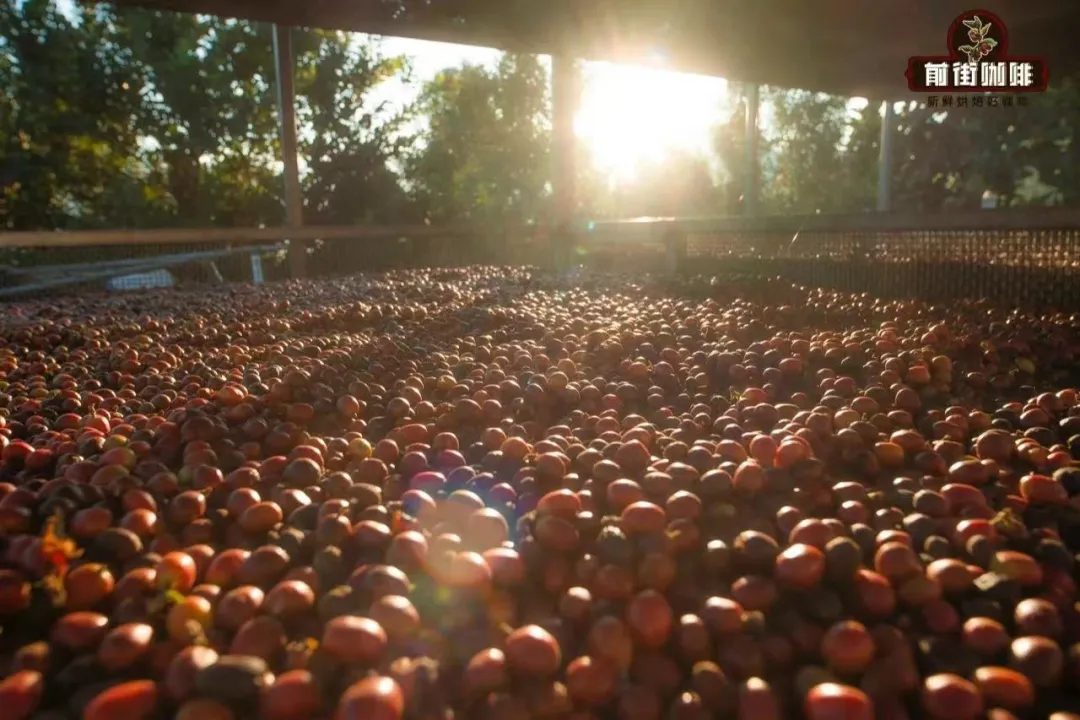
Its operation steps are indeed worthy of the name, without introducing any technological intervention. It is only necessary to spread the freshly picked coffee cherries on any flat surface, wait for the cherries to dry to a certain degree, then collect them, and remove all the skin, pulp, mucilage, parchment layer, etc. wrapping the coffee beans. The processing is then complete.
But the sun-dried method has an obvious shortcoming: it is highly dependent on weather. Because the whole cherry is dried together, the drying speed is very slow. For countries with humid climates and frequent rainfall, this is not ideal, so many regions developed other processing methods according to local conditions. For example, in the West Indies, because it is difficult to use sun-dried processing for coffee beans locally, they developed washed processing by combining their own conditions.
Washed Processing (Washed Process )
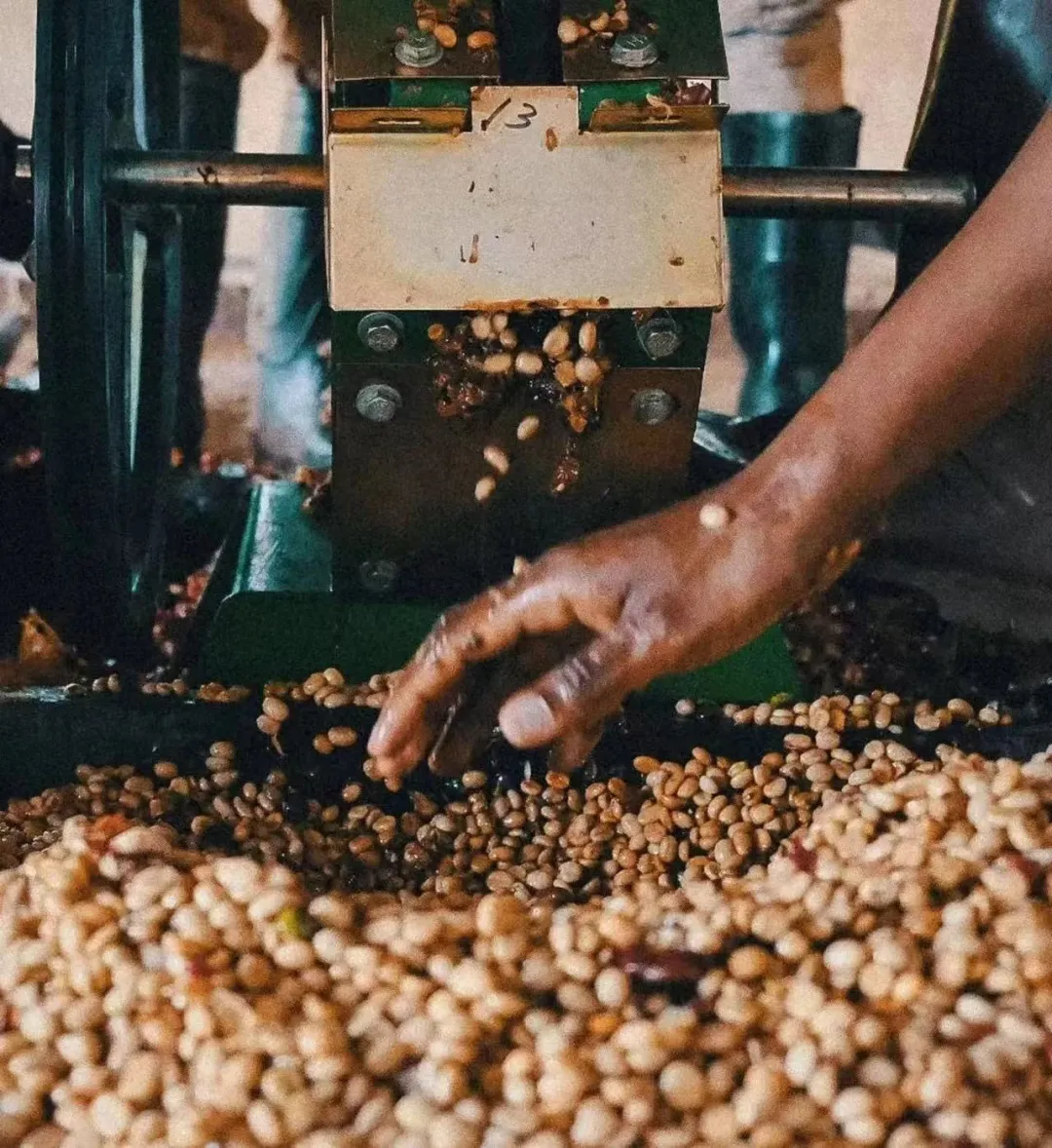
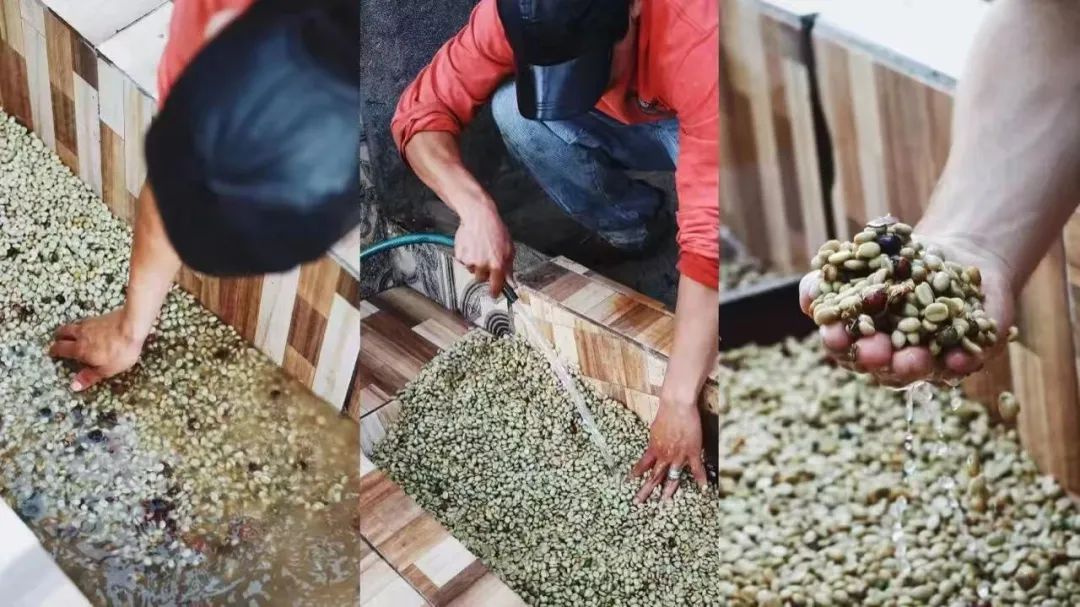
As the name suggests, it is a method of processing coffee with the help of water resources. A common washed process is: put the harvested coffee cherries into a water tank for flotation, screening out unripe cherries and rotten defective ones; then remove the skin and pulp of the good cherries, and move the coffee beans still with mucilage and parchment layer into a water tank for soaking; after a period of time, this batch of beans is transferred to another clean water tank, where a dedicated person stirs them, with the purpose of removing mucilage remaining on the surface; after the process is completed, the coffee beans with only the parchment layer and silver skin are sent for sun-drying, and after drying to a certain degree, the outer shell is removed to take out the coffee beans.
The above is the complete process of the two processing methods. After understanding these steps, you can then begin to master how to identify sun-dried and washed coffee!
Differences in green beans...
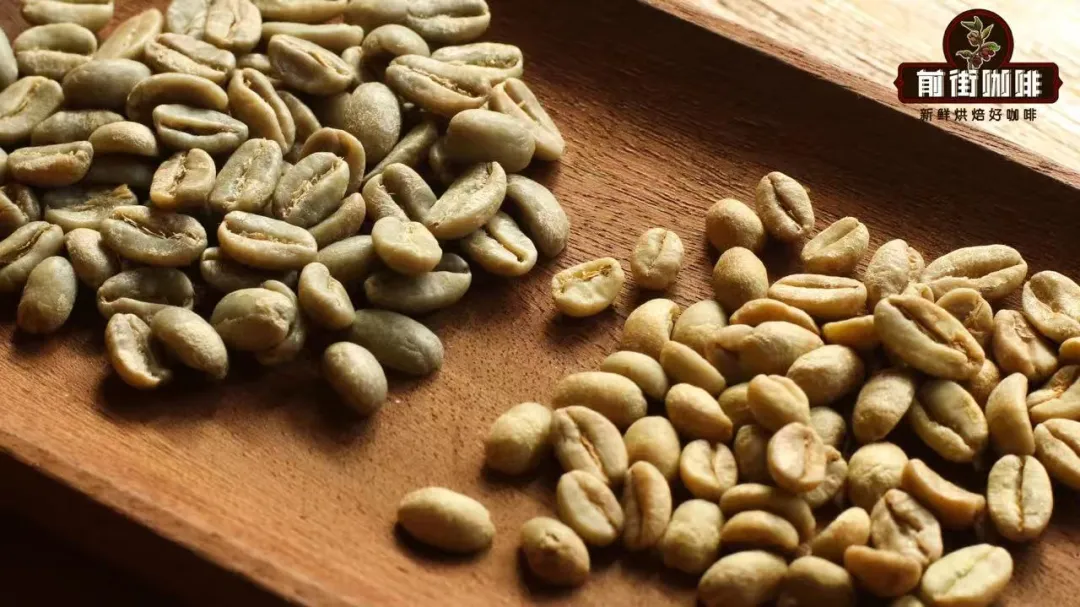
From the perspective of green beans, color can be used to distinguish sun-dried and washed coffee. As Front Street said earlier, sun-dried processing directly dries the whole coffee cherry, so the drying speed is very slow. This causes a large amount of sugar in the pulp and mucilage to penetrate into the bean surface during drying and produce Maillard reactions and caramelization reactions; in addition, because the beans are wrapped by the pulp and skin and cannot be exposed to sunlight, the final processed beans present a dazzling golden yellow (right in the picture) .
Washed processing, on the other hand, has already removed the pulp, skin, and mucilage before sun-drying, so almost no sugar penetrates to the bean surface during drying. In addition, the beans themselves can directly contact air and sunlight, and the drying speed is fast, so the original color of the beans is well preserved. Therefore, washed green beans usually present a clear emerald green (left in the picture) .
Differences in roasted beans...
The characteristics on roasted beans are more intuitive, and many coffee veterans rely on this point to quickly distinguish sun-dried beans from washed beans. The method is very simple: just observe whether the center line of a coffee bean has a large amount of , relatively white silver skin, and you can determine whether it is sun-dried or washed.
Generally speaking, the center line of washed roasted beans will have a large amount of white silver skin, while sun-dried beans have relatively little, or even none. The reason also lies in the difference in processing steps.
Sun-dried processing allows sugar to soak the coffee beans, and this sugar also soaks into the silver skin. Therefore, during roasting, the silver skin of sun-dried beans darkens in color due to sugar caramelization and is no longer so white. If roasted slightly darker, the color of the silver skin will approach that of the coffee bean itself, and from a distance it looks as if there is no silver skin (right in the picture) .
The silver skin of washed beans, because it has not been soaked by sugar, will remain relatively white unless the roast degree is darker. And because white contrasts with the dark brown of the coffee bean, the silver skin appears prominent and conspicuous. This is the best method for distinguishing sun-dried and washed beans by appearance.
Differences in taste...
Finally, there are differences in taste. In the early years, coffee processing was developed to dry coffee beans, but as the concept of specialty coffee became popular, people discovered that different processing methods bring different flavor changes to coffee, so more and more special processing methods emerged. The biggest difference between sun-dried and washed processing lies in their different degrees of fermentation.
During processing, sun-dried coffee has more substances drying and fermenting together with the coffee beans, and for a longer time, so sun-dried coffee often has very rich layers and flavor expression. At the same time, depending on the degree of fermentation, sun-dried coffee also carries different degrees of fermented feel;
By contrast, washed coffee appears very clean. Because fewer substances participate in fermentation during processing and the drying time is shorter, washed processing can preserve more of the coffee's original flavor. Although the layers are not as rich as sun-dried coffee, because the fermentation degree is not so strong, washed coffee has very high cleanliness.
On Front Street's bean list, there are two coffees from the same producing region but processed differently. They are Front Street Yirgacheffe · Sun-Dried Red Cherry and Front Street Yirgacheffe · Washed Gudingding. Although both carry the basic flavor of the Yirgacheffe producing region, because the processing methods are different, the texture of the coffee tastes very different.
The following is a comparison of the flavors Front Street brewed from the two coffees. You can refer to it. The extraction parameters are as follows: dose 15g, coffee-to-water ratio 1:15, water temperature 92°C, fine granulated sugar grind, 75% passing rate through a No. 20 sieve, time 2 minutes.
Front Street Yirgacheffe · Sun-Dried Red Cherry:
On the first sip, you can taste the fruity sweetness and acidity of citrus, berries, and yellow peach, along with a faint jasmine aroma, and the aftertaste has a bit of dried fruit and red wine aroma. The overall mouthfeel is full, with rich layers and a long finish.
Front Street Yirgacheffe · Washed Gudingding:
On the first sip, you taste a very rich jasmine aroma, followed by fresh and bright acidity such as lemon, grapefruit, and berries, as well as the clear sweetness of honey and the aftertaste of oolong tea. The overall mouthfeel is clean and clear, and the taste is soft.
In addition to the difference in texture, we also often hear sayings such as "sun-dried coffee tastes sweeter, and washed coffee tastes more sour." This characteristic is also affected by the processing method, which in turn leads to sun-dried coffee often being roasted darker, with sour substances consumed relatively more, so it tastes sweeter, while washed coffee is the opposite.
The above are several differences between washed and sun-dried coffee. In fact, as long as you understand the processing steps, and then go through one actual comparative experience, you can basically master the skill of quickly distinguishing washed and sun-dried coffee. Very simple~
The above content is compiled by CoffeeHunters, a coffee news website.


