







Why Does Mixing Ingredients into the Puck Ruin Coffee Extraction?
Adding sugar, butter, or other ingredients directly into an espresso puck is not recommended, even though it works for most other brewing methods. Espresso extraction runs at roughly 9 bar, and on a 58mm puck that equals about 240 kg of force. Anything foreign disrupts the puck structure, the water takes the path of least resistance, and channeling follows.
Channeling splits the shot: some grounds get over-extracted and bitter, others stay under-extracted and sour, so the taste lands imbalanced. Principle aside, Fick's law and grind size explain why the dense, fast flow of espresso leaves no room for extra material. Flavor is safer added after the shot, in the cup, than inside the puck.
In coffee making, some people think: since soaking and stirring are troublesome, why not add ingredients directly into the extraction process so the flavors are drawn out along with the hot water? For most brewing methods, this can indeed simplify the process and blend the flavors, but Front Street explicitly does not recommend using it for espresso. The reason is that espresso extraction relies on about 9 bar of pressure, with a 58mm puck bearing roughly 240 kg of force, making extraction extremely efficient and extremely sensitive. Once the puck structure is disrupted by foreign objects, hot water will preferentially take the path of least resistance, forming channeling, which causes some coffee grounds to be over-extracted and some under-extracted, resulting in an imbalanced taste. This article starts from the principles of pressure extraction, Fick's law and its relationship with grind size, and combines experiments and cases such as adding sugar and adding butter to explain why espresso should not be mixed with other materials, as well as safer ways to add flavor.
However, this kind of operation is often rather cumbersome and also fairly time-consuming (relatively speaking). How long to soak and how to stir all add quite a few steps to making a cup of coffee. So many clever friends think: if the ingredients are put directly into the coffee extraction stage, can the aroma and flavor of the ingredients be drawn out by the hot water together with the substances in the coffee? This way it saves effort and time, and the blending of flavors may also be more complete and natural.
For most coffee brewing methods, this practice can indeed shorten the preparation process. But what Front Street wants to say is: espresso is the one exception, and it is not recommended to do this! The reason is simple—the coffee made this way is very unlikely to taste good.
Why is it not recommended to add things into the espresso puck for extraction? In the article from the past two days, "Can You Taste the Difference in Coffee Made with 0.5 Grams More or Less Coffee?", Front Street mentioned that the pressure used by a coffee machine to extract espresso averages about 9 bar. When this 9 bar acts on a 58mm puck, it is equivalent to about 240 kg of force, roughly the body weight of three adults.
Under such high pressure, the substances in the coffee grounds are extracted in large amounts in a very short time, but at the same time this also makes extraction harder to control. If the extraction time is two seconds longer or shorter, or the dose is a little more or a little less, the final amount of extracted substances will show noticeable differences.
In addition, this highly efficient extraction also makes it easy for water to "take shortcuts," preventing the coffee from being extracted evenly. As everyone knows, water has inertia, and it will preferentially flow to places that are easier to pass through. In the extraction environment of espresso, this phenomenon is further amplified. It is precisely for this reason that we need to level and tamp the coffee grounds.
The reason espresso needs pressure assistance is to quickly extract the substances in the coffee in a short time and make a cup of coffee. According to Fick's law, the rate at which substances are released is positively correlated with the contact area. So we need to increase the contact area of the coffee by adjusting the grind finer, thereby increasing the rate of substance release.
After the grind is made finer, the gaps between particles become smaller, and after tamping they form a dense, watertight puck. That is why pressure assistance is needed, so that hot water can pass through the coffee bed and quickly bring out the coffee substances.
But if several easy-flow channels suddenly appear in an "airtight" puck, then during extraction the hot water will concentrate on flowing through these channels. The result is that the coffee grounds within the channel range are over-extracted, while the coffee grounds outside the channel range are under-extracted. This is what is called "channeling." For espresso that uses pressure-assisted extraction, this is a very common phenomenon.
So why did Front Street take such a long detour to introduce channeling? It seems to have little to do with the topic, right? (First, please rule out filler content)
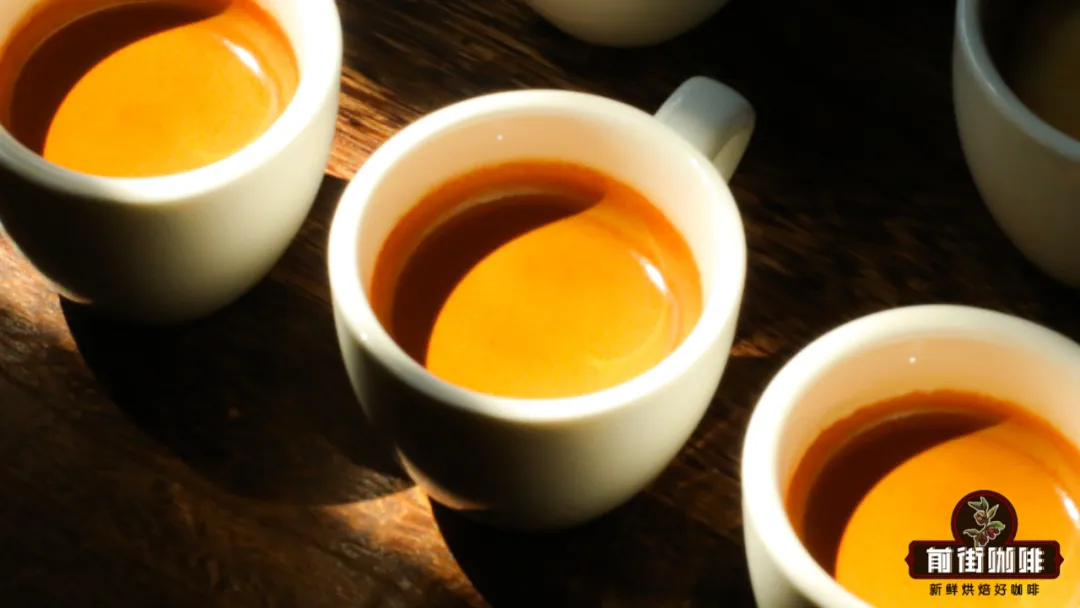
But in fact, the two are very closely related! The reasons a puck develops channels are nothing more than the coffee grounds not being distributed evenly enough, with more grounds in some places and fewer in others; or with higher density in some places and lower density in others. There are many causes for these situations, such as uneven distribution, uneven tamping, or the addition of foreign objects disrupting the puck structure. And what Front Street mentioned at the beginning belongs to the third point!
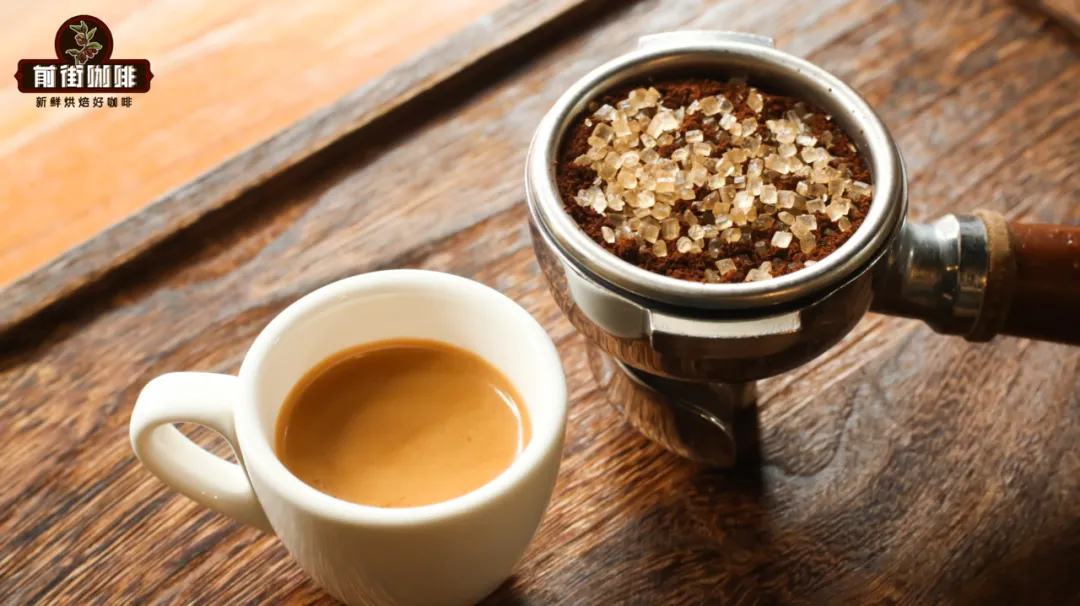
Whether you add crushed flowers, granulated sugar, salt, or other seasonings to the coffee grounds, even if the distribution is more even and the tamping is flatter, the puck structure will still be disrupted during extraction because of the presence and dissolution of these materials, thereby producing channels.
Last year, Front Street conducted a related experiment: adding 5g of granulated sugar into the puck and extracting together. As a result, the espresso not only frequently splattered during extraction, but the taste of the coffee was also hard to describe because of uneven extraction. These are all consequences brought about by the formation of channels. Most critically, the sugar and coffee ultimately failed to blend well together, and the jarring sensation when drinking it was very strong.
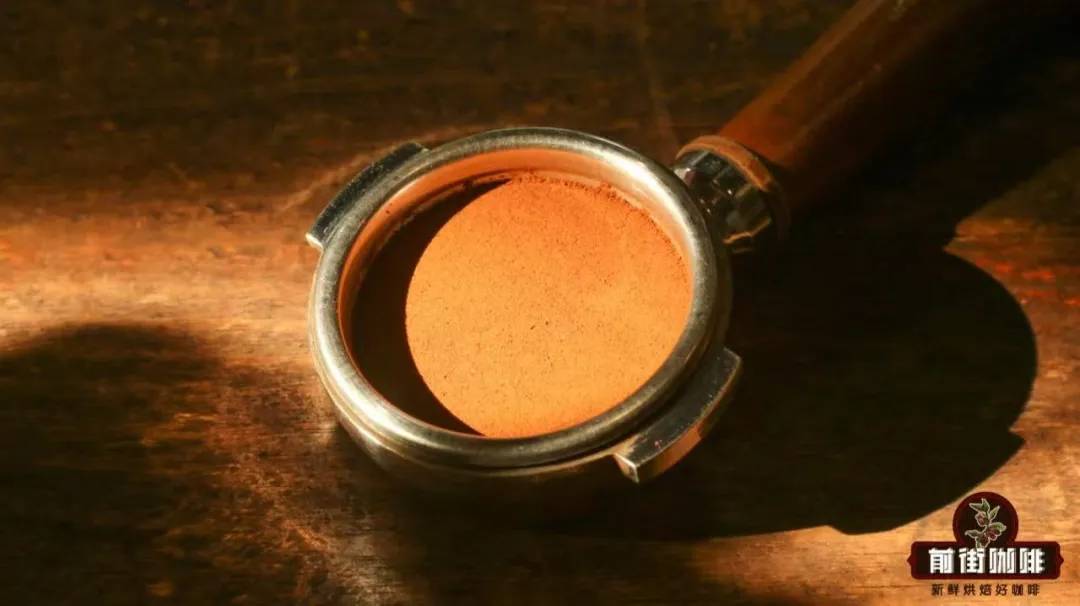
Not only that, if what you put in is an ingredient containing oil or something else that easily sticks and is hard to clean, such as butter, then congratulations, you may have quite a lot to do after making it.
Last year it was very popular to put a piece of butter at the bottom of the portafilter basket to make a "butter coffee stretching waterfall." After a friend of Front Street tried it, not only did they not get to drink delicious butter coffee, but they also spent a long time cleaning the coffee machine. It can be said to be a huge loss for no gain.
In summary, everyone can understand why it is best not to add other materials when extracting espresso. Because doing so not only fails to let the materials blend perfectly with the coffee, but also interrupts the even extraction of the coffee, making the coffee taste worse, and it also easily adds a lot of extra work.
Therefore, if you want to add other flavors to espresso, it is best to mix them in separately after the coffee extraction is complete. That way, too many unstable factors will not arise~
- END -
The above content is compiled by CoffeeHunters, a coffee news website.


