







Drip Bag Coffee vs. Bagged Coffee: A Closer Look
Drip bag coffee comes pre-ground in non-woven filter bags. You hang the bag on a cup and pour water in stages, which gives you control over extraction. Bagged coffee, on the other hand, works like a tea bag: you steep it directly in hot or cold water and then remove it. The main difference is the brewing method, which affects flavor clarity and body.
For a reliable results, start with specialty coffee that has clear flavor notes. If you enjoy floral aromas, try Panama Geisha. For a balanced cup, Brazil Pulped Natural works well. Those who prefer a full body might like Golden Mandheling. These beans are hand-sorted to reduce defects, so the sweetness and aroma come through more clearly.
In the scorching summer heat, everyone's demand for invigorating coffee only grows, and all kinds of novel ideas come along with it. Last week, a reader asked Front Street: can coffee be put into a bag and brewed directly, just like tea? After all, drip bags require pouring water in stages and controlling the amount of water, which makes the steps a bit numerous, while bagged coffee seems to save a lot of trouble. To give an objective answer, Front Street used the same beans to conduct a comparison between bagged coffee and drip bags in both hot brewing and cold brew, recording everything from grind size and coffee-to-water ratio to steeping time. If you are also curious about the real performance of bagged coffee and where exactly it differs from drip bags, why not follow along with Front Street's experiment and take a look.
With the high temperatures persisting, everyone's demand for invigorating coffee only grows, and the industry has therefore seen quite a few "new ways to play." For example, last week, a reader left a message for Front Street asking: can coffee be made into bagged form like tea? She thought drip bags require pouring water in stages and keeping an eye on the water amount, making them somewhat cumbersome to operate, while direct bagged brewing can save many steps.
The premise of a delicious cup of coffee is, of course, good beans. When beginners choose drip bag coffee, they should give priority to specialty coffee with highly recognizable flavors: those who prefer floral notes can try Front Street · Panama Geisha Drip Bag, one of the most expensive coffees in the world; those who like a fresh, slightly acidic profile are recommended Front Street · Huakui Drip Bag Coffee, which tastes of black tea and berry-like flavors;
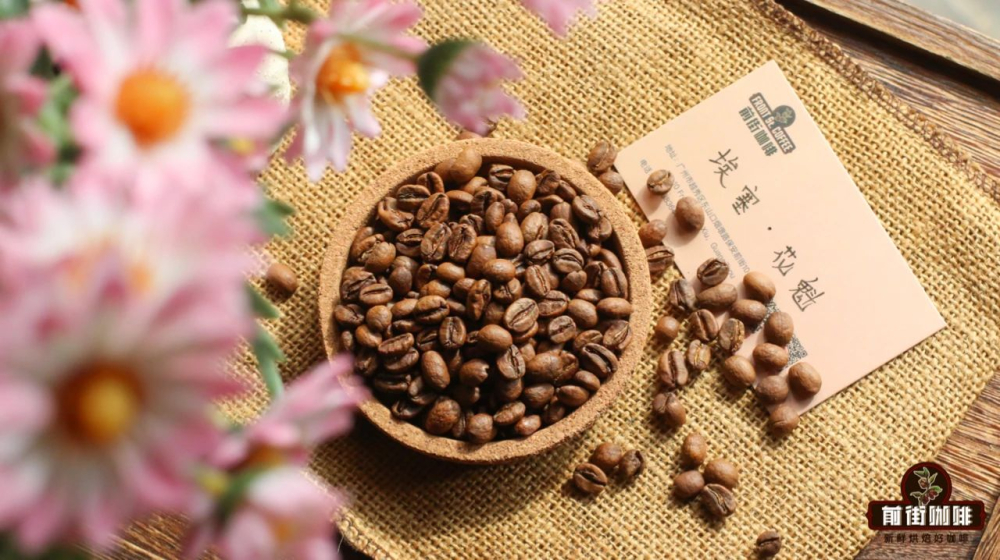
If you like a balanced mouthfeel, that is, a direction that is neither sour nor bitter, Front Street · Brazil Pulped Natural Drip Bag is a good choice; finally, for those pursuing a solid, mellow mouthfeel, it is recommended to buy the selected Front Street · Golden Mandheling Drip Bag Coffee. These beans have undergone multiple rounds of hand sorting, which can minimize the defect rate, making the aroma clearer and the sweet aftertaste more outstanding.
Main characteristics of bagged coffee and drip bag coffee
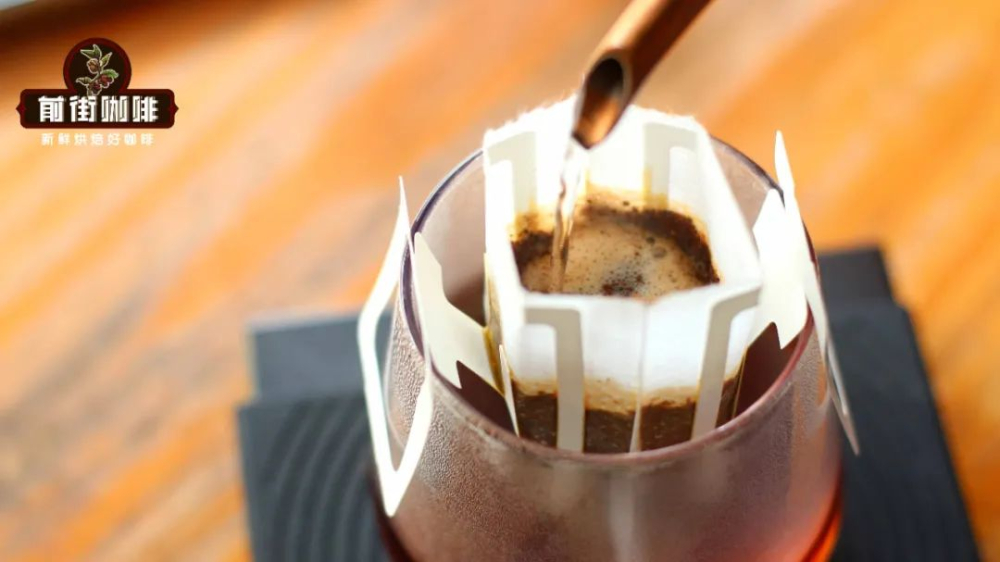
First, let's review the drip bag coffee that everyone is more familiar with. The drip bags sold on the market are made by pre-grinding coffee beans and putting them into non-woven filter bags. When brewing, the paper tabs on both sides of the filter bag are hung on the rim of the cup, and the coffee packet is suspended right in the center of the cup. It can be regarded as a convenient product that simulates pour-over. When you want to drink it, you only need to pour in an appropriate amount of hot water, and after it has fully filtered through, you get a cup of black coffee that is ready to drink immediately.
As a type of drip coffee, the flavor of drip bag coffee is affected not only by the coffee bean variety, but mainly by several factors: coffee powder coarseness, coffee-to-water ratio, water temperature, and the size of the water stream.
Although bagged coffee is also a convenient product, you can tell from the name that it belongs to a typical immersion extraction. Because it uses a "tea bag-style" sealed pouch, when brewing you have to put it directly into the water and let the soluble substances seep out through the gaps on their own.
It is said that as early as 18th-century France, people would put coffee grounds into a large cloth bag, tie it tightly, throw it into hot water to "boil," and then fish the cloth bag out once the concentration was sufficient. The bagged coffee Front Street is talking about today evolved from this.
Bagged coffee VS drip bag coffee
In order to give an objective answer to the friend who asked the question, in this comparison experiment between bagged coffee and drip bag coffee, Front Street plans to make two different coffees at once, including regular hot brewing and cold brew, and finally find out the differences between the two by tasting, to see who ultimately wins and who loses.
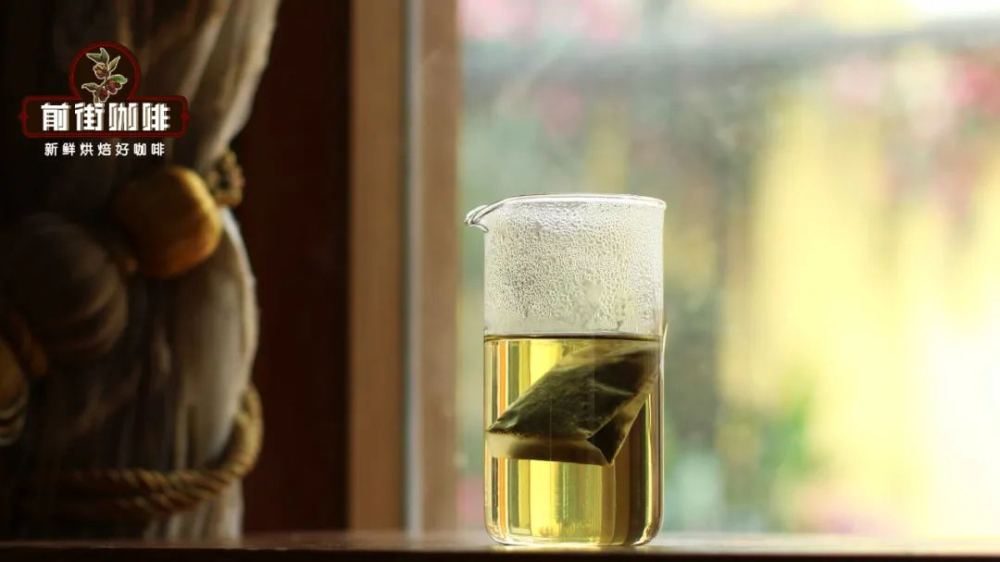
As for the size of the non-woven filter bags, the mini version Front Street bought online is 5.5*7cm, which just fits 10g of medium-light roasted coffee grounds; while the drip bags sold daily in the shop are composed of one layer of coarse mesh non-woven fabric plus one layer of fine non-woven fabric, and before unfolding they are 7.5*9cm rectangles, with each bag also holding 10g of grounds.
This round of comparison used Front Street Duncan Estate · Caturra throughout. The unique geographical conditions of the Panama production region, plus the natural processing method, allow this coffee to show diverse and delicate floral and fruity notes, with a honey-like sweetness. However, because the quantity obtained this time was not large, it is temporarily only provided and sold at Front Street stores.
The grind size was kept consistent with pour-over, both at 9.5 on the EK43s grinder (24 on the C40 hand grinder).
Making hot coffee with bagged coffee and drip bags
Hot brewing parameters for drip bag coffee: 10g coffee grounds, coffee-to-water ratio 1:15, water temperature 93℃, pour 150g hot water in three stages with a small stream. In the first stage, Front Street first used 20g of hot water to wet all the coffee grounds, waited a moment, then poured 65g in the second stage, ending exactly at eight-tenths full of the filter bag. After the coffee liquid had fully flowed through, the same method was used to pour the final 65g.
Hot brewing parameters for bagged coffee: 10g coffee grounds, coffee-to-water ratio 1:15, water temperature 93℃. Front Street first put the coffee packet into the cup and poured in 150g of hot water all at once. Because it was unclear how fine the filter bag was, the steeping time could only depend on the situation.
The result showed that, blocked by the non-woven fabric, the coffee grounds and hot water were isolated from each other, and it was difficult to release enough soluble substances in a short time, so the time had to be extended to bring concentration and extraction yield back up. After waiting bitterly for more than 20 minutes, Front Street found that the coffee temperature was already far below 50℃, yet the concentration was still far below expectations, so Front Street chose to give up.
Sure enough, through tasting, there was indeed an obvious difference between the two: the Duncan Caturra brewed with the drip bag smelled clearly of tropical fruit, and on the palate there was the sweet-and-sourness of strawberry, dried mango, and pineapple, with the preserved-fruit aroma especially full, and after swallowing there was still a clear grape note left in the mouth; while the coffee "steeped" in the bagged version tasted noticeably weak, showing slight preserved fruit and faint floral notes on the palate, with low acidity, and then there was nothing else...
Making cold brew with bagged coffee and drip bags
Considering that coffee grounds themselves absorb water, Front Street used 20g of grounds for making cold brew here. The specific parameters were: drip bag coffee/bagged coffee 20g, coffee-to-water ratio 1:11, room-temperature water 220g, steeping time 8 hours.
Method for drip bag cold brew: prepare a sealable container, tear open the drip bag and pour in all the coffee grounds, then add 220g of room-temperature water and stir evenly, seal it and put it directly into the refrigerator. During this time, you may stir the grounds layer appropriately to make the extraction more complete. After refrigerating for 8 hours, filter out the grounds with a filter bag or filter paper and it is ready to enjoy.
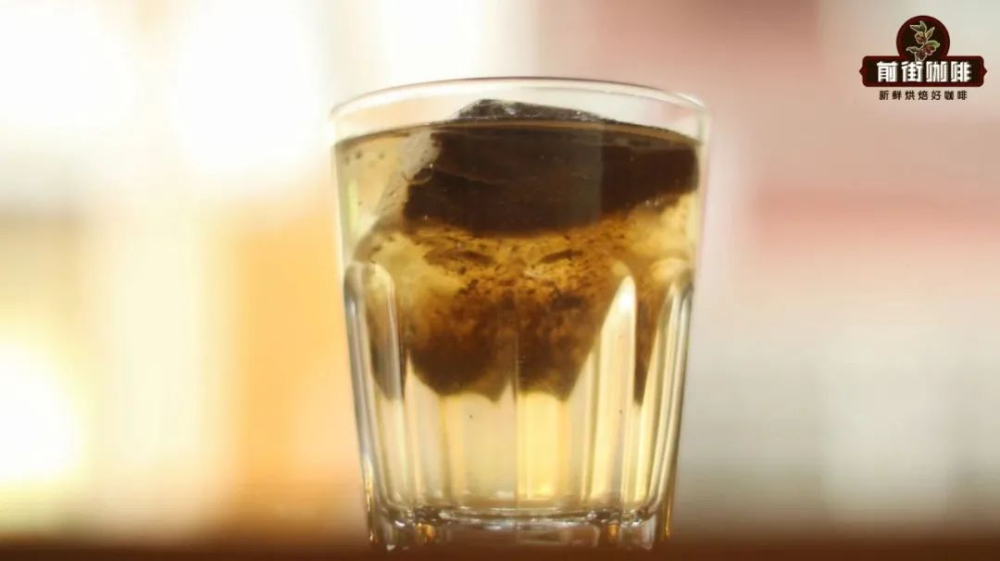
The cold brew method for bagged coffee is relatively simpler: directly throw the 2 prepared coffee packets into a clean container, pour in 220g of room-temperature water, seal it and likewise put it into the refrigerator, remembering to turn them appropriately along the way. Since the coffee grounds have already been "packed" in advance, after extraction the coffee liquid does not need to be filtered; just take out the coffee packets and discard them.
After comparison, Front Street found that the two cups of cold brew were actually very close in taste, and their aromas each had their own merits. The difference lay only in subtle nuances: the drip bag-style cold brew, which lets coffee grounds come into direct contact with water, was overall more refreshing, leaning toward raisin and citrus notes on the palate; while the bagged-style cold brew, with the coffee grounds wrapped in non-woven fabric, was more intense, with flavors mainly of blueberry and black tea, and carrying a faint orange aroma.
In summary, if you want to drink it hot, Front Street recommends choosing drip bags. Bagged coffee, due to its low extraction efficiency, easily leads to both concentration and flavor being weak; but if you are making cold brew or similar iced coffee, you might as well try the bagged form. Compared with direct contact between grounds and water, the filter bag lets the coffee grounds gather into a clump in the water, making it easier to release the internal soluble substances in a concentrated way after contact with water, while also ensuring concentration and making the coffee's mouthfeel more mellow and rounded.
The above content is compiled by CoffeeHunters, a coffee news website.


