








Caffè Marocchino: A Niche Italian Espresso Drink with a Chocolate Twist
Caffè Marocchino is a lesser-known Italian espresso drink made with a shot of espresso, a dollop of milk foam, and a dusting of cocoa powder or chocolate sauce. Despite its name, which means Moroccan, it originated in Italy, likely in the mid-20th century at a bar in Alessandria. The drink's name is said to come from the brown leather strip on Borsalino hats, as the bar was near the Borsalino factory.
To make it at home, pull a single or double shot of espresso into a small glass. Add a small amount of milk foam on top, then sprinkle with cocoa powder or drizzle with chocolate sauce. The result is a layered drink with a distinct chocolate aroma and a creamy texture, quite different from a mocha. It is typically served in a small glass and enjoyed as a quick, flavorful pick-me-up.
In the big family of fancy espresso drinks, there is a very niche yet highly storied beverage—Caffè Marocchino, often transliterated into Chinese as "玛罗奇诺咖啡," whose literal meaning is "Moroccan coffee." Its combination of ingredients is actually quite familiar: espresso, milk foam, and chocolate sauce or cocoa powder. It sounds similar to a mocha, but the flavor and mouthfeel are completely different. This coffee was born in Italy, and the origin of its name is actually related to the brown leather strip on the luxury hat brand Borsalino. This article will take you through the historical origins of Caffè Marocchino, its differences from mocha, and share Front Street's commonly used preparation method and tasting experience, so you can easily recreate this layered, niche Italian classic at home.
And what Front Street wants to share today is yet another particularly niche existence among fancy espresso drinks! Although it is niche, Front Street believes everyone is no stranger to the combination of ingredients used to make it: espresso, milk foam, chocolate sauce/cocoa powder! How about that? Pretty familiar, right?
That's right! It shares a "same result by different means" charm with the mocha coffee that Front Street often shares in its articles, but its taste and mouthfeel are completely different from mocha. And it is—as mentioned in the title—Caffè Marocchino!

In Italian, "Marocchino" means "Moroccan," so its literal translation is "Moroccan coffee." But most of the time, we are more accustomed to calling it "玛罗奇诺咖啡," its transliterated name. Because if we call it Moroccan coffee, it is very easy to confuse it with Morocco's local specialty spiced coffee, causing misunderstanding. Although Caffè Marocchino is named Moroccan, it did not originate in Morocco, but was born in the birthplace of espresso—Italy. As for why it was named Moroccan coffee, it is because the color of this cup of coffee is very similar to a specialty product of Morocco.
According to the information Front Street has reviewed, the origin of Caffè Marocchino can be traced back to the mid-20th century, developed by a barista at Bar Carpano in the province of Alessandria on the edge of Italy. Because this bar was located near a factory operated by Borsalino, most of the bar's regular customers were employees from the Borsalino factory. Here Front Street will briefly introduce Borsalino: Borsalino is a long-established Italian luxury hat brand. The hats designed by this brand are world-famous for their exquisite craftsmanship and iconic designs, especially its custom-made fedoras, which became one of the most popular hats in the world after being worn by many Hollywood stars.
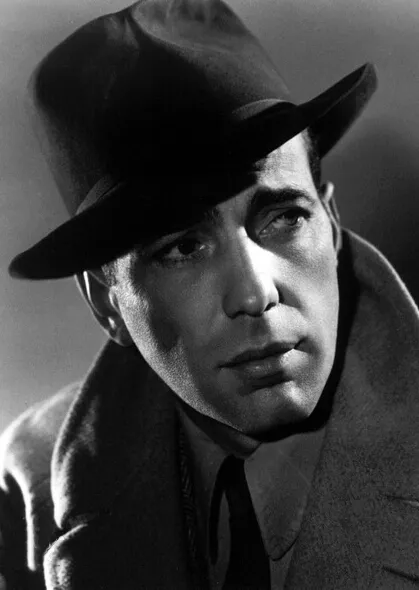
Humphrey Bogart wore a fedora in the 1942 film Casablanca, which he starred in, and this is one of the reasons the fedora became famous. So why does Front Street mention this? Because some Borsalino hats are sewn with a brown leather strip called Moroccan. As Front Street explained at the beginning, not everyone can accept the strong bitterness of espresso, so in order to accommodate those who cannot drink bitter espresso, the barista at Bar Carpano used chocolate as a flavoring and incorporated it into the coffee, then added milk foam, creating an espresso drink with a rich taste but not so bitter. Then, because this coffee is finished with a layer of cocoa powder sprinkled on the surface, and the color of the cocoa powder is very similar to the color of the Moroccan leather strip on Borsalino hats, the barista at Carpano named it Caffè Marocchino. (There is also a saying that the barista at Carpano specially developed it using the Moroccan leather strip on Borsalino hats as inspiration.)
Although Caffè Marocchino and mocha have similar ingredients, they are completely different drinks. Mocha coffee is made with espresso as the base, then a large amount of milk and chocolate sauce are added. The cup size is relatively large, and there is almost no bitterness.
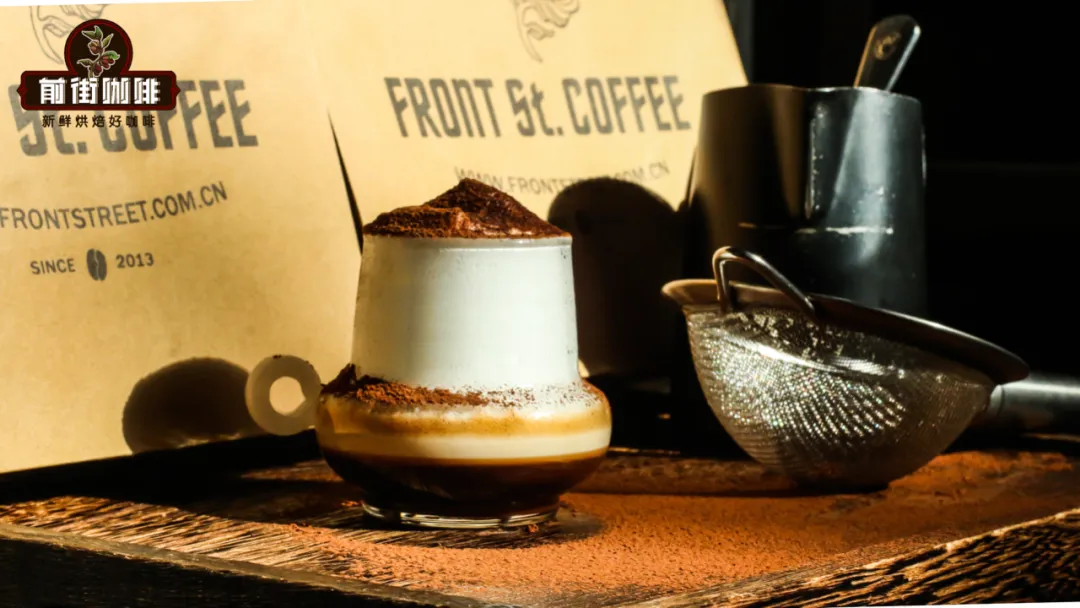
The cup size of Caffè Marocchino, on the other hand, is not that large—rather, it is very small, because the cup used to make Caffè Marocchino usually has a capacity of around 60 ml. Its main components are espresso, milk foam, and cocoa powder. It can be said to be a macchiato with more milk foam and cocoa powder added, and the coffee flavor will be very rich. You can find it on the menus of almost most Italian coffee shops, and it can be said to be very popular locally. But it is worth mentioning that in different regions, the name Caffè Marocchino may differ, and the preparation method may also vary.
Next, Front Street will share with you a relatively common way of making this Caffè Marocchino~ Preparation sharing: Moroccan coffee The materials you need to prepare are very simple: a double espresso, milk foam, cocoa powder (if the cocoa powder is unsweetened, then you need to add a little extra sugar), and then prepare an additional small cup of about 60 ml. First, sprinkle an appropriate amount of cocoa powder into the cup. If the cocoa powder is unsweetened, then it is best to add a little extra sugar here, using just a tiny bit to dilute the bitterness.)
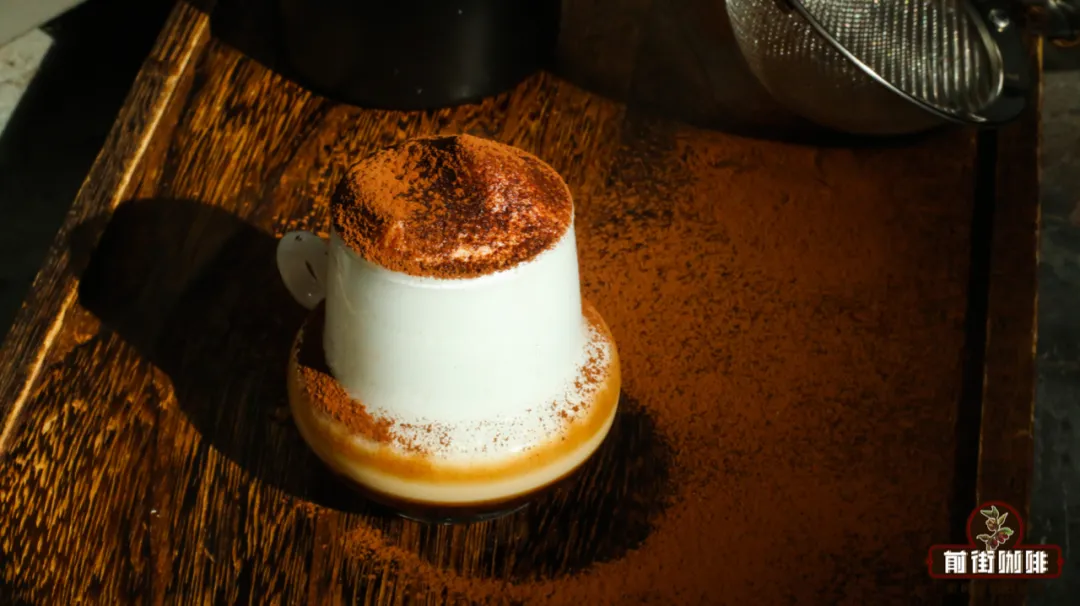
Then we extract the espresso! The coffee beans used here at Front Street are still the store's regular choice, Warm Sun Blend, with extraction parameters of 20 g of grounds, extracting 40 ml of coffee liquid in 30 seconds! While extracting the espresso, we can conveniently whip up the milk foam; the thicker the milk foam, the better. And once the espresso extraction is complete, we directly pour the espresso into the cup.
Next, we take out the milk foam we just whipped, use a small spoon to scoop out the milk foam, and cover it over the espresso until the cup is full. (Do not use too large a cup, otherwise by the next sip you won't be able to taste the coffee.)
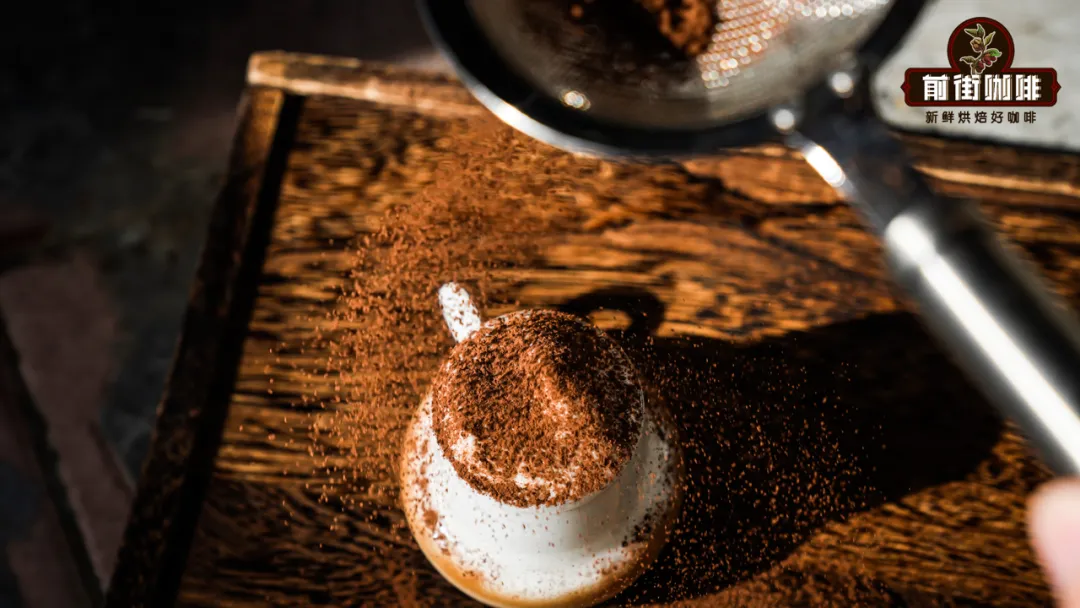
Finally, we just need to sprinkle another layer of cocoa powder on the surface of the milk foam, and a cup of Caffè Marocchino is complete!
With one big sip, Front Street first felt the aroma of the cocoa powder on the surface, then the dense, velvety texture of the milk foam, and then it immediately switched to the rich-tasting, full-bodied espresso—the layers were very distinct and rich! Because the flavor of the cocoa powder pairs very well with Front Street's Warm Sun Blend, the coffee flavor is further highlighted. You can clearly perceive whiskey, chocolate, butter cookies, and a hint of berries. Overall, it is still quite good, but if friends cannot drink bitter coffee, Front Street suggests adding more sugar when making it, or replacing the cocoa powder with chocolate sauce or replacing the milk foam with cream, which would be more suitable. Because the milk foam itself does not have much flavor, and together with a little sugar, it can only appropriately dilute the bitterness without changing the overall taste. For friends who do not like bitterness, this is still a very stimulating cup of coffee. Finally: Not offered in stores~
- END -
The above content is compiled by CoffeeHunters, a coffee news website.


