







What Water Temperature Should Drip Bag Coffee Be Brewed At?
Drip bag coffee brews at its reliable with water just off the boil, roughly 195 to 205 degrees Fahrenheit. Water that is too cool under-extracts the grounds, leaving a flat, sour cup, while boiling water can scorch the roast and add harsh bitterness. Because a drip bag cannot be steeped like a tea bag, the temperature has to do the extraction work the short contact time cannot.
Two other details matter alongside heat. A thin stream poured in several small stages keeps water moving through the grounds instead of channeling through one spot, and a steady coffee-to-water ratio near 1:15 keeps the cup balanced. Flavor also follows the bean: a Yirgacheffe drip bag shows floral, bright fruit notes, while Brazil and Mandheling bags lean nutty and mellow.
Drip bag coffee has become a daily pick-me-up for many thanks to its portability, but to brew a good cup, a packet of grounds and hot water alone are not enough. Water temperature, the amount poured, cup shape, pouring technique, and even the habit of shaking the filter bag all directly affect the final flavor. This article covers five practical details: what range the water temperature should be kept in, how to estimate the coffee-to-water ratio, what requirements the cup rim and body have, why a thin stream should be poured in stages, and how to avoid fine grounds sinking to the bottom when opening the package. It also combines the flavor characteristics of three seasonal drip bags from Front Street — Yirgacheffe, Brazil, and Mandheling — to offer targeted brewing suggestions.
Although drip bag coffee cannot compare with freshly ground pour-over, it wins on convenience and speed, and many people still rely on it for their morning boost.
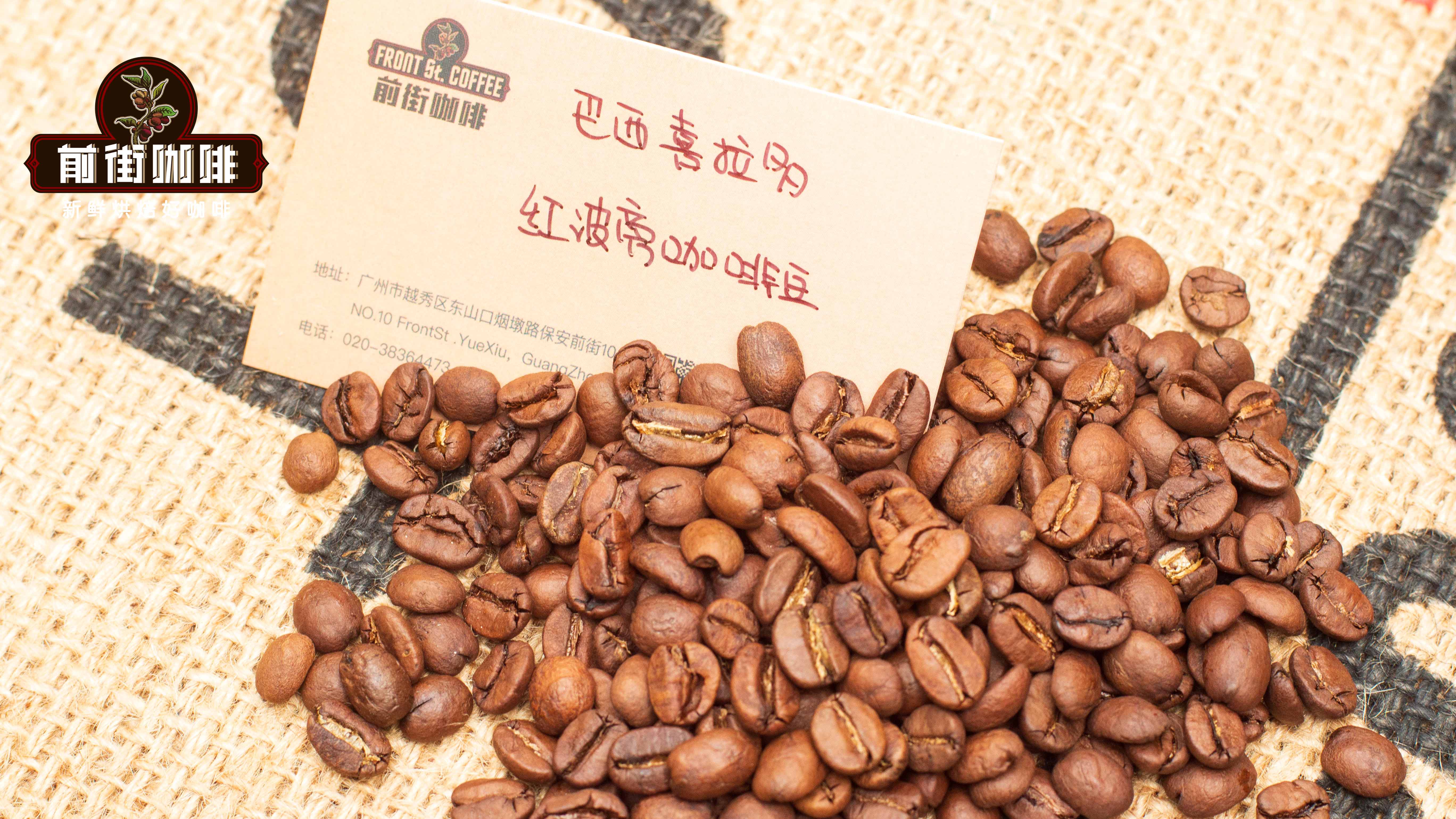
The flavor direction of drip bag coffee is mainly determined by the coffee beans used. If you prefer acidity, choose the Front Street. Yirgacheffe seasonal drip bag, where a medium-light roast brings fresh floral notes and bright fruit acidity; if you don't like it too sour or too bitter, the Front Street. Brazil seasonal drip bag is more suitable, with a medium roast presenting mixed nuts and creamy tones; if you want a rich, mellow bitterness, then the Front Street. Indonesia Mandheling seasonal drip bag is recommended, where a medium-dark roast highlights spice, dark chocolate, and caramel flavors.
Drip bag coffee is often called the "instant noodles" of the coffee world — the beans are pre-ground to a fixed weight, packed into a filter bag with two "ears," and hot water is poured in to get black coffee after the grounds are filtered out. Whether you're in the office, a park, or on a train or plane, as long as you have a cup and hot water, you can drink a cup anytime. It is undoubtedly the least troublesome drip coffee.
However, the pre-made process also brings two limitations: the aroma inevitably suffers; and the filter bag's portable structure makes extraction less easy to control than pour-over — if you pour hot water in one strong gush, it can easily go wrong. So to make it taste good, you still need to master some techniques. Based on daily feedback from friends around him, Front Street has compiled five easily overlooked details to help everyone find the key to brewing a delicious drip bag.
1. The water temperature must be high enough
Many office workers, for convenience, directly use water heated by a water dispenser to brew drip bag coffee. But on the market, water dispensers after "boiling" often only reach around eighty degrees, and the coffee brewed tends to be weak and sour.
In pour-over, water temperature directly determines extraction efficiency: the higher the temperature, the faster flavor compounds are released and the richer the taste. According to Front Street's brewing experience, light to medium roasts that express floral and fruity acidity are suitable for 90–93°C, while medium-dark roasted beans featuring caramel, nuts, dark chocolate, cream, and spice are better extracted at 86–89°C.
Drip bag coffee does not require overly precise water temperature. It's fine if you don't have a thermometer or temperature-controlled kettle nearby; by relying on everyday experience to keep the water temperature within a rough range, you can still get a good extraction. Front Street's tests found: boil a large kettle of water, turn off the heat and leave the lid open, and at a room temperature of 25–30°C let it sit for 2–3 minutes, and the water temperature will drop to 92–95°C (suitable for floral-fruity acidic coffee); let it sit for 5–6 minutes, and the water temperature falls to 87–90°C (suitable for nutty, bitter coffee).
2. Control the amount of water poured
Brewing drip bag coffee is not like pour-over, where you must use an electronic scale; it emphasizes convenience, so many people casually find a cup that looks right, hang the drip bag on it, and just fill it up. As a result, the coffee is sometimes bland and sometimes bitter. In most such cases, the coffee-to-water ratio was not right.
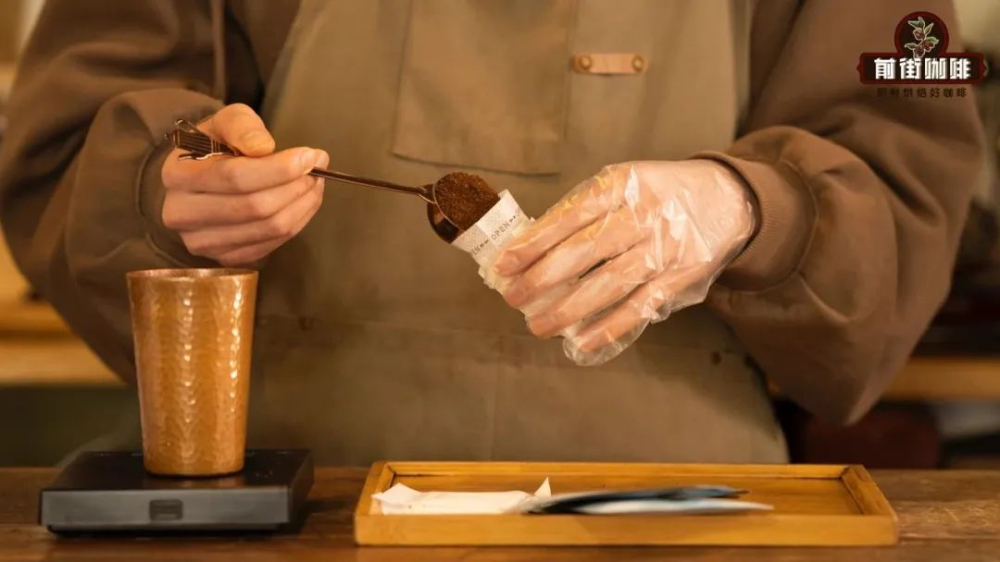
A packet of drip bag coffee usually contains about 10g of coffee grounds. After many measurements, pouring hot water to half of the drip bag is about 30–40g, and filling it to nine-tenths full in one go is 60–80g. This way, combined with the number of stages, you can roughly estimate the total water amount.
If following the pour-over ratio of 1:15–1:18, you need to pour 150–180ml of hot water. If you usually like a rich taste, you can pour in three stages: first pour half to wet the coffee bed, wait 20 seconds, then pour twice in succession to nine-tenths full, taking about 1.5 minutes in total, with the total water amount basically 140–160g. If you pursue a lighter taste, you can add one more stage, for four stages in total, likewise waiting for the water to drain before pouring to nine-tenths full, with a total water amount of about 200g.
3. The cup must be deep enough, and the rim must not be too wide
Brewing drip bag coffee has certain requirements for the cup. It is generally recommended to use a tall glass or a slightly deep mug, so that the coffee liquid falls directly through the coffee bed to the bottom of the cup. If the cup is too shallow, the brewed coffee liquid may flow back and re-soak the coffee bed, making the whole cup taste heavier and more bitter, and the flavor naturally poor.
The ears on both sides of the drip bag need to bear force against the rim of the cup; if the cup rim is too wide, the filter bag is likely to sag under gravity when pouring water. Therefore, Front Street recommends choosing a container with a rim smaller than 9cm and a body taller than 12cm for brewing drip bag coffee.
4. Use a thin stream and pour in multiple stages
Because there is no need to pour in circles, there is almost no restriction on the equipment for brewing drip bag coffee — any clean container that can pour water will do — an ordinary kettle, a dusty thermos at home, an inherited hot water bottle, or even the hot water dispenser on a high-speed train.
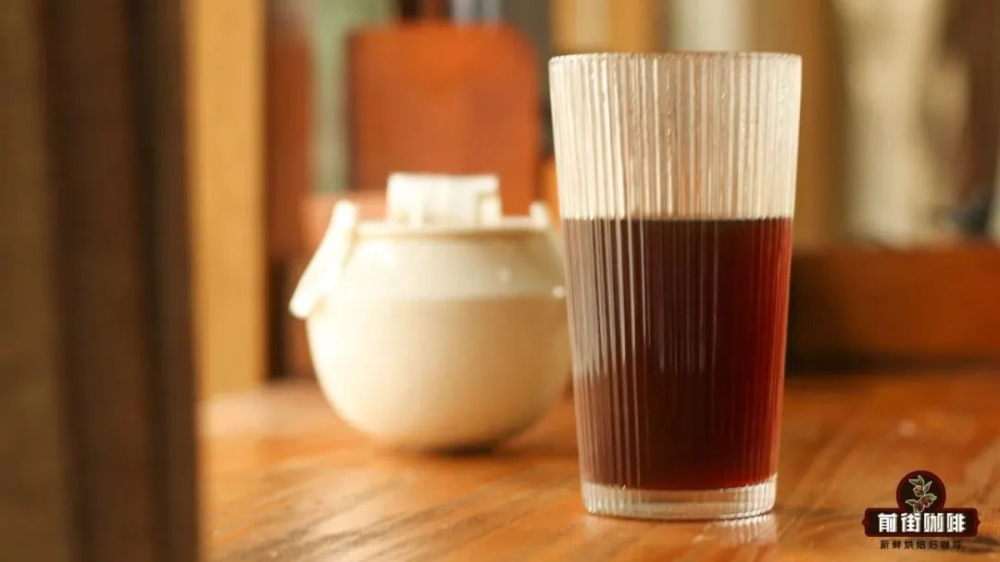
But precisely because the water flow of such utensils is hard to control, water tends to gush out when pouring, greatly shortening the contact time between hot water and coffee grounds, leading to insufficient extraction and a thin, tasteless drink. When there is no gooseneck pour-over kettle, to improve extraction efficiency, you can control the hot water flow and increase the number of stages to extend the extraction time, allowing more flavor compounds to be released.
Combined with the water amounts mentioned above by Front Street, you can divide it into 5 pours, each time pouring only half of the drip bag's hot water, and the pouring point can be slightly raised. In this way, it takes about 1 minute 50 seconds to 2 minutes for all the coffee liquid to drip through, and the overall taste is much richer than filling it up with a large flow.
5. Avoid frequently shaking the drip bag
When discussing pour-over details, Front Street analyzed: the greater the force or the more times you tap the dripper, the easier fine grounds fall through the gaps to the bottom, causing clogging. The same applies to drip bag coffee. Some friends are used to shaking it hard before opening the package; the more frequently you shake, the greater the chance fine grounds sink to the bottom, and the more likely water accumulates in the final stage, making the coffee bitter and astringent.
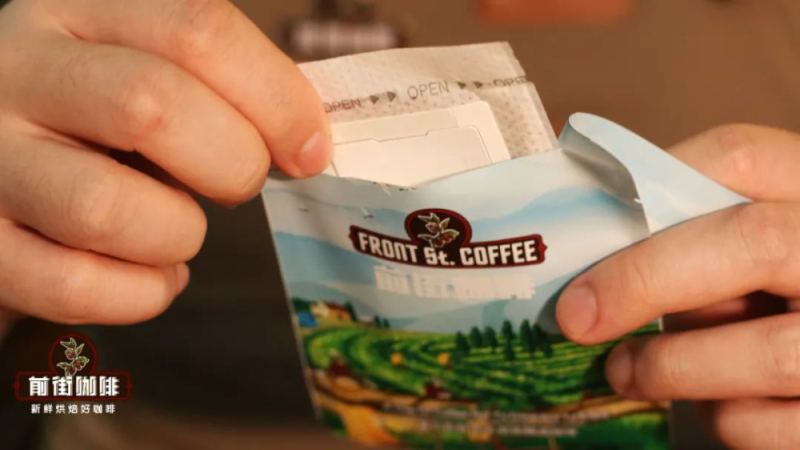
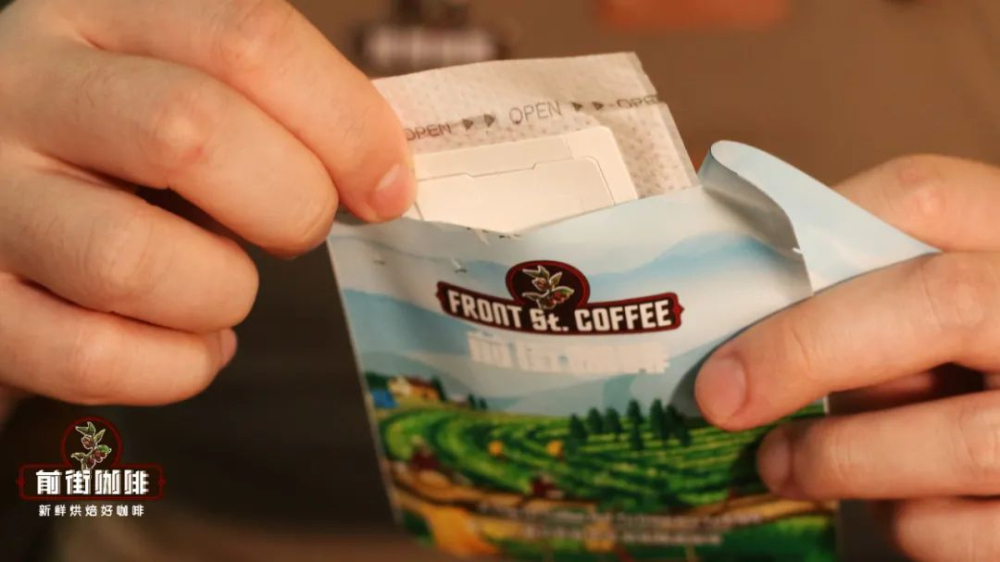
After opening the outer package, just gently flick the dotted line of the drip bag, tear open the seal, pull the two ears apart and hang them on the cup, and the coffee grounds will fall evenly to the bottom.
The above content is compiled by CoffeeHunters, a coffee news website.


