







Can Coffee Brewing With an Egg-Whisking Stir Boost Sweetness?
The egg-whisking pour-over is a stirring variant: two chopsticks quickly stir the coffee bed during extraction, disrupting the rhythm and speeding up flavor release. Fans say it raises sweetness noticeably. Three comparative rounds tested it, moving from a light-medium roasted natural bean without blooming to swapped beans, an adjusted coffee-to-water ratio, and finally a reintroduced blooming step.
Each round recorded the parameters, technique, and flavor performance, and examined how grind size, water temperature, coffee-to-water ratio, and blooming shape the final cup. The sweet and sour compounds in coffee are mainly released early to mid-extraction, which is why many brewers skip blooming to capture them, then add a hot-water segment to adjust concentration and balance.
Pour-over coffee brewing methods are endlessly inventive, and recently a stirring extraction technique dubbed the "egg-beating brewing method" has made a comeback, said to significantly boost coffee's sweetness. Front Street, out of curiosity, ran three rounds of comparative experiments: from a light-medium roasted natural bean without blooming, to swapping beans and adjusting the coffee-to-water ratio, to reintroducing the blooming step, verifying one by one the actual effects and problems of this technique. The article documents in detail the parameters, technique, and flavor performance of each round, and analyzes how grind size, water temperature, coffee-to-water ratio, and blooming affect the final cup. If you also want to try this novel stirring extraction, or are looking for brewing ideas to enhance sweetness, this hands-on record will offer concrete reference.
In the circles of pour-over enthusiasts, there is never a shortage of schools with their own systems and unconventional methods. Last weekend a regular customer came to the shop for coffee and said he had recently learned a very novel extraction technique called the "egg-beating brewing method," and stressed that coffee made this way had a fuller flavor than usual, suggesting Front Street give it a try too.
Front Street searched several platforms with this keyword and found that the so-called "egg-beating brewing method" actually appeared last year, only it has gone viral again recently as more people joined in. Interestingly, almost everyone who tried it gave positive reviews, saying coffee brewed this way has particularly high sweetness.
Just from the name, many people might think, like Front Street did, that it means cracking an egg into the coffee—that kind of bizarre dish. In fact, it mimics the motion of beating eggs while cooking: during brewing, two chopsticks are used to quickly stir the coffee bed, disrupting the extraction rhythm and accelerating the release of flavor compounds. So in principle, the "egg-beating brewing method" is a variant of the stirring method.
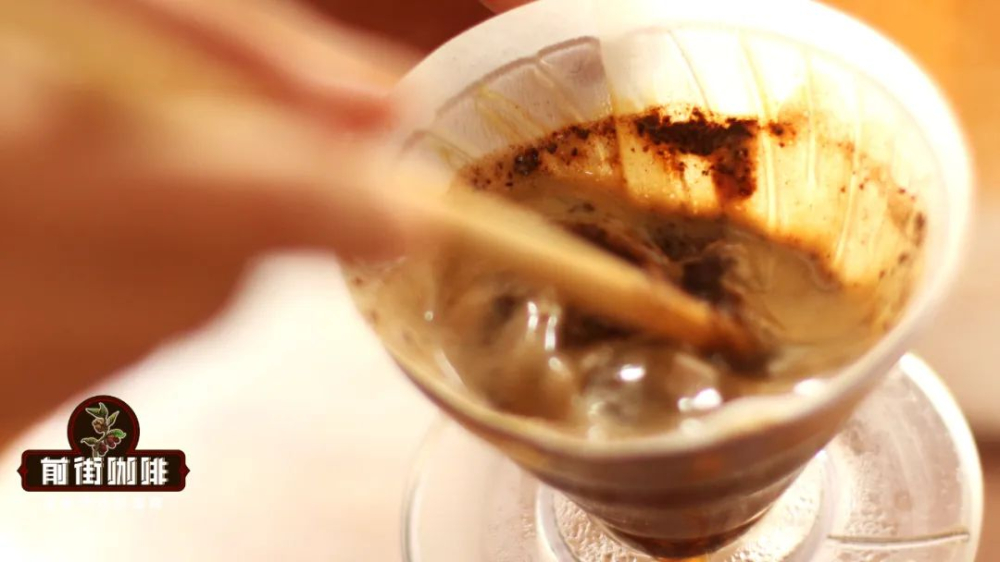
Experienced enthusiasts share that the sweet and sour substances in coffee are mainly released in the early-to-mid stages. To capture as much of these flavors as possible, they skip the blooming step, add the "egg-beating" motion during the main extraction, and finally add a segment of hot water to adjust concentration. According to them, this distribution allows sweet and sour substances to dissolve faster, naturally making the coffee sweeter. Is that really true? Today Front Street will test the effect for everyone.
Considering that the "egg-beating" technique is rather "violent," to prevent over-extraction, Front Street adjusted the parameters in advance: coarser grind, water temperature lowered by 2°C, and a larger coffee-to-water ratio, making it easier to catch sweetness on the palate.
As for the coffee beans, people generally favor floral and fruity types, so Front Street chose a light-medium roasted natural bean—Ethiopia Sidamo ALo.
Coffee bean: ALo Hatessa
Dose: 15g
Coffee-to-water ratio: 1:16
Water temperature: 90°C
Grind size: EK43s grinder, 10.5 setting
Dripper: Hario V60
Tool: a pair of chopsticks
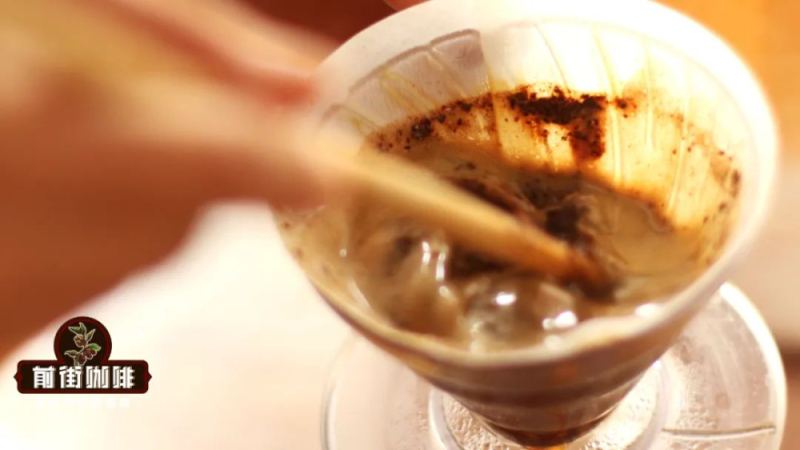
Pour the coffee grounds into the dripper and gently tap level. For the first pour, skip blooming and directly pour 150g of hot water in a circular motion with a strong stream, bringing the water level to about 80% of the dripper, timing roughly 20 to 25 seconds;
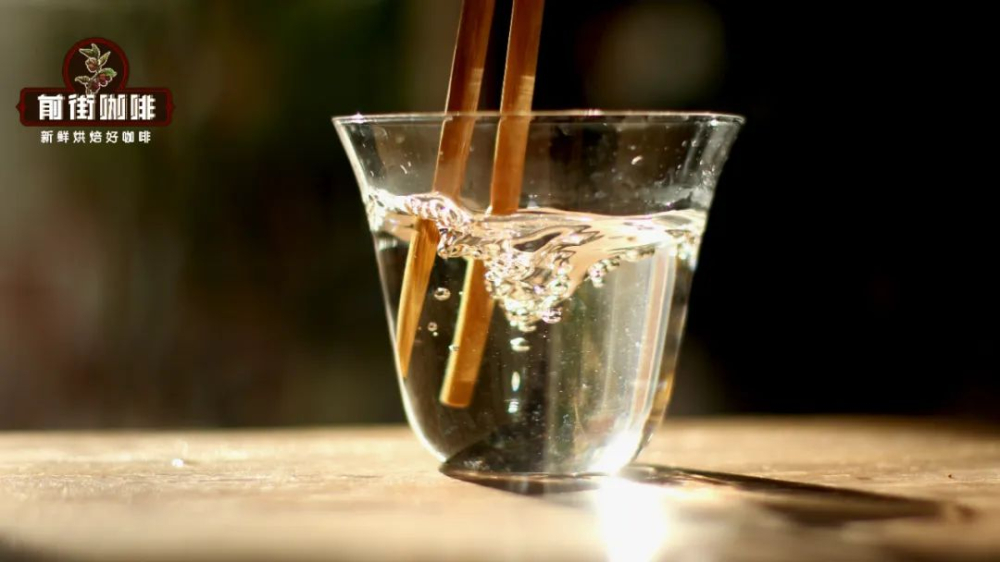
Then take out the pre-prepared chopsticks and, like beating eggs, plunge them into the coffee bed and stir in one direction for 10 seconds, then wait for the coffee to drain through;
When the time reaches 1 minute 10 to 15 seconds, as the coffee is nearly drained and the bed is about to be exposed, begin pouring the final 90g of hot water. Since the final pour is mainly to adjust concentration, Front Street did not use a circular motion but poured in the center, then waited for all the coffee to drop into the server.
To make the results more intuitive, Front Street brewed another pot with the same bean following the shop's standard recipe as a control, with parameters: 15g dose, coffee-to-water ratio 1:15, water temperature 92°C, grind size EK43s grinder setting 10, paired with a Hario V60 dripper, using a three-pour method (30g+95g+100g).
Comparison showed that the regular three-pour brew took 2 minutes 02 seconds, while the coffee bed after egg-beating stirring became clogged, with the final drawdown noticeably slower, finishing extraction at about 2 minutes 30 seconds. The taste difference was also obvious. The three-pour ALo entered with citrus and passion fruit acidity, aromas mainly mango, pineapple, and lemon, with a toffee-like sweetness, overall balanced and full;
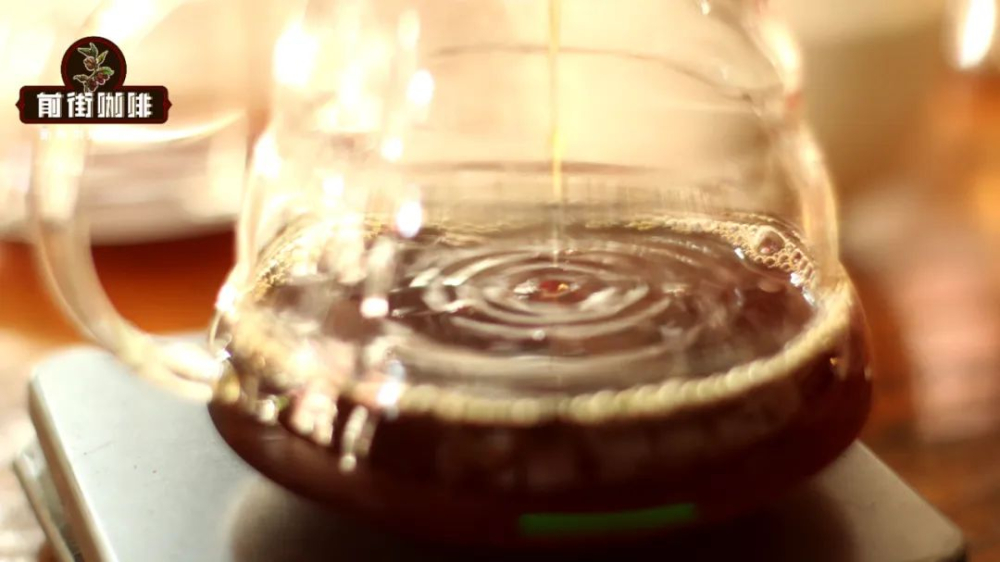
while the ALo extracted by the egg-beating brewing method showed noticeably more clean, moist fruit character, with notes of orange, blueberry, melon, black tea, and creamy strawberry. In terms of sweetness, it was indeed higher than the regular group, but the downside was that these aromas were mostly weak, resulting in a short aftertaste and slightly lower complexity, and because the acidity was not pronounced, it tasted a bit watery.
To solve the clogging and watery issue, Front Street's second round switched to a raisin honey-processed Milasu Strawberry Candy, changed the coffee-to-water ratio to 1:15, kept other parameters the same, and observed any differences.
Coffee bean: Milasu Strawberry Candy
Dose: 15g
Coffee-to-water ratio: 1:15
Water temperature: 90°C
Grind size: EK43s grinder, setting 10
Dripper: Hario V60
Pouring technique: egg-beating brewing method
The Strawberry Candy stirred with the egg-beating technique indeed did not clog, and the entire extraction finished in about 1 minute 51 seconds. The coffee entered with very high sweetness and almost no acidity, like eating strawberry fruit candy. But because it lacked the support of late-stage substances—the tail end mainly provides caramel and lingering sweetness—compared to the regular group, the overall mouthfeel was still thin.
We all know extraction is a dynamic process, and parameters influence each other. Coarse grinding hides more flavor compounds inside the particles, and the two rounds above both removed blooming, meaning the coffee grounds lacked a degassing phase. So when extraction ends, the large molecules in the innermost layer may not have had time to release. Therefore, to "recover" this part of the finish, Front Street believes the blooming step should be added, letting gases in the coffee bed escape first and helping more large molecules dissolve out.
So in the third round, Front Street added the regular blooming step, choosing Panama washed Butterfly Flower, a bean with both bright fruit acidity and moderate caramel notes, easily presenting a balanced coffee profile.
Coffee bean: Panama washed Butterfly Flower
Dose: 15g
Coffee-to-water ratio: 1:15
Water temperature: 90°C
Grind size: EK43s grinder, 10.5 setting
Dripper: Hario V60
Pouring technique: First pour 30g of hot water in a circular motion over the coffee bed, bloom for 30 seconds, then pour 120g of hot water in one go with a strong circular stream, and begin "beating eggs," stirring for 10 seconds; when the bed is nearly dry, pour the remaining 75g of hot water, and finally wait for all the coffee to drain into the server, taking 2 minutes 23 seconds.
After adding blooming, the Butterfly Flower brewed with the egg-beating method was superior to the previous two groups in both flavor intensity and finish. It entered with aromas of citrus, grapefruit, melon, and melon seeds, with a clean sweet and slightly sour taste, a clear green-tea-like finish, moderate body, and richer complexity.
- END -
The above content is compiled by CoffeeHunters, a coffee news website.


