








Why Is High-Density Coffee Hard to Brew in a Pour-Over?
High-density coffee beans drain slowly in a pour-over because their compact structure makes them sink and pack at the bottom of the dripper. That leaves fewer channels for water to pass through, so the pour rate outpaces the drainage rate and water level keeps rising. The result is over-extraction or uneven extraction, showing up as bitterness, a thin body, or a weak cup.
Density coffee usually comes from higher growing altitudes or lighter roast profiles, both of which leave the bean harder and more tightly structured than lower-density lots. Two practical fixes exist: a multi-pour routine for anyone still building water-control skill, and a three-pour method using a slow, small stream throughout. The Geisha Village Red Label example sets dose, grind, temperature, and pouring rhythm for citrus, berry, and rose notes.
Many coffee enthusiasts often encounter problems such as slow drainage, weak flavor, or bitterness when brewing high-density light-roast beans. These beans, due to their tight structure, high altitude, or light roast, tend to settle and clog in the dripper, leading to over-extraction or uneven extraction. Based on Front Street's practical experience, this article analyzes the underlying reasons why high-density beans are difficult to brew and offers two approaches: one is multi-pour brewing, suitable for those who are not yet skilled at water control; the other is a three-pour method with a slow, small stream throughout, better suited for players with some water-control foundation. Using the Ethiopian Geisha Village Red Label as an example, the article details the dose, grind, water temperature, and pouring rhythm to help you brew a great coffee with citrus and berry acidity, rose floral aroma, and an oolong finish.

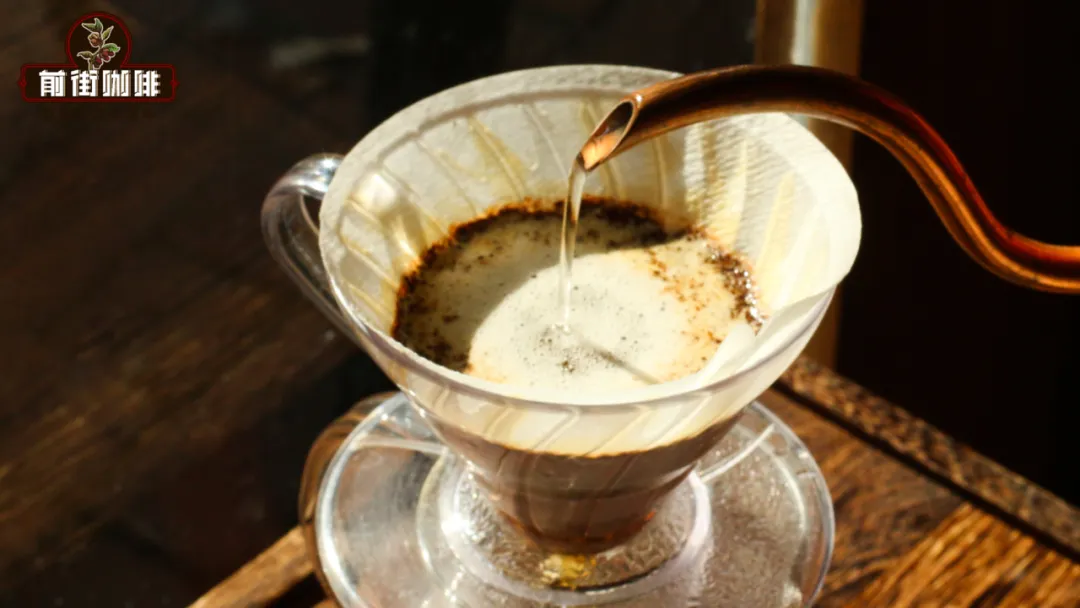
When brewing high-density coffee beans, people often run into situations like "clogging," "thin taste," "bitterness," or "weak mouthfeel." Many beginners in pour-over are troubled by this, because no matter how they adjust, it seems difficult to make a satisfying cup with these beans. Either the extraction time drags on too long and causes over-extraction, or there is too much bypass water, resulting in uneven and incomplete extraction.
Although Front Street has written quite a few related articles before, some friends still don't know how to deal with these beans that easily clog and easily fail. No worries—today Front Street will talk about it again: how exactly should high-density coffee beans be brewed? But before formally sharing the brewing method, we first need to understand why high-density beans are so difficult to brew.
Why are high-density beans difficult to brew?
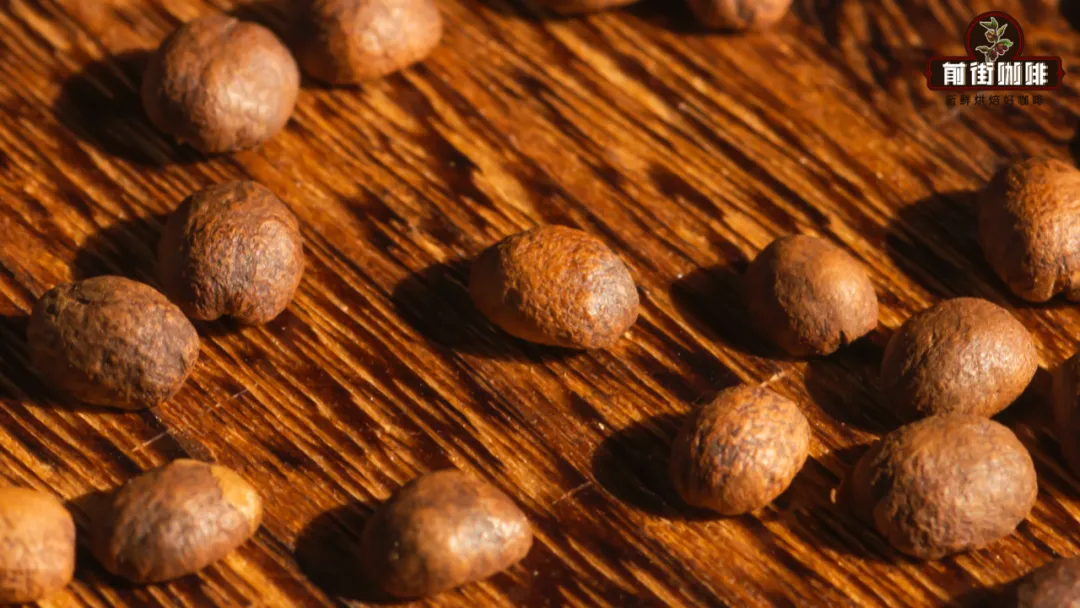
So-called high density means the coffee beans are harder and have a compact internal structure. Generally speaking, these beans are grown at higher altitudes or roasted lighter. Compared with lower-density beans, high-density coffee is more likely to sink to the bottom of the dripper during brewing. As a result, there are fewer paths for hot water to flow through, and the pouring speed is often much faster than the drainage speed, so hot water easily keeps accumulating in the dripper.
Simply put, the amount of water poured in exceeds the amount flowing out, and the water level in the dripper continues to rise. This triggers the two situations Front Street mentioned at the beginning: one is over-extraction, and the other is uneven extraction.
If a sufficiently high coffee bed wall does not form during brewing, too much hot water will submerge the coffee bed. The hot water will then find a "shortcut," bypassing the coffee grounds and flowing out from other parts of the dripper, causing uneven extraction; and when hot water stays in the dripper for too long, the contact time between coffee grounds and water becomes too long, too many substances are released, bringing obvious bitterness, off-flavors, and astringency—what we usually call over-extraction.
Reading this, many friends may think of coarsening the grind to speed up drainage. Indeed, after coarsening the grind, the flow rate increases, and clogging can be somewhat alleviated. But the effect is limited.
Small adjustments to the grind do not noticeably affect the flow rate, while adjusting too much can significantly speed it up but brings another extraction problem—it easily causes under-extraction. Because the coffee grounds are too coarse, hot water needs more time to reach the inside of the particles, making it difficult to fully dissolve the flavor substances within a limited time. High-density coffee beans themselves are harder to extract than ordinary beans, so grinding too coarse will only make under-extraction worse.
Therefore, Front Street does not recommend using coarser grinding as the main corrective measure. Of course, the premise is that your grind setting itself is correct. After brewing, the coffee bed particles should be neither too loose (too coarse) nor muddy (too fine/too many fines). When facing clogging, Front Street recommends starting from another direction—reducing the pouring rate.
How to brew high-density coffee well?
Reducing the pouring rate can narrow the gap with the drainage rate, preventing the water level from overflowing the coffee bed and ensuring every drop of hot water contacts the coffee grounds, so the flavor substances in the coffee can fully dissolve. At the same time, we can also lower the pouring height. This reduces the impact force of the water column, thereby reducing the tumbling of coffee grounds and preventing fines from quickly sinking to the bottom and clogging the filter paper.
Many times, clogging is not entirely due to high coffee density and sinking accumulation; fines blocking the filter paper are also one of the causes. When we lower the pouring height and slow the pouring rate at the same time, the coffee is hardly disturbed much during brewing, greatly reducing the risk of over-extraction caused by excessively long extraction time. Below, Front Street will demonstrate how to brew a good cup of high-density coffee.
(If the clogging is caused by too many fines, please refer to this article to learn more: "What to Do When There Are Too Many Fines?")
The coffee beans selected by Front Street this time are a recent popular choice—Ethiopia · Geisha Village Red Label. Its growing altitude is about 2,000 meters, and it is also roasted lighter, perfectly combining the two major factors that make brewing difficult. There are two extraction plans. One is the multi-pour brewing Front Street has shared before, dividing the total water amount into 4 to 5 pours, which is more suitable for friends who have just started and are not highly skilled at water control. For details, please refer to the article "A Brewing Plan for High-Sweetness, Non-Clogging Light-Roast Coffee." Front Street will not repeat it here.
The other plan is exactly what this article will share. It is more suitable for friends who already have a certain level of water-control proficiency, because the pouring lasts longer and requires maintaining a small stream throughout. The extraction parameters are the same as usual, as follows:
Dose used: 15g
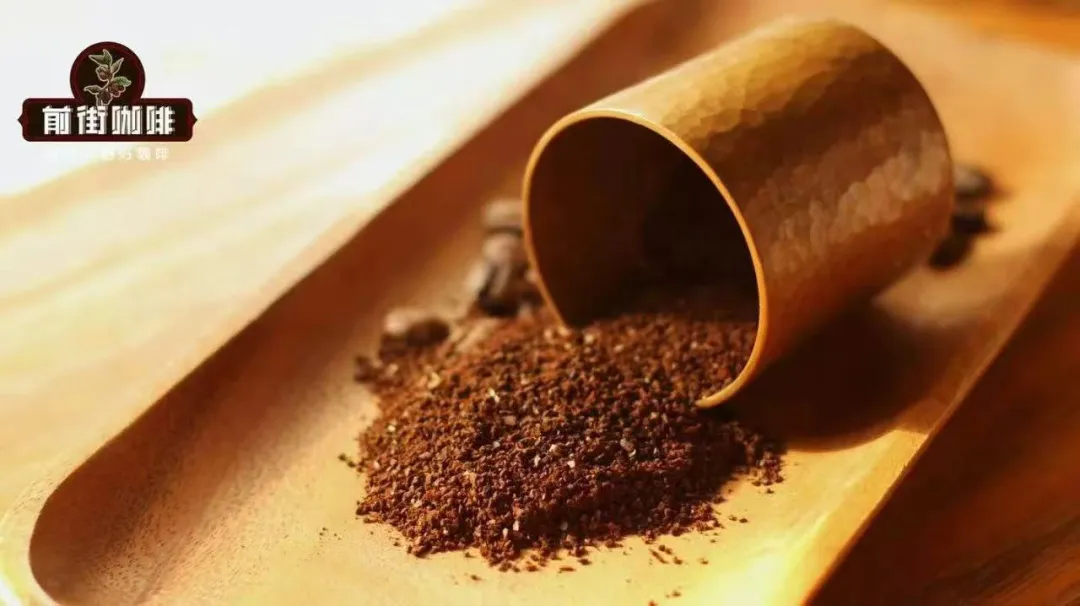
Grind level: Ek43 setting 10, 75% passing rate on a No. 20 sieve, fine granulated sugar grind
Coffee-to-water ratio: 1:15
Brewing water temperature: 92°C
Brewing method: three-pour
Dripper used: V60
First, bloom with twice the coffee dose in water for 30 seconds.
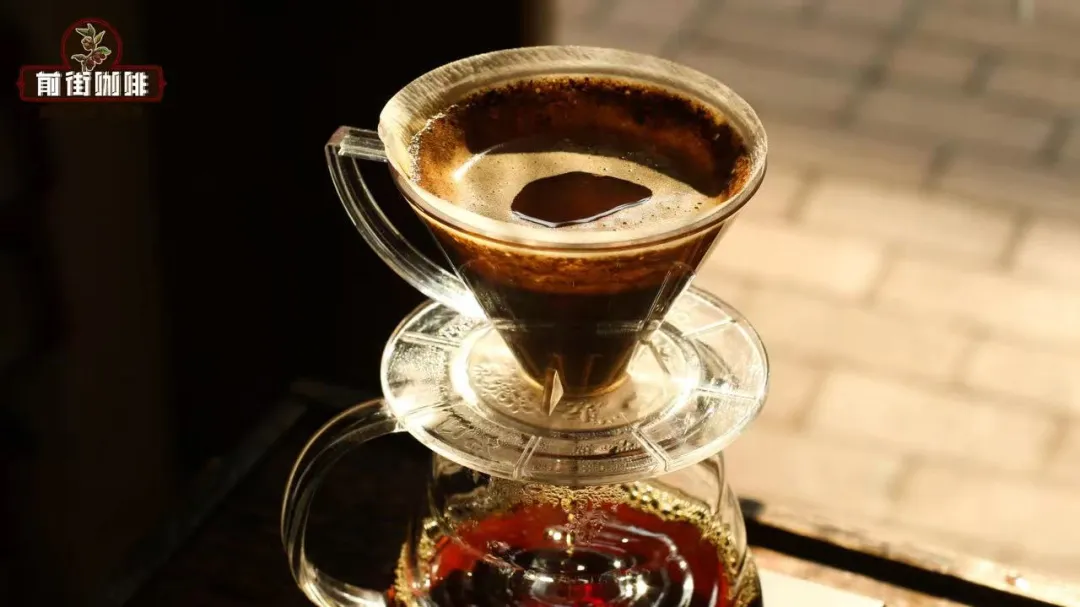
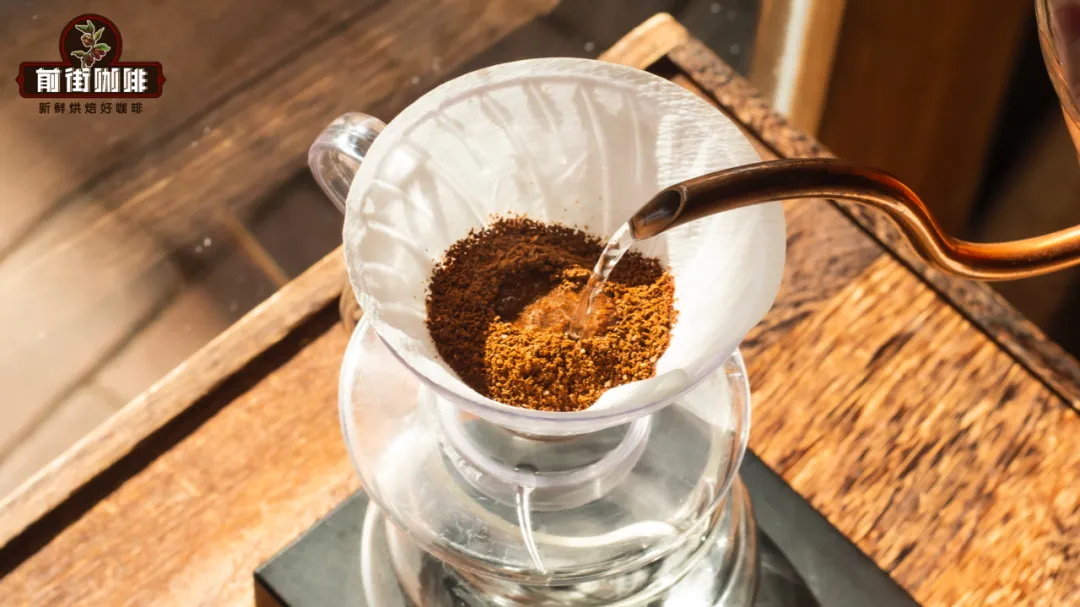
After the bloom ends, pour the second stage of hot water, totaling 120ml. For this entire stage, use a small stream (averaging 3ml/s). Start pouring from the center, then slowly spread outward, repeatedly pouring in circles in a "mosquito coil" pattern until this stage of hot water is finished.
At 1 minute 10 seconds, Front Street completed the second pour. Then, after waiting for the hot water to drip through almost completely, begin pouring the next stage (at this point Front Street's brewing time reached 1 minute 45 seconds).
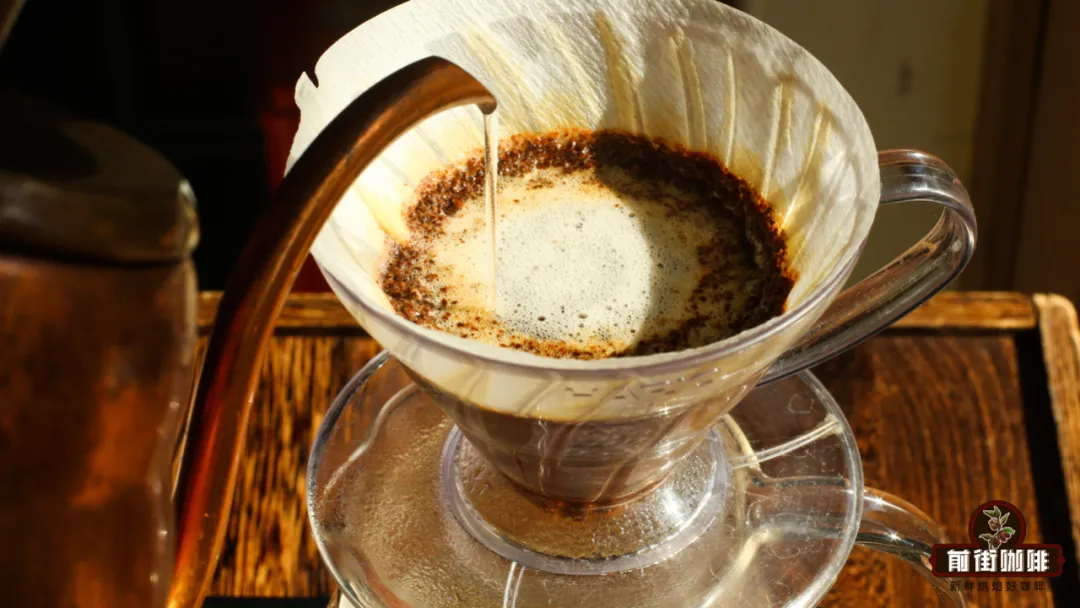
Likewise, the third stage is still poured in circles with a small stream, totaling 75ml. The only difference is that this time the circles are smaller, because the focus is on extracting the coffee grounds in the center. After all the hot water is poured (at this point Front Street's brewing time is 2 minutes 10 seconds), simply wait for the drip to finish, then remove the dripper and end extraction.
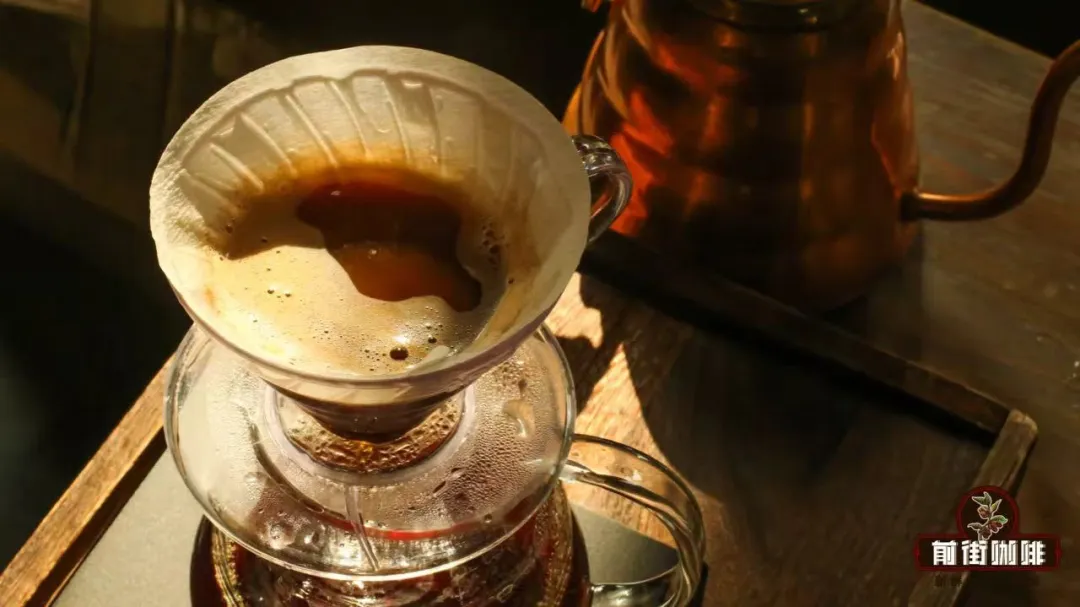
Total time: 2 minutes 31 seconds! Although it is longer than the usual extraction time, the coffee did not develop negative over-extracted flavors because of it. This benefits from the lower disturbance intensity and also because the coffee beans themselves are relatively difficult to extract.
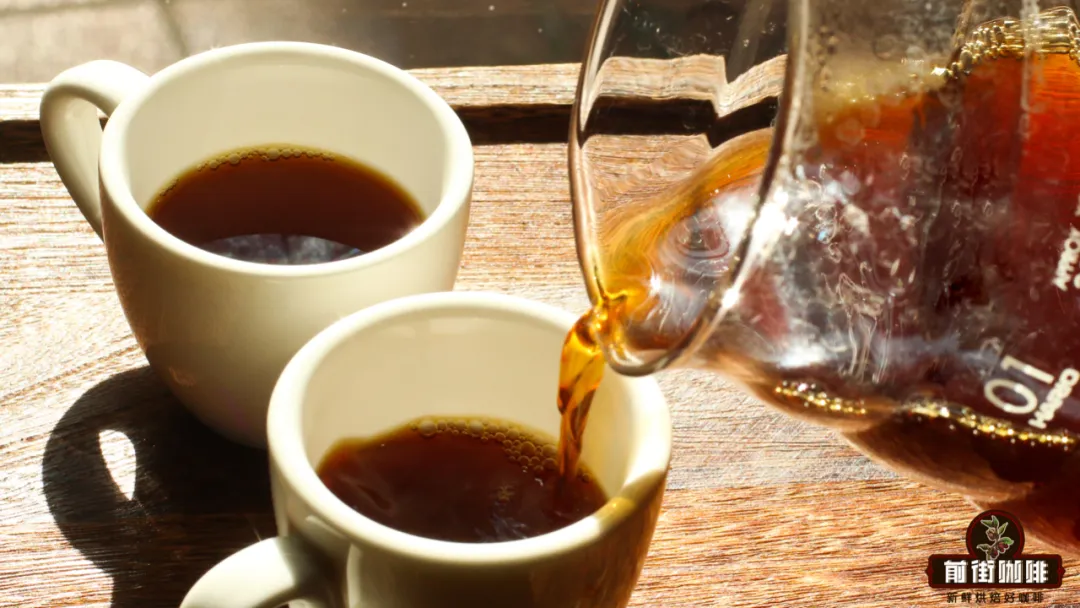
Through tasting, Front Street captured from this cup of coffee the sweet-tart notes of citrus and berries, the fermented aroma of strawberry, and the floral aroma of roses. The overall taste is balanced and soft, with rich layers, a long finish, and the aroma of oolong tea. If you are also troubled by some high-density or clog-prone coffee beans, you might as well try these two brewing methods.
- END -
The above content is compiled by CoffeeHunters, a coffee news website.


