







How does hanging coffee relate to iced pour-over with light roast beans?
Iced pour-over with light roast beans fails when a hot recipe is simply poured over ice, because melting dilutes concentration. Four cooling methods are compared using a medium-light Ethiopia Kafa Forest: high-concentration high-extraction, ice-rinse, stirring, and ice-bath cooling. Each keeps extraction yield and concentration inside a workable range, so the cup stays sweet and clean instead of watery.
Extraction yield decides whether the taste reads sour, balanced or bitter; concentration decides mouthfeel. Too strong suppresses aromas, too weak tastes like water. Rather than hanging coffee on a fixed formula, the guide adjusts grind size, water temperature, coffee-to-water ratio and pouring technique around those two figures, then compares how each cooling method performs in the cup.
As temperatures rise, iced coffee returns to the top of the sales charts. Iced pour-over lets you choose your own beans and comes with a refreshing chill, making it the top choice for hot weather. However, if you simply add ice cubes to a hot pour-over recipe, the concentration gets diluted and it tastes as bland as water. The core problem to solve is: how to maintain a moderate concentration after cooling. Using a medium-light roasted Ethiopia Kafa Forest as an example, Front Street Coffee has compiled four highly practical iced pour-over methods—high-concentration high-extraction, ice-rinse, stirring, and ice-bath cooling—breaking down the parameters and techniques one by one, and comparing their flavor performances to help you find the cup that suits you best.
When the felt temperature briefly rises, Guangzhou, where Front Street Coffee is located, enters a phase that feels like summer but isn't quite summer, and iced coffee returns to the number one spot in store sales. Its popularity comes not only from being able to freely choose your favorite beans, but also from the extra layer of chilled texture—sweet, clean, and refreshing—making it a veritable "heat-relief remedy" for hot days.
While the sunshine is still plentiful, Front Street Coffee has put together a collection of iced pour-over extraction methods, all low-threshold operations, so simple you barely need to learn them. We suggest bookmarking this first.
Before making iced pour-over, get this straight first...
No matter which method you use to extract coffee, the parameters we focus on always revolve around two cores: extraction yield and concentration. Extraction yield determines whether the taste leans sour, balanced, or bitter; concentration affects the mouthfeel—too strong brings a pungent sensation and suppresses flavors, while too weak is no different from drinking water. As long as these two ultimately fall within a reasonable range, the pairing of parameters can be adjusted flexibly.
Iced pour-over, like most coffee methods, is an extension of the hot pour-over framework. Conventional hot pour-over uses a combination of grind size, water temperature, coffee-to-water ratio, equipment, and pouring technique to achieve the right extraction yield and concentration. Iced pour-over adds ice cubes for cooling on top of hot pour-over. If you directly copy a hot brew recipe and then add ice, the extraction yield may be fine, but once the ice melts into water, the concentration is pulled down, and it will inevitably taste like a cup of weak, flavorless iced coffee water.
Therefore, the key to making a delicious iced pour-over is keeping the coffee at a moderate concentration after cooling. Common approaches include adjusting the ratio, changing the grind size, intervening with technique, and physical cooling. Front Street Coffee has summarized these into four methods.
Method One: High-Concentration High-Extraction
High-concentration high-extraction refers to high concentration and high extraction yield. High concentration is easy to understand—it means ensuring the brewed coffee still has enough flavor and a full body after adding ice. In practice, simply reduce the amount of water poured and adjust the grind finer.
With the same amount of water, increasing the extraction yield means letting the coffee release more flavor. Iced pour-over requires separating some of the hot water in advance and replacing it with ice cubes, so the water volume is less than conventional hot pour-over, and the extraction time is also shortened. The reduction in later-stage substances leads to a lower extraction yield. So when Front Street Coffee says "high extraction," it actually means letting the brewer squeeze out as much soluble material as possible within a limited water volume, which can be coordinated by adjusting technique.
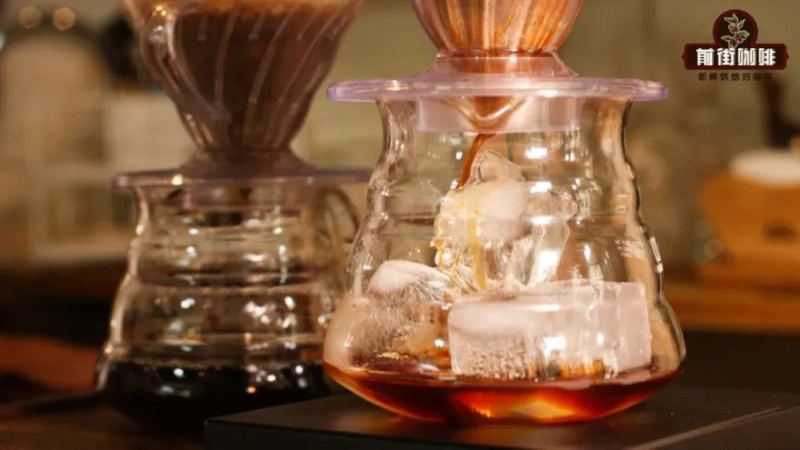
Here, Front Street Coffee uses a medium-light roasted bean—Ethiopia Kafa Forest—as an example. The high-concentration high-extraction iced brew parameters are as follows:
Dose: 15g
10x hot water: 150g
5x ice: 75g
Water temperature: 92°C
Grind size: 83% pass rate on a No. 20 sieve (EK43s setting 9, C40 setting 22)
Dripper: Hario V60
Technique: three-pour
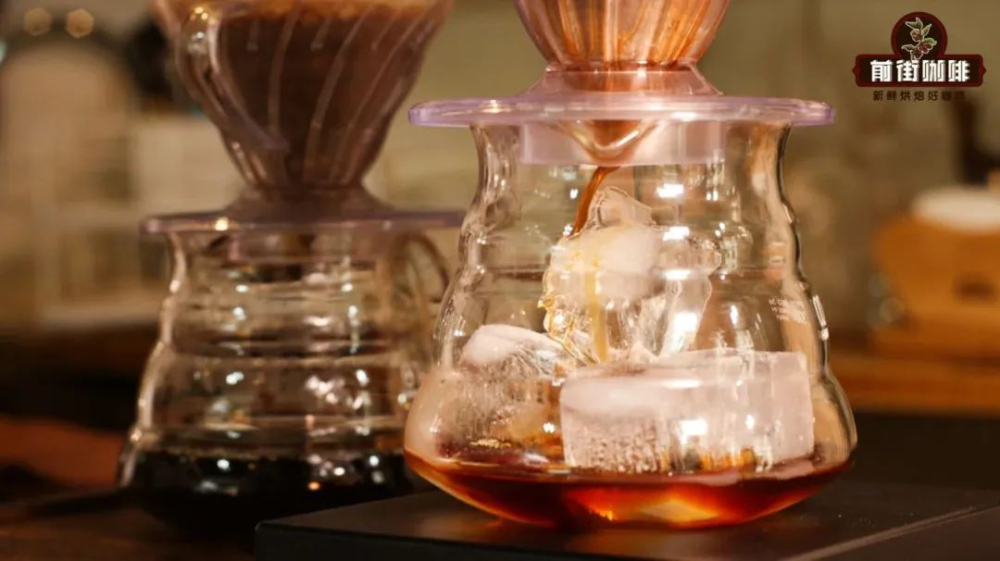
First, place 75g of ice cubes into the server, then pour 15g of ground coffee into the dripper and gently tap to level. For the first pour, use a slow flow of 3ml/s from the center outward in small circles to pour 30g of hot water, and bloom for 30 seconds; after 30 seconds, pour the second stage of 60g water using the same technique, being careful not to raise the water level too high, otherwise it may lead to under-extraction; when the coffee liquid is about to finish dripping, pour the remaining 60g of hot water at 3ml/s, ensuring the extraction time is controlled between 1 minute 50 seconds and 2 minutes.
The Kafa Forest brewed this way not only has rich fruity notes like lemon and blueberry, but also highlights the sweet aroma of melon seeds, with a light body and balanced acidity, sweetness, and bitterness. However, after brewing, a small amount of crushed ice will remain in the server. If you don't want the coffee to continue diluting, either drink it quickly before the ice melts or remove the ice cubes first.
Method Two: Ice-Rinse Method
In the first method, Front Street Coffee used high-hardness square old ice cubes, which dissolve more slowly, so the coffee liquid can cool quickly without being overly diluted. But if your home ice mold is on the smaller side, the ice particles made will melt faster, and brewing iced coffee with the same parameters will yield a discounted result, typically showing as a watery body and weak flavor.
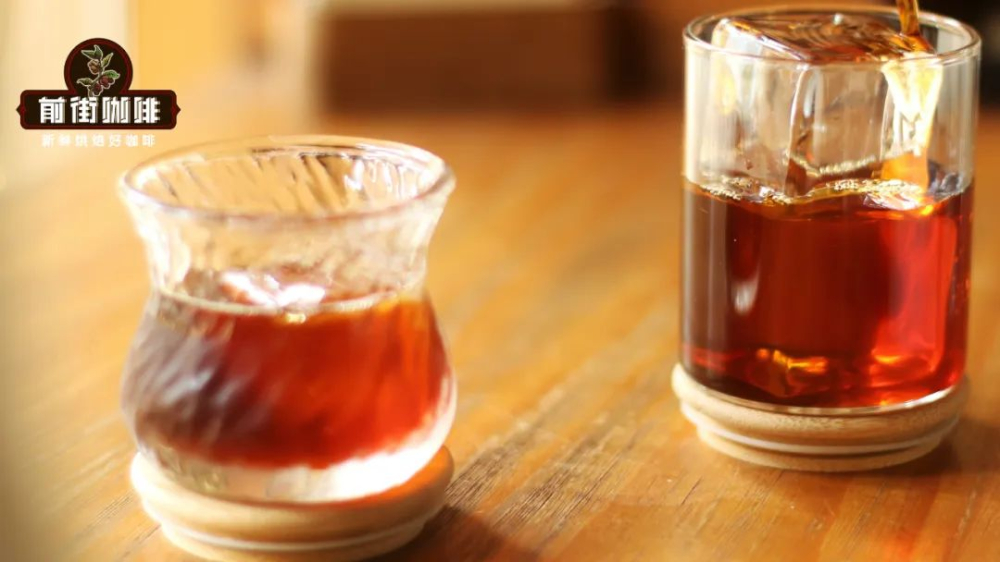
To reduce excessive ice melting that leads to overly low concentration, you can use the "ice-rinse" method for cooling. This approach keeps the brewing parameters unchanged; you just need to prepare double the ice amount (150g) and find a filter that can hold the ice and let liquid flow through—Front Street Coffee simply uses a dripper—then pour the brewed coffee liquid over the ice, cooling it through repeated rinsing.
The Kafa Forest brewed this way has better intensity and flavor layering than the previous method, mainly featuring aromas of yellow peach, citrus, and apricot, with a soft mouthfeel and a sweet finish.
Method Three: Stirring Method
In the same amount of time, adding a stirring action to pour-over can use external force to improve the extraction efficiency of hot water on coffee grounds, thereby increasing flavor concentration. For light to medium roasted beans, stirring during the pouring stage can accelerate the release of sweet and acidic substances, giving the coffee better juiciness and floral notes. The corresponding iced pour-over parameters are as follows:
Dose: 15g
Hot water: 160g
Ice: 80g
Grind size: 80% pass rate on a No. 20 sieve (EK43s setting 9.5, C40 setting 24 clicks)
Dripper: Hario V60
Three-pour: 30g, 80g + stir, 50g
Before pouring, put the ice cubes into the sharing pitcher and add all the coffee grounds. The first bloom remains the same, maintaining a slow flow of 3–4ml/s from the center outward in circles to pour 30g. After 30 seconds, pour 80g of hot water in circles from inside out, slightly raising the water level. When the scale shows 110g, stop pouring, take the pre-prepared small spoon and draw 5 circles along the dripper wall in the same direction, then wait for the coffee liquid to slowly drip down.

When the coffee bed is about to be exposed, use a slow flow to pour the remaining 50g of hot water into the center. Once all the coffee liquid has dripped through, remove the dripper to end extraction. The time is about 2 minutes to 2 minutes 10 seconds. Finally, shake the sharing pitcher to let all the ice melt, and it's ready to taste.
The iced Kafa Forest with the stirring action has a richer sweet-and-sour sensation, with flavors dominated by fruits like pomelo, orange, yellow peach, and sweet tangerine, along with a tea-like finish. The final ice gives the coffee a clean, moist quality, making it taste full of juice.
Method Four: Ice-Bath Cooling Method
Besides the three common methods above, Front Street Coffee has also saved a more luxurious method—"ice bath cooling." There's no need to adjust grind size or coffee-to-water ratio; the coffee liquid is cooled throughout by external ice water physical cooling, which can reduce the bland taste caused by ice melting into the coffee. The downside is that it requires a large amount of ice and a long cooling process. Before brewing, prepare a thermometer. The corresponding brewing parameters are as follows:
Dose: 15g
Coffee-to-water ratio: 1:15
Grind size: 78% pass rate on a No. 20 sieve (EK43s setting 10, C40 setting 26 clicks)
Water temperature: 92°C
Dripper: Hario V60
Pouring technique: three-pour
For the first pour, add 30g of water and bloom for 30 seconds. Use a medium flow of 5ml/s from the center outward in circles to pour 95g, finishing in about 50 seconds. When the water level drops to 2/3 of the coffee bed, pour the remaining 100g of hot water using the same technique, finishing the drip in about 2 minutes 10 seconds. Then place the entire server of coffee into an ice-water mixture to cool. When the thermometer shows it has dropped to 10°C, it's ready to taste.
The Kafa Forest using ice-bath cooling has a very clear sweetness. Because there's no ice affecting it, you can feel white floral notes and citrus acidity right on entry, along with characteristics of melon, sugar tangerine, and blueberry. It's full of sweet and sour notes, and among the four methods, it's the cup with the richest layering.
- END -
The above content is compiled by CoffeeHunters, a coffee news website.


