








Why Turkish Coffee Is Served With Its Grounds
Turkish coffee is not filtered because its brewing method and grind size demand that the grounds remain in the cup. The coffee is boiled in a cezve, often on a sand tray, and the extraction takes only about ten seconds. To achieve a strong cup in that short time, the beans are ground to an ultra-fine powder, almost like flour. This fine grind allows rapid extraction during boiling, and the particles quickly settle to the bottom, so you can drink the clear liquid above without filtering.
Beyond practicality, retaining the grounds is a deep-rooted tradition in coffee culture. It connects to the custom of fortune-telling, where the leftover grounds are used to read patterns. The no-filter approach also gives Turkish coffee its distinctive thick mouthfeel. While modern methods often rely on paper or metal filters, Turkish coffee shows that leaving grounds in the cup can be a deliberate choice, not an oversight. This unique practice reflects a different way of thinking about coffee preparation and enjoyment.
In an era where filtration devices have become highly prevalent, Turkish coffee still insists on being consumed with its grounds. This is not a sign of backwardness or laziness, but rather a product of its sand-brewing extraction method, extremely fine grind size, and deep-rooted cultural tradition. From the perspective of Front Street Coffee, this article explains why Turkish coffee is not filtered: just how fine its grind is, how it differs from espresso grind, how the coffee grounds quickly settle in a short time to give the coffee a rich mouthfeel, and the fortune-telling custom that arose from retaining the grounds—guiding you through the logic behind this unique coffee culture.
Although modern coffee filtration equipment has become quite common, some coffee varieties deliberately retain their grounds. Turkish coffee is a typical example—aside from that exaggerated visual effect of "never finishing pouring," its peculiar way of being drunk grounds and all has also earned it plenty of attention in the coffee world.
Turkish coffee not filtering out its grounds is by no means laziness, nor is it a sign of falling behind the times. The real reason lies in its distinctive brewing method, long-established drinking habits, and deep-rooted cultural tradition. In a January article titled "Why Does Turkish Coffee Never Finish Pouring?", Front Street Coffee pointed out that the most fundamental difference between Turkish coffee and modern mainstream coffee lies in the extraction method—boiling.

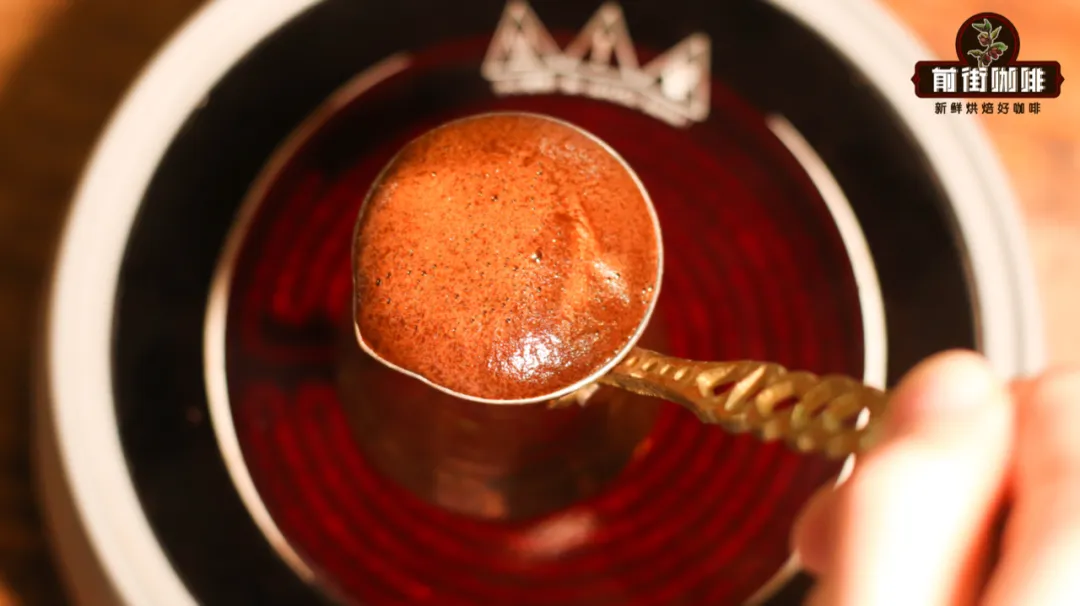
The so-called "boiling" means putting coffee grounds into a vessel filled with water and applying continuous heat, which is completely different from the two mainstream extraction logics of "pouring" and "steeping." The method itself is actually not complicated: pour water and coffee grounds together into a copper pot called a "Cezve," then place the pot on a sand tray to heat. Once the coffee slurry in the pot boils, Turks decide when to pour based on their own habits—either letting it boil three times before pouring it all out at once, or pouring out one-third of the amount each time it boils. Either way, the result is a cup of rich black coffee.
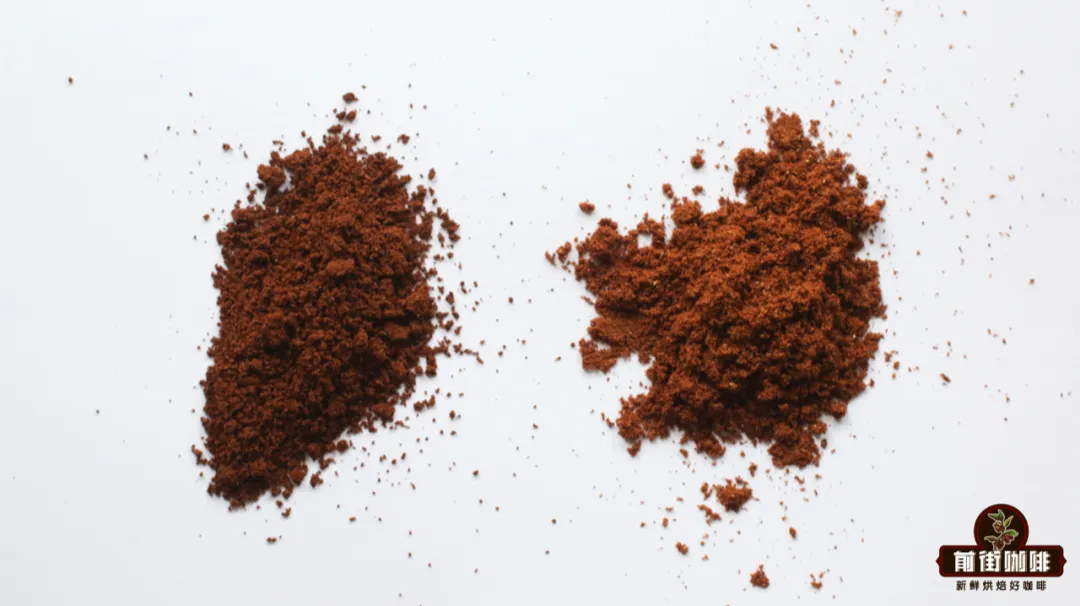
Anyone who has tried Turkish coffee should know that its brewing time is actually very short—from boiling to the end of extraction, it takes only about ten seconds. If the coffee grounds were ground as coarsely as for pour-over, it would be nearly impossible to extract a cup of strong black coffee in such a short time, even counting the heating time before boiling. This is precisely why Turkish coffee uses an extremely fine grind. How fine? To put it in perspective, its particles are already close to a powder state. Many people think it looks about the same coarseness as espresso grind, but in reality, Turkish coffee grounds are even finer than espresso grounds.
When you rub espresso grounds between your fingers, you can still feel a slight grittiness; but when you rub Turkish coffee grounds, you can barely feel any particles at all—the texture is like flour. Each particle has a diameter of roughly 100 to 150 micrometers, falling into what we typically classify as the extra-fine range (the right side of the image shows the "Turkish coffee grounds" sifted by Front Street Coffee). On average, a single coffee bean can be broken down into 15,000 to 35,000 particles of this size. The extremely fine grind allows Turkish coffee to brew a rich black coffee in a short time, and it is precisely for this reason that it does not need to filter out the grounds.
After absorbing enough water, coffee grounds settle toward the bottom of the cup, and the finer the grind, the faster they absorb water. As a result, the powder can quickly become saturated, release flavor compounds, and then sink to the bottom. When the coffee is brewed and poured from the copper pot, some grounds will enter the cup along with the coffee liquid due to the boiling turbulence, but these grounds that enter the cup will also quickly sink. By the time the coffee drops to a palatable temperature, the grounds have long settled at the bottom of the cup. As long as the pouring angle is not too steep, it is nearly impossible to drink a large amount of grounds.

Of course, it is not entirely impossible to drink them—there is still a certain probability. But even if you do, it does not matter, because the amount of floating coffee grounds is very small and the particles are powder-like, so they will not have much negative impact on the mouthfeel of Turkish coffee. On the contrary, these fine particles can make the coffee taste richer and the mouthfeel smoother, essentially playing a supporting role in "enhancing the color and flavor" of the coffee. At this point, some might ask: it was understandable not to filter in the past when there were no filtering tools, but now that filtration equipment is so common, why does Turkish coffee still choose to retain its grounds?
This is where another major feature of Turkish coffee must be mentioned! Because the tradition of not filtering has existed for so long, it has given rise to a highly representative and mysterious special use of Turkish coffee—fortune-telling. When people finish drinking their Turkish coffee, the grounds that had settled at the bottom of the cup become exposed. At this point, people place the saucer over the cup's rim and flip it upside down, letting the grounds at the bottom dry, and then tell fortunes based on the patterns formed by the grounds.
This custom makes "retaining the grounds" an indispensable part of Turkish coffee. People try to read hints about various aspects of life from the patterns, and they also place a ring or a coin on the overturned cup to ward off ill omens—it is full of fun.
Taken together, everyone can understand why Front Street Coffee says: Turkish coffee still retains its grounds today, a result determined jointly by its unique brewing method, drinking habits, and cultural tradition. - END -
The above content is compiled by CoffeeHunters, a coffee news website.


