








Vietnamese Egg Coffee: From Its Origins to a Hands-On "Liquid Tiramisu" Recipe
Vietnamese egg coffee began as a practical answer to a common problem. During the war years, milk was scarce, so people turned to eggs to soften the strong bitterness of dark-roasted Robusta. Whipping egg yolks with sugar created a thick, silky foam that could stand in for dairy. That simple idea, credited to Nguyen Van Giang, grew into a drink that visitors now seek out across Vietnam and beyond.
This guide walks through a popular modern version often called liquid tiramisu. You will see how to prepare the ingredients, whip the egg mixture to the right texture, and work out solid coffee extraction for a strong base. You can brew with a moka pot, a phin, or another method you trust. The goal is a balance of rich coffee, airy egg cream, and mild sweetness in every sip.
There are two highly iconic coffees on the streets of Vietnam. Besides the familiar drip coffee, the other is egg coffee made with raw eggs. Recently, a new version of the recipe has become popular online, and those who have tried it have described it as a "liquid tiramisu," which makes one wonder: what kind of taste and flavor could deserve such praise? This article will guide you through the origin and evolution of Vietnamese egg coffee, and provide a complete replication using the current popular recipe, sharing everything from material preparation, whipping techniques, to coffee extraction parameters, and finally, a real tasting experience. If you also want to know how magical this egg coffee called "liquid tiramisu" really is, then follow Front Street Coffee and give it a try.


As you all probably know, Vietnam has two highly popular specialty coffees. One is the drip coffee that Front Street Coffee introduced not long ago, and the other is egg coffee made with raw eggs.
Today, Front Street Coffee is going to talk about the latter—Vietnamese egg coffee, which is also a must-try beverage for most tourists visiting Vietnam. Recently, a new style of egg coffee has become popular online, and those who have tried it have praised it as a "liquid tiramisu." This made Front Street Coffee curious: what kind of taste and flavor does it have to deserve such a name?
So, Front Street Coffee decided to replicate it according to the popular online recipe to see if the egg coffee really is as amazing as rumored. Of course, as per Front Street Coffee's usual habit, before starting, let's briefly understand the background of Vietnamese egg coffee.
Vietnamese Egg Coffee
Like sugar and dairy products, eggs initially played a role in Vietnamese coffee as a condiment to neutralize the bitterness. As is well known, Vietnam is the world's second-largest coffee producer, but it mainly grows Robusta. Although Robusta has high yield, its flavor is relatively inferior. After deep roasting, Robusta's bitterness becomes even stronger and more prominent.
For most people, this intense bitterness is hard to accept, so sugar and dairy became the main means for locals to balance the coffee's bitterness. However, during the war years, dairy products became scarce local supplies. Although white sugar could still dilute the coffee's bitterness, people missed the silky texture that dairy gave to coffee. Thus, the practice of adding eggs to coffee emerged.
The method of whipping eggs and adding them to coffee was invented by Nguyen Van Giang. Initially, only egg yolks and white sugar were used. After whipping the eggs to a creamy consistency, they were poured directly into the coffee instead of milk (condensed milk). After the war, as dairy was no longer scarce, Giang added condensed milk, butter, and other ingredients to flavor and thicken it, creating a new version of egg coffee.
The new version of egg coffee was excellent in both taste and texture, so it quickly became popular after its launch. This led other local cafes to imitate it, and with more and more makers, egg coffee gradually became a signature beverage in Vietnam.
From the introduction above by Front Street Coffee, it's easy to see that making egg coffee is not complicated: just prepare and whip the ingredients, then pour them over the coffee. The new method mentioned earlier is the same, with the only difference being the choice of materials. So next, let Front Street Coffee personally experience what this egg coffee hailed as "liquid tiramisu" really tastes like!
Production Sharing
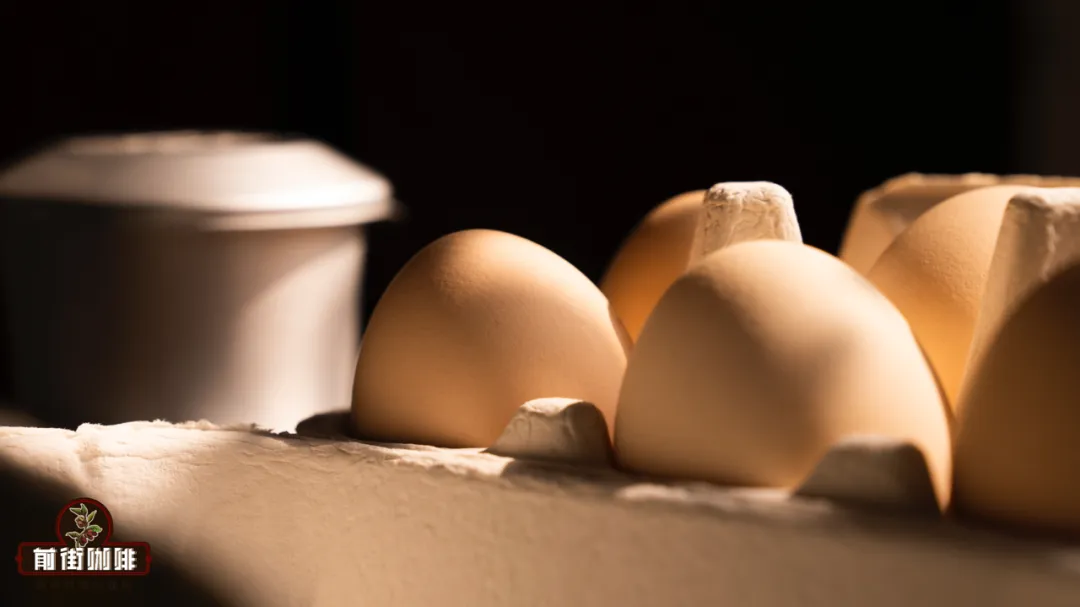
The materials needed are not complicated: cream, condensed milk, cocoa powder, eggs, and a serving of strong coffee. It should be noted that for digestive health, it's best to use pasteurized eggs when making it at home. The choice of coffee is flexible; black coffee made by pour-over, Moka pot, AeroPress, or espresso diluted with water is all fine. But it's best to use medium-dark or dark roasted coffee so that the coffee's bitterness can complement the sweetness of the egg "cream." The ratio of coffee to egg "cream" can be adjusted according to personal preference.
This time, for convenience, Front Street Coffee used espresso diluted with water, using Warm Sun Blend coffee beans. The extraction parameters were: 20g powder, 30 seconds, yielding 40ml coffee liquid (i.e., powder-to-liquid ratio 1:2), then adding water at twice the volume of the coffee liquid.
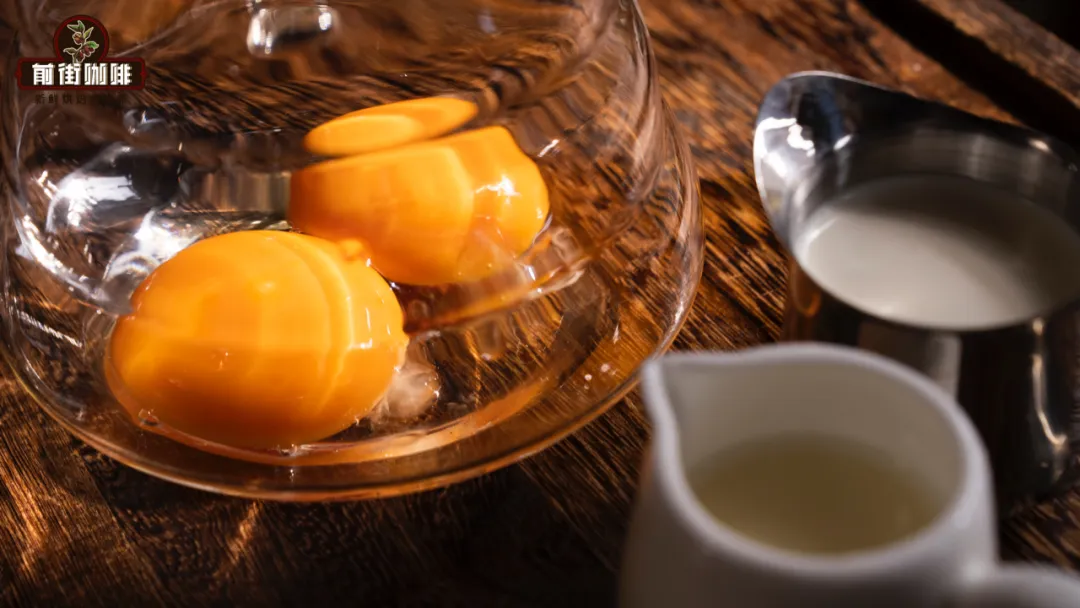
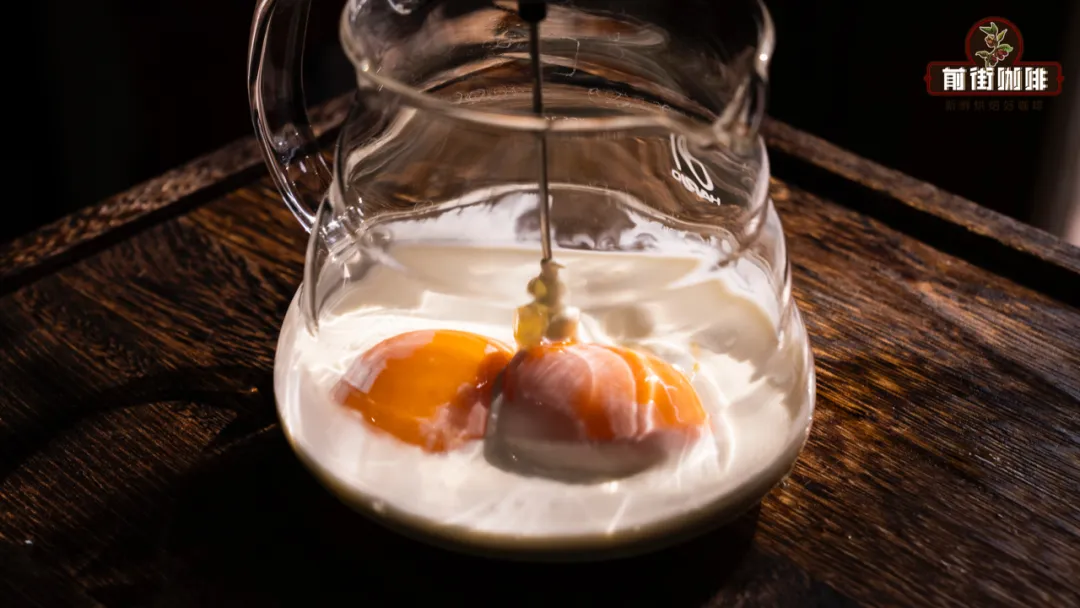
Also note that it's best to start making the coffee after the eggs are whipped, because whipping eggs takes a very long time, and coffee can't wait that long. So, we need to whip the eggs before extracting the coffee. The egg "cream" recipe used by Front Street Coffee this time is currently the most widely used online: 2 pasteurized egg yolks, 20ml condensed milk, 30ml cream.
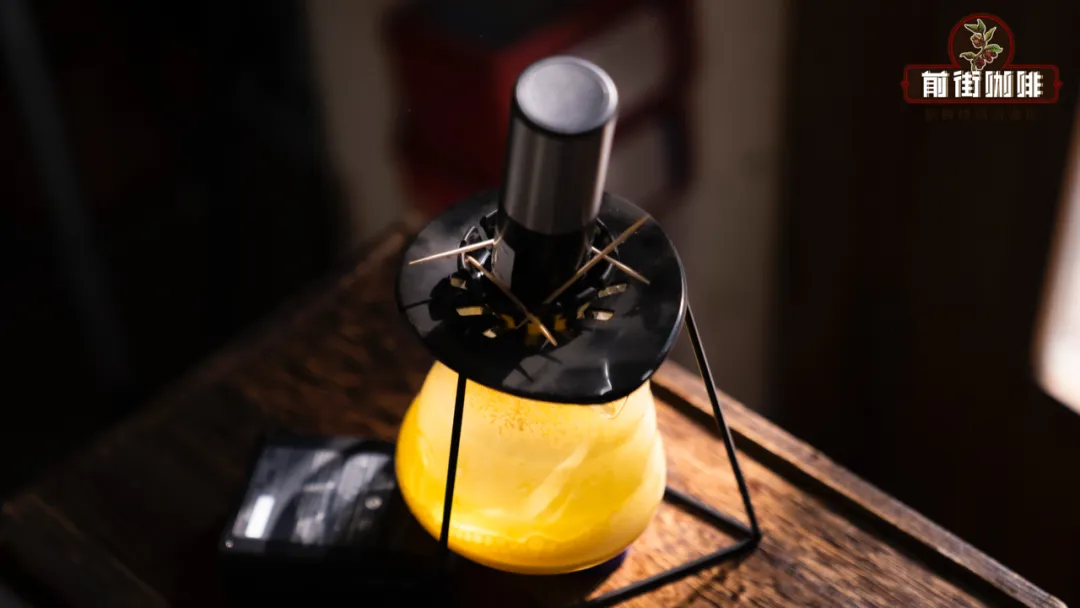
The steps are simple: pour all ingredients into a container, then use an electric mixer to whip. Stop when the egg mixture becomes thick and you can clearly feel resistance.
Although it sounds easy, because Front Street Coffee's electric mixer is not very efficient, it took a full ten minutes or so to finish. Because of this, Front Street Coffee deeply understood what it means that laziness drives human progress.
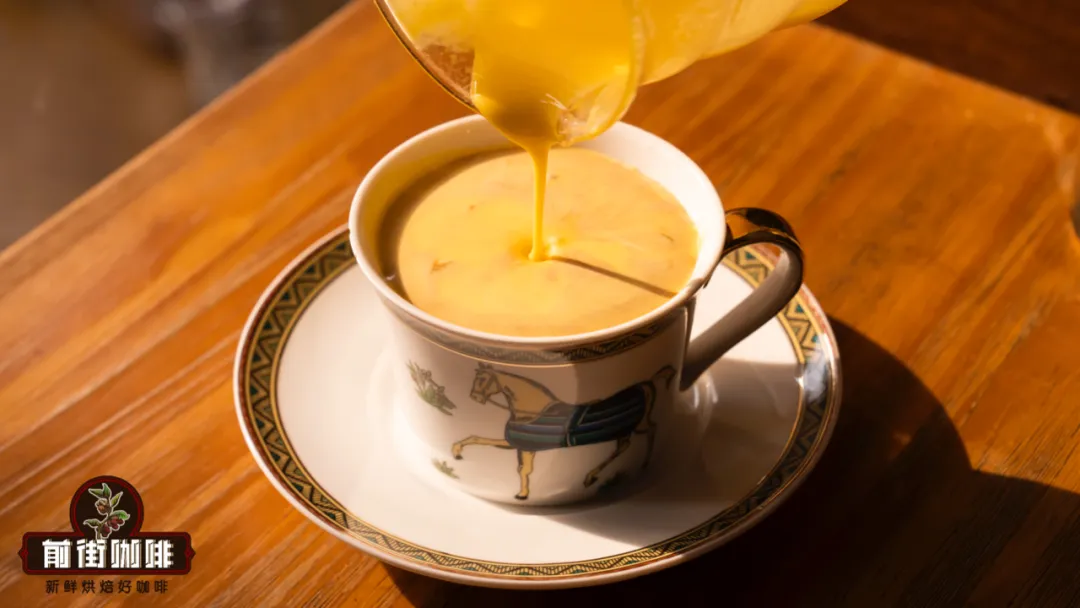
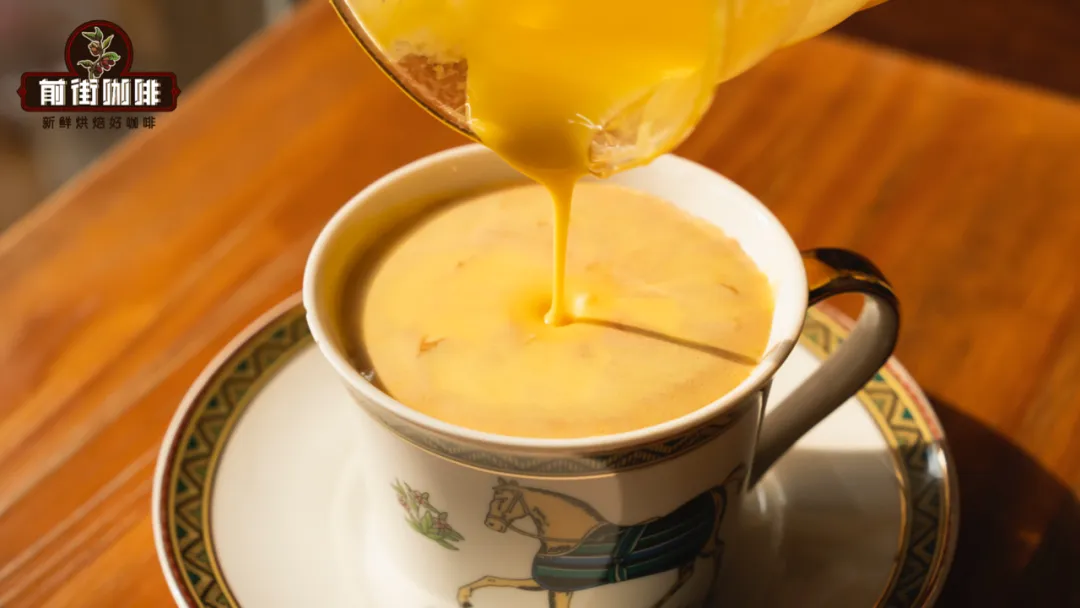
Once the eggs are whipped, you can start making the coffee. In order, pour the coffee and egg "cream" into the prepared cup.
(Here, Front Street Coffee used 120ml coffee liquid and 80ml egg "cream")
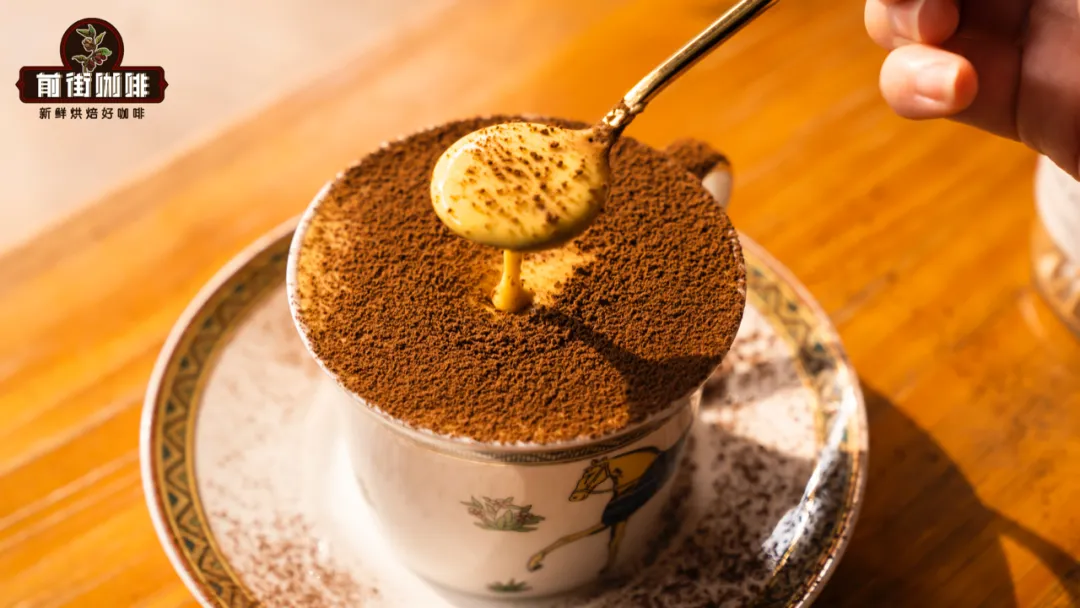
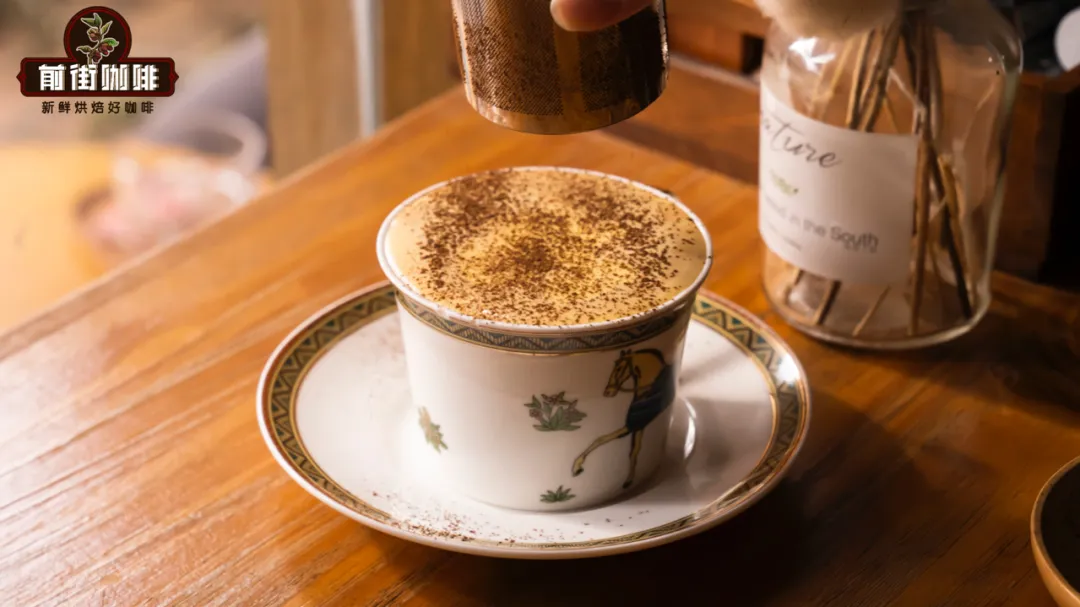
After filling the cup, sprinkle cocoa powder generously on top, and a cup of "liquid tiramisu" (Vietnamese egg coffee) is complete!
Then Front Street Coffee immediately began tasting. At the moment the egg coffee entered the mouth, Front Street Coffee confirmed the rumor's truth, because it tastes (or perhaps we should say eats?) quite like tiramisu.
The texture is silky and smooth, melting in the mouth (isn't that obvious?), with no eggy smell at all!
The integration between the various ingredients is almost perfect, each not overpowering the others while showcasing their own characteristics—the slight bitterness of cocoa powder, the richness of cream, the sweet aroma of condensed milk, the smoothness of eggs, plus the flavor of coffee, all combined wonderfully! I must say, Warm Sun Blend is used perfectly here; its whiskey-like flavor compensates for the missing liqueur aroma, making the whole cup of egg coffee closer to a "tiramisu"!
Overall, it's really very good! Front Street Coffee strongly recommends that friends who have time give it a try. Of course, a small reminder at the end:
Front Street Coffee stores do not offer this, do not offer, do not offer~~
- END -
The above content is compiled by CoffeeHunters, a coffee news website.


