







How Do Starbucks Zongzi Quotas Affect Coffee Culture?
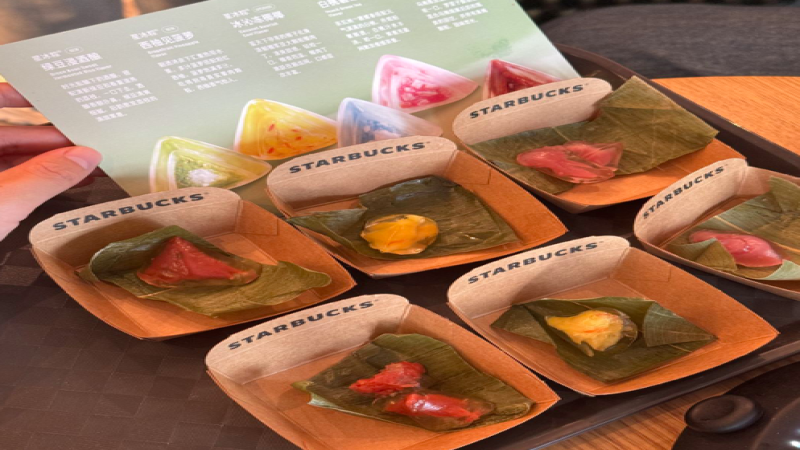
Ahead of the Dragon Boat Festival, Starbucks Frappuccino-inspired zongzi returned to stores along with the sales quotas employees must meet. Some customers say that after declining clearly, they were still pressed repeatedly with pitches, while staff say rigid company targets leave them clearing inventory through every channel, sometimes paying out of pocket.
The conflict reflects tension between brand performance pressure and the consumer experience. Regular customers have grown used to the yearly sampling routine, and some now refuse before staff can speak. Complaints spread during mooncake and zongzi seasons, when the push to sell turns coffee culture into a chore rather than a pleasure.
As the Dragon Boat Festival approaches, Starbucks stores' Frappuccino-inspired zongzi have made their return, and with them come the sales quotas that employees are forced to push. Some customers report that even after clearly declining, they were still repeatedly pestered by staff with persistent recommendations, leaving them thoroughly annoyed. On the other side, Starbucks employees are also full of grievances—facing rigid sales targets from the company, they have no choice but to use every channel to clear inventory, even paying out of their own pockets. This tug-of-war over the Frappuccino zongzi reflects a deeper conflict between the brand's performance pressure and the consumer experience.
▲
Click to follow | Daily specialty coffee culture magazine Coffee Works
Just after Qingming, the colorful Frappuccino zongzi punctually appeared in the display cases of Starbucks stores across the country. If a passerby so much as glances at them, the partner behind the counter will notice, and may promptly offer a small cut sample, enthusiastically introducing this year's new flavors.
Regular customers have long since grown accustomed to this marketing routine repeated year after year. Precisely because of this, many people, the moment they see a staff member about to speak up, preemptively declare their refusal to avoid being caught by a sales pitch.
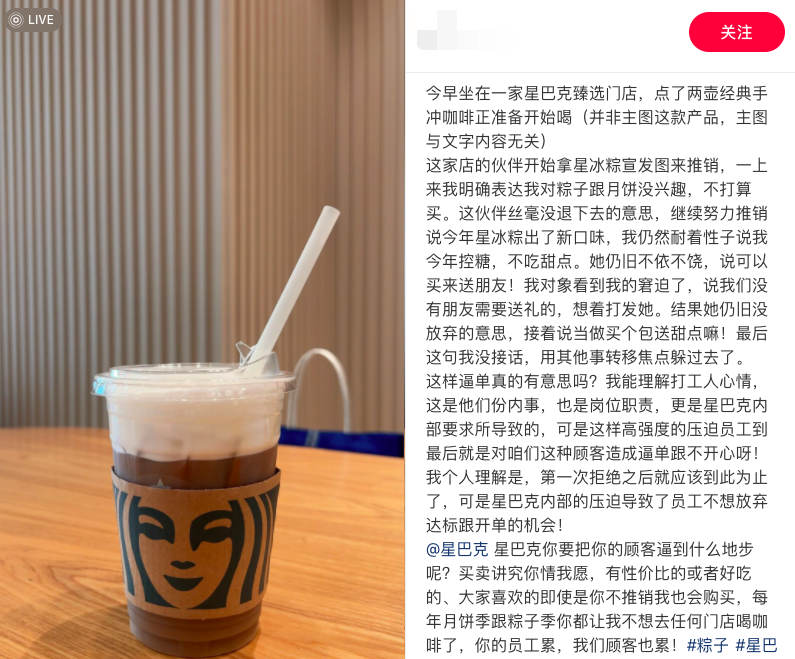
However, recently a consumer posted a complaint that despite having clearly stated they had no intention of buying the Frappuccino zongzi, they still encountered an in-your-face sales pitch from a Starbucks employee.
According to the netizen's description, the staff member approached proactively with product promotional images and introduced the item, and the person patiently declined twice, explaining they don't eat sweets. But the other party did not stop there—instead switching tactics and continuing to persuade with the pitch of "buy a bag and get a dessert free," which was truly irritating.
The poster said that Starbucks employees carry company performance targets and job responsibilities when recommending Frappuccino zongzi to customers, and she can understand that. But relentlessly "forcing the sale" after being clearly refused only breeds more resentment in consumers' eyes: "Every year during mooncake season and zongzi season, it makes me not want to step into any store for coffee."
This complaint resonated with many regular customers, some of whom said the post voiced their own feelings. Many netizens left comments expressing the same sentiment, admitting that to avoid being pitched Frappuccino zongzi in person by staff, they simply avoid Starbucks before the Dragon Boat Festival and turn to other chain brands instead.
Meanwhile, Starbucks employees drawn to the post vented their grievances in the comments, with some even "begging" regular customers to complain to headquarters, "hoping for more public pressure. Either stop selling them, or stop setting these rigid targets," "Hurry up and email 400 to complain," hoping the "hot potato" of Frappuccino zongzi would disappear sooner rather than later.
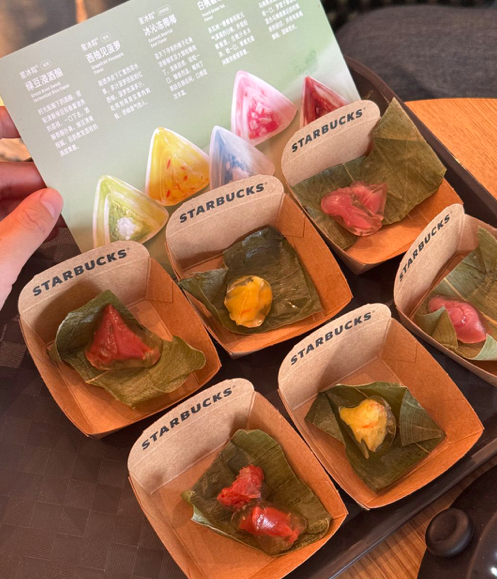
Most employees feel helpless about the Frappuccino zongzi sales tasks assigned by the company, admitting they themselves don't want to repeatedly bother customers or hard-sell these desserts that don't suit most people's tastes. But if they can't sell a single box, not only do they have to write an analysis and action plan every day, they also have to constantly endure pressure from management; some staff even say they could be reassigned due to poor zongzi sales.
So the miserable workers can only try every trick: transforming into "zongzi micro-sellers" on WeChat Moments, dumping them at low prices on second-hand platforms, privately contacting regular customers to sell, hand-painting custom backpacks per customer requests, and so on. Some staff who never made a sale had no choice but to buy a box or two out of their own pockets, just so their sales numbers wouldn't look too bad.
Many netizens pointed out that a transaction should be mutually willing; the brand shifting performance pressure onto workers, forcing employees to hard-sell Frappuccino zongzi just to make a sale, will ultimately only make customers blanch at the mention of it, driving away users who dislike sales pitches and making people unwilling to enter stores to spend.
Image source: Xiaohongshu
Disclaimer: Some images in this article are from the internet. For some content on the website, such as images, we will respect the original author's copyright and indicate the source. However, due to the sheer volume, a few images and texts may not have been credited in time; please forgive us. If the original author has any disputes, they may contact the website for handling. Once verified, we will correct it immediately. Compiled and edited by "Coffee Works." Please indicate the source when reposting. If there is any infringement, please inform us for removal. Thank you~!
The above content is compiled by CoffeeHunters, a coffee news website.


