








How Is Coffee Processed Relevant to One-Pour Brewing?
The one-pour method skips blooming and pours the full planned water volume in a single go. It comes from 2016 World Barista Champion Tetsu Kasuya, who introduced it in 2019. It is often confused with the single-pour method, but the single-pour splits water into two stages, blooming plus main extraction, while the one-pour adds everything at once, so the two follow different brewing logic and produce different cups.
Blooming normally releases carbon dioxide that blocks extraction, which is why most recipes include it. Omitting that step lowers the barrier to entry and changes how grind, dose, ratio, water temperature and time need to be set. The article tests the approach with a Colombia Hope Estate Geisha and covers bean selection, grind adjustment and pouring direction, showing how is coffee processed affects what a brewer can get away with.
Pour-over coffee usually starts with blooming, but in 2019, 2016 World Barista Champion Tetsu Kasuya proposed a brewing method that skips blooming entirely—the one-pour method. It looks similar to the single-pour method, but the differences are clear: the single-pour method splits the water into two pours, while the one-pour method pours all the hot water in at once. This article covers the principles of the one-pour method, its differences from the single-pour method, equipment and bean selection, grind adjustment, pouring direction, and the full process of Front Street using a Colombia · Hope Estate Geisha for a hands-on test, providing key parameters such as dose, ratio, water temperature, grind, and time to help you decide whether this minimalist brewing method suits you.

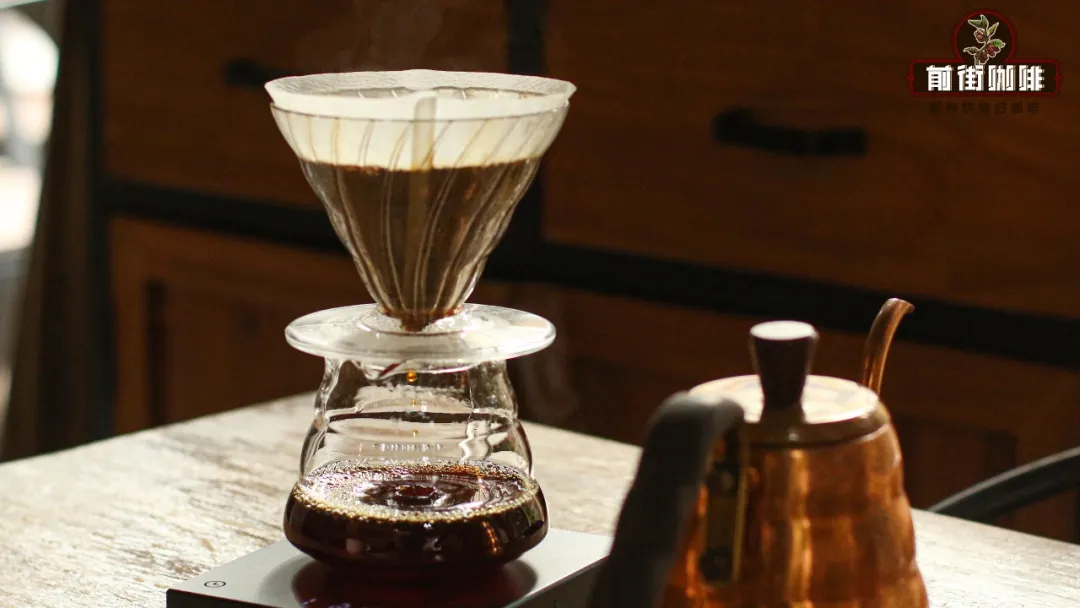
First, let's answer a question Front Street raised: What should be the first step in pour-over coffee? The answer is blooming. Through blooming, the carbon dioxide in the coffee grounds that hinders extraction is released, allowing subsequent extraction to be more efficient. Because of this, blooming appears in most brewing recipes.
However, there is a brewing method that deliberately omits the blooming step, and its barrier to entry is extremely low—it could even be said to be the least troublesome brewing method. It comes from 2016 World Barista Champion Tetsu Kasuya (creator of the 4:6 brewing method) , and it's called the "one-pour method."
What is the one-pour method? In 2019, Tetsu Kasuya introduced this brewing method. The so-called one-pour method can be understood as pouring all the planned total water volume in one go. Because the name is close to the single-pour method, many people directly equate the two. But in fact, they are two different brewing logics: the single-pour method splits the total water into two pours (blooming plus main extraction) , while the one-pour method pours the total water in one go (no blooming) .
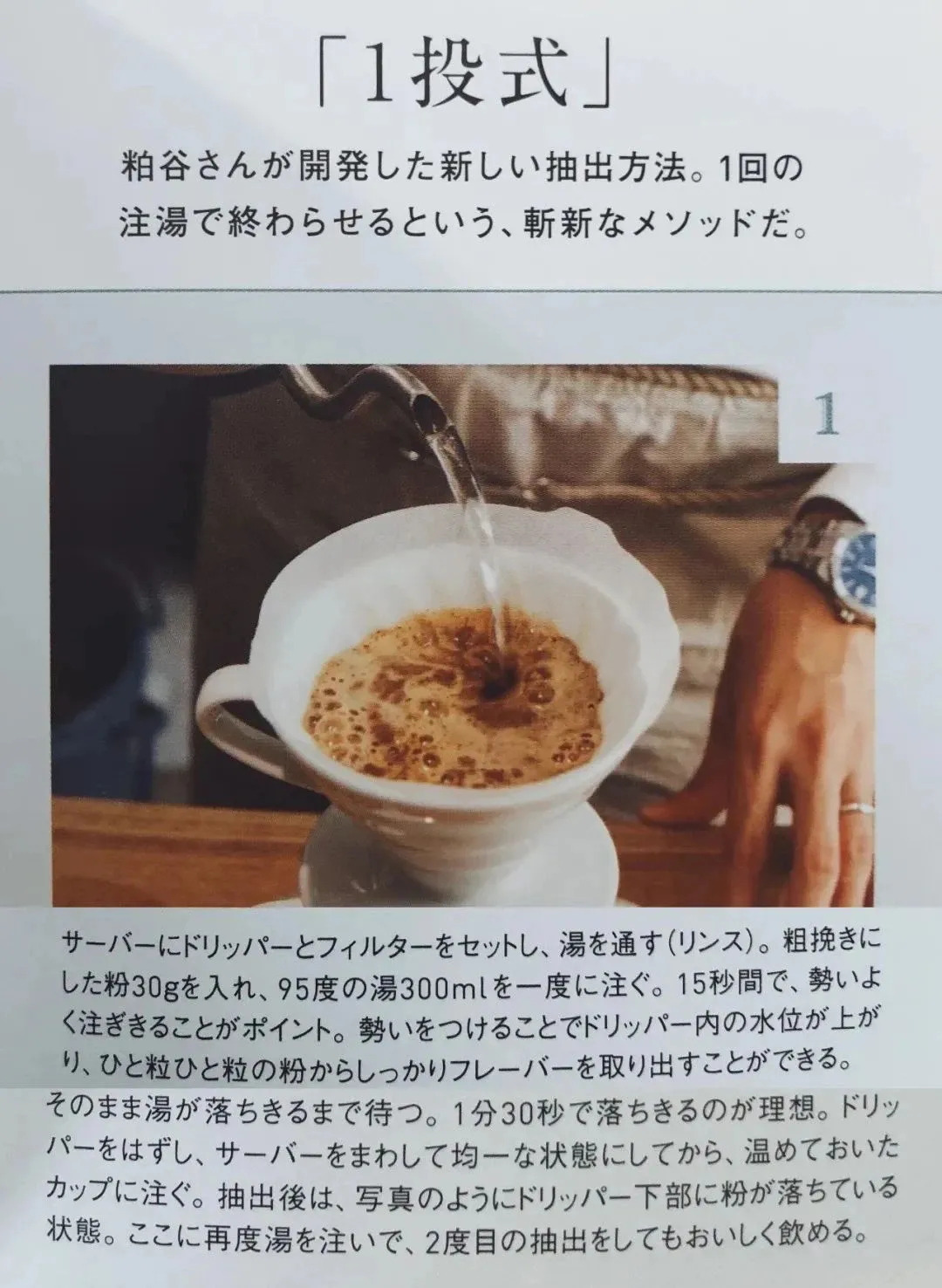
From the process perspective, the only difference between the two is whether there is a blooming step, but it is precisely the presence or absence of this action that sends the two sets of parameters and the final cup flavor in different directions. Front Street wrote about the single-pour method not long ago, so we won't elaborate here; the focus is on Tetsu Kasuya's one-pour method. In the Japanese coffee magazine "CAEFRS," the specific operation and parameters can be found: use a 02-size V60 dripper; for parameters, 30g coffee grounds, 1:10 coffee-to-water ratio, 95°C water temperature, extremely fine grind. 300ml of hot water should be poured in one go within 15 seconds, with an ideal extraction time of about 1 minute 30 seconds.
This approach is a typical high-concentration, low-extraction style: increased dose, reduced water, and the coffee doesn't need to pursue a very high extraction yield—flavor intensity is supplemented by increased concentration. Making the grind finer and raising the water temperature allows brewing to complete in a short time, and even with a single pour, a decent extraction yield can be achieved, so the one-pour method doesn't need blooming.
It's worth mentioning that since the total water volume must be poured out in a short time, there isn't much technique required for pouring—just repeatedly circle with a large stream of water. How about it, isn't it simple?
Although the one-pour method isn't complicated to operate, there are quite a few details to pay attention to when actually using it. Front Street will first share a few precautions when using the one-pour method, then start brewing.
Precautions for One-Pour Brewing ① Dripper selection: As with the single-pour method, when preparing to brew with the one-pour method, it's best to choose a large 02-size dripper (depending on dose) . Because the hot water is all poured in at once, a dripper that's too small will struggle to "hold" all the hot water. So try to pick a 02-size or larger capacity dripper for making coffee.
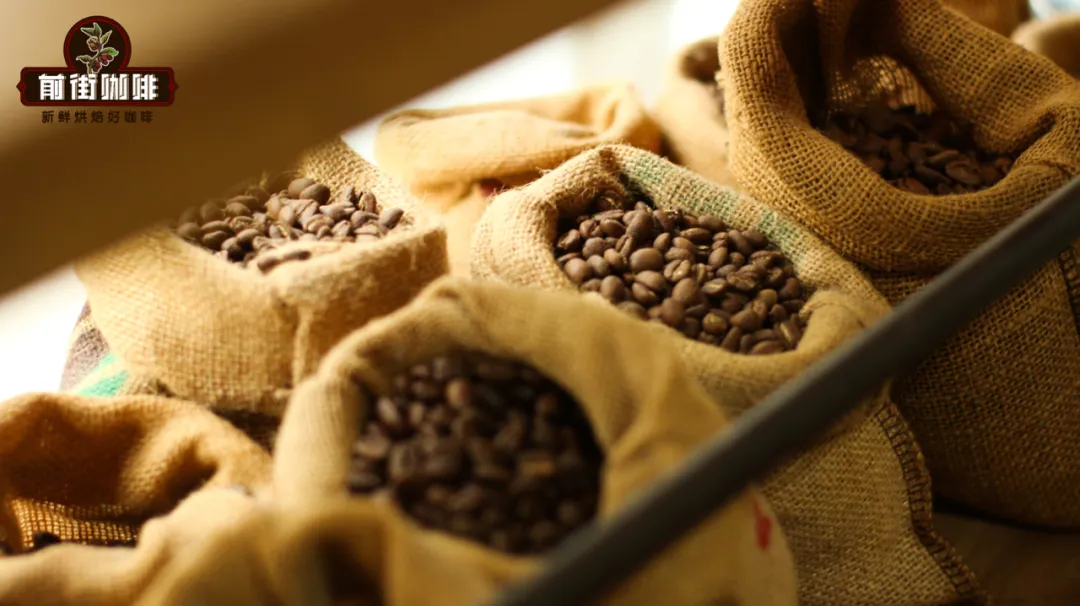
② Bean selection: Although this brewing method is suitable for coffee beans of various roast levels, Front Street recommends pairing it with medium to light roast beans. If using dark roast beans, the coffee won't be undrinkable, but the rich, highly sweet aftertaste characteristics of dark roast coffee are hard to bring out. Therefore, coffee beans with a fresh expression pair better with this brewing method.
③ Coffee grind: The book doesn't give a specific grind size, so during brewing you can pay attention to the time it takes to complete the brew. When obvious negative flavors appear in the cup (under-extraction or over-extraction) , or when the brewing time is too fast or too slow, you can adjust the grind based on the problem. For example, if the flavor isn't strong enough and the extraction time is on the short side, you can make the grind finer; if bitterness appears and the extraction time is too long, you can make the grind coarser.
④ Pouring direction: Although pouring doesn't require flow control, trying to maintain circling in one direction ensures more even extraction of the coffee grounds, while also preventing all the grounds from piling up at the bottom and causing clogging.
How to brew with the one-pour method? Next, Front Street will demonstrate how to brew coffee with the one-pour method. Actually, it's not much of a demonstration, since it's just pouring hot water. This time Front Street uses a Colombia · Hope Estate Geisha, a honey-processed medium-light roast coffee bean. Honey processing leaves a lot of sugars attached to the coffee beans, producing more caramelization reactions during roasting, making extraction a bit easier~ Parameters are as follows: Dose: 20g Coffee-to-water ratio: 1:10 Brewing water temperature: 95°C Grind setting: Ek43 setting 7 (usually setting 9.5) , slightly finer than caster sugar Dripper: 02 V60 Brewing method: one-pour
First, prepare everything, then pour the coffee grounds into the dripper.
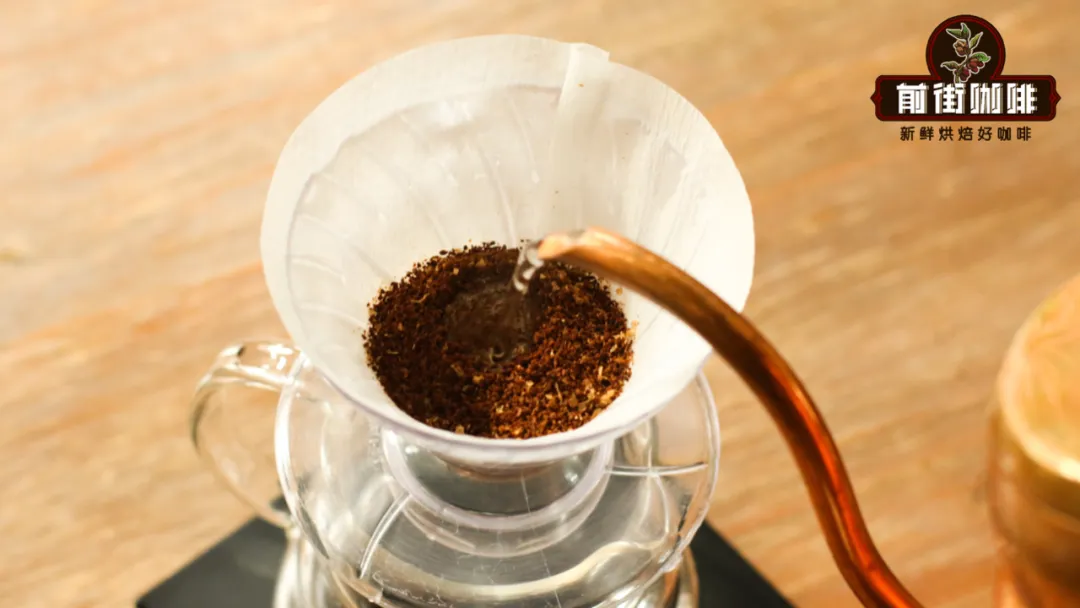
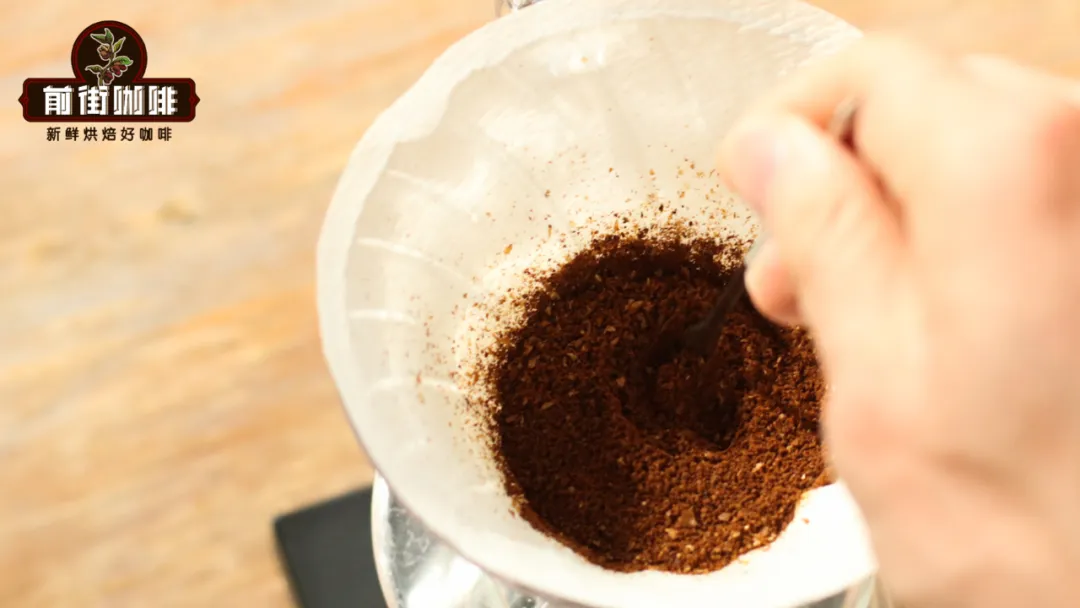
After pouring into the dripper, use any object to "carve" a well in the center of the coffee bed. The purpose of this is to allow the hot water to better contact the coffee grounds at the bottom, making extraction more even.
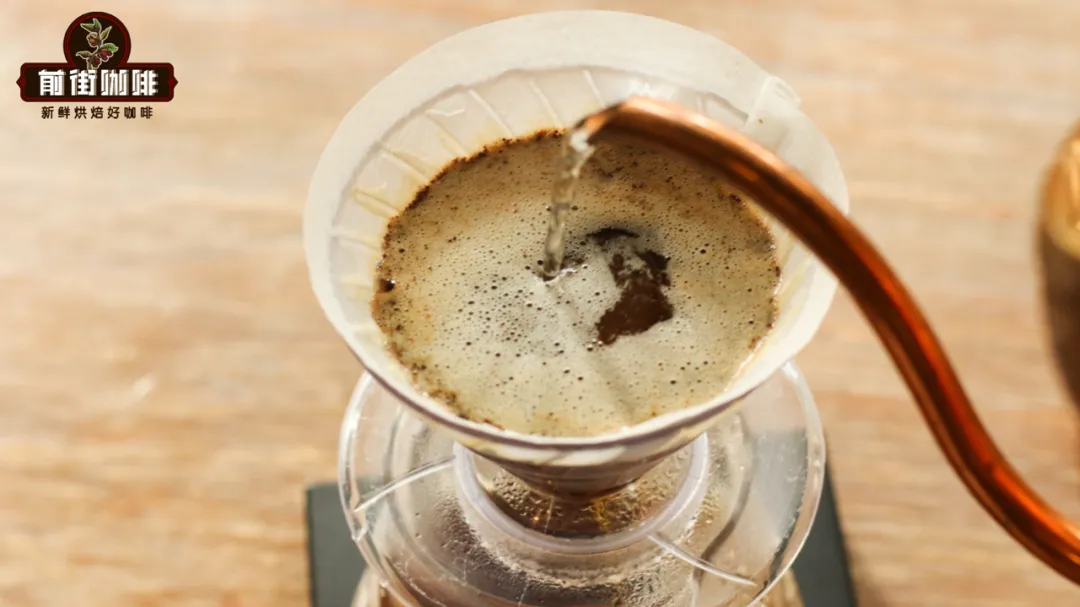
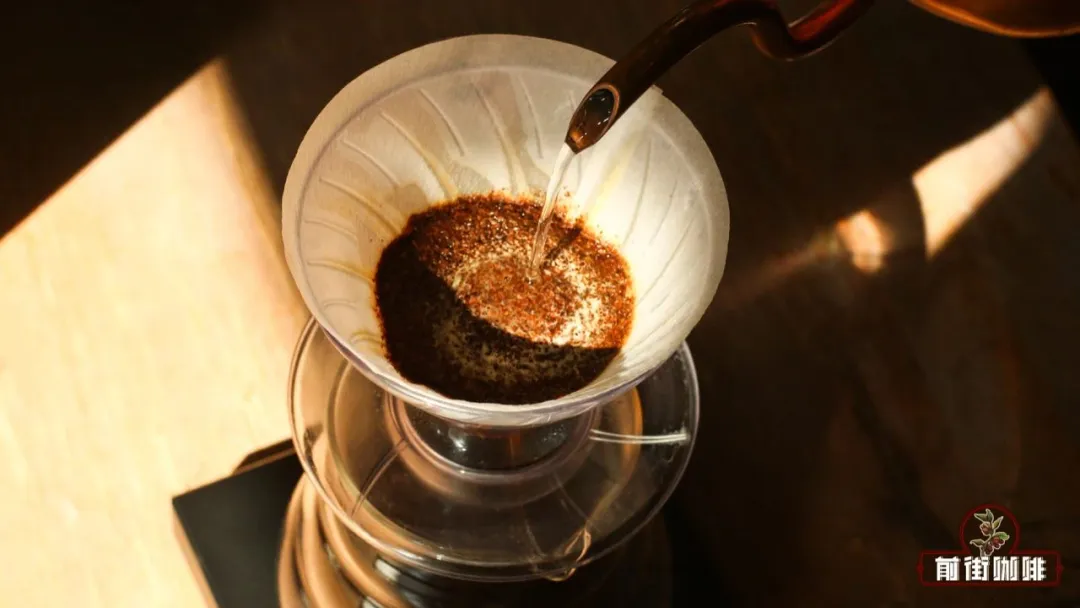
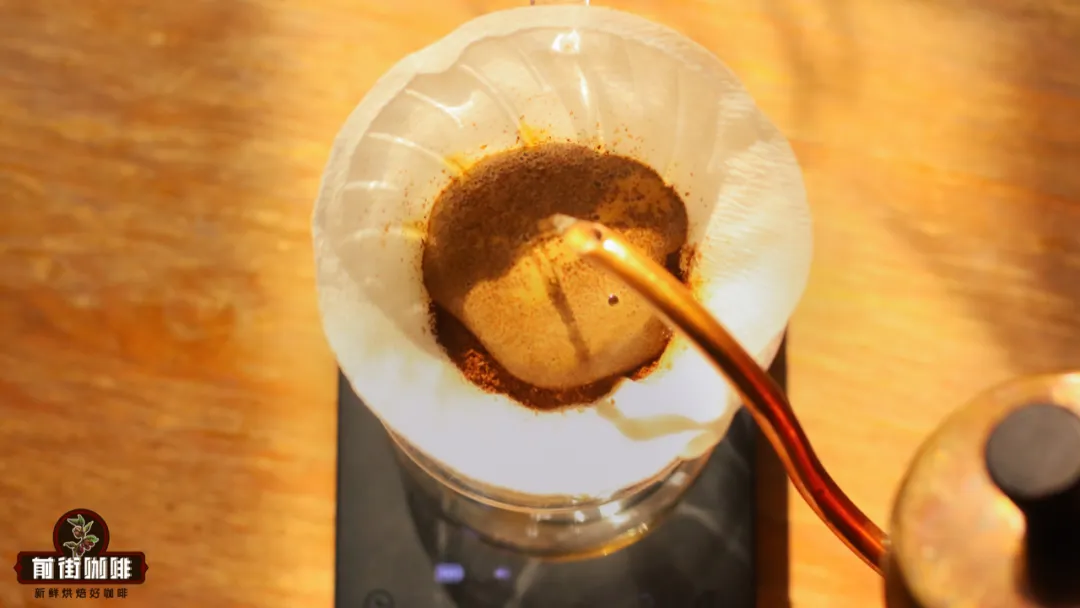
Then, pick up the gooseneck kettle and pour all 200ml of hot water in a large stream, circling like a mosquito coil. The mosquito coil circling method is to pour water from the center and gradually expand outward in circles; after reaching the outermost circle, pause briefly, repeat the large circles, then gradually contract inward in mosquito coil fashion, trying to pour all the hot water within 15 seconds.
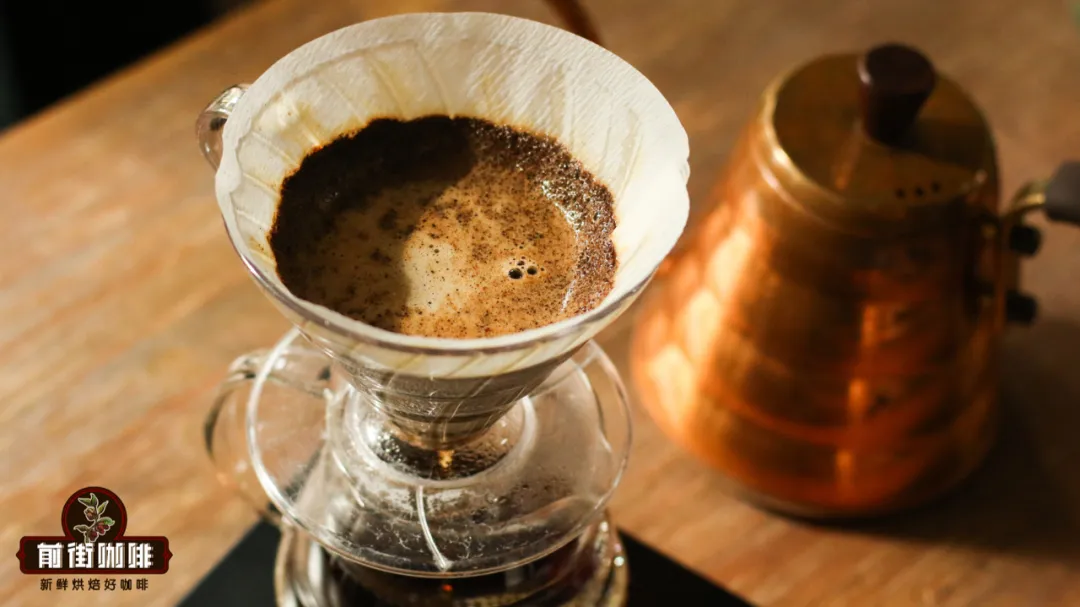
After pouring is complete, just wait quietly for the coffee liquid to finish dripping to end extraction.
Total time was 1 minute 36 seconds, fairly close to what Tetsu Kasuya considers ideal. Now let's taste: on the palate, you can clearly feel grape, rose, and berry flavors, with a black tea finish, prominent acidity and sweetness, and a very smooth mouthfeel.
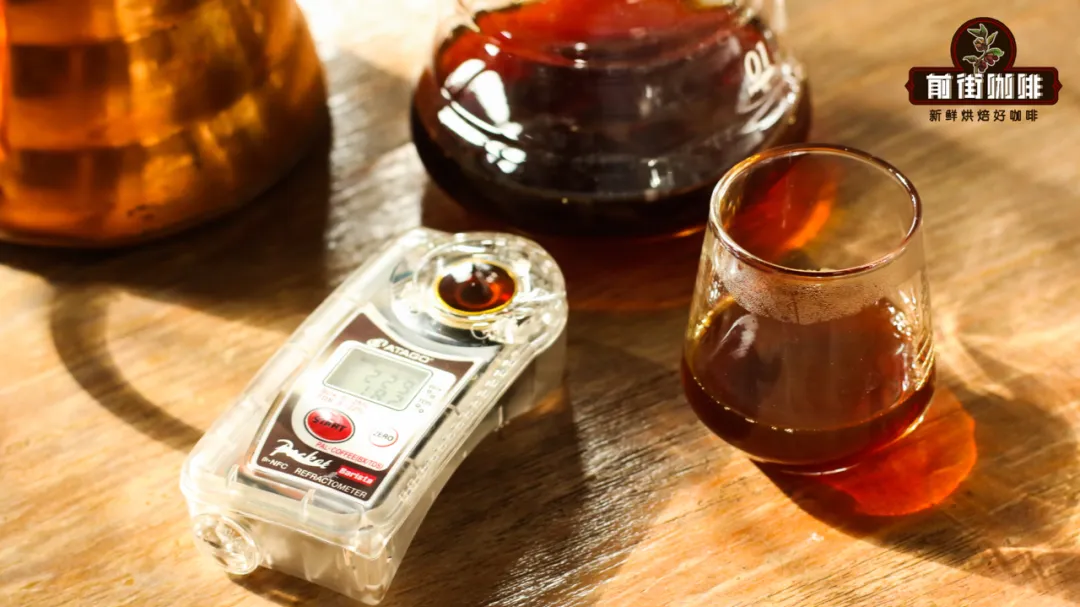
Measured with a concentration meter, the coffee concentration is 1.82% and the extraction yield is 16.1%—solidly high-concentration, low-extraction. Although the concentration is as high as 1.82%, it doesn't taste bitter or lacking in flavor at all; instead, it's very easy to drink and the flavors are prominent—an acceptable taste and concentration.
So, if you're troubled by never being able to brew coffee well, or find your usual brewing method too troublesome, then why not give the one-pour method a try. It's both simple and effective~
- END -
The above content is compiled by CoffeeHunters, a coffee news website.


