








Do Dark Roast Coffee Beans Really Lose All Their Acidity?
Dark roast coffee can still taste sour. Coffee's acidity comes from organic acids already present in green beans, such as chlorogenic and citric acid, plus acetic acid formed when sugars caramelize during roasting. A darker roast breaks down more of those organic acids, so acidity falls, but it does not vanish. Bitterness and smoke and chocolate aromas usually mask what remains.
Roast level shifts the balance rather than removing acidity, which is why the common saying that lighter roasts taste more acidic and darker roasts more bitter can mislead. Acidity becomes easier to notice in dark roast when the cup is brewed weaker, when the beans are older, or when the roast is uneven. Perceived acidity also depends on how the drinker tastes it.
Many people believe that dark roast coffee should be completely free of acidity, but is that really the case? Front Street Coffee has noticed that some friends unexpectedly taste acidity in dark roast beans, and even suspect that the roaster's roasting was inadequate. In fact, the sources of coffee's acidity can be divided into the organic acids originally present in green beans and the acetic acid produced by caramelization reactions during roasting. The darker the roast, the more organic acids decompose, and the acidity decreases accordingly—but it does not disappear entirely. The reason the acidity in dark roast coffee is hard to detect is that the intense bitterness and signature aromas of smoke and chocolate mask it. This article will explain, from the perspectives of the causes of acidity, differences in roast degree, and perception mechanisms, why dark roast coffee may still carry acidity, and in which situations the acidity is more likely to be tasted.
Front Street Coffee has found that many coffee enthusiasts hold a fixed impression about dark roast beans—for example, believing that dark roast coffee should have no acidity at all. The starting point of this discussion was that a friend told Front Street Coffee he tasted acidity in a cup of dark roast coffee, which completely contradicted the theory he had originally learned, to the point that he once suspected the shop's beans had not been roasted dark enough.


"The lighter the roast, the more acidic the coffee tastes; the darker the roast, the more bitter the coffee tastes"—many friends have long been familiar with this saying. And most people's misunderstanding of dark roast coffee is precisely caused by this saying.

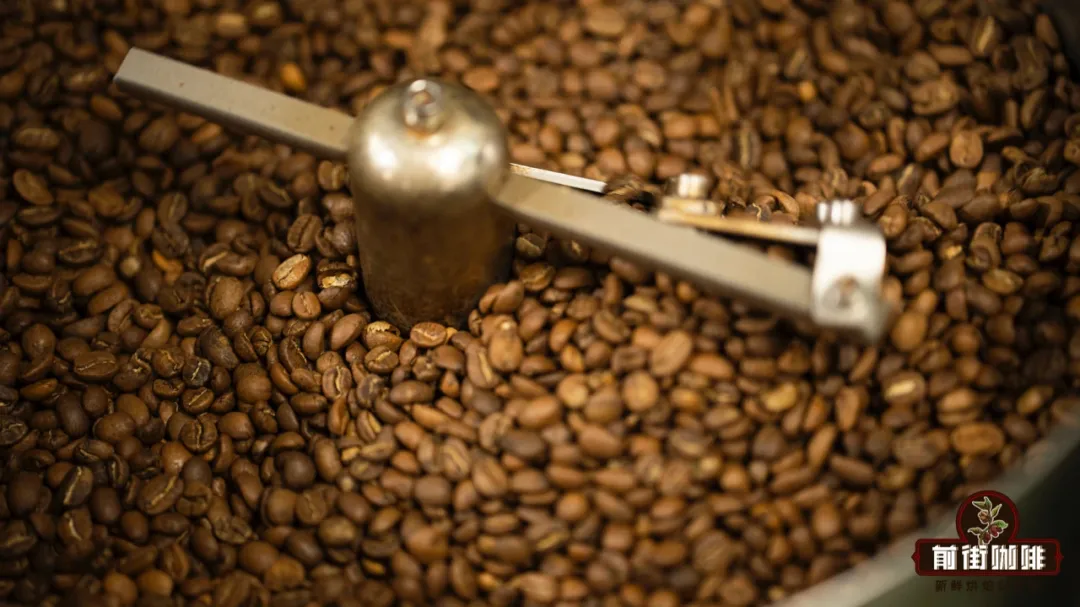
This saying itself is not wrong; it just easily leads people to the misunderstanding that "dark roast coffee is completely free of acidity."


Dark roast coffee does have acidity—it's just relatively less obvious.
Where does coffee's acidity come from?
The sources of acidity in coffee can be divided into two categories: native organic acids and newly formed acids from roasting. Native organic acids refer to the organic acids already present in green coffee beans, such as chlorogenic acid, citric acid, malic acid… while newly formed acids from roasting refer to the acetic acid (vinegar acid) produced by sugars through caramelization reactions during roasting.
In an article a couple of days ago, Front Street Coffee mentioned that the organic acids in green coffee beans gradually decompose and transform during roasting. The lighter the roast, the less the organic acids decompose and transform; the darker the roast, the more they transform—and organic acids are one of the important sources of acidity in coffee. So this is why lighter roasted coffee is more acidic and darker roasted coffee is more bitter. Because when coffee is roasted darker, the decomposition of organic acids lowers the acidity.
However, this does not mean that dark roast coffee is completely free of acidity. Because organic acids do not decompose completely, even after the coffee is roasted past second crack, a small amount of organic acids still remains in the coffee, contributing acidity. At the same time, the acidity in coffee is not provided solely by organic acids! During roasting, sugars are converted into acetic acid through caramelization reactions, and acetic acid gradually increases as the roast degree deepens.
So we can know that the acidity in coffee will not disappear as the roast deepens; it's just that their proportion in the coffee becomes smaller. But under normal circumstances, we cannot taste obvious acidity in dark roast coffee, because the acidity in dark roast coffee is masked by a "sleight of hand"!
Why is the acidity of dark roast coffee hard to detect?
Under deep roasting, coffee develops an intense bitterness brought by carbonized substances and caramelization products. Compared with acidity, we humans are more sensitive to the perception of bitterness, and moreover, the amount of bitter substances is not small, so the trace acidity of the coffee is masked.
In addition, after deep roasting, coffee carries signature aromas such as smoke and chocolate. Because aroma dominates the sense of smell and takes priority in creating associations for us, it further weakens the perception of acidity.
In summary, we can understand why it is difficult for us to taste obvious acidity in dark roast coffee. It is both because the acidity itself is already low, and because the acidity is masked by the bitterness and aroma of dark roast coffee.
Why can some people taste acidity in dark roast coffee?
If you perceive acidity in dark roast coffee, then it may be caused by these situations. One is that this coffee itself is a coffee relatively rich in "acid content," so even after deep roasting, it still retains acidity that can be noticed; or it may be because this cup of coffee has been under-extracted, and the dissolved substances are not enough to completely mask the acidity, which is why you have the chance to catch the coffee's acidity.
Of course, it may also be because your senses are relatively sensitive, so even subtle acidity can be caught by you~
- END -
The above content is compiled by CoffeeHunters, a coffee news website.


