







How Does Stirring the Bloom Affect Coffee Extraction?
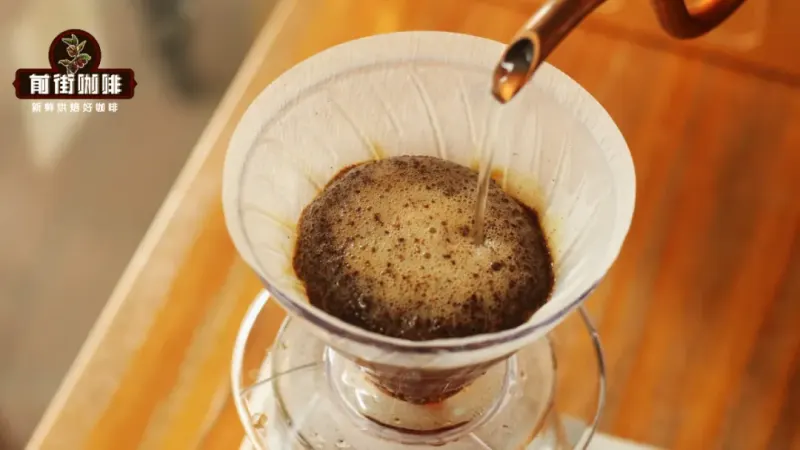
Stirring during the bloom stage of a pour-over pushes water through the coffee bed far more aggressively than pouring alone. Because water tends to flow along the path of least resistance, a dry dose wets unevenly, and some grounds stay dry while others soak. A gentle stir with a tool turns the bed over, so all the coffee particles meet water at roughly the same time, which raises extraction uniformity and speeds up the release of soluble flavor compounds.
Tool agitation differs from agitation caused by the pouring stream. The core of coffee extraction is the movement of soluble material out of the grounds and into the water, and stirring increases contact between the two. That extra push means grind size, how hard the tool is moved, and how many stirs are used all shape the result, so the technique is also used to fix a stalled brew or to shift parameters deliberately.
In the world of pour-over coffee, the agitation method is a more aggressive extraction technique than water-stream agitation. It works directly on the coffee bed through a tool, accelerating the release of soluble flavor compounds. Front Street Coffee shared this method last year, but did not elaborate on the specific steps. This article will systematically outline the three main applications of the agitation method—during the blooming stage, as a remedy when extraction efficiency is insufficient, and its use when actively adjusting parameters—and will take a deeper look at the key details to watch out for when using agitation, such as grind size, agitation intensity, and number of stirs, to help coffee enthusiasts master this technique more precisely.
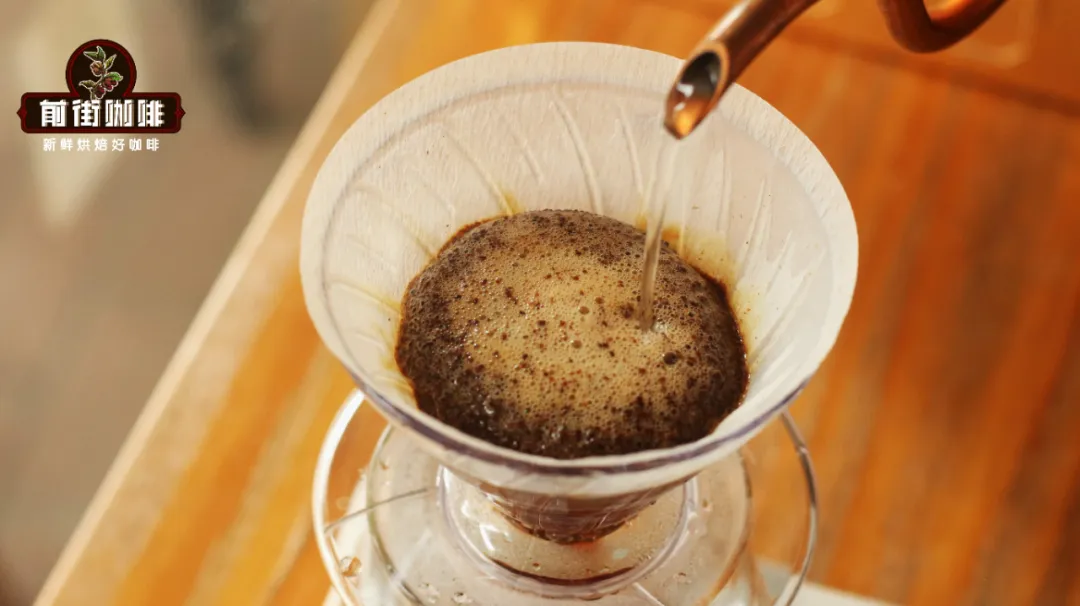
Around this time last year, Front Street Coffee introduced a more aggressive approach than agitating with the pouring stream—the "agitation method," which involves directly turning over the coffee bed with a tool. Like water-stream agitation, the core purpose of tool agitation is to speed up the dissolution rate of flavor compounds. The essence of coffee extraction is the transfer of soluble components from inside the coffee particles into the water, and agitation drives the water flow, allowing the coffee grounds and water to make fuller contact, thereby improving extraction efficiency. Compared with plain water-stream agitation, however, tool agitation produces a noticeably greater boost in extraction.
Since Front Street Coffee's article last year did not focus on the specific ways to use the agitation method, today we will fill in the application approaches for several different scenarios, in the hope of helping everyone understand and use this technique more thoroughly.
1. Using it during the blooming stage
As the name suggests, this means adding an agitation motion to the blooming step of a pour-over, and it is also the moment when many coffee experts most often employ the agitation method. That is because agitating during the bloom can significantly improve extraction uniformity.
It is worth briefly reviewing the meaning of blooming here; Front Street has mentioned it almost every day recently, so you surely already understand it well: the purpose of blooming is to let the carbon dioxide inside the coffee grounds, which hinders extraction, escape, creating a more ideal extraction environment for the hot water to be poured in next. Therefore, we use a small amount of hot water to first wet the dry coffee grounds.
However, water is inert and will preferentially flow toward areas of lower resistance, so the small amount of hot water used during blooming may not fully wet every coffee particle. This means that coffee grounds not touched by the hot water and unable to degas during the bloom cannot quickly release their internal flavor compounds in the subsequent extraction, resulting in uneven extraction.
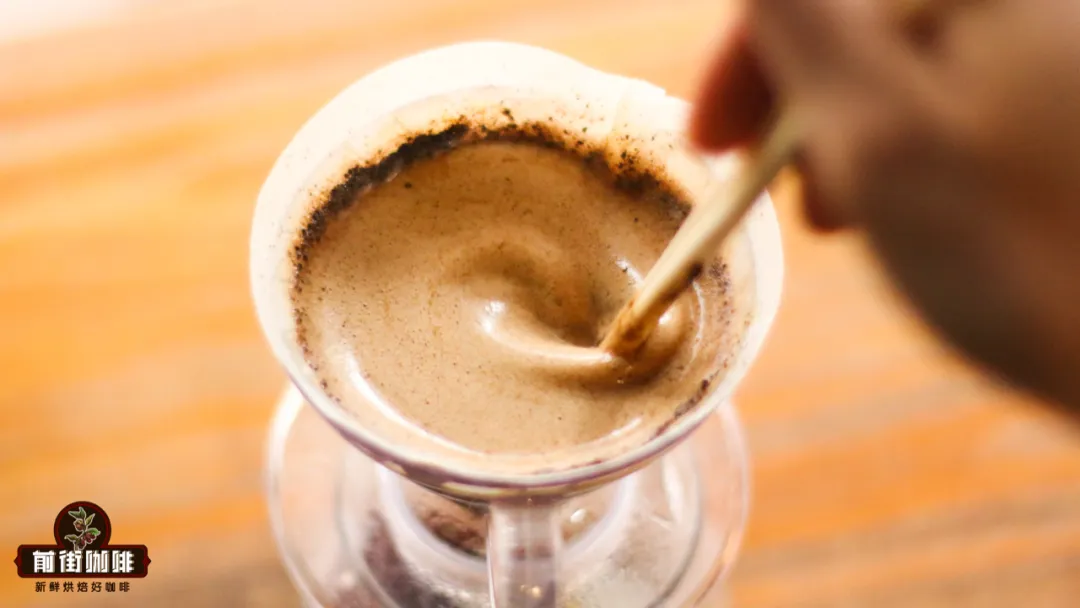
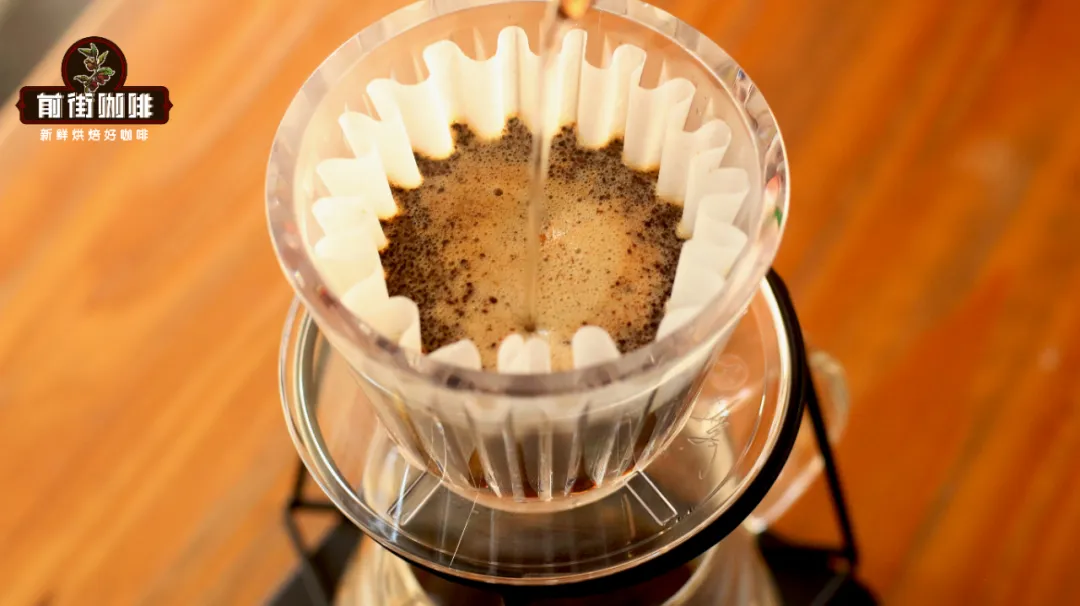
If we add agitation during the blooming process, we can break up the original structure of the coffee bed, making the contact between water and coffee grounds more uniform and reducing the negative effects of channeling.
The specific operation is not complicated: after pouring the bloom water, take any tool and stir the coffee bed—front to back, left to right, or in circles are all fine—and about 5 stirs is enough.
2. Using it when extraction efficiency is insufficient
The second applicable scenario is when extraction parameters deviate from the preset values, such as when the water temperature is a few degrees lower than the target, or the grind is a few notches coarser than the target. In this case, introducing the agitation method is a good remedy.
This is because when the parameter deviation is too large, conventional brewing methods find it hard to fully dissolve the flavor compounds in the coffee. But as long as we use additional means to raise the dissolution efficiency of flavor compounds, we can still get a relatively fully extracted cup of coffee even if the extraction parameters are not up to standard.
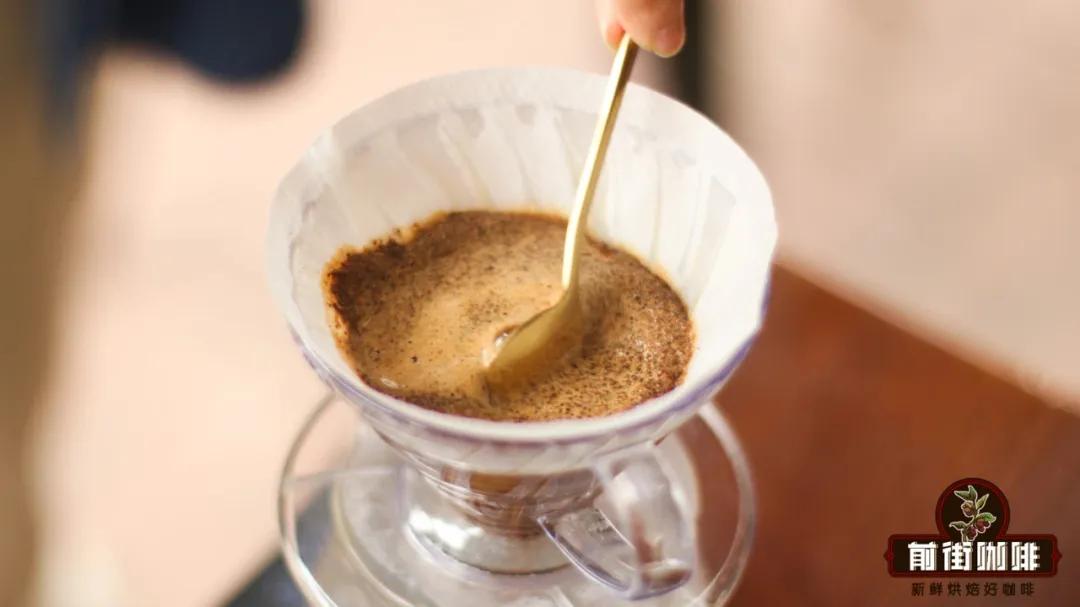
For example, the parameters Front Street Coffee normally uses to brew a pot of light-roast beans are: 15 grams of coffee, a 1:15 coffee-to-water ratio, EK43 grinder at setting 10, and 92°C water temperature. But if by accident the EK setting becomes 12, or the water temperature is only 88°C, then in a situation where the parameters differ so greatly from the original settings, by adding an agitation motion during brewing we can bring the final cup to a relatively complete degree of extraction.
(To be honest, chopsticks really are very handy, but disposable chopsticks are not recommended, as they easily introduce off-flavors.)
The number of stirs depends on how large the parameter deviation is; the greater the deviation, the more stirs are needed during brewing. Note that agitation is best concentrated in the early stage of brewing, first to dissolve as much of the acidic and sweet compounds as possible in the early stage, and second to avoid releasing a large amount of bitter components in the final stage.
3. Actively using it during brewing
Of course, besides the cases above where the agitation method is used for passive reasons, many coffee enthusiasts also actively add agitation to their brewing routine. For example, deliberately coarsening the grind to reduce the extraction efficiency of the parameters themselves, thereby creating room for adding agitation, with the aim of more easily brewing a good cup of coffee.
Another approach is to set very extreme parameters and then add agitation during brewing. For example, the iced coffee recipe Front Street Coffee shared before uses a finer grind, a higher water temperature, and the agitation method during brewing. In this way, a fully extracted cup of coffee can be obtained in a short time with a very small amount of water.
Precautions for using the agitation method
But it must be noted that the agitation method gives a very large boost to extraction efficiency. If you do not want to drink a cup with prominent bitterness after agitating, it is best to adjust the parameters accordingly first. In other words, you should plan the extraction in advance and clarify which parameters need to be increased and which need to be decreased after adding agitation, so as to ensure the coffee does not become over-extracted due to excessively high extraction efficiency.
Take the iced coffee plus agitation approach just mentioned as an example: although the coffee grounds used are finer and the water temperature is higher, because the amount of brewing water is reduced, the extraction time is also shorter than usual. That is why the final cup does not show over-extraction.
There is one more point worth noting: when using the agitation method, it is best to decide the intensity and number of stirs according to the coarseness of the grind, because fine particles easily sink to the bottom after agitation and clog the filter paper. The finer the grind, the more fine particles there are. When the coffee is ground very fine, using the agitation method should avoid touching the coffee grounds at the bottom layer as much as possible, and you should not stir too vigorously, so as to reduce clogging and prevent over-extraction caused by clogging.
- END -
The above content is compiled by CoffeeHunters, a coffee news website.


