







How Does Coffee Extraction Logic Apply to Brewing Tea?
An espresso machine can brew tea at espresso strength, because coffee extraction and tea extraction follow the same basic principle: pressure and a small amount of water dissolve flavor compounds quickly. A hands-on test confirmed the concentration is reachable, but it also brought clogged portafilter baskets, tea fragments seeping into the cup, and hard-to-clean grinders.
The test documented the full process, from choosing a grinder and adjusting tea leaf dosage to controlling the coffee-to-water ratio and extraction time. The practical advice is to expect those pitfalls before trying it, or to use dedicated tea extraction tools instead of copying coffee parameters directly.
The extraction principles of coffee and tea are essentially the same. Since an espresso machine can use pressure to extract highly concentrated coffee in a short time, can it also be used to brew a cup of "espresso-strength tea"? Front Street did a hands-on test with this question in mind: from choosing grinding equipment and adjusting tea leaf dosage to controlling the coffee-to-water ratio and extraction time, they fully documented the entire process of brewing tea with a coffee machine. The experiment proved that a coffee machine can indeed extract tea with a concentration comparable to espresso, but many pitfalls were encountered along the way—difficult grinder cleaning, clogged portafilter baskets, and tea fragments seeping in and affecting the taste, among other issues. This article will share the specific parameters and operational details, and give Front Street's practical advice: if you really want to try it, be mentally prepared, or get dedicated tea extraction tools.
Although the operation methods are not entirely the same, most extraction methods can actually be interchanged between coffee and tea. So Front Street believes that many friends who have been drinking coffee for years have had this thought pop into their heads: "Can I stuff tea leaves into a coffee machine and extract a shot like espresso?"
Everyone knows that the extraction logic of a coffee machine differs from conventional methods. With pressure assistance, it can dissolve coffee flavor compounds "completely" with very little water in an extremely short time. Since the "solvent" (water) in the "solution" (coffee) is minimal, the concentration is naturally very high.

Thanks to this high concentration, espresso can serve as a base for creating various specialty coffee drinks. Adding it won't dilute the drink's taste, and it allows the coffee flavor to come through clearly in the entire cup. Since tea and coffee are essentially the same in terms of extraction, can tea also use the coffee machine's pressure extraction to produce a highly concentrated tea?
Undoubtedly, the answer is yes, for the same reasons Front Street mentioned above. However, since the two do have inherent differences, you can't completely copy the coffee extraction logic when using a coffee machine to brew tea. So today, Front Street will talk about how to use a coffee machine to extract an "espresso" version of tea. How to use a coffee machine to extract an "espresso" of tea? First, you need to understand that if you just throw tea leaves directly into the portafilter basket and start extracting, you definitely won't get highly concentrated tea. Because the gaps between tea leaves are too large, the coffee machine can't build up pressure at all, and the extracted tea will at most be a bit stronger than regular brewing. To make highly concentrated tea with a coffee machine, the first step is to pulverize the tea leaves. Like coffee beans, it follows Fick's law of diffusion: the rate of substance release is positively correlated with contact area. So to quickly dissolve the substances in tea leaves, you first need to increase the tea's water-contact surface area through grinding.
Front Street was also trying this for the first time, so they started with the Ek43's finest grind and a single-shot basket to avoid waste. For the tea, they chose aged white tea, because it was the only kind available in the shop, and it was hidden in the cabinet
. Then, as Front Street mentioned earlier: When brewing tea, you can't completely apply the coffee extraction logic. This is because most tea leaves expand more than three times in volume when they encounter hot water, so you should appropriately reduce the dosage when using a coffee machine to brew tea. Therefore, the parameters Front Street used for this extraction were: 10g tea leaves, ground at Ek43 setting 0.
The tea "particles" ground at setting 0 were extremely distinct. After a simple tamp, you can lock the portafilter onto the coffee machine and start extracting!
As you can see, the flow rate during extraction was very fast, producing 100ml of tea in under 20 seconds. Although the tea color was much darker than regular brewing, this clearly didn't meet our goal, so the grind needed to be finer. Since setting 0 was already the limit of the shop's Ek43, Front Street switched the grinding tool to an espresso grinder. The tea amount remained the same, but the grind setting was adjusted from Ek43's 0 to the Galileo Q18's 1.2, which was the optimal grind setting Front Street obtained this morning for Today's Warm Sun.
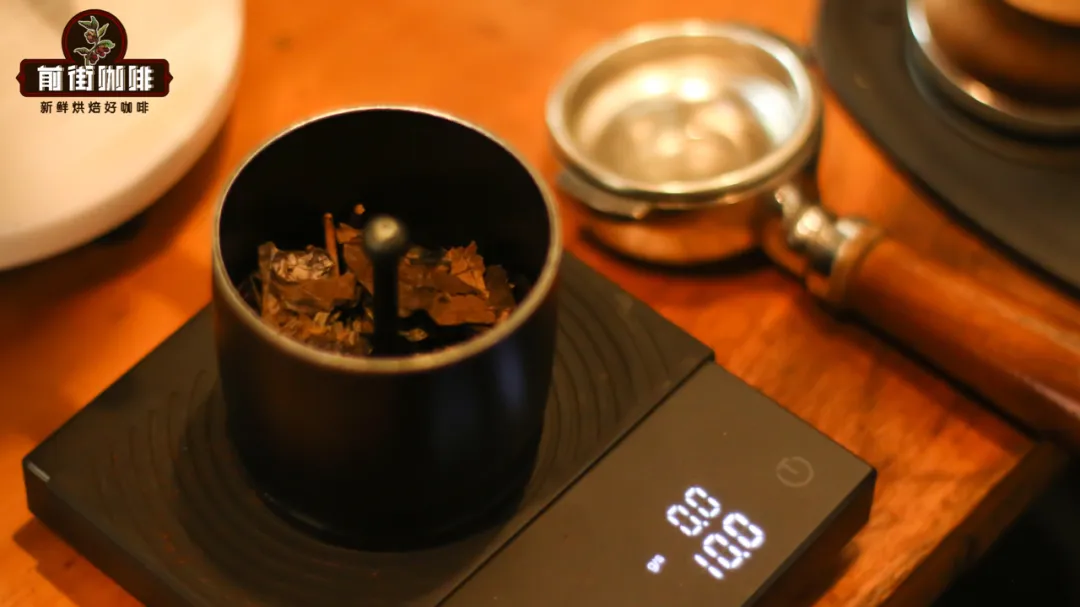
If nothing unexpected happens, something unexpected is about to happen. Because the espresso grinder's bean inlet is too small, the larger flaky tea leaves simply couldn't get in and couldn't be ground. But this isn't without a solution—the plan is to manually crush them first, then pour them into the grinder. So all the customers who visited this morning saw Front Street's sorry figure digging out tea leaves.
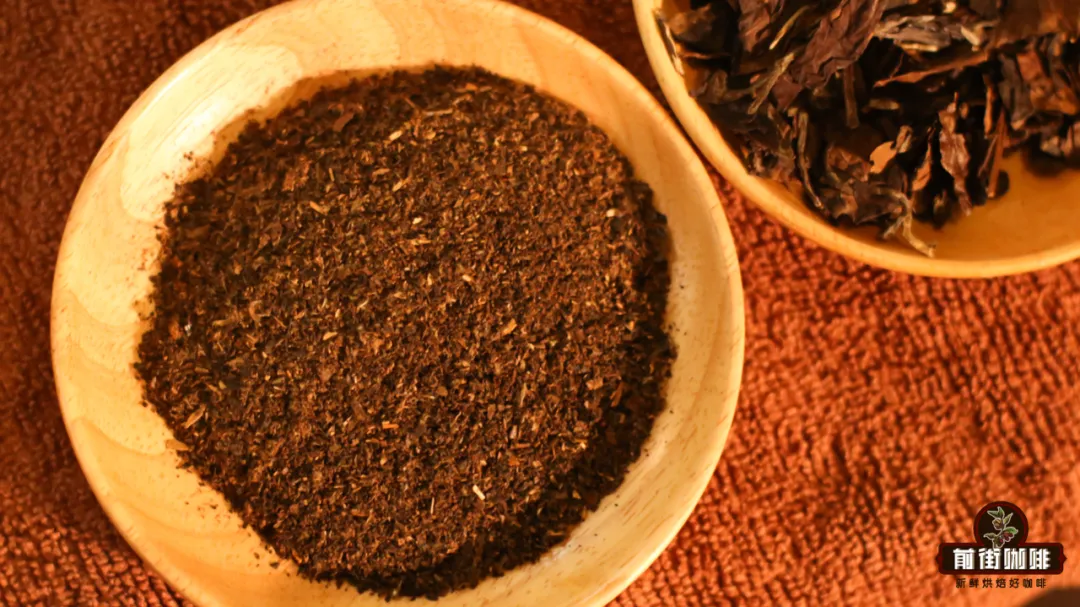
After all the fuss, the tea leaves were finally ground as desired. Compared to what the Ek produced, it was indeed much finer—truly worthy of being an espresso grinder. Similarly, after a simple tamp, it was loaded for extraction. (Customer friend: Guess why a coffee grinder is called a coffee grinder)

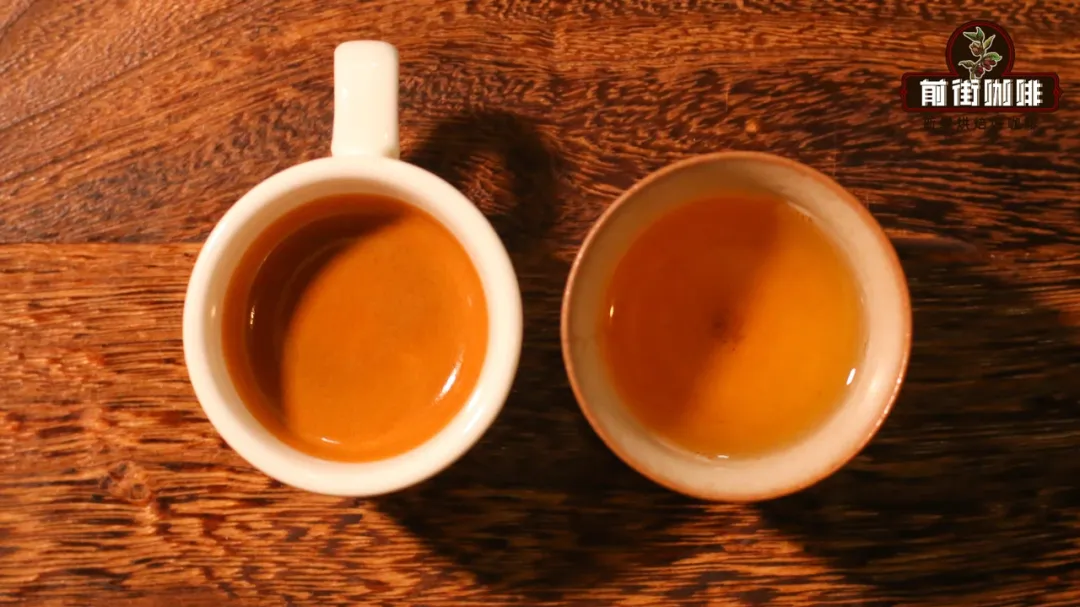
This time the flow rate was indeed much slower compared to the previous one, but it can only be compared to the previous one, because this time extracting 100ml of tea took 30 seconds, with the pressure at around 6 bar. Although the tea color was darker than before, it was clear that this cup still didn't meet our concentration requirements. So based on experience, Front Street adjusted the grind five steps finer in one go. (Left is the first shot, right is the second shot)
This time, finally, a relatively ideal tea grind was achieved—just by looking at the appearance, you could see the tea particles were very fine. So Front Street directly switched from the single-shot basket to a 20g double-shot basket, and increased the tea amount to 18g.
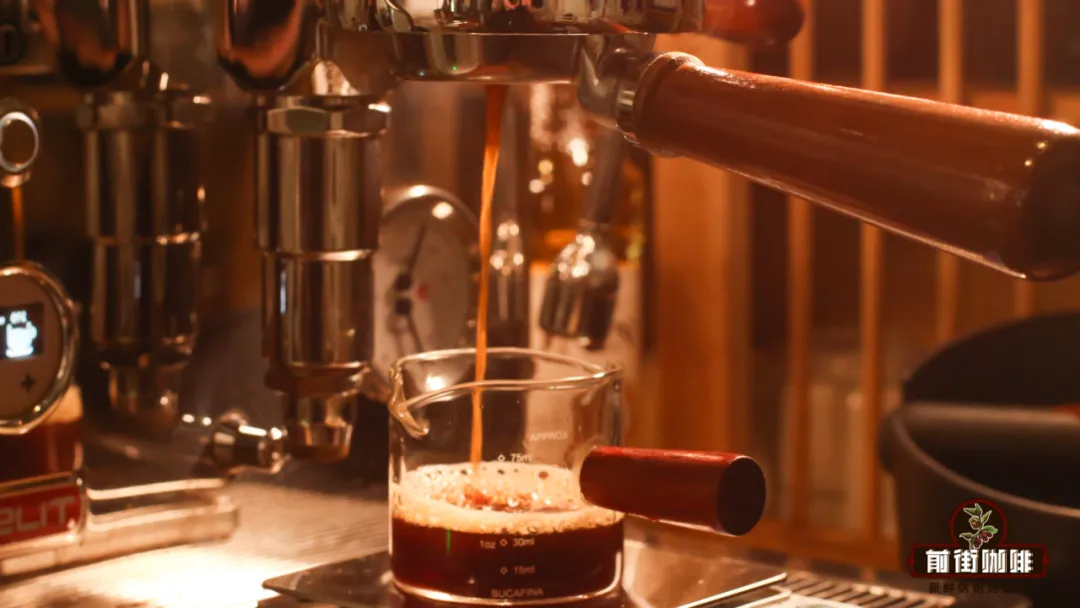
The result was no surprise—this extraction indeed went in the direction Front Street had envisioned. The flow rate was slow, the pressure gauge rose to 10 bar, and you could even see noticeable "crema" (which is actually foam). And because tea differs from coffee, Front Street set the coffee-to-water ratio here at 1:3.5, meaning 18g of tea leaves extracted 63ml of tea. As the tea leaves gradually expanded, the flow rate became slower and slower. When the time reached 32 seconds, the liquid weight was approaching the target, and Front Street ended the extraction.
Needless to say, just from the appearance of this cup of tea, you could tell its concentration was quite high, because the color was very dark.
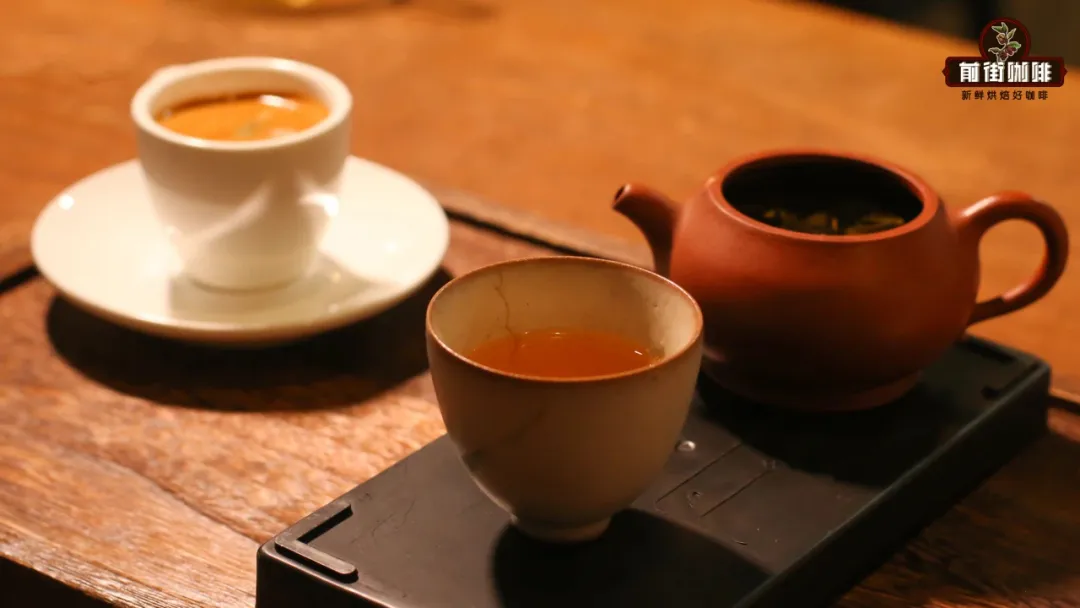
Front Street took a small sip with a spoon—this cup of tea indeed had a concentration comparable to espresso. And because tea differs from coffee, even without deliberately controlling the extraction, it won't develop sharp acidity or burnt bitterness from over-extraction—at most it'll be a bit astringent (and it can be extracted multiple times). Just like espresso, such a highly concentrated cup of tea isn't suitable for most people to drink directly. So Front Street made it into a "tea latte" by adding milk (which is actually milk tea, except the base uses tea as concentrated as espresso, borrowing the meaning of "tea-ppuccino"), at a ratio of 1:6, meaning 30ml of tea with 180ml of milk, one cold and one hot.
Whether it's the cold "tea latte" or the hot "tea latte," Front Street can say the taste is impeccable! Because the tea concentration was high enough, even with so much milk added, the tea flavor wasn't masked. The mouthfeel was rich, the taste balanced and aromatic—really very good! And this might also be thanks to Front Street's "timely stop-loss," not over-extracting, so this cup of tea didn't have overly prominent astringency. In summary, a coffee machine can indeed extract a highly concentrated cup of tea. However, Front Street does not recommend directly using a coffee grinder and coffee portafilter to make "espresso tea." Because cleaning the grinder after grinding tea leaves is very troublesome, and since the ground particles are too small, a large amount of tea fragments pass through the basket and seep into the tea, affecting the taste somewhat. And even!! Most of the basket's holes were clogged, requiring careful rinsing to clean properly! Really very troublesome!
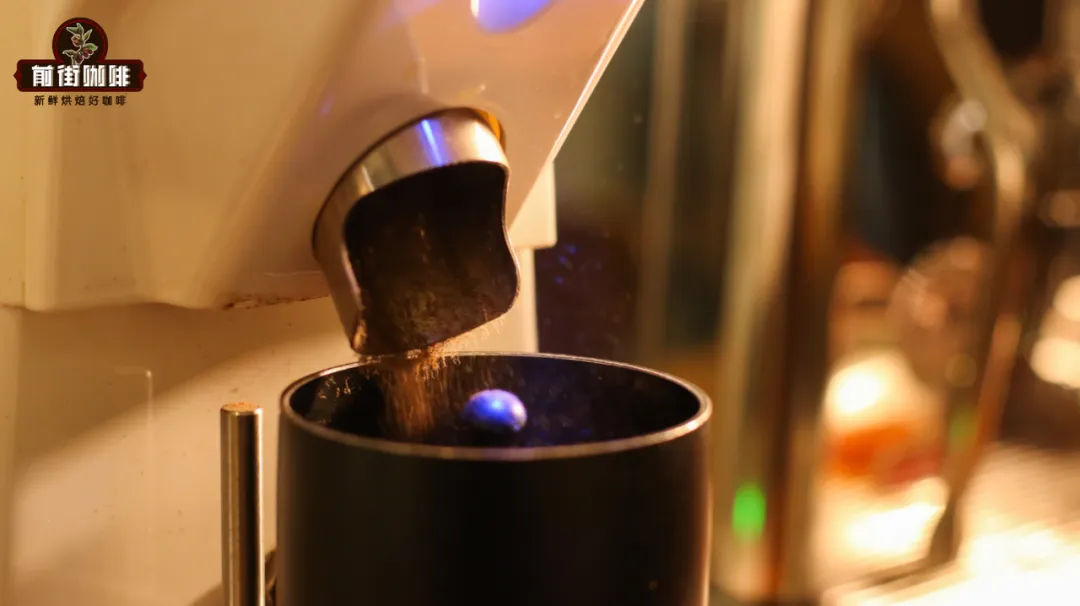
So, if everyone wants to try this, Front Street suggests being mentally prepared. Or get professional tea extraction tools, so you won't end up in a sorry mess after extraction due to a momentary impulse. (Finally, Front Street's shop does not offer this, does not offer this, does not offer this~) - END -
The above content is compiled by CoffeeHunters, a coffee news website.


