







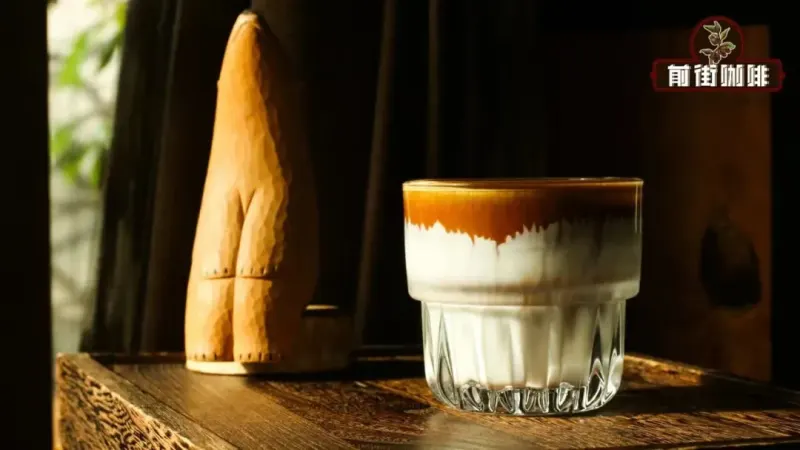
How Do You Make a Dirty Coffee With Clear Layers?
Dirty coffee is hot espresso poured over cold milk so the shot floats on the surface and bleeds downward. Three things control whether the layers hold: the distance between the milk surface and the espresso spout, the temperature gap between milk and espresso, and the milk's concentration.
When the espresso sinks and mixes in, the result is an iced latte without ice, with no contrast in color or mouthfeel. Home brewers often see just a thin crema layer or none at all. Front Street Coffee's guidance focuses on those three variables so the drink keeps its bold-then-soft structure and stays distinct from a latte.
Dirty coffee has long been adored by coffee lovers for its visual effect of espresso floating on the surface of iced milk and slowly seeping downward, along with its contrasting mouthfeel. But many people who try to recreate it at home often run into the problem of the espresso sinking straight to the bottom and blending in, making it impossible to achieve any layering at all. Drawing on Front Street Coffee's practical experience, this article systematically breaks down the three keys to making dirty coffee: controlling the distance between the milk surface and the espresso spout, maximizing the temperature difference between the milk and the espresso, and increasing the milk's concentration. It also answers the essential question of how dirty coffee differs from a latte. Whether you want to make a dirty coffee that delivers both looks and taste, or you want to figure out exactly how it differs from an iced latte, this guide will give you clear answers.
The method for making dirty coffee isn't actually complicated—a quick search on any major content platform will turn up plenty of tutorials. The core principle is simply pouring freshly extracted hot espresso over iced milk, letting it first float on the surface and then gradually bleed downward over time.
It's called "dirty coffee" because the finished drink looks like a pristine white canvas that's been stained. And that intensely contrasting taste experience—bold first, then soft—comes precisely from this layered structure.
Although dirty coffee has been popular for several years now, Front Street still receives plenty of questions about the finer points of making it. The one asked most often is: why doesn't the dirty coffee I make at home look "dirty" enough?
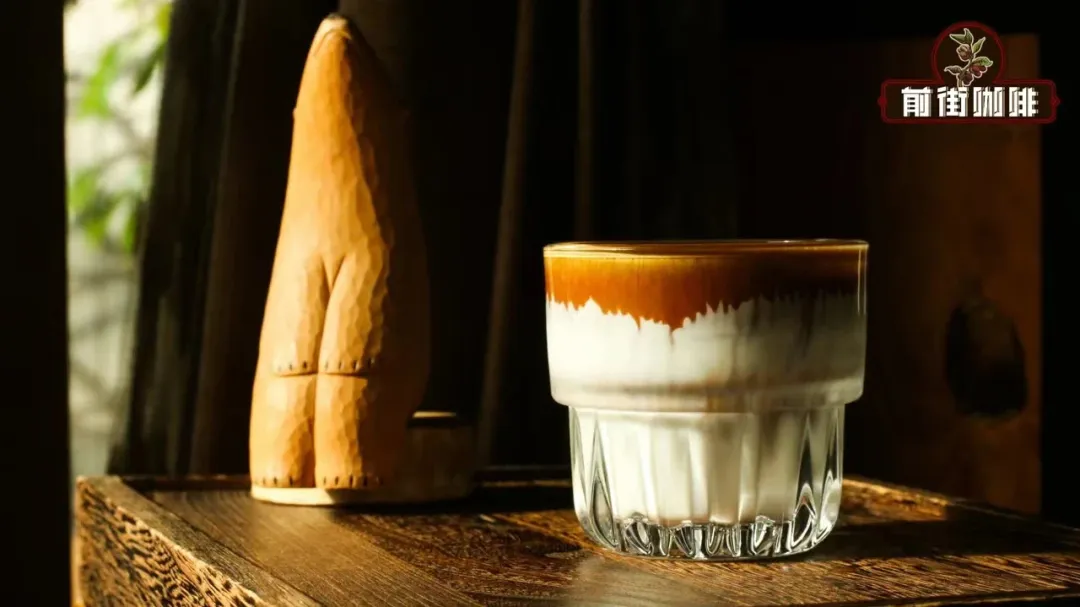
Many people end up with a finished drink that either has just a thin layer of crema floating on the milk, or shows no crema at all, with the espresso and milk completely mixed together and no color contrast whatsoever. What does this tell us? It means the espresso never formed a layer with the milk at all. That being the case, the striking contrast in mouthfeel is naturally out of the question—what you end up drinking is nothing more than an iced latte without the ice.
Don't worry—today Front Street is here to talk again about how to make a dirty coffee with clear layering and strong contrast. First, we need to understand that the reason espresso can float on the surface of milk and form layers comes down to a difference in density between the two. But many people fail to achieve obvious layering not because they chose the wrong ingredients, but because something went wrong in their technique.
1. Master the correct technique
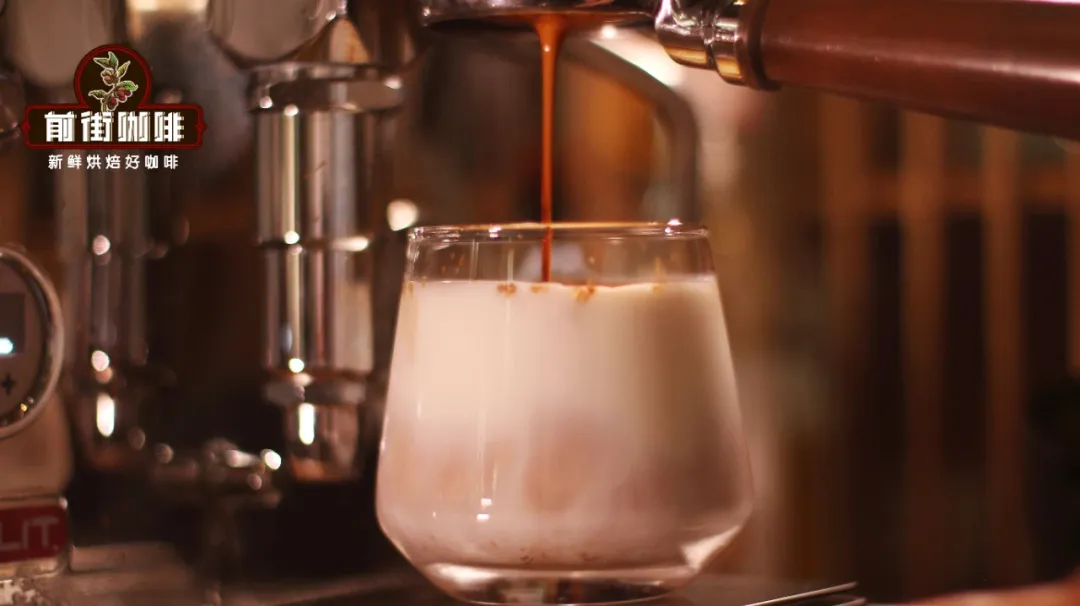
As Front Street mentioned earlier, dirty coffee tutorials are everywhere, and just from the verbal description you can tell the steps are extremely simple: just place the milk glass under the espresso spout to catch the coffee. But precisely because it's so simple, many people overlook the details—such as controlling the distance between the milk surface and the espresso spout.
Although milk and espresso separate into layers due to a density difference, the difference in density between them is actually quite small. This means that if the espresso isn't gently poured onto the milk surface but instead falls with force, it will plunge straight into the milk and mix with it. If you watch various videos carefully, you'll notice the distance between the milk surface and the espresso spout is usually very short—this way, the extracted espresso can settle steadily on top of the milk. If the milk is too far from the spout, you get the situation below:
When the milk surface is too far from the espresso spout, the extracted espresso rushes into the milk with a great deal of force. So, to make a dirty coffee with obvious layering, the first priority is to keep the espresso spout as close to the milk surface as possible. Here Front Street shares three methods—choose whichever suits your habits:
① Use something to raise the milk higher:
Most espresso machines come with a drip tray—using it to prop up the milk glass shortens the distance between the surface and the spout, weakening the espresso's impact force.
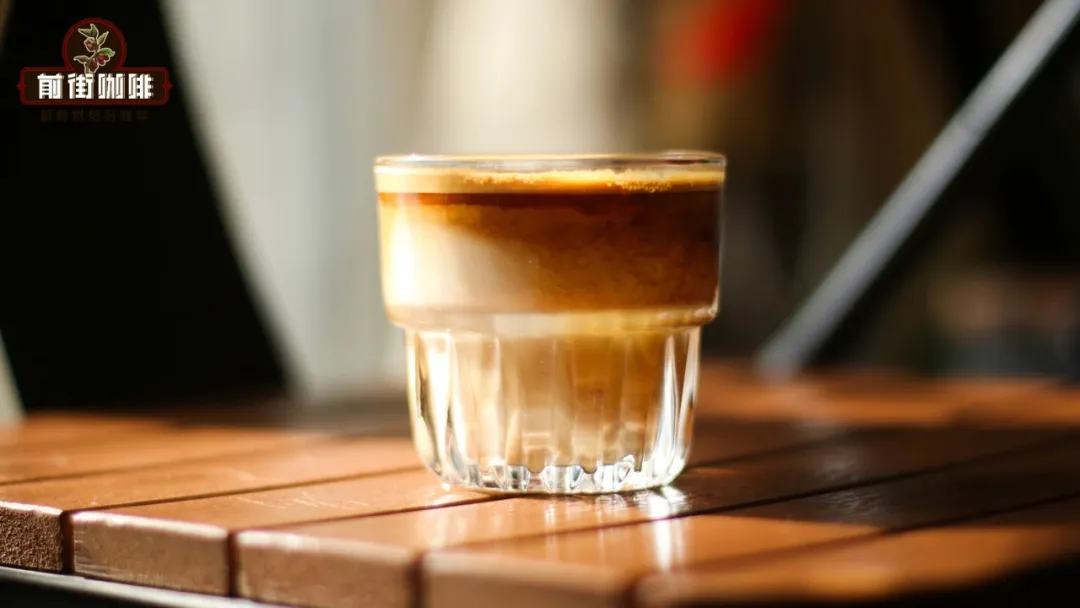
② Hold the milk glass up near the spout with your hand:
If the drip tray is too high and the glass won't fit on it, simply hold the milk glass in your hand and lift it up near the spout. This way you can close the distance between the two without any extra tools and still achieve the layered effect.
③ Place a spoon on the milk surface to absorb the impact:
This is the method Front Street uses most often, because it produces the most obvious layering. During extraction, take a spoon and place it face-up on the milk surface to catch the espresso—this way the coffee won't plunge straight into the milk due to excessive force. The espresso will flow gently from the spoon onto the milk surface, and this method produces the most outstanding layered effect.
2. Increase the temperature difference
Besides the correct technique, there are other details that can enhance the layering effect and make it last longer—such as temperature difference.
As Front Street mentioned earlier, the layering of milk and espresso is mainly achieved through a density difference, and one of the causes of that density difference is the temperature difference between the two. The lower a liquid's temperature, the higher its density, and vice versa. Iced milk has a low temperature and therefore higher density, so it can hold up the relatively lower-density espresso and form layers.
So, to make the layering more obvious and longer-lasting, you can achieve this by maximizing the temperature difference between the milk and the espresso. The espresso's temperature is fixed, so the only way to widen the temperature gap is to lower the milk's temperature. This is also why you use a chilled glass and refrigerated milk when making a dirty—the goal is to further reinforce the layered effect.
3. Increase the milk's concentration
Besides widening the temperature difference, increasing the milk's concentration can also enhance the layering effect. The higher the milk's concentration, the stronger its ability to "hold up" the espresso, making the layering more obvious and longer-lasting, with a sharper contrast in mouthfeel. This is also why purified milk took the coffee world by storm after dirty coffee became popular—the dirty coffee made with it performs even better.
How do you increase the milk's concentration? There are two options. One is to simply buy ready-made purified milk—saves time and effort, though the downside is it's a bit pricey. The other is to freeze the milk you're currently using—because when milk freezes, many substances melt before the water does, so by taking only one-third or one-half of the total volume (depending on the concentration you want) , you get a higher-concentration milk. For the specific steps, you can look back at Front Street's previous articles—we won't go into detail here.
- END -
The above content is compiled by CoffeeHunters, a coffee news website.


