







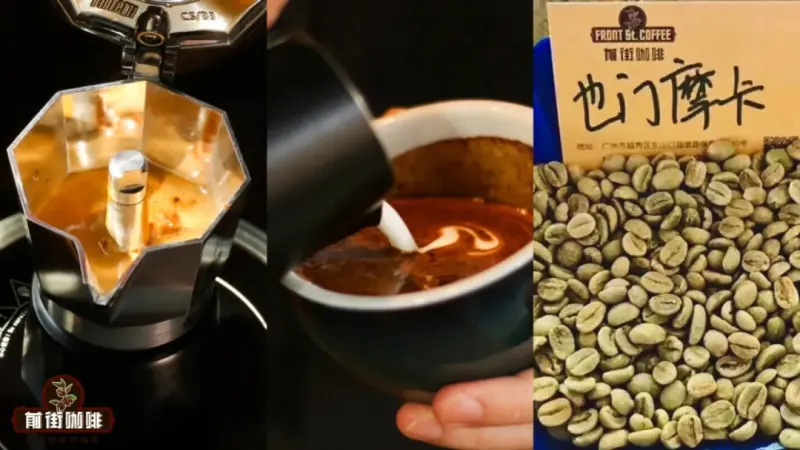
Why Do Mocha Coffee Beans Share a Name With the Moka Pot?
Mocha coffee beans take their name from Mocha, a Red Sea port in southern Yemen that was the world's main coffee trading hub from the 15th to the early 18th century. The beans did not grow there; they were exported through the port. Caffè mocha later evolved in Italy into a milk coffee with chocolate, and the moka pot borrowed the name separately.
For over three hundred years, most of the world's coffee passed through Mocha Port, the only waterway linking the Red Sea to the Indian Ocean. That trade history fixed the name on the beans, while the stovetop moka pot, invented in Italy, was named for the coffee being brewed rather than for the Yemeni city itself.
In the world of coffee, the name "Mocha" appears frequently in coffee beans, coffee equipment, and coffee drinks. What exactly is the connection between them? This article starts with the history of Yemen's Mocha Port, tracing how Mocha coffee beans got their name from the port and became popular in Europe, then analyzes how modern Mocha coffee evolved into an Italian milk coffee with chocolate added, and finally explains the naming logic of the Moka pot. The article also combines Front Street brand products to offer pairing suggestions for Mocha coffee and Moka pots, helping readers fully understand the story behind the three "Mochas."
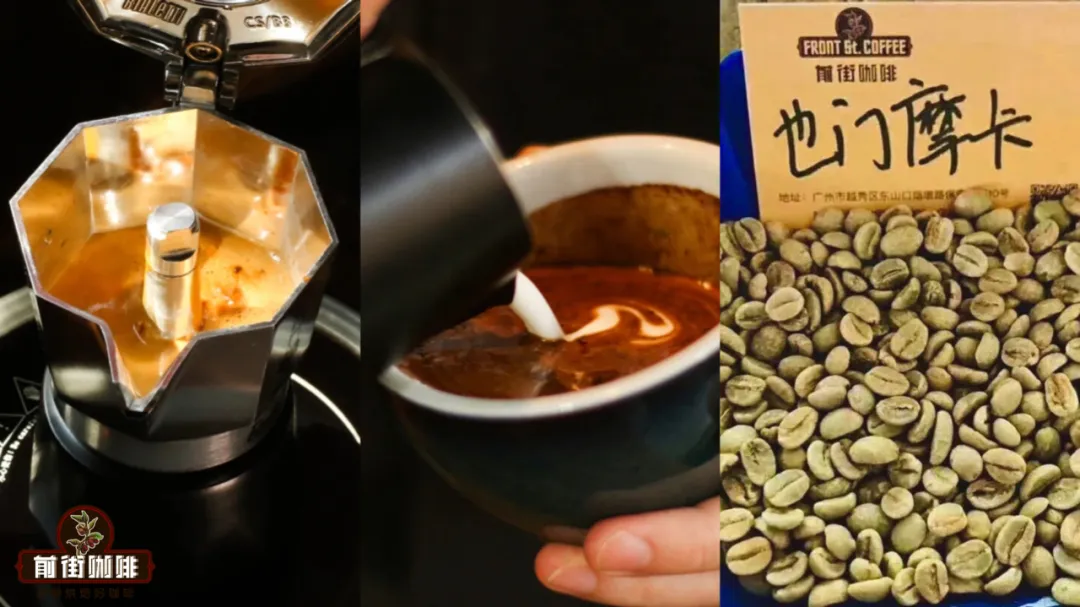
In the coffee world, the term "Mocha" has long been deeply ingrained. Whether it's Mocha coffee beans, Mocha coffee, or the Moka pot, people can't help but wonder: what exactly is the connection between these three things all called "Mocha"? Judging from the words alone, many would assume they are all related to a place called "Mocha."
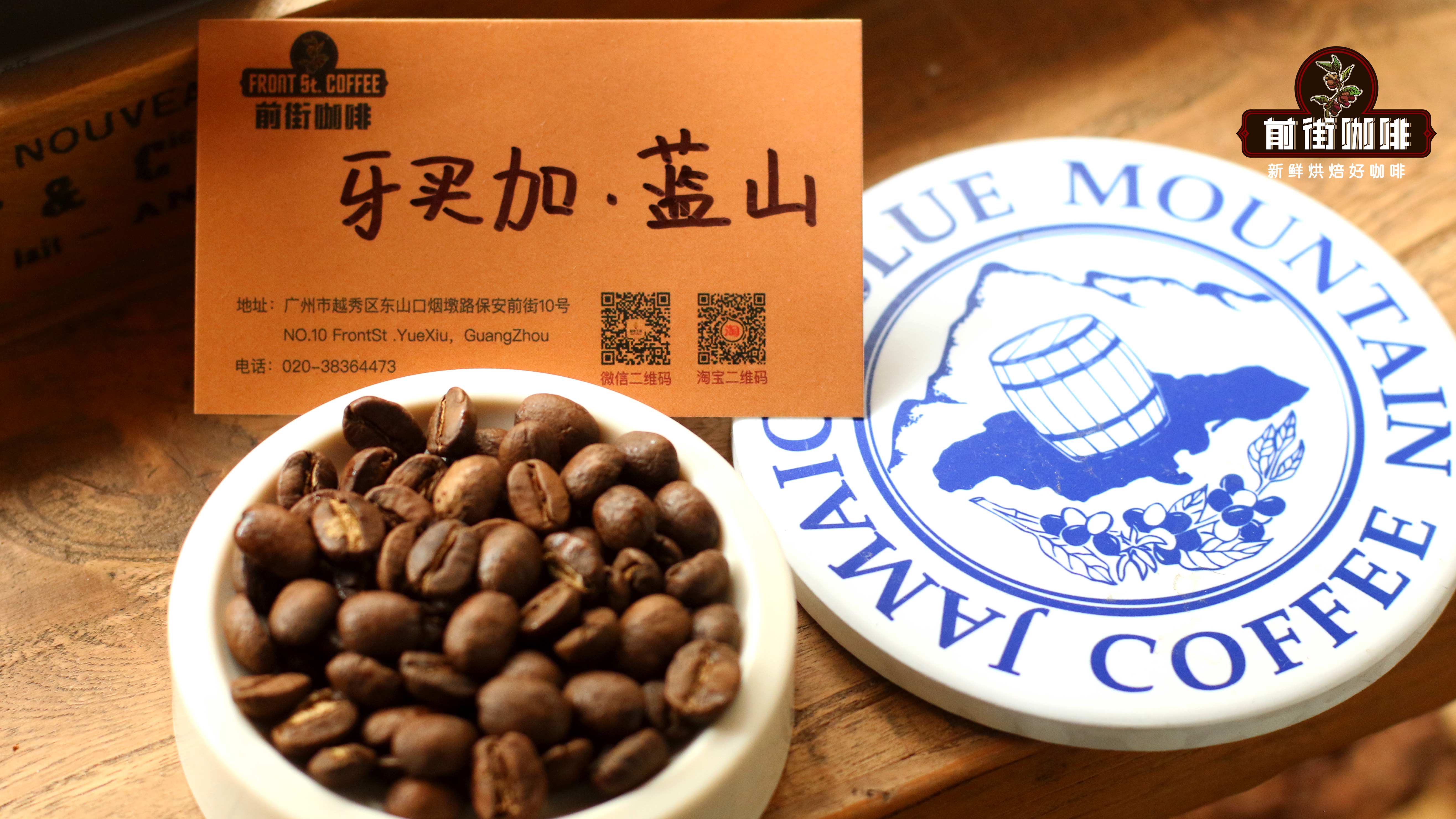
For example, Front Street Blue Mountain Coffee is named after Jamaica's Blue Mountain region. Following this logic, Mocha coffee beans would seem to come from Mocha, and the Moka pot would seem to have been invented in Mocha.
However, this is not the case. Mocha neither grows coffee beans nor is it the birthplace of the Moka pot. But that doesn't mean these items have no connection to Mocha. Today, Front Street will discuss why Mocha coffee beans, Mocha coffee, and the Moka pot all share the name "Mocha."
Mocha
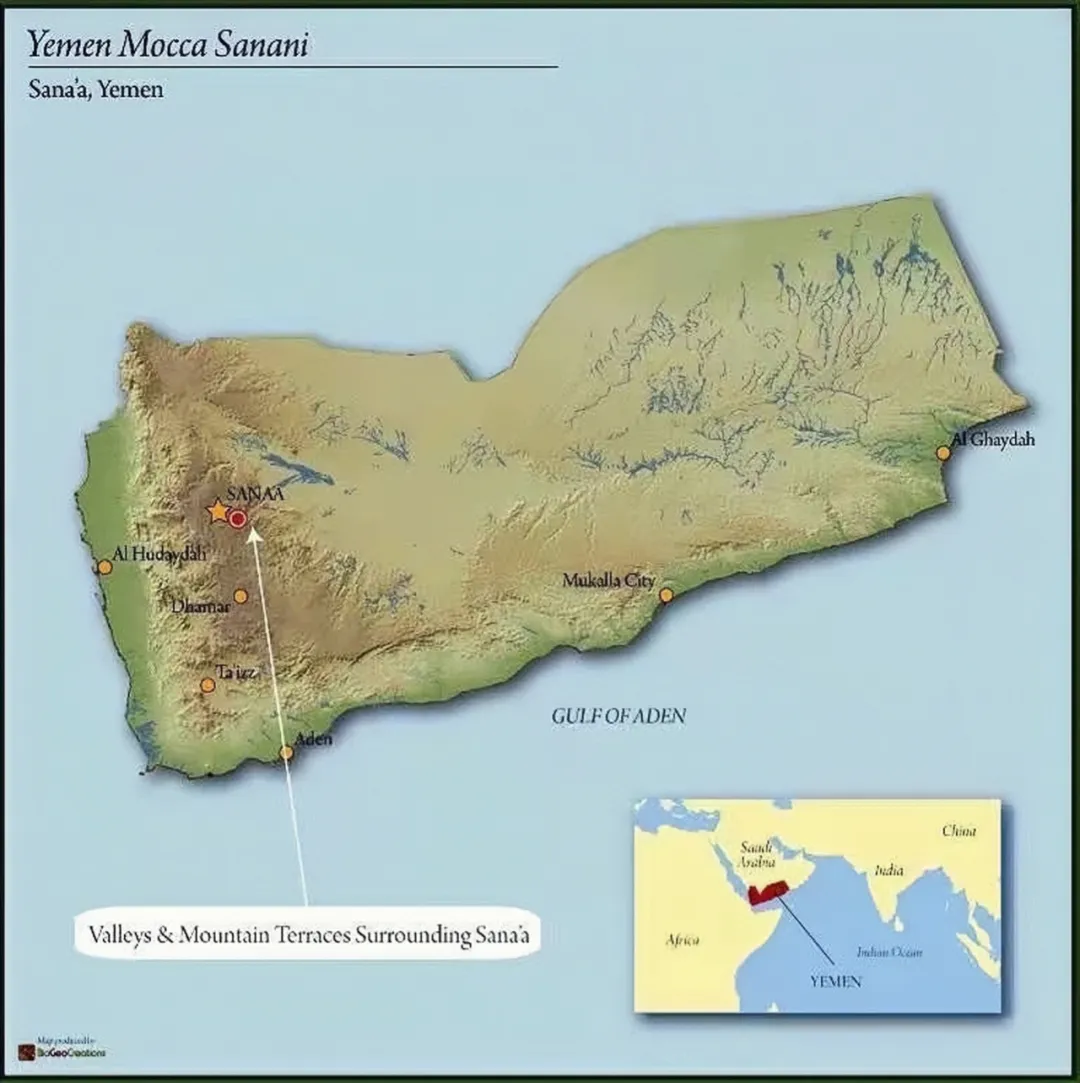
Let's first get to know Mocha. It is a port city located on the Red Sea coast in southern Yemen. In the past, Mocha Port was an extremely important transportation hub, comparable in status to today's Port of Shanghai. It was the only waterway from the Red Sea to the Indian Ocean, and all merchant ships sailing from the Indian Ocean to the Mediterranean and Europe had to pass through here.
At the same time, Mocha Port was also the earliest coffee trading hub, once the world's largest coffee trade center. From the 15th century to the early 18th century, for over three hundred years, the vast majority of the world's coffee was exported through Mocha Port. The coffee element on Yemen's national emblem shows how important coffee is to this country. And the famous Mocha coffee beans were named after Mocha Port.
Mocha Coffee Beans
Although Mocha doesn't produce coffee beans, the coffee exported from here mainly came from central Yemen (though not exclusively). It's worth noting that Yemen was the first country in the world to cultivate coffee on a large scale as an agricultural product.
After coffee was sold around the world through Mocha Port, it was widely praised for its unique chocolate flavor. But at the time, the only traceable information about the coffee was "from Mocha Port," so people simply called coffee beans exported from Mocha Port "Mocha coffee beans."
As coffee became popular in Europe, all coffee exported through Mocha Port was sold under the name "Mocha coffee." This was also related to the policy at the time: coffee sacks exported through Mocha Port were stamped with the word "Mocha," further reinforcing people's perception. Therefore, the original "Mocha coffee" referred to coffee beans exported from Mocha Port, especially Yemen-grown Mocha coffee beans with a chocolate flavor.
However, as global demand for coffee surged, colonial trading companies such as the Dutch, French, and British East India Company smuggled coffee seeds out of Yemen through various channels and planted them on a large scale elsewhere. As coffee flourished in foreign lands, Yemen gradually lost its coffee monopoly.
Due to lower coffee prices from other countries, combined with factors such as Ottoman Empire rule in the mid-to-late period, Mocha coffee's market share continued to shrink, with both production and exports declining. In just a few centuries, Yemen went from being the world's sole coffee powerhouse to a player with a tiny market share. By the early 19th century, Yemen's coffee production accounted for less than 6% of global output; today it's less than 0.1%, making Mocha coffee beans a rare and precious commodity.
Mocha Coffee
Now when people say "Mocha coffee," they mostly mean an Italian milk coffee made with espresso and milk as the base, plus chocolate products added — simply put, a latte with chocolate.
Some believe this was specially crafted to replicate the chocolate notes of Mocha coffee beans, and this theory has some credibility. It's easy to imagine that as Yemen lost its coffee monopoly, fewer and fewer Mocha coffee beans flowed into Europe. Those who loved Mocha coffee beans, unable to enjoy that rich chocolate flavor anymore, might have tried this preparation method to recreate the taste of days gone by.
Moreover, Mocha coffee beans held a status in people's minds similar to Blue Mountain in the last century or Geisha in this century. So it's also possible that this drink was specially crafted to evoke the flavor of Mocha coffee beans and given the name "Mocha coffee" to convey a sense of sophistication.
So today's "Mocha coffee" mostly refers to a drink in the espresso system made with milk and chocolate products. Because Mocha coffee naturally has chocolate flavors, it pairs very well with medium-dark roasted espresso beans — Front Street Classic Blend. It combines the roasted aroma of Brazilian Red Bourbon and Indonesian Mandheling, and to enhance the richness of crema, Front Street Classic Blend adds a small amount of Robusta, producing a coffee with rich flavors of butter, dark chocolate, and roasted chestnuts.
Moka Pot
Finally, let's talk about the Moka pot. Among these three "Mochas," the Moka pot is probably the most familiar, and Front Street often shares it too. It's also the most recently created of the three.
The Moka pot was invented by Alfonso Bialetti in Italy in the early 20th century (1933). Like espresso machines, it uses pressurized extraction, so it can also make relatively strong black coffee. With its innovative design, affordable price, and strong alignment with local culture, the Moka pot became widely popular as soon as it was launched, quickly spreading throughout Italy. But what does it have to do with Mocha... it seems there really isn't much of a connection.
The most common explanation for why the Moka pot is called a Moka pot is that by that time, the name "Mocha" was already closely tied to coffee. As Front Street mentioned earlier, when coffee first entered Europe, it was very popular, but Europeans only knew that coffee was imported from Mocha Port, so they called it "Mocha coffee." By then, the words Mocha and coffee were already linked — mention Mocha, and people immediately thought of coffee. So naming it Moka essentially translates to "coffee pot."
There's another theory that because Mocha coffee was famous for its rich flavor, Bialetti named the coffee pot "Moka" so people would immediately associate it with a device that can extract rich coffee.
Moka pot coffee has a rich, bold taste, making it very suitable for medium-dark roasted specialty coffee beans. For beginners, Front Street Black Cocoa Basic Blend is the top choice, delivering a balanced result that won't go wrong; for advanced users who enjoy floral and fruity flavors, get Front Street Strawberry Candy Espresso Blend, whose unique flavors of rose, grape, and dried blueberry leave a lasting impression.
That's the reason why three different products are all named "Mocha." We wonder if this matches your expectations?
The above content is compiled by CoffeeHunters, a coffee news website.


