







How to Brew Pour-Over Coffee Without a Scale
A broken or dead digital scale does not end pour-over brewing. The dose and the water volume can be estimated by eye: judge 15g or 20g of grounds from the height of the coffee bed in the dripper, read the dripper markings for water, and keep the ratio between 1:14 and 1:16. A three-pour blind method then brings the cup to roughly 210ml.
Front Street Coffee gathered this from its own kitchen mishaps, including a trip where the filter papers were left behind and a friend's scale that failed after long storage. Roast level shifts the bed height, so darker beans sit lower for the same weight. Timed pouring still matters, much as it does with how to work a coffee pot, so count the pours instead of weighing them.
Consistent pour-over coffee output relies on the precise measurement of an electronic scale, but if the scale breaks, runs out of battery, or no alternative tool can be found at all, does that mean we have to give up on a good cup of coffee? Starting from the two core variables of coffee dose and water volume, this article shares Front Street Coffee's hands-on experience: how to judge 15g or 20g of ground coffee by visually estimating the height of the coffee bed, reference points for dripper markings under different roast levels, the choice of coffee-to-water ratios from 1:14 to 1:16, and a three-pour blind brewing process that requires no scale. Even without equipment, mastering these techniques can still brew a qualifying pour-over of about 210ml.
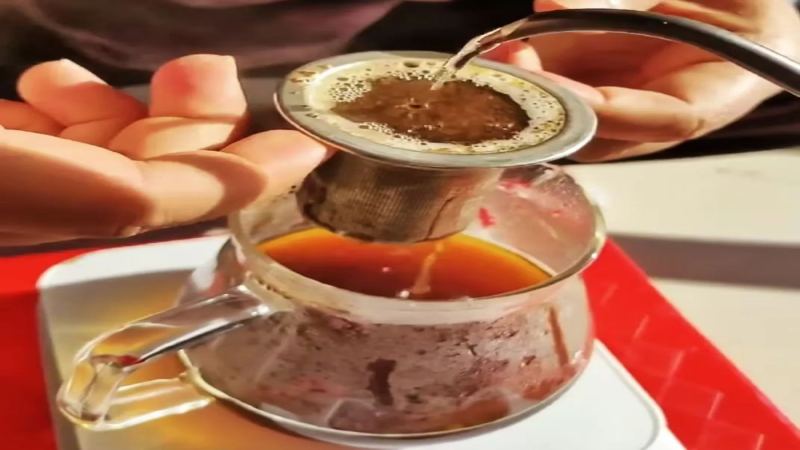
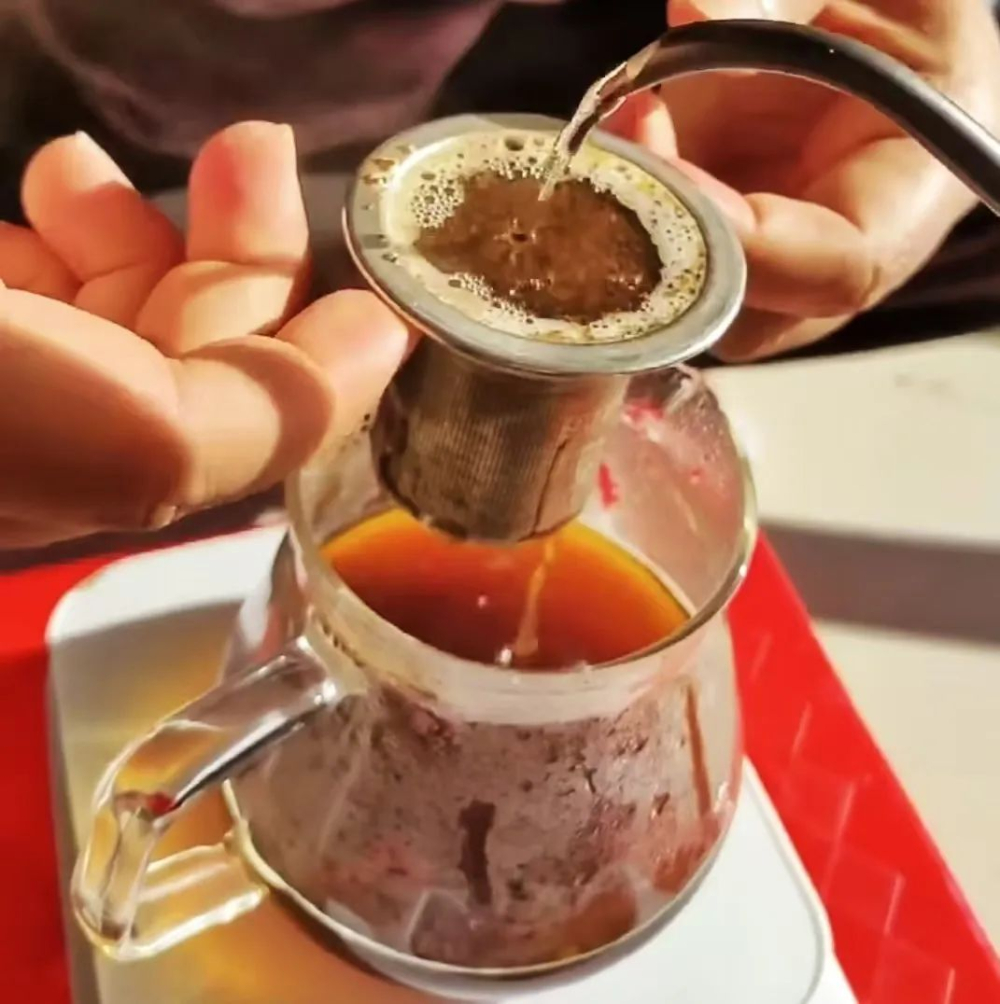
Last year, in order to be able to enjoy pour-over coffee anytime even in the countryside, Front Street deliberately stocked up on all kinds of gear and beans before setting off, but one oversight slipped through—the filter papers were forgotten. In a pinch, they had to borrow an elder's tea set at home as an emergency substitute, which led to the scene below:
And this year, Front Street received another distress signal from a friend back in their hometown: the electronic scale had sat idle too long and had given up working, and after searching the whole house, no substitute that could weigh anything could be found, so it seemed blind brewing was the only option. Faced with this extraction method that relies entirely on feel, is there any way to keep the result from going wrong as much as possible?
What role does an electronic scale play in pour-over coffee?
When equipment is complete, a full pour-over roughly includes these steps: weighing beans, grinding, placing the filter paper, boiling water, measuring temperature, pouring in the grounds, timed pouring, and removing the dripper. Each step involves quite a few subtle parameters, and a slight adjustment may shift the final flavor.
To precisely control the above process and achieve consistent output, an electronic scale is undoubtedly one of the most critical tools. It wears several hats at once: it must weigh the initial dose of grounds, feed back the extraction time of each stage, and monitor the amount of water poured in real time. So once pour-over coffee loses the assistance of an electronic scale, if we still want to brew a decent cup, we must find a corresponding substitute for each of its functions.
Setting aside the factors of the beans themselves, the flavor performance of coffee mainly depends on the coffee-to-water ratio and the extraction yield (the latter is affected by grind size, extraction duration, and filtering device). As for timing, Front Street believes it is relatively easy to solve—a phone is enough. Therefore, to make a good pour-over without a scale, dose and water volume are the toughest problems we need to overcome.
First, the issue of coffee dose
Experienced friends should know that, influenced by differences in origin, green bean grade, and variety, coffee beans come in different shapes, and the roast level also leads to differences in particle size. So when facing different types of beans, accurately controlling weight usually requires dedicated tools as an aid. Once the scale is missing, one can only infer the actual amount used based on experience.
For this reason, two years ago Front Street did a special feature—"Clever Trick! Count Out 15g of Coffee Beans Without a Scale!!" Back then, in order to find the answer, that handsome young man, with sheer determination, actually counted out the number of beans corresponding to 15g for several common types of coffee. Friends who need it can look it up themselves according to the beans on hand.
Rather than buying whole beans, some friends prefer pre-ground coffee powder for its time and effort savings. In that case, judging the actual dose of grounds can only rely on visual estimation.
According to Front Street's habits, when brewing a single serving, 15g of coffee beans is usually weighed, paired with a No. 01 cone dripper (V60 or KOKO). If it is a light-to-medium roast fruity-acidity bean, after pouring, the coffee bed height is about 3–3.5cm, that is, 2/5 of the way up the dripper; if it is a medium-dark roast, the height of 15g of grounds will reach 4–4.5cm, close to half of the dripper.
When brewing multiple servings, Front Street generally uses 20g of grounds per pot, paired with a larger-capacity No. 02 dripper. The coffee bed height for light-roast beans is about 3.5–4cm, while for dark-roast beans it is between 4.5–5cm. (Coffees represented by anaerobic fermentation mostly use medium roasting, so the coffee bed shape is usually between the above two.)
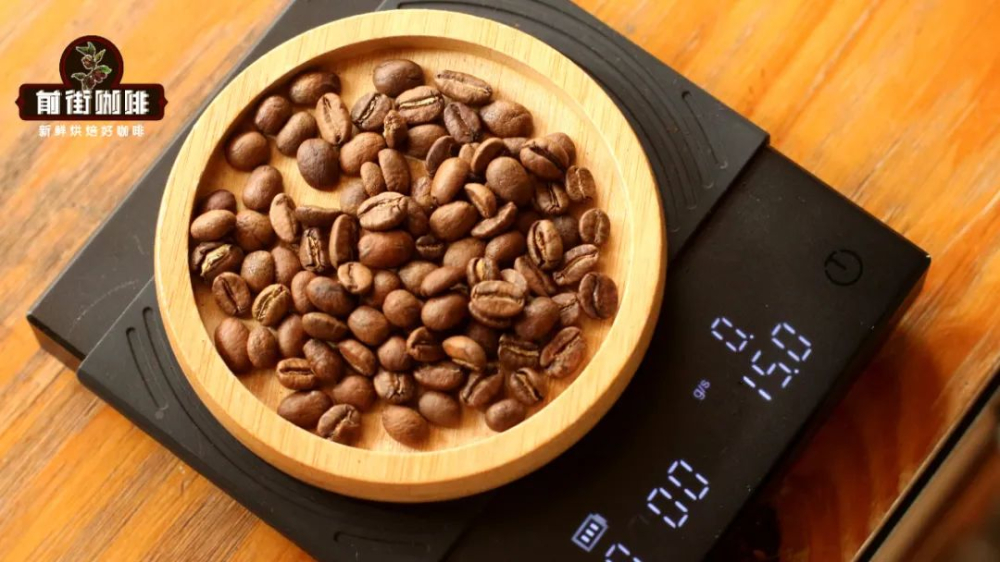
20g dark-roast beans
Next is the amount of water poured
Everyday experience tells us: if you want a stronger cup, add less water; if you want a lighter cup, add more water. The same principle applies to pour-over coffee. If you pursue a solid, mellow mouthfeel, Front Street recommends a 1:14 coffee-to-water ratio; if you like a balanced, rich flavor, 1:15 is recommended; if you prefer a soft, sweet-toned profile, then 1:16 can be used for extraction.
How do you measure water volume without an electronic scale? Not a big problem. Although there are no markings on the dripper, if you brew pour-over often, muscle memory will actually tell you during the brewing process roughly how much water you have used.
Here Front Street takes a medium-roast Flor de Dios as an example, paired with a No. 01 V60 dripper, using 15g of grounds and a 1:16 coffee-to-water ratio, corresponding to 240g of hot water that needs to be poured. Subtract the amount used for blooming (about 30g), and the remaining 210g of hot water can be divided into three segments poured in sequence.
Starting blind brewing
Step one, first use a small amount of water to bloom. Front Street has tested it: as long as the entire coffee bed is ensured to be saturated and no repeated pouring is done, the water amount will basically fall between 20–30g.
After blooming for 30 seconds, pour the second segment (70g) in a circular motion with a small stream. Finish pouring at 40–45 seconds, and the coffee bed will rise to about 2/3 of the dripper's height, then wait for it to filter through. In this step, try to keep the stream steady, and be careful not to rush to pull the coffee bed too high.
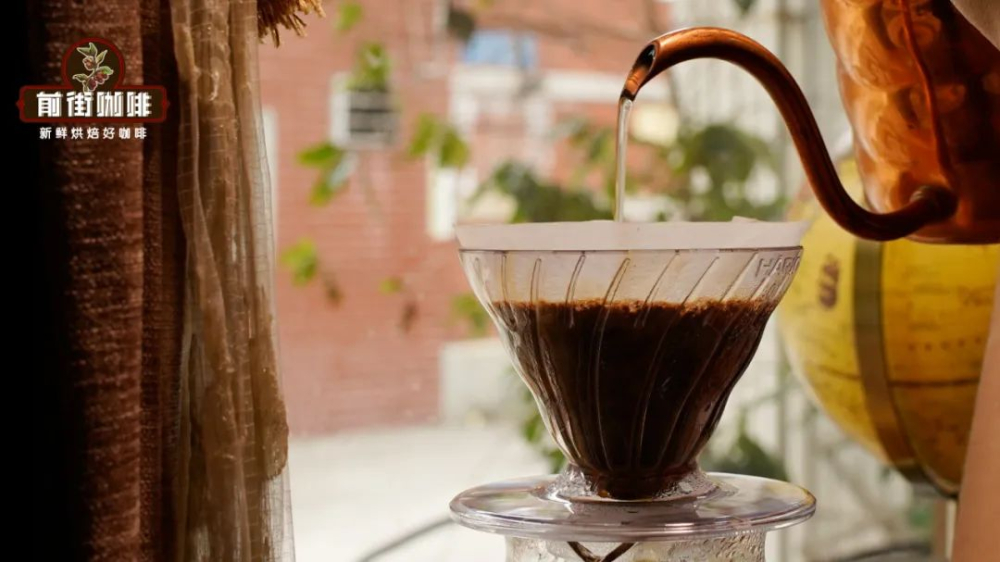
When the water in the dripper is almost drained, pour the third segment (70g) using the same technique. Finish pouring at 1 minute 15 seconds to 1 minute 20 seconds; at this point the liquid level is level with the height of the coffee wall.
When the coffee liquid is almost finished seeping through, repeat and pour the final segment (70g). Finish pouring at 1 minute 50 seconds, then quietly wait for all the coffee liquid to fall into the sharing pot. At this time the total water amount is about 230–240g.
After deducting the hot water absorbed by the coffee grounds, we can easily get a pot of pour-over coffee of about 210ml.
The above content is compiled by CoffeeHunters, a coffee news website.


