








How to fix sour cold brew and other under-extracted coffee
An under-extracted cup tastes sharply sour, thin, and bland because the grounds have not given up enough dissolved material. For drip methods like pour-over and immersion methods like cold brew or the Clever Cup, one practical rescue is to pour the brewed coffee back over the spent grounds and extract again, raising the extraction yield so the flavor and body fill in.
The method does not suit every brewer. Iced brewing and pressure extraction, such as espresso, fall outside it, so those drinks need parameter corrections instead. A common question, is cold brew sour, points to the same cause: too little extraction. Note where the fault started, then fix it before the next brew rather than repeating the mistake.
Brewing a cup of coffee that is sharply sour, bland, and thin-bodied—pouring it out feels wasteful, but drinking it is torture. This time, Front Street Coffee isn't going to talk about parameter adjustments, but instead share a practical idea for rescuing coffee that has already gone wrong: pour the coffee back and re-extract it, compensating for flavor and concentration by increasing the extraction yield. The article will separately address drip filtration and immersion extraction methods, explaining the specific steps, applicable conditions, and situations where it does not apply, such as iced brewing and pressure extraction, to help you save under-extracted coffee as much as possible.
An occasional mishap is no big deal, as long as we can promptly identify where the problem lies afterward and correct it before the next brew. Front Street Coffee has already shared far too much on that subject, so what Front Street Coffee is sharing today is not about how to find the right parameters, but about how to promptly rescue coffee that has already "gone wrong." After all, no one wants to drink a pot of coffee that tastes sharply sour, feels thin-bodied, and is as bland as water—that would be far too torturous!
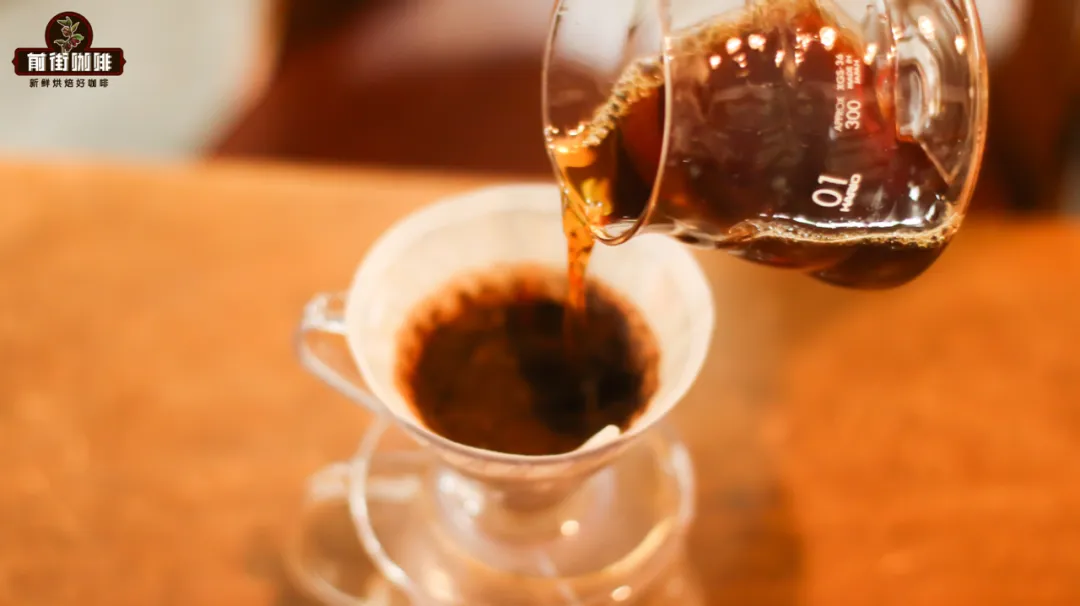
"Tasteless to eat, yet a pity to discard" describes the current situation exactly. If we do not want to drink a pot of unpleasant, under-extracted coffee, then we need to use some "rescue measures" to increase its extraction yield, so that the coffee has enough flavor and concentration to make it more acceptable to us. How do we rescue it? Actually, it is very simple—just pour the coffee back and extract it again! This is an "unorthodox trick" that Front Street Coffee shared last year. Although this method looks a bit abstract, its effect is very real. Whether it is drip filtration extraction like pour-over, or immersion extraction like cold brew and the Clever Cup, as long as the coffee you brewed comes out under-extracted, you can use this method to "rescue" it.

The specific principle is also easy to understand. So-called under-extraction means that the substances in the coffee grounds have not been fully dissolved out. Because the coffee in the cup lacks sufficient substance to support it, the flavor is bland and the body is thin. If we pour such a cup of coffee back to re-extract the coffee grounds, we can bring out more of the substances from the grounds, and the under-extraction situation is thereby weakened. However, it should be noted that depending on the extraction method, the use of this method differs to a certain extent. At the same time, not all under-extracted coffee can be corrected using such an "abstract" method (for example, pressure extraction). So next, let Front Street Coffee share how to use this rescue measure~ Drip Filtration Extraction Drip filtration extraction refers to an extraction method like pour-over coffee, in which water is poured in while coffee seeps out at the same time, that is, a method in which hot water quickly flows through the coffee grounds layer by gravity while bringing out the substances in the coffee grounds. If we find that the brewed coffee is under-extracted, then we only need to prepare an additional container, place the dripper with the coffee grounds on it, then pour the coffee back in and wait for the drip filtration to finish~
In terms of extraction, we do not need to worry that the coffee will become over-extracted! This is because the temperature of the coffee liquid obtained after brewing is already around 70°C, and the coffee already has a certain concentration, so the dissolution efficiency is greatly reduced. Even if this filtration takes as long as three minutes, over-extraction will not occur. But there are two points to note here. One is that iced brewing cannot use this method! The reason is simple: because the temperature of iced coffee is too low, relying only on brief contact cannot dissolve the substances in the coffee out. So coffee such as under-extracted iced pour-over and cold drip cannot be rescued through this method. Immersion Extraction Immersion extraction refers to a method of extracting coffee flavor substances by letting coffee grounds soak in water for a long period of contact. For example, the Clever Cup, French press, and cold brew coffee all use immersion extraction. If the coffee is made using immersion extraction, then when it is under-extracted, we only need to pour it back and let it soak again.
The above content is compiled by CoffeeHunters, a coffee news website.


