







What rules shape the coffee industry's used grounds?
Luckin stores refuse customer requests for used coffee grounds, while Cotti hands them out freely, even to people who buy nothing. The difference comes down to company rules and staff incentives, with employees describing fines for rule violations. Starbucks, Manner, Cotti and many community shops do give spent grounds away, often leaving packed pucks out for anyone to take.
Demand keeps rising because grounds are reused for composting and deodorizing, a small side of the coffee industry's daily waste stream. The article looks at what each chain allows and why Luckin stands apart, then adds practical tips for asking a shop for grounds. Cotti staff say giving them away costs nothing; Luckin staff say policy and penalties leave no room.
As coffee consumption becomes increasingly widespread, more and more coffee grounds are produced every day. These seemingly useless "waste materials" have been cleverly reused by netizens and become treasures for composting and deodorizing. However, when consumers want to ask coffee shops for free coffee grounds, they encounter completely different treatment: Luckin stores refuse sternly, while Cotti gives them generously. What exactly are the regulations and hidden reasons behind this? This article takes you to find out, and includes practical advice from Front Street Coffee.
▲
Click to follow | Daily specialty coffee culture magazine Coffee Works
The number of coffee consumers continues to rise, and with it comes a large amount of coffee grounds produced every day. These things, originally regarded as kitchen waste, have now taken on many new uses through netizens' creative reuse, such as composting for plants and deodorizing refrigerators. However, for people who cannot make coffee at home, the only way to obtain these widely useful coffee grounds is to ask coffee shops for them.
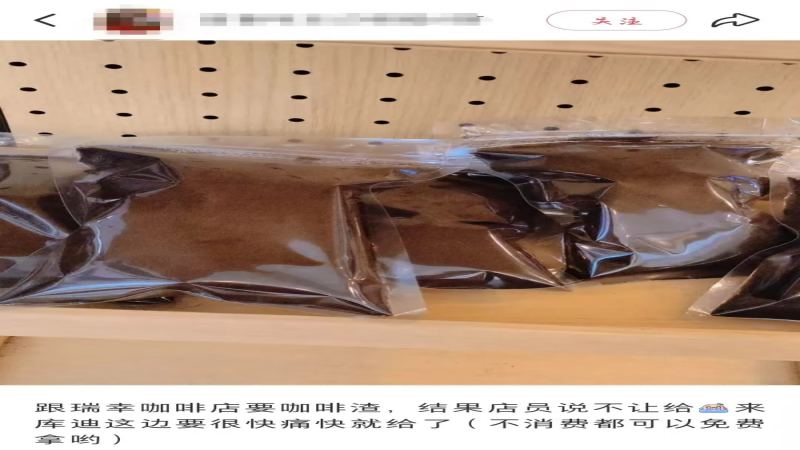
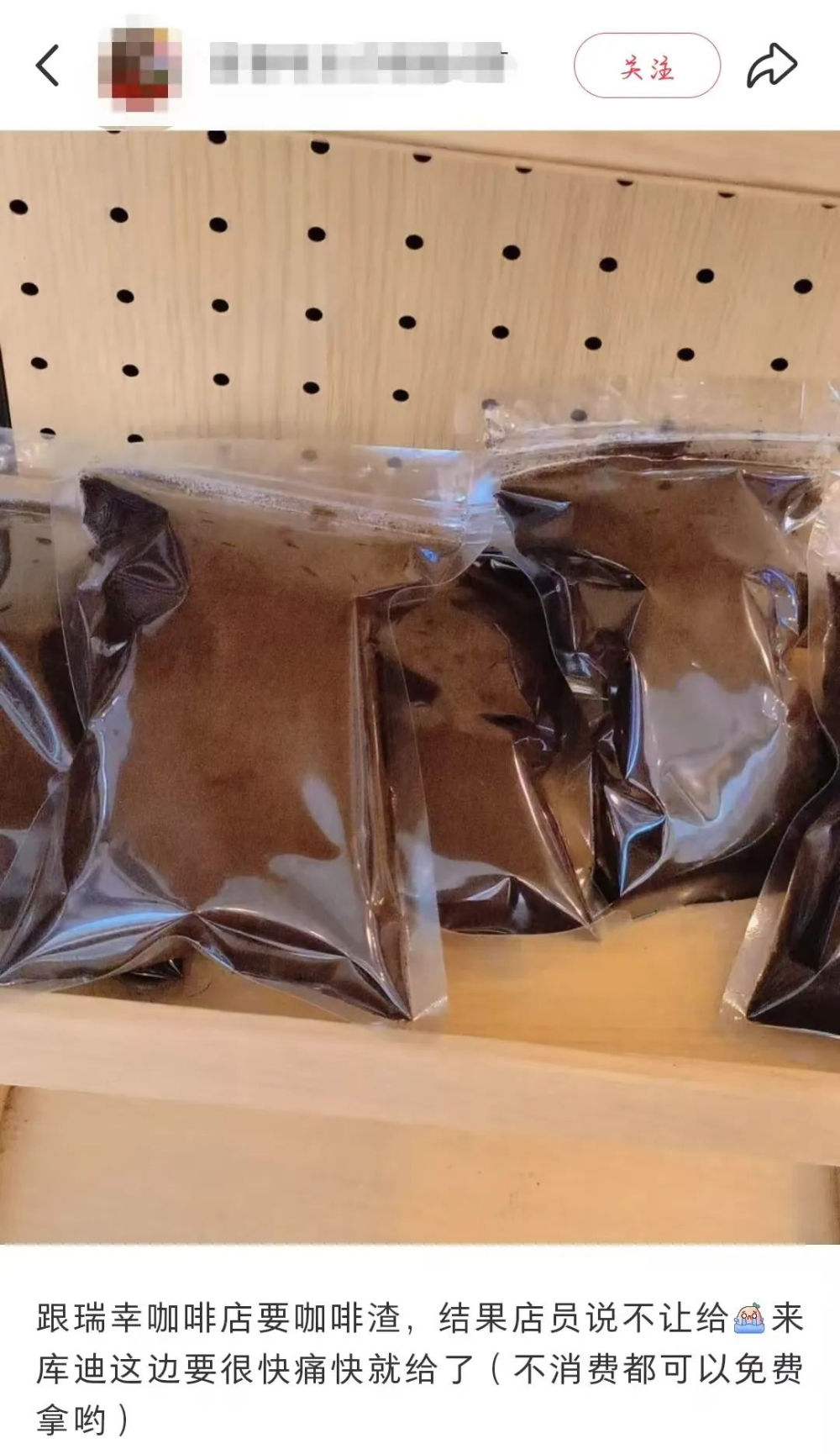
Recently, a netizen who needed coffee grounds went to a nearby Luckin store and tried to ask the staff for some coffee grounds for personal use, but was refused. After hitting a wall, this customer turned to a nearby Cotti store. Unexpectedly, without making any purchase, he successfully obtained several packs of already packed coffee grounds.
The different attitudes of the two major chain brands toward customers asking for coffee grounds left the person involved very confused: they are just production waste that coffee shops do not need, so why do Cotti employees give them away readily and generously, while Luckin staff refuse sternly? It is worth mentioning that on social platforms, there are quite a few people with experiences similar to this user.
It is understood that because coffee grounds have many uses and some consumers go to stores to ask for them, chain brands such as Starbucks, Manner, and Cotti, as well as some community coffee shops, currently provide leftover coffee grounds free of charge to those in need. Some thoughtful stores even place packed coffee pucks in conspicuous positions, along with instructions on their uses, so that customers entering the store can take them as needed.
However, among all the chain brands, Luckin seems to be the only exception. Many netizens report that whether or not they make a purchase, as long as they go to the store counter and ask the staff for coffee grounds, they are basically refused. This unusual attitude makes users whose requests are denied feel puzzled, and they say outright that they do not understand why Luckin is so different on this matter.
In response, Luckin employees also feel quite helpless, explaining that they repeatedly refuse because this is a mandatory rule set by Luckin for all stores. Under the store's surveillance cameras, once they give coffee grounds from the trash can to a customer who comes to ask for them, it will be regarded by auditors as a violation. At best, they will receive a scolding; at worst, they may be fined.
As for the reason Luckin issued this rule, according to various explanations from onlookers in the comments section, it should be related to an incident years ago when a consumer re-brewed free coffee grounds obtained upon request, then drank them and had problems, which led to Luckin being sued and compensating the customer.
However, because this claim sounds rather bizarre and no relevant reports of the specific incident can be found, while netizens exclaim in surprise, they also say they cannot believe someone would reprocess and eat production waste that stores had thrown into the trash.
However, experienced coffee industry practitioners say that the world is full of strange things. "I'm from Cotti. Last time a woman came to ask for coffee grounds, I gave them to her, and before she left she said to me that she was going to use them to make cold brew coffee." "I used to work at Starbucks. One day a girl came and said, your coffee is so hard to drink, I can't swallow it, it's all grounds. I thought, how could coffee have grounds? Then she held up a bag of packed coffee grounds and asked me whether she had brewed it the wrong way."
Some onlookers guess that perhaps some people do not understand the coffee-making process and mistakenly think coffee grounds are similar to tea leaves and can be brewed again, which is why they reprocess the coffee grounds they take home and eat them. From this perspective, perhaps coffee shops should add a disclaimer and a "do not eat" reminder when providing coffee grounds.
For enthusiasts who want to use coffee grounds at home, Front Street Coffee suggests: common uses of coffee grounds include deodorizing, cleaning, composting, and so on, but they must never be used for brewing and drinking again. Front Street Coffee reminds that coffee grounds should be handled properly to avoid health problems caused by accidental ingestion.
Image source: Xiaohongshu
Disclaimer: Some images in this article come from the internet. For some content on the website, such as images, we will respect the original author's copyright and indicate the source. However, due to the large quantity, there may be individual images or texts that have not yet been credited. Please forgive us. If the original author has any dispute, they may contact the website for handling. Once verified, we will correct it immediately. Compiled and edited by "Coffee Works." Please indicate the source when reposting. If there is infringement, please inform us for deletion. Thank you~!
The above content is compiled by CoffeeHunters, a coffee news website.


