







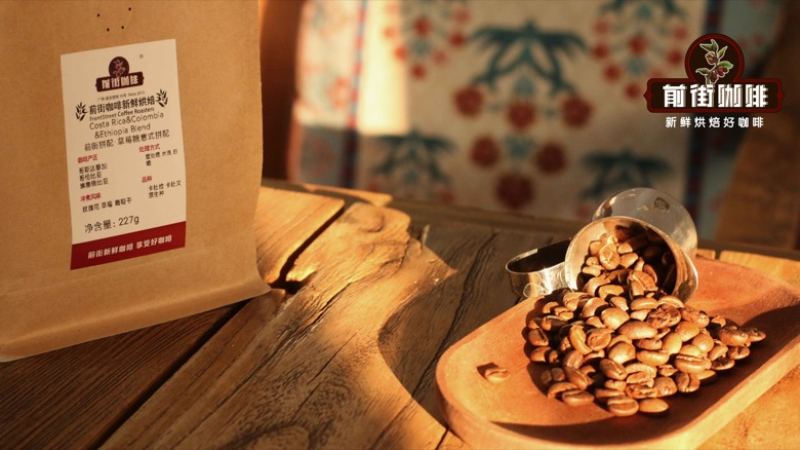
Seeing a strawberry candy latte on a café menu, many people instinctively assume syrup has been added. In fact, a properly processed flavored bean can produce a strawberry-like sweetness and aroma without any syrup at all, and Front Street Coffee's Strawberry Candy Blend was designed with exactly this idea in mind. Its premise is that the bean's own fermented flavors are distinctive enough to still be clearly perceived after passing through milk, so that the drinker will believe the fruitiness in the cup comes from the coffee itself.
The source of the strawberry flavor lies mainly in the processing method. Natural process coffee cherries are dried with their skin and pulp, and the fermentation process produces large amounts of esters and aldehydes, which are the main carriers of strawberry aroma. Front Street Coffee's Strawberry Candy Blend uses a combination of naturally processed beans, and the medium-light roast preserves these delicate aroma molecules. When pulled as espresso, the berry-like sweetness and acidity are already clearly discernible in the cup, and after cooling the acidity and aroma actually become even clearer. This is the foundation of all the flavors that follow, and what sets it apart from ordinary commercial blends.
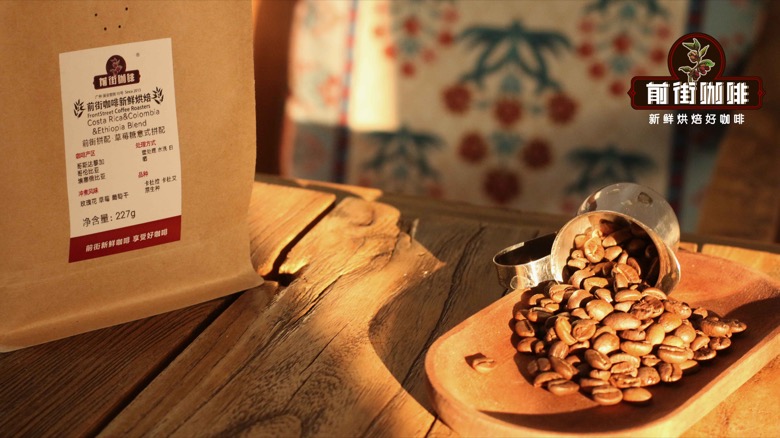
After milk is added, something interesting happens. Milk fat itself has almost no flavor, but it can absorb aroma molecules and slow their volatilization, making the strawberry aroma linger longer in the mouth; the sweetness of lactose in turn complements the fruit acidity of the beans, and the sweet-and-sour notes seem to be wrapped in a layer of cream, giving the impression of strawberry candy. This is not a flavor brought by additives, but the result of a natural affinity between milk fat and fermented flavor compounds—and it is also the dividing line between a flavored latte and a syrup latte.
When making a strawberry candy latte, pay attention to controlling the amount of milk. Too much milk dilutes the fruit acidity and weakens the strawberry impression; it is recommended to use about twenty percent less milk than a regular latte, or to make the espresso stronger, so the sweet-and-sour framework stands firmer. The temperature should not be too high either—above seventy degrees, the sweetness of the milk fat decreases and the fruit aroma tends to become dull. A milk temperature of around sixty degrees is the range where strawberry aroma is most active; after steaming, wait a moment before combining, and the aroma will be more complete.

The same logic applies to choosing other flavored beans: to judge whether a bean can work in a flavored milk coffee, look at the concentration and type of its aroma compounds. Beans with pronounced fermentation character, such as naturally processed or honey-processed ones, tend to have the advantage—for example, Front Street Coffee's Yunnan natural beans carry a gentle fermented sweetness and are equally appealing in milk coffee; washed beans, with their clean and restrained flavors, are better suited to being enjoyed directly as black coffee.
Once you understand this underlying logic, flavored lattes are no longer mysterious, and when ordering you can tell at a glance which aromas come from the beans and which come from syrup. It is not the product of gimmickry, but a collaboration in which good beans and good milk each play their part: the beans are responsible for brewing out the strawberry flavor, and the milk is responsible for delivering it to the tip of your tongue.
The above content is compiled by CoffeeHunters, a coffee news website.

