







Coffee Culture and the Merchandise Dilemma
Coffee brands often use limited-edition merchandise to build excitement. Nayuki recently sold leftover co-branded items for 5.9 yuan with free shipping, upsetting customers who had bought designated drink packages to get the same goods. Some employees even gave away expired merchandise for free with a check-in and a positive review. This has sparked a debate about how brands should handle unsold promotional items after a campaign ends.
Fans who spent money feel betrayed, while others see it as a practical way to avoid waste. The incident raises questions about fairness in marketing and the value of collectibles. For coffee shops, balancing customer loyalty with inventory management is tricky. Some worry that deal-hunters could exploit such clearances, affecting future collaborations. As coffee culture grows, these issues will likely become more common in the industry.
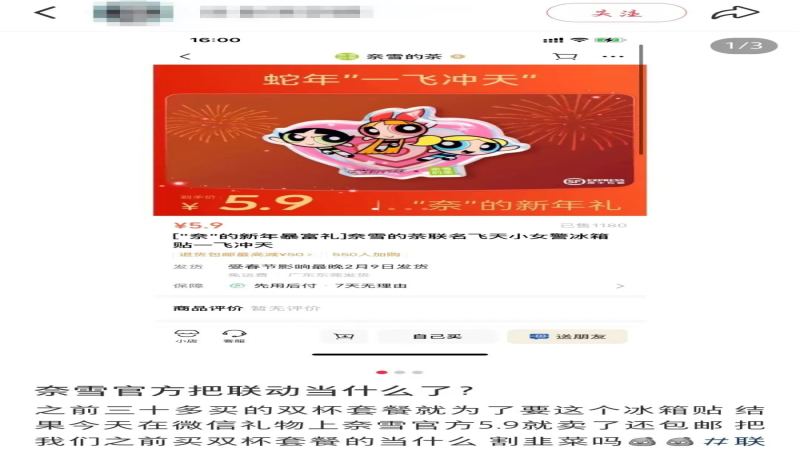
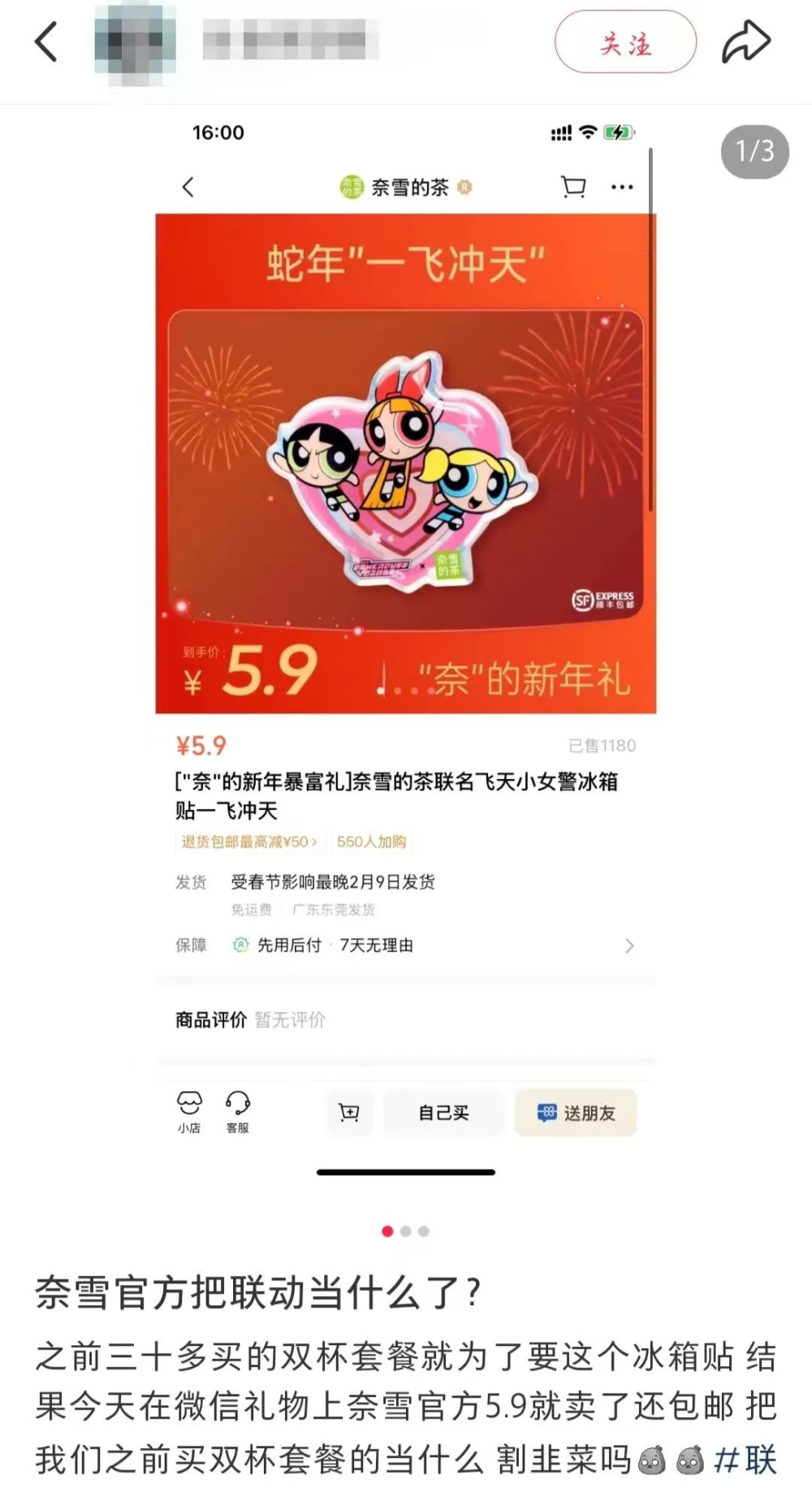
Nayuki's official small shop recently sold last year's co-branded limited-edition merchandise for 5.9 yuan with free shipping, including Powerpuff Girls fridge magnets, sparking strong dissatisfaction among consumers who had originally bought designated packages to get the merchandise. Some store employees even revealed that some expired merchandise could be obtained for free without any purchase, simply by checking in and writing a positive review. On one side, fans who spent money on packages feel let down; on the other, the brand is turning inventory into free gifts or selling it at low prices to avoid waste. Around how limited-edition merchandise should be handled after a campaign ends, consumer opinions are clearly divided—some support clearing stock, while others worry that deal-hunters exploiting loopholes could affect future collaborations.
▲
Click to follow | Daily specialty coffee culture magazine Coffee Workshop
Recently, a Nayuki user posted on social media, claiming that in the Nayuki official shop on WeChat Gifts, several limited-edition items left over from last year's co-branding campaigns were mixed in with currently sold products, such as the Powerpuff Girls co-branded fridge magnet released in October.
Regarding the brand's practice of publicly selling off-season merchandise, this consumer who had specifically bought a designated package completely broke down emotionally, angrily asking, "Nayuki official sells it for 5.9 with free shipping—what does that make those of us who bought the double-cup package before?"
Others who "bought the casket for the pearl"—purchasing for the merchandise—shared the poster's feelings. They expressed their dissatisfaction one after another: if they had known the brand would directly list remaining limited-edition merchandise after the campaign ended, they would not have spent both money and effort scrambling for designated packages. "I drank two cups of dishwater just for this fridge magnet..." "So what does it mean that I spent over 100 yuan to buy the full set except the thermos cup?"
What made merchandise fans even more indignant was that, according to some customers, they did not spend a single cent on these expired items—they only needed to check in at the store and write a positive review to get them from the staff. "Free with check-in~ and you can pick any."
According to Nayuki internal employees, some co-branding campaigns planned by the brand do not see fans rushing to buy in certain regions. Therefore, after the campaign ends, stores in these areas often have a large backlog of materials that were not given away with packages. Unlike other brands, this off-season merchandise is not ordered to be destroyed overnight; instead, stores use it as thank-you gifts for customer check-ins and positive reviews, or as freebies during in-store promotions.
But in the eyes of some netizens, whether it is official low-price clearance or offline stores giving items away with orders, Nayuki's methods of clearing inventory merchandise seem unfair to users who bought designated packages during the campaign.
Some netizens analyzed that one reason limited-edition merchandise can make people rush to buy is that it is only sold in limited quantities during a specific period, and this added scarcity drives merchandise fans to spend. But once the campaign ends, if the brand turns around and sells or gives it away, it will more or less leave those fans who bought for the merchandise feeling upset. Many even said bluntly, "Now when they launch a collaboration, I mainly just don't buy; I'll wait until they give it away with orders later." "I'll never scramble for Nayuki collaborations again... those who wait always win."
However, although they can understand the emotional collapse of customers who spent money on packages when they see others getting the items at low prices, some people believe that since the co-branding campaign has ended, Nayuki has the right to dispose of inventory materials as it wishes. Whether selling at low prices or giving them away as gifts, it is more environmentally friendly than directly destroying them, and it can also fulfill the wishes of fans who failed to get the merchandise during the campaign, giving them a channel to obtain the items they want.
So, in some people's view, Nayuki's way of handling unsold merchandise is not inappropriate. However, some netizens worry that the brand's gifting behavior may be exploited by deal-hunters. Some consumers who get merchandise for free will no longer buy packages the next time a collaboration starts, but instead wait until the campaign ends to snap up leftovers.
Over time, the practice of stores giving away merchandise may have a negative impact on future co-branding partnerships. Therefore, more people tend to support the brand uniformly listing surplus merchandise on e-commerce platforms: first, it can effectively clear inventory; second, it can, to a certain extent, prevent certain free-riding behaviors from affecting the reputation of official co-branding campaigns.
Image source: Xiaohongshu
Disclaimer: Some images in this article are from the internet. For some content on the website, such as images, we will respect the original copyright and indicate the source. However, due to the large volume, some images and texts may not have been credited in time. Please forgive us. If the original author has any disputes, they can contact the website for handling. Once verified, we will correct it immediately. Compiled and edited by "Coffee Workshop." Please indicate the source when reposting. If there is infringement, please inform us for deletion. Thank you~!
The above content is compiled by CoffeeHunters, a coffee news website.


