







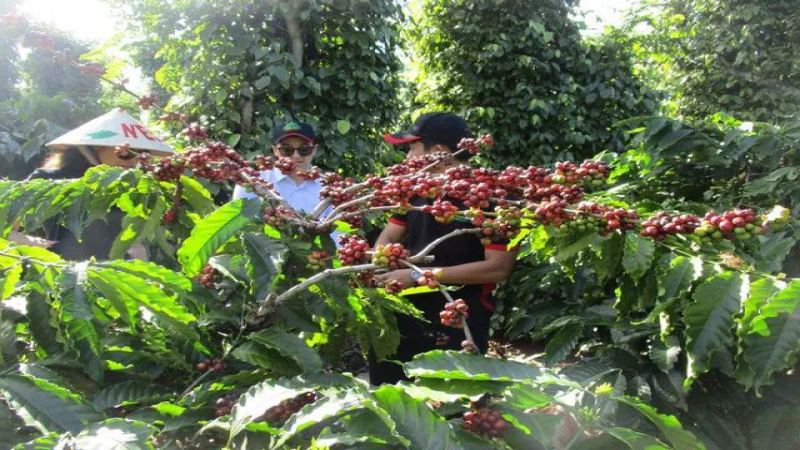
How is Vietnam coffee production shaping Robusta prices?
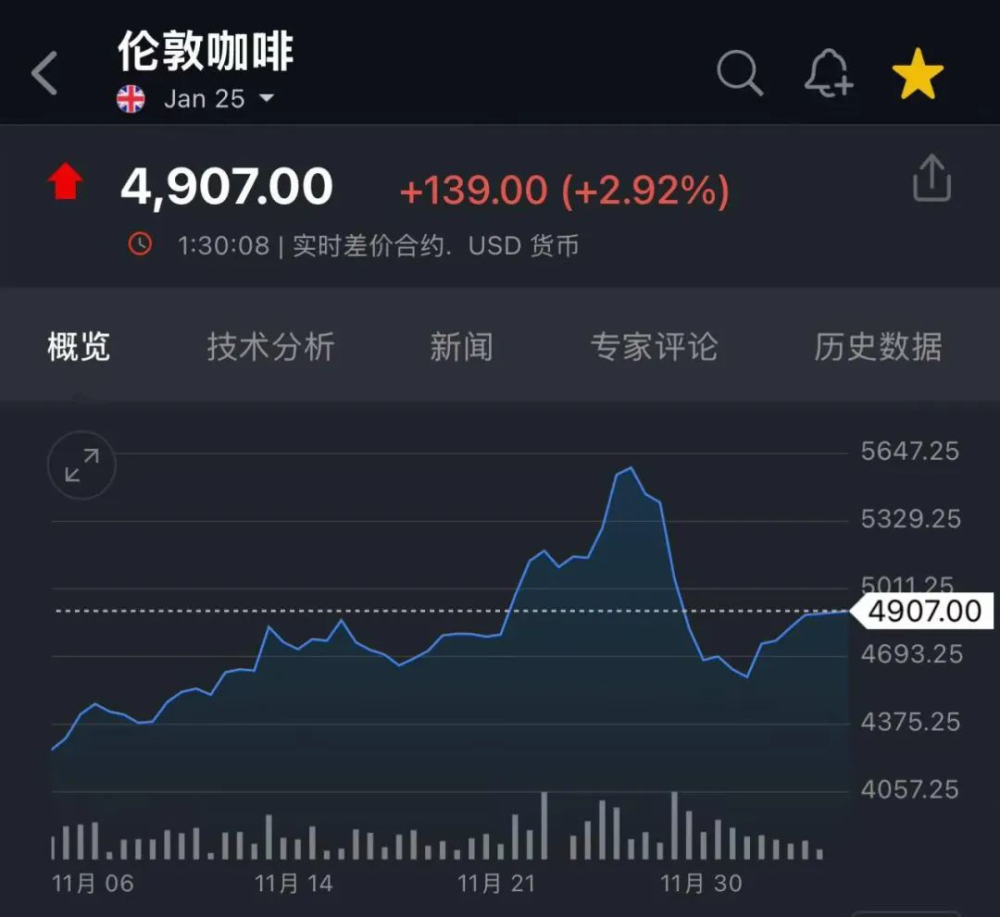
Vietnam's coffee production for the 2024/25 crop year is projected at 28 million bags, down 5% to 7% from the previous season, according to the Vietnam Coffee and Cocoa Association. The figure was revised up by 1 million bags but still marks a smaller harvest. Despite that, Robusta futures climbed to $4,907 per ton, with analysts expecting a possible push past $5,000.
The report was released at the Asian International Coffee Conference in Ho Chi Minh City. Arabica futures also rose 3% to about 315.75 cents per pound on tight supply from Brazil and Vietnam, a stronger dollar against the real, and rising freight costs. Domestic Robusta prices neared 115,000 Vietnam dong, export revenue grew, and traders and farmers turned cautious amid market volatility.
The Vietnam Coffee and Cocoa Association released a report at the Asian International Coffee Conference held in Ho Chi Minh City, projecting Vietnam's coffee production for the 2024/25 crop year at 28 million bags, a decrease of 5%-7% compared to the previous season. Despite the upward revision in production expectations, Robusta coffee futures prices still climbed sharply to $4,907 per ton, and analysts believe they could further break through $5,000 per ton. Domestic coffee prices in Vietnam have subsequently rebounded, and export revenue has grown significantly, but heightened market volatility has led to a wait-and-see sentiment among traders and coffee farmers. Multiple factors including severe weather, geopolitical tensions, and rising freight costs continue to affect Vietnam's coffee industry. Front Street Coffee brings you the latest updates from the origin.
Recently, according to Vietnamese media reports, the Asian International Coffee Conference was held in Ho Chi Minh City, where the Vietnam Coffee and Cocoa Association (VICOFA) disclosed that Vietnam's coffee crop production for the 2024/25 crop year is expected to reach 28 million bags, revised up by 1 million bags from the previous estimate, but still down 5%-7% compared to the previous season.
At the end of December, Robusta and Arabica coffee futures prices surged significantly due to factors including insufficient coffee supply from Brazil and Vietnam, a stronger US dollar against the Brazilian real, and continuously rising transportation costs. However, by early December, coffee sales activity in Vietnam became more active, traders gradually released inventory, and Brazilian exporters, taking advantage of favorable exchange rates, sold coffee at more advantageous rates, increasing market supply and causing futures prices to fall back.
Although Vietnam reported that production would increase, Robusta coffee futures prices still rose strongly, reaching $4,907 per ton. Arabica coffee futures also climbed, rising 3% to currently quote at 315.75 cents per pound. Some analysts noted that given the recent intensification of market volatility, Robusta coffee prices could potentially climb further to $5,000 per ton.
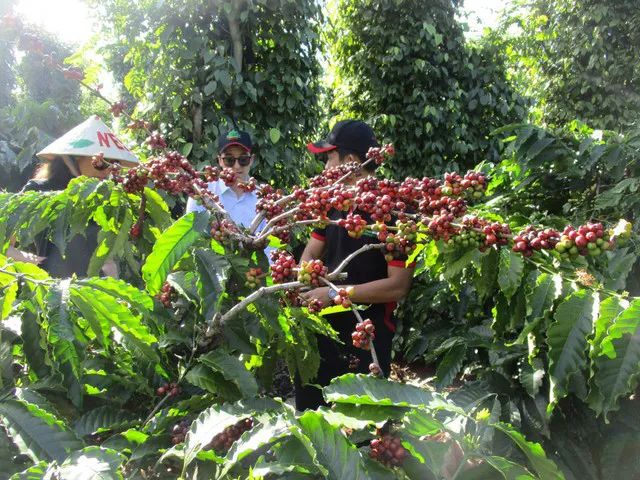
Following the rise in international markets, domestic coffee prices in Vietnam have also rebounded. In the Central Highlands region, Robusta coffee prices have approached 115,000 Vietnamese dong per kilogram, up 5,000-6,000 Vietnamese dong per kilogram compared to the previous season.
Vietnam's coffee revenue has grown as a result. According to statistics from the Vietnam Coffee and Cocoa Association, in the first 11 months of 2024, Vietnam's coffee exports amounted to nearly 1.2 million tons, with export value reaching $4.84 billion. Compared to the same period in 2023, although export volume decreased by 15.4%, revenue increased by 32.8%.
However, despite prices remaining high, the market has been extremely volatile with abnormal fluctuations, making price trends difficult to predict. This has led traders to refrain from purchasing readily, and some coffee farmers have also adopted a cautious attitude, unwilling to sell their coffee beans hastily. Ultimately, Vietnam's coffee export data in November showed a year-on-year decline in both export volume and revenue for the first time.
According to statistics, in November Vietnam exported a total of 50,605 tons of coffee beans, generating $250.4 million in revenue, with an average unit price of $4,947 per ton. Compared to the same period last year, export volume decreased by 47.4% and revenue decreased by 0.5%.
Since the beginning of this year, Vietnam has been continuously affected by severe weather. A severe drought at the beginning of the year dried up and cracked the beds of multiple reservoirs and rivers, and groundwater resources were scarce, causing coffee trees and other crops to wither, with leaves turning yellow and falling off, severely impacting production.
In the second half of the year, as the rainy season arrived, the drought conditions eased somewhat. However, due to the severe damage caused to plants by the drought, the Vietnam Coffee Association believes that production cannot fully recover and will still decrease by about 10%. In addition, during September and October, Vietnam was hit by multiple consecutive typhoons. Fortunately, the typhoons did not make direct landfall in coffee-producing areas, but they brought heavy rainfall and strong winds, which may cause production to decline by 5%-7% compared to the previous season.
Vietnam has now entered the harvest season, but recent continuous moderate to heavy rain in major coffee-producing areas has slowed harvest progress. At the same time, Vietnam's coffee industry also faces many challenges: the geopolitical situation is uncertain, and tensions in the Red Sea continue to drive up freight costs, bringing considerable difficulties and risks to local coffee companies and import-export operations. Therefore, coffee farmers are currently not in a hurry to sell their coffee, but rather hope to drive up prices through limited supply.
To learn more about coffee origin news and information, please scan the QR code to follow: Coffee Review
Long-press the QR code to follow:
The above content is compiled by CoffeeHunters, a coffee news website.


