







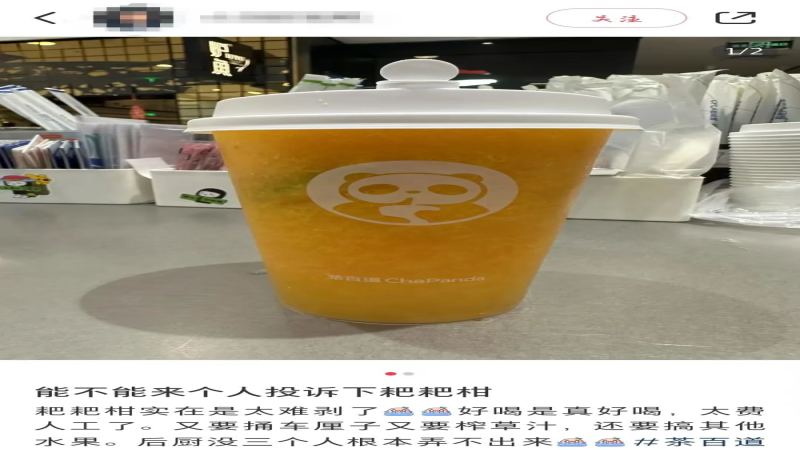
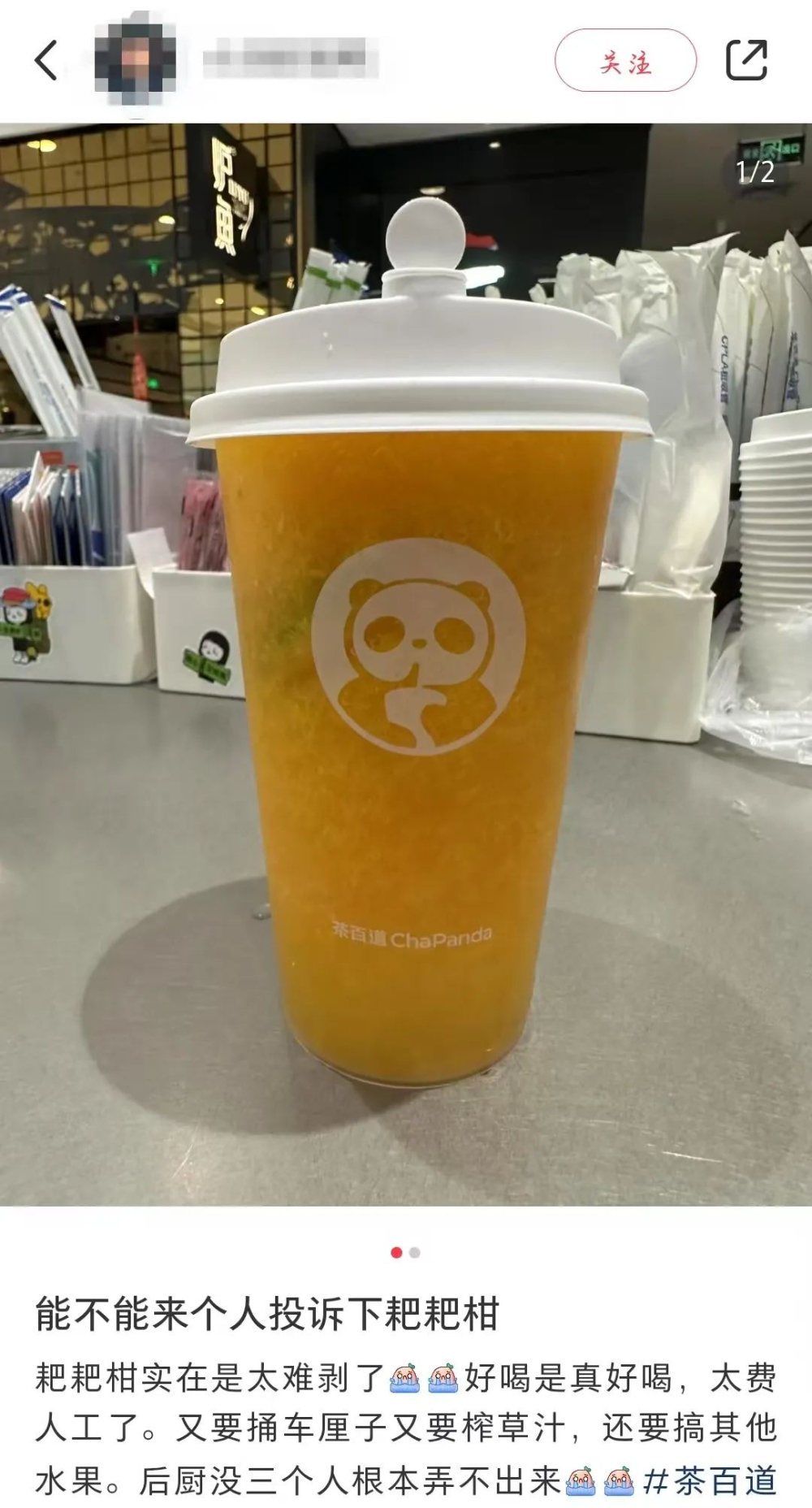
ChaPanda Ponkan Series Return: Why Staff Fear the Prep Work
ChaPanda has brought back its PaPa Gan tangerine drink series with two new items, Shushi PaPa Gan and PaPa Gang Shang Hua, each using fresh tangerine pulp. The return delighted longtime customers, but store employees recalled last year's grueling prep: removing the membrane, pith and white core from every segment by hand.
The added tasks of washing tea, cutting fruit, squeezing grass juice and stir-frying pearls have sharpened staffing shortages during peak hours. Some workers quietly delisted difficult drinks to buy prep time. Customers remain divided on whether the white pith must be removed so meticulously, while the coffee ingredients list debate over authenticity continues.
ChaPanda recently announced the official return of last year's highly popular PaPa Gan (tangerine) drink series, launching two new products: Shushi PaPa Gan and PaPa Gang Shang Hua. The company emphasized that each cup of fruit tea is made with fresh PaPa Gan pulp, insisting on genuine ingredients. The news delighted many longtime customers, but brought back memories for store employees of last year's fear of being dominated by hand-peeling citrus. According to the recipe, employees must remove the membrane, pith, and white core from each segment of pulp one by one, keeping only plump juice sacs—an extremely tedious prep process. During peak hours, peeling speed could never keep up with consumption, and with this year's added tasks of washing tea, cutting fruit, squeezing grass juice, and stir-frying pearls, the staffing shortage has become even more acute. Some employees took it upon themselves to delist difficult-to-make drinks to buy time for prep, while consumers have differing views on whether the white pith must be so meticulously removed.
▲
Click to follow | Daily specialty coffee culture magazine Coffee Workshop
ChaPanda recently officially announced that last year's consumer-favorite PaPa Gan series is back online, bringing two new drinks: Shushi PaPa Gan and PaPa Gang Shang Hua. According to the brand's official introduction, the series continues last year's production process, with fresh PaPa Gan pulp placed in every cup of fruit tea, emphasizing genuine ingredients and no skimping.
Once the news spread, longtime customers who love PaPa Gan were naturally overjoyed, saying their happiness had returned. However, for ChaPanda's store employees, seeing the three words "PaPa Gan" brought back memories of last year's fear of being completely dominated by this fruit.
Some veteran employees recall that when the brand first launched the PaPa Gan series last year, employees were required to peel citrus on-site every day to prepare enough pulp in advance for making fruit tea. To most people, eating citrus naturally involves peeling, and PaPa Gan is a typical representative of thin-skinned, easy-to-peel oranges, so in the public's eyes, peeling PaPa Gan is a piece of cake—hardly something that could become a milk tea shop employee's nightmare.
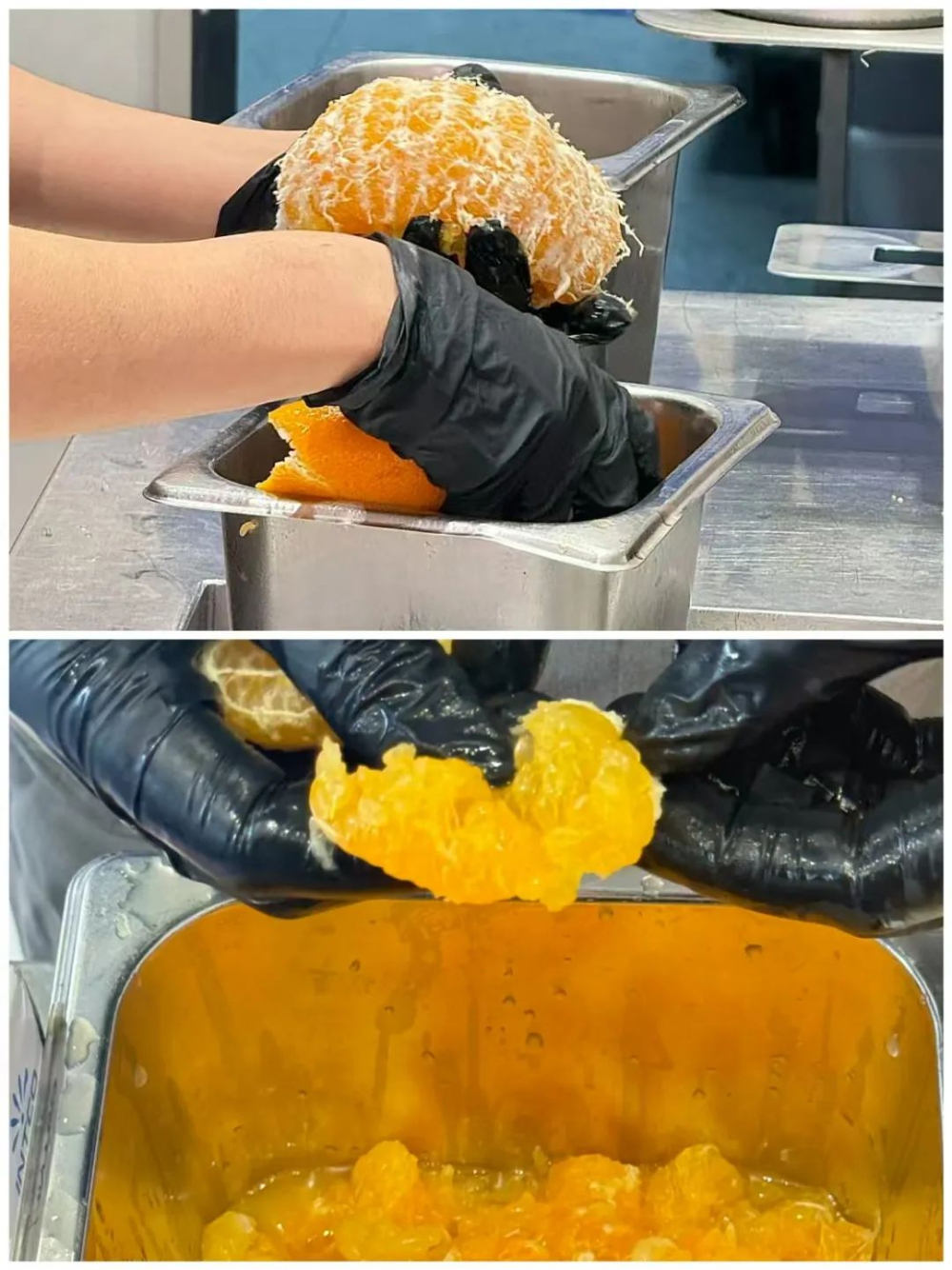
But workers wave their hands frantically and share internal operating documents to prove that their PaPa Gan processing procedure is far from as simple as netizens imagine. According to the official product recipe, employees must not only peel off the outer skin but also thoroughly remove the membrane, pith, and white core from every segment of pulp, ultimately leaving only juice-filled pulp sacs.
This tedious prep process has many employees grumbling when facing mountains of PaPa Gan to be processed. Some complain, "Peel for an hour, sold out in five minutes," others sigh, "I don't even eat my own PaPa Gan this carefully," and still others exclaim, "Workers are going crazy."
Many employees admit that last year's PaPa Gan drinks became a nightmare kitchen staff didn't want to recall precisely because of the peeling and membrane-tearing required. At the time, to improve citrus processing efficiency, everyone tried every possible method, such as soaking peeled citrus pulp in ice water and tearing the membrane and pith after a while.
However, these auxiliary methods had little effect. Once order peaks hit, kitchen staff's citrus-peeling speed simply couldn't keep up with the rate at which the pulp was consumed.
What doubles the pressure on ChaPanda employees is that this year they not only have to deal with the troublesome PaPa Gan but also wash tea, cut fruit, squeeze grass juice, and stir-fry pearls. Some joke that they don't feel like they're working at a milk tea shop every day but rather like they've entered a restaurant kitchen—the moment they walk in, they're stationed at the prep counter with no time to stop.
The workload has increased significantly, yet staffing hasn't been supplemented accordingly. Some employees reveal that their store usually only schedules one person for the morning shift, occasionally adding one more colleague. As drink categories continue to increase, the materials stores need to prepare daily also keep rising. Many clerks say outright that unless they could grow three heads and six arms, it's very difficult to prepare all the day's needed materials within one or two hours.
Because of this, to ensure normal store operations, some workers can only make their own decisions to temporarily delist certain difficult-to-make drinks, buying themselves more prep time.
Regarding this matter, some consumers have also expressed their views. They believe the white flocculent material on the pulp actually has a heat-clearing effect, and eating a little occasionally is good for health. Therefore, the brand may not need to require employees to process PaPa Gan so painstakingly, adding extra burden to frontline staff.
However, netizens' well-meaning suggestions seem unworkable to employees. One clerk said, "If you don't peel it clean, it affects appearance and taste. Wait until the shop gets posted online for being unhygienic, then they'll behave." So for them, perhaps "only delisting can relieve the worry."
Image source: Xiaohongshu
Disclaimer: Some images in this article are from the internet. For some content on the website such as images, we will respect the original author's copyright and indicate the source. However, due to the large quantity, some images and text may not have been credited in time. Please forgive us. If the original author has any disputes, they can contact the website for handling. Once verified, we will immediately correct it. Compiled and edited by "Coffee Workshop." Please indicate the source when reprinting. If there is infringement, please inform us for deletion. Thank you~!
The above content is compiled by CoffeeHunters, a coffee news website.


