








Why Astringent Coffee Appears in an Otherwise Normal Brew
Astringent coffee happens when brewing pulls out compounds that leave the tongue and throat feeling rough, like sand. It is a tactile sensation rather than a taste, so it stands out even when acidity, sweetness, and bitterness seem balanced. The usual culprits are an overly long brew time, water poured too forcefully, and a dripper with high extraction efficiency.
Adjusting one variable at a time makes the problem easier to trace. Shorten the long brew, pour more gently, or switch to a slower-flow dripper, then taste again. Astringency rarely shows up in high-quality beans, so if the beans are fresh and well roasted, the brewing routine is the first place to look.
When many people drink a cup of coffee, they can detect an uncomfortable astringency on the very first sip. That tactile sensation of the tongue and throat being seized, rough like sand, often leaves a deeper impression than acidity, sweetness, or bitterness. Where exactly does astringency come from? Is it a problem with the beans or an error in the brewing process? This article, from Front Street's perspective, first clarifies the essence of astringency as a tactile sensation, then breaks down common causes one by one—such as overly long brewing time, excessively forceful water flow, and high extraction efficiency of the dripper—and offers corresponding adjustment ideas to help you fundamentally reduce the unpleasant astringent taste in coffee.
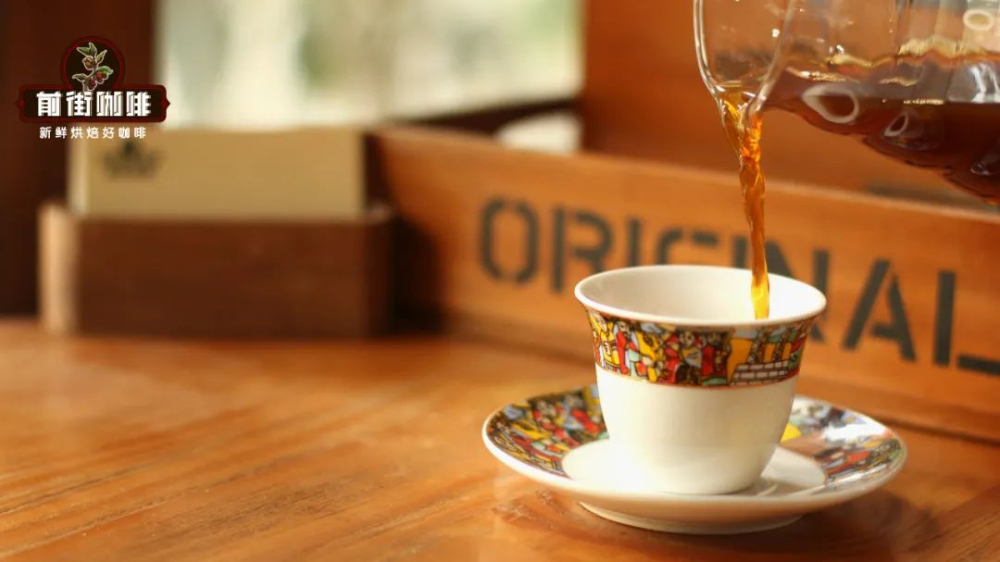
What flavors a cup of coffee actually has is often a matter of disagreement, with different people holding different views and consensus hard to reach. But if a noticeable astringency appears in the cup, almost everyone will catch it the moment it enters the mouth.
Front Street's back office frequently receives questions from readers, and many of them want to know how to avoid brewing astringent coffee. For example, last week a friend left a message saying that the entire brewing process seemed normal and the parameters were all within the planned range, yet the coffee still had an uncomfortable feeling when drunk. When swallowing, the tongue and throat felt rough as if coated with sand, and it even lingered for a long time. So they suspected it was caused by excessive astringency and wanted to figure out exactly which step went wrong.
Astringency is a negative mouthfeel and generally does not appear in coffee of excellent quality. If you want to brew a clean, defect-free cup of good coffee, you can prioritize Front Street Panama Geisha, Front Street Huakui, and Front Street Gutingting. These three single-origin beans all come from world-renowned regions, with rich aromas and sweet fruit flavors, making them suitable whether for your own enjoyment or as gifts.
In Front Street's view, to solve that unpleasant astringency in coffee, you first need to understand this perception itself and grasp the patterns of how it is released, so that you can block it at the source.
What exactly does astringency feel like?
So-called astringency refers to a puckering, contracting sensation in the mouth and on the tongue, or a tactile feeling similar to roughness and wrinkling. In other words, astringency is not smooth, so it belongs to the category of touch, not taste.
Although it is not the same thing as tastes like sourness, sweetness, and bitterness, as a tactile sensation that most people do not readily accept, once "astringency" appears, even if the food is full of aroma, the first thing that usually comes to mind is still this negative impression. It is like when Front Street eats a banana that is not yet fully ripe: the fruity aroma can be smelled, but the rough feeling left on the teeth after chewing still makes one feel uncomfortable.
Where does astringency in coffee come from?
Drinking tea, red wine, and coffee can all involve an astringent mouthfeel, but their sources differ. The astringency in tea comes from tea polyphenols, the astringency in red wine comes from tannic acid contained in grape skins and seeds, while the astringency in coffee comes from dicaffeoylquinic acid, which is produced by the degradation of chlorogenic acid in green beans after roasting. In addition, substances such as tartaric acid and tannic acid also bring astringency.
If the coffee you drink has obvious astringent sensations such as sand-like roughness, scraping the mouth, catching in the throat, or drying, then it is most likely caused by the above substances being dissolved in excessive amounts or accounting for too high a proportion in the coffee.
Strictly speaking, there are quite many causes of astringent coffee. Insufficient ripeness at harvest, a high defect rate in green beans, rough post-processing, improper transportation and storage, insufficient roast development, and uneven extraction can all be possible "driving forces behind the scenes" causing astringency.
However, for consumers, as long as they buy from a trustworthy brand, they usually will not encounter astringency caused by green beans or roasting. After all, before such products are put on the shelf, they have already gone through layer upon layer of screening by producers at origin, green bean merchants, roasters, baristas, and other professionals, so the quality is guaranteed. Therefore, when you confirm that the product you bought is fine but the coffee you brew frequently tastes astringent, you might as well look for the root cause in the following brewing details.
Which situations are most likely to cause astringency in coffee?
1. Brewing time too long
Most people who play with coffee know that various substances do not dissolve at the same rate under hot water. Large-molecule substances dominated by bitterness and astringency tend to concentrate in the final stage of extraction, so when coffee tastes astringent, it usually also carries an unpleasant bitter note. From the logic of extraction, the longer the brew, the stronger the flavor, and the closer to the end, the easier it is to bring out bitterness and astringency.
Therefore, if you want the coffee to achieve reasonable extraction, you must control the brewing duration well. Taking a single serving of 15–16 g coffee grounds as an example, Front Street recommends keeping it within 2 minutes 30 seconds. If your actual brewing time exceeds this limit and you do indeed taste bitterness and astringency, then you must adjust the parameters according to the specific situation.
For example, if after brewing there is a large amount of wet, sticky mud-like powder remaining on the surface of the coffee bed, it means there are too many fines causing water retention, and at this point you need to coarsen the grind size;
If the coffee grounds have basically settled at the bottom and the surface looks quite flat, then it is most likely that the pouring force was too small, the coffee bed was not lifted up, and the water could only be forced to slowly seep through a thick obstructive layer, thus prolonging the brewing time. The solution is to appropriately increase the flow of the water stream after blooming ends, so that the water level rises as much as possible to two-thirds the height of the dripper.
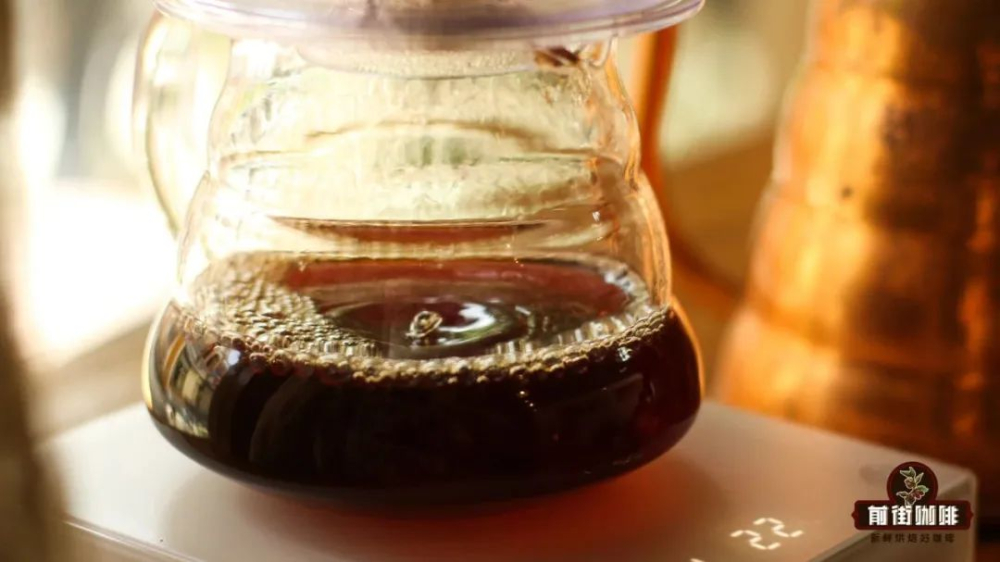
2. Water flow scouring force too strong
According to Front Street's observation, there are mainly two situations in which pouring water causes astringency: one is that unstable water flow causes uneven extraction of particles, making the coffee taste both sour and astringent; the other is that friends who are used to stirring the coffee bed with a large stream of water can easily wash out off-flavors and astringency during the later stage of extraction.
Unlike other parameters, pouring water is a practical skill that requires repeated practice. To achieve even brewing, Front Street recommends using a vertical water stream, keeping a distance of 3–4 cm from the coffee bed, and then pouring slowly in circles.
3. The dripper's extraction efficiency is too high
For many beginners, the material of the dripper is one of the most easily overlooked causes of over-extraction. For example, ceramic drippers have a relatively high specific heat capacity. Preheating them in advance can maintain good heat retention throughout the pouring process, but at the same time it also "secretly" raises extraction efficiency, increasing the probability that astringency will be released in the final stage.
So when we taste astringency in coffee, and the dripper we are using happens to be ceramic, and the first two causes have already been ruled out, then we might as well start with temperature and try lowering the brewing water temperature by 2–3°C to reduce the risk of over-extraction.
The above content is compiled by CoffeeHunters, a coffee news website.


