







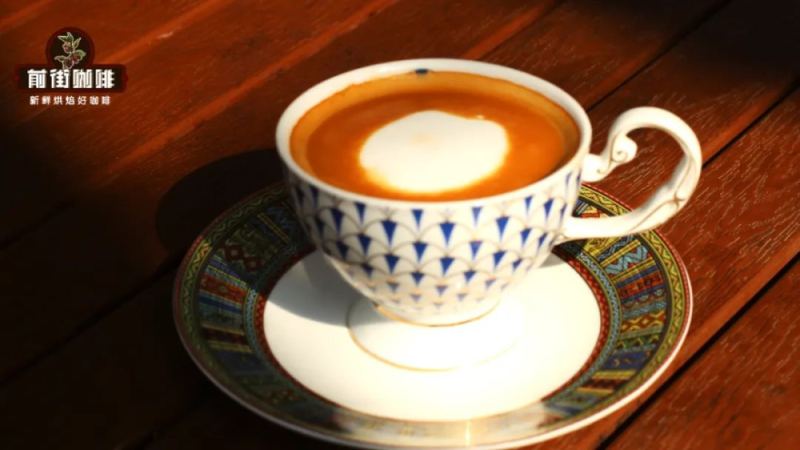
Why Is Viennese Melange Often Confused With Cappuccino?
Melange is one of the most iconic milk coffees in Viennese café culture. Its name comes from the French word meaning mixture, emphasizing a blend of espresso, hot milk, and thick milk foam. It shares ingredients with cappuccino, but the cup size, number of espresso shots, and foam texture differ, which is why the two drinks are frequently confused.
Its history is tied to Viennese coffeehouse culture, where the number of coffeehouses approached six hundred before World War I and literati gathered to drink coffee and exchange ideas. The cappuccino name meaning points to a different origin story, while Vienna coffee origin and Melange both belong to the Austrian capital's café tradition, where Viennese Coffee itself mainly adds cream.
Melange is one of the most iconic milk coffees in Viennese café culture. Its name comes from the French word meaning "mixture," emphasizing the blend of espresso, hot milk, and thick milk foam. It is quite similar to the cappuccino we are familiar with in terms of ingredients, but there are clear differences in cup size, number of espresso shots, and foam texture. This article will explore Melange's historical origins, its specific differences from cappuccino, and the complete process of Front Street using Warm Sun coffee beans to make a traditional-style Melange, helping coffee enthusiasts understand the unique qualities of this Viennese classic.
Under yesterday's article, a reader mentioned in the comments a drink also from Vienna — Melange coffee. Whether in its Chinese translation or its original English name, it sounds quite niche, which immediately sparked CoffeeHunters' curiosity. Since we came across it, we might as well make it today's topic.
What exactly is Melange coffee?
Melange is the transliteration of Melange, a word derived from French originally meaning "mixture." Because this coffee is most popular in Vienna, it is also called Wiener Melange, or "Viennese mixed coffee," with the core being the harmonious unity of espresso, hot milk, and thick milk foam. (A side note: another classic drink, Viennese Coffee, mainly adds cream.)
As for the origin of Melange, Front Street couldn't find much detailed information online, but what is certain is that its history is inseparable from the traditional culture of Viennese coffeehouses.
Wenn ich nicht im Café Central bin, bin ich am Weg dorthin.
If I'm not at Café Central, I'm on my way there.
Before World War I, the number of coffeehouses in Vienna approached six hundred. Austrian literati and artists often gathered here, drinking coffee while exchanging ideas, writing, brainstorming, or appreciating art. Viennese coffeehouse culture (Wiener Kaffeehauskultur) reached its peak at that time and developed a set of unique traditions that continue to this day. It was against this backdrop that Melange emerged.
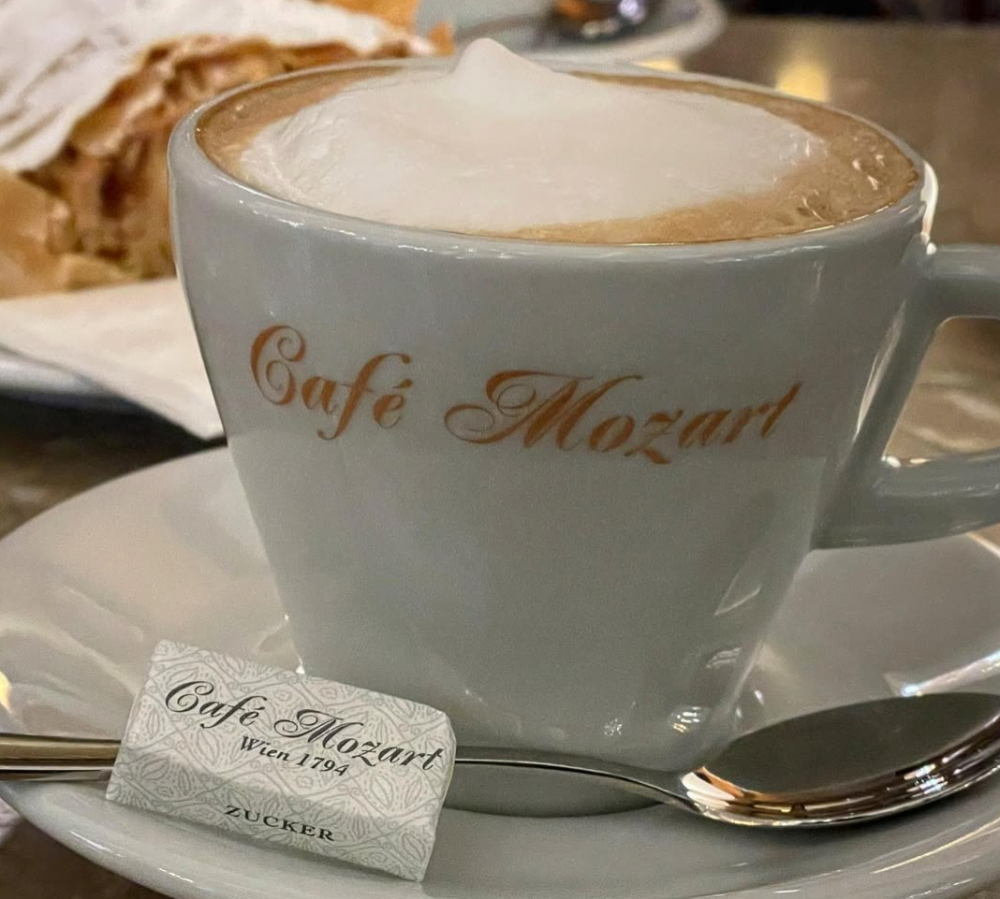
As a renowned old cultural city in Europe, Vienna's coffeehouses not only have a long history and large scale but also generally carry an antique atmosphere. Elegant music, vintage decor, and traditional coffee and desserts together create a unique cultural ambience and romantic style. Viennese coffee culture is a calling card that Austria takes pride in, and the milk coffee locals order most is Melange — a classic product that can be found at any of the major established coffeehouses at any time.
How is Melange different from cappuccino?
In terms of global fame, cappuccino is a "big star," while Melange is practically a nobody. In Europe, you can get a cappuccino at any coffee shop you walk into; but if you order a Melange from a barista outside Austria, they will most likely look bewildered because they've never heard of it.
However, looking purely at the combination of elements, Front Street thinks Melange is actually no different from the cappuccino we drink daily — both are a small, intensely flavored hot milk coffee.
The method is indeed similar. The most widely circulated version is: use a slightly larger ceramic cup, combine a single shot of espresso with steamed milk (usually without latte art), keep the white foam on top, and a Melange with Viennese characteristics is complete.
After comparing, Front Street found that the main differences between the two are concentrated in cup size, number of espresso shots, and whether the foam is domed: Melange emphasizes the balance between coffee and milk. Baristas typically use a single shot of espresso, the cup is one size smaller than a cappuccino cup, with a capacity between 120–180ml. After making it, it generally isn't filled to the brim, reaching about eight to nine tenths full. Some old-established coffeehouses even add a dollop of cream on top;
While the cappuccino we are more familiar with, because it emphasizes richness of flavor and abundance of foam, usually uses a double standard espresso, paired with a 6-ounce coffee cup, and has an iconic "dome" that's about to overflow. Some coffee shops even finish it with a dusting of cinnamon or cocoa powder.
Let's make a Melange
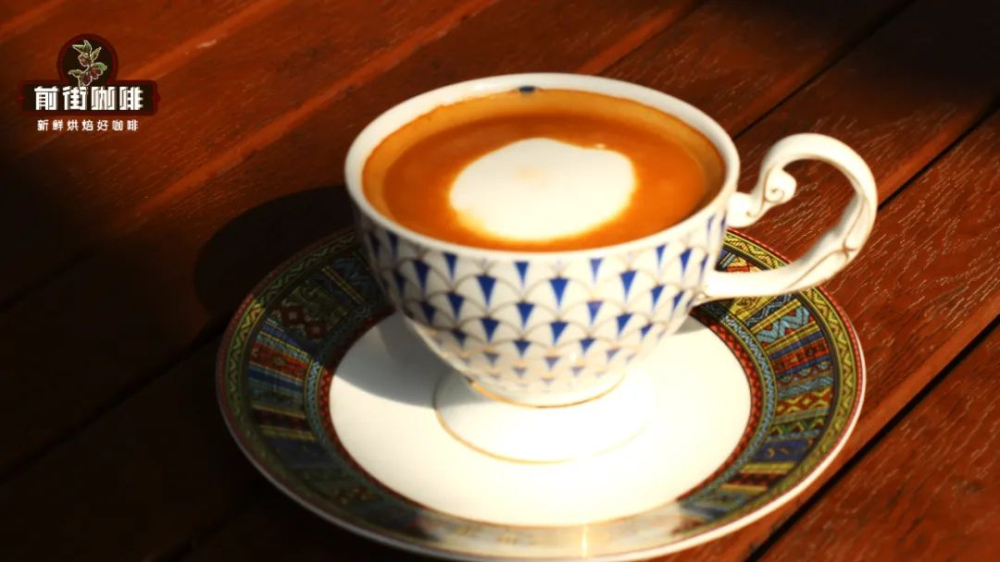
Front Street wanted to present a Melange closer to the traditional flavor, so we specifically found a vintage-style bone china cup, chose the store's daily offering Warm Sun for the coffee beans, and followed the classic version mentioned above for the recipe.
Step one: use 20g of coffee grounds to extract 40g of coffee liquid, with the time controlled at 30 seconds. Pour half of it into the cup and set aside;
Next, add 100ml of fresh milk to the milk pitcher, steam it into a dense, thick foam with the temperature controlled at 55–60°C; then mix the steamed milk with the coffee, trying to let the white milk foam land in the center and be wrapped by the coffee liquid.
A Melange made this way is relatively close to a hot latte in strength. Perhaps because Front Street skipped the blending and latte art steps, the crema is retained more completely. Additionally, the thick milk foam makes the first few sips exceptionally rich in coffee flavor, presenting a slightly bitter nutty note; only after drinking to the middle and encountering the white foam does the mouthfeel gradually soften, with much more sweet milky aroma.
- END -
The above content is compiled by CoffeeHunters, a coffee news website.


