







Why the coffee industry expects a multi-year high-price cycle
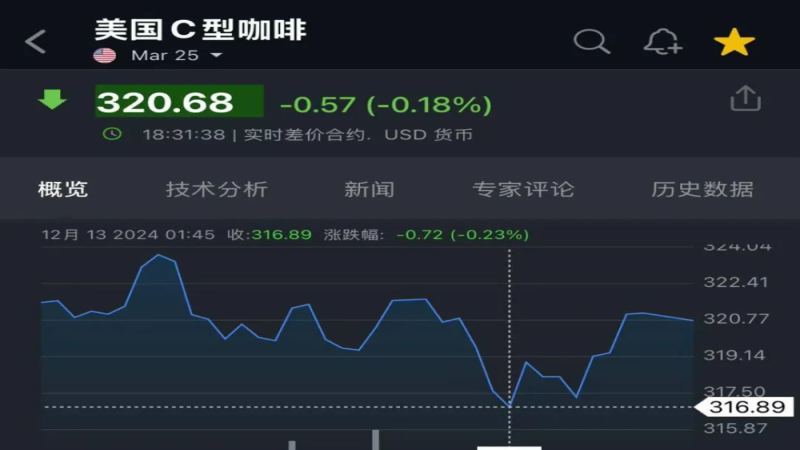
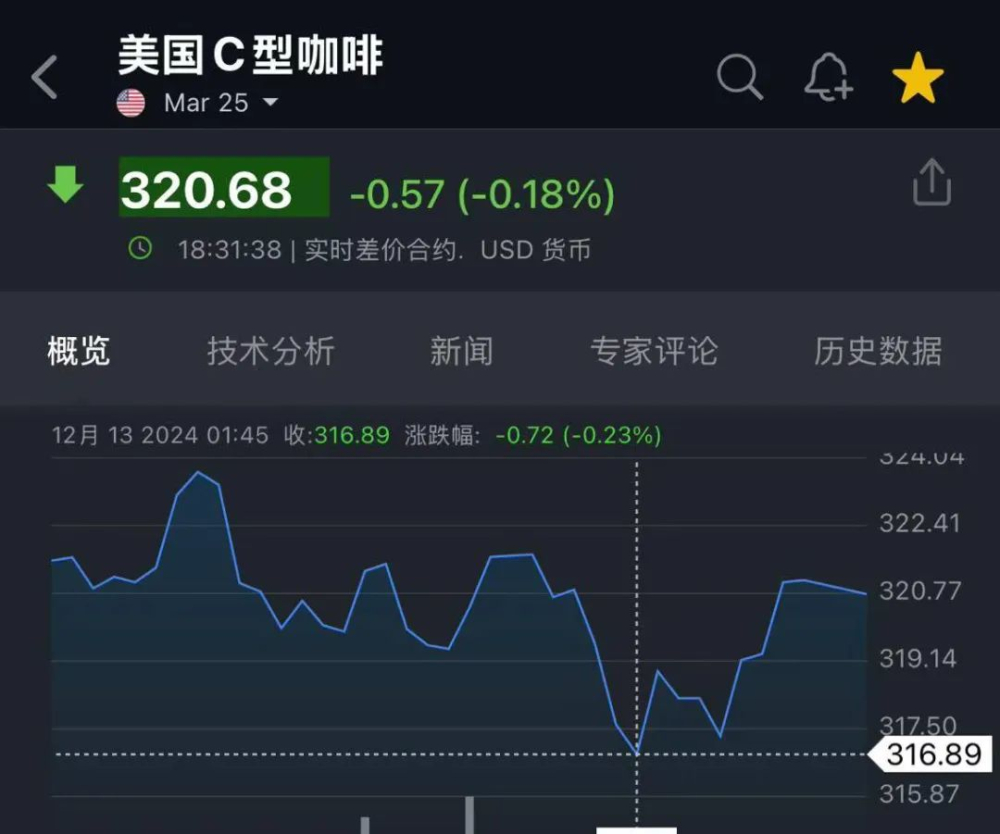
New York Arabica futures hit a record 343.4 cents per pound before US C coffee futures pulled back to about 319.6 cents, while Robusta continued to slide, touching roughly US$5,059.5 per tonne. Brazil's central bank raised its benchmark rate to 12.25 percent, lifting export costs, and traders turned to Vietnam for cheaper Robusta.
The US Department of Agriculture forecasts Vietnam coffee production of 30.1 million bags in 2024/25, up from 27.5 million, with 29 million bags Robusta and 1.1 million Arabica. The World Meteorological Organization warns La Niña may form, and with geopolitics and labor shortages in play, much of the coffee industry expects prices to stay high for three to five years.
Recently, the global coffee market has experienced a round of dramatic fluctuations. New York Arabica futures once hit a record high of 343.4 cents per pound, before US C coffee futures pulled back to around 319.6 cents, while Robusta futures continued to decline. Meanwhile, Brazil's central bank raised interest rates to 12.25%, driving up export costs, and traders turned to Vietnam to buy cheaper Robusta beans. The latest report from the US Department of Agriculture forecasts that Vietnam's coffee production in 2024/25 will recover to 30.1 million bags, but climate uncertainty still hangs over the market. The World Meteorological Organization warns that a La Niña phenomenon may form, and combined with geopolitics and labor shortages, the industry generally believes that coffee prices will remain high over the next 3 to 5 years.
Previously, rising concerns in the market about tightening global coffee supply kept pushing coffee futures prices higher. New York Arabica futures rose by 4%, setting a historic record at 343.4 cents per pound, while US C coffee futures, the industry price benchmark, also once surged to 348.3 cents.
However, yesterday the market took a turn, with US C coffee futures falling back to 319.6 cents/lb. At the same time, Robusta futures continued their downward trend, once touching US$5,059.5 per tonne during the session. Some analysts believe this round of price adjustment may reflect that the market's supply and demand structure is being recalibrated.
Other news shows that Brazil's central bank recently raised its benchmark interest rate to 12.25%. Higher interest rates push up the cost of exported goods, thereby driving Brazilian coffee quotations higher. At the same time, Brazilian traders, in order to secure future coffee inventories, have slowed the pace of sales and begun seeking lower-priced alternative supplies, which has prompted them to increase purchases of Vietnamese Robusta coffee.
A recent Vietnam coffee industry report released by the US Department of Agriculture forecasts that Vietnam's total coffee production in 2024/25 will reach 30.1 million bags (60 kg per bag), of which Robusta production will be 29 million bags and Arabica production is expected to be 1.1 million bags. Although this figure is lower than the June estimate, it still represents growth compared with 27.5 million bags in 2023/24.
It is understood that from March to May this year, Vietnam experienced severe drought, with cracked land and scarce water sources, significantly affecting the growth of coffee trees; then, after entering the harvest season, it encountered continuous rainfall, ultimately leading to a decline in production. However, the report also noted that the recent sustained rise in coffee prices has increased farmers' incomes, and they have accordingly increased investment in coffee cultivation, which has helped Vietnam's coffee industry gradually recover amid the drought and alleviated some losses.
Vietnam is currently in its coffee harvest period. According to the chairman of the Vietnam Coffee and Cocoa Association (VICOFA), this year's harvest season encountered heavy rain, which delayed picking progress, but most farmers harvested fruit with higher maturity, better quality, and greater weight. Therefore, production is expected to increase, which will also be beneficial for exports.
However, market concerns about climate conditions have not dissipated. The latest forecast from the World Meteorological Organization shows that from December 2024 to February 2025, there is a 55% probability of shifting from the current neutral state to La Niña, but this La Niña is expected to be weak in intensity and short in duration.
The organization also pointed out that an El Niño phenomenon occurred earlier this year, and even if La Niña does arrive in December, its short-term cooling effect will not be enough to offset the warming impact caused by record greenhouse gases. After May this year, neither El Niño nor La Niña appeared, but the world still experienced a series of extreme weather events, including record rainfall and floods, as well as severe droughts and high temperatures in many places, which have become the new normal of climate change.
Therefore, some industry insiders say that weather factors continue to put pressure on soft commodities, and coffee prices may fluctuate further next year. In addition, the coffee industry also faces multiple challenges such as geopolitics, conflict, and labor shortages, and these factors will further intensify the instability of the supply chain. In addition, coffee trees have a long growth cycle, and even if large-scale expansion of planting were carried out now, it would take nearly 5 years for them to mature and bear fruit. Therefore, coffee prices are expected to remain high over the next 3 to 5 years.
To learn more news and information about coffee origins, please scan the QR code to follow: Coffee Review
Long-press the QR code to follow:
The above content is compiled by CoffeeHunters, a coffee news website.


