







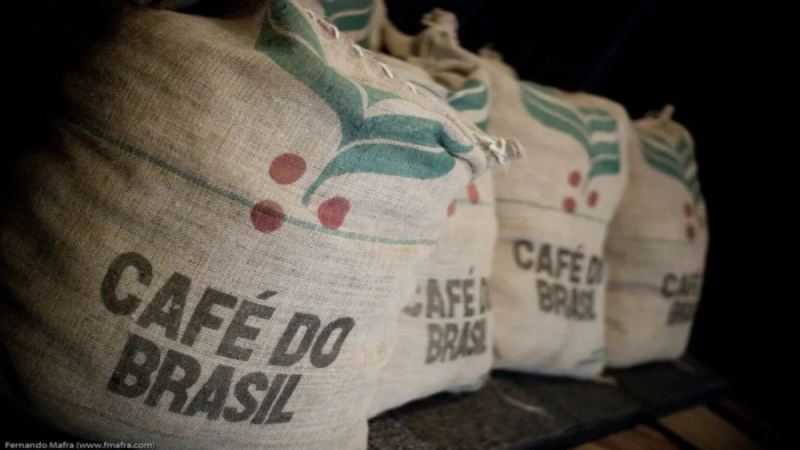
What is driving the drop in arabica coffee output?
StoneX's first estimate for Brazil's 2025/26 crop puts total coffee production at about 65.6 million bags, down 0.4% from the previous year. Arabica coffee is projected at 40 million bags, a 10.5% decline, while Robusta rises 20.9% to 25.6 million bags. The Robusta gain does not offset the arabica shortfall, so the overall total still edges lower.
The decline traces to weather in Minas Gerais and São Paulo, the core arabica regions: severe drought followed by storms and strong winds. Soil moisture deficits in Minas Gerais reached the second-highest level on record, and October rainfall fell well below normal. Better rainfall in Espírito Santo is helping Robusta, and the European Parliament's one-year delay of EUDR gives Brazil's coffee production and exports more time to adjust.
StoneX has released its first estimate for Brazil's 2025/26 coffee production, projecting a total output of approximately 65.6 million bags, a slight decrease of 0.4% from the previous year. Arabica production is expected to fall 10.5% to 40 million bags, while Robusta is expected to increase 20.9% to 25.6 million bags, but the increase in Robusta is not enough to offset the shortfall in Arabica. The decline is mainly due to unfavorable weather in Minas Gerais and São Paulo: first severe drought, followed by storms and strong winds. Soil moisture deficits in Minas Gerais reached the second-highest level on record, with October rainfall far below normal, and future hot and dry conditions may continue to affect the fruit-setting period. Meanwhile, improved rainfall in Espírito Santo is benefiting Robusta. The European Parliament's decision to delay EUDR implementation by one year also provides a buffer period for Brazil's coffee exports.
Recently, well-known consulting firm StoneX released its first adjusted estimate for Brazil's coffee production, projecting total output for the 2025/26 season at 65.6 million bags (60 kg each), a slight decline of 0.4% from the previous year.
By variety, Arabica coffee production is estimated at 40 million bags, down 10.5% year-on-year; Robusta coffee production is estimated at 25.6 million bags, up 20.9% year-on-year. Although Robusta's increase is significant, it still cannot fill the gap left by Arabica's decline, so total production still shows a slight downward trend.
It is understood that this production downgrade is closely related to Brazil's recently unfavorable climate conditions, especially in the country's core Arabica coffee-producing regions—Minas Gerais and São Paulo. Previously, Brazil experienced its most severe drought in recent years, with almost no rainfall in major coffee-growing areas, rivers and reservoirs drying up, and water levels dropping, leading to prominent water shortages.
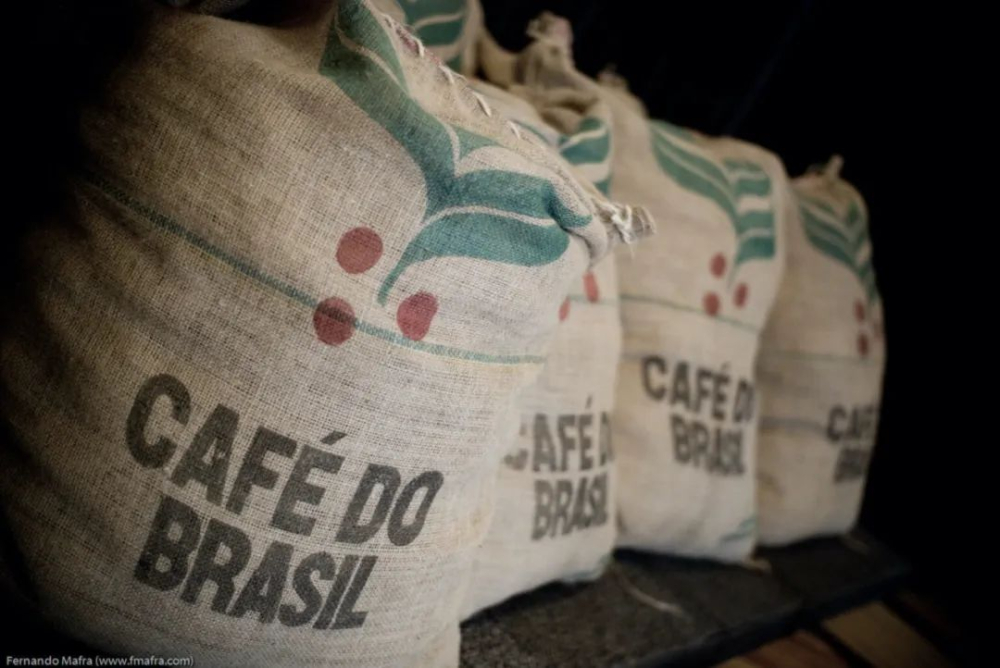
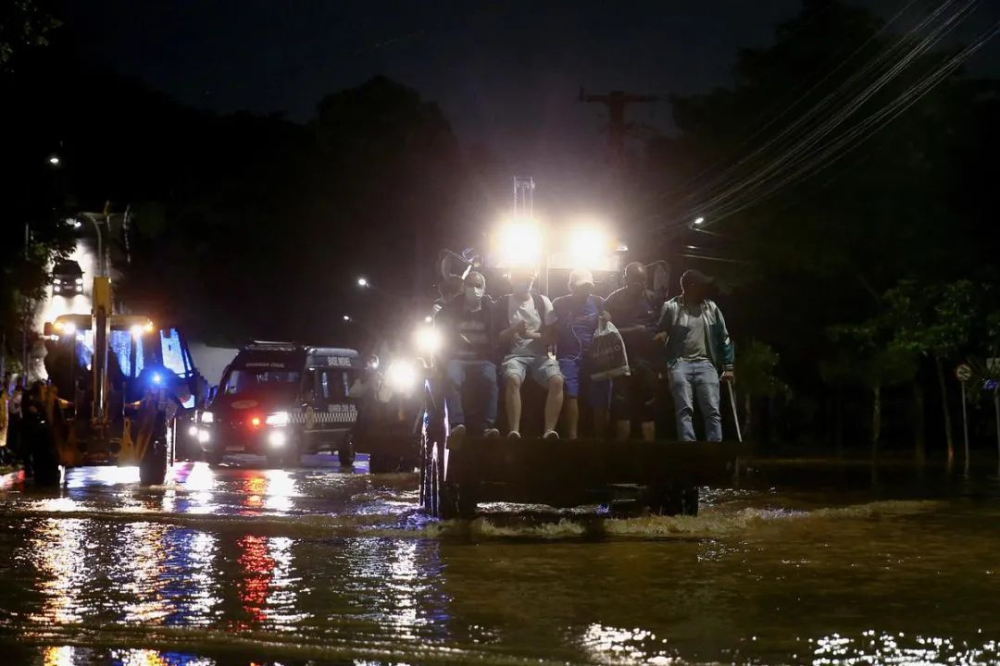
Although rainfall began to recover in mid-October in Brazil, São Paulo state was hit by extreme stormy weather, with severe flood threats and record-breaking strong winds. While rainfall can alleviate soil drought to some extent, excessively strong winds still adversely affect coffee tree growth.
In addition, Brazil's largest coffee-producing state, Minas Gerais, suffered severe damage during the drought, with extremely sparse rainfall, and some areas even setting records of more than 160 days without rain. According to Minas Gerais coffee research institution Fundacao Procafe, before rainfall resumed, soil moisture deficits in major coffee-producing areas of Minas Gerais were 250 mm above normal, the second-largest deficit on record.
From October to early November, although Minas Gerais also began to receive rain, rainfall remained below average. Meteorological expert Climatempo pointed out that average October rainfall was only 63.4 mm, far below normal levels. Even by November, rainfall was still insufficient, and it is predicted that the region will become hotter over the next 10 days, with temperatures possibly reaching 35°C and weather becoming drier.
Such climate conditions are very unfavorable for the subsequent coffee fruit-setting period, so many institutions believe it is almost impossible for coffee trees to recover to maximum production. Affected by this, multiple institutions judge that Brazil's Arabica coffee production will decline by more than 10%, and recently Arabica coffee futures prices have continued to rise due to news of Brazil's production decline.
In contrast, weather in Espírito Santo, Brazil's largest Robusta coffee-producing state, has improved, with rainfall reaching over 100 mm, effectively alleviating the local drought and benefiting Robusta coffee growth, so production shows an upward trend.
However, recently Brazil's coffee industry received good news: the European Parliament approved a decision to delay implementation of the "Deforestation Regulation EUDR" by one year, and the law will begin enforcement on December 30, 2025. The EU accounts for about 20% of Brazil's coffee exports, so the delay gives Brazil more time to meet relevant requirements.
In addition, the parliament also passed a concept of "risk-free countries," creating a new category for countries that are developing stable or growing forest areas. Such countries will face looser regulatory requirements, but this also increases uncertainty in EUDR regulation.
To learn more about coffee origin information, please scan the QR code to follow: Coffee Review
Long-press the QR code to follow:
TRANSLATE with
x
English
Arabic Hebrew Polish Bulgarian Hindi Portuguese Catalan Hmong Daw Romanian Chinese Simplified Hungarian Russian Chinese Traditional Indonesian Slovak Czech Italian Slovenian Danish Japanese Spanish Dutch Klingon Swedish English Korean Thai Estonian Latvian Turkish Finnish Lithuanian Ukrainian French Malay Urdu German Maltese Vietnamese Greek Norwegian Welsh Haitian Creole Persian
TRANSLATE with
COPY THE URL BELOW
Back
EMBED THE SNIPPET BELOW IN YOUR SITE Bing Webmaster Portal
Back
The above content is compiled by CoffeeHunters, a coffee news website.


