







Where do arabica coffee beans come from and why are they fruity?
Arabica coffee beans come from Ethiopia, the birthplace of the species, with most producing areas in the southwest. The East African Rift Valley creates mountains, plateaus, and forest land there, and coffee grows at roughly 1,100 to 2,350 meters. That origin terroir, not added flavoring, is what gives Ethiopian arabica coffee beans their fruity character.
The wide day-to-night temperature swing at altitude slows cherry ripening, letting more flavor compounds build up and producing denser, harder beans. Complex terrain adds microclimates that encourage citrus and berry notes. Processing carries those notes forward: natural methods dry whole fruit in the sun for three to four weeks, while washed Yirgacheffe lots, lightly roasted and brewed as pour-over, show jasmine, citrus, and berry tones.
Ethiopian coffee is renowned for its rich floral and fruity aromas and bright fruit acidity, which is completely different from the mellow taste people associate with traditional coffee, making it the introductory choice for many enthusiasts stepping into the world of specialty coffee. So where exactly do the fruity flavors in Ethiopian coffee come from? This article will analyze this from three angles: origin terroir, processing methods, and cultivation patterns, and use Yirgacheffe washed beans as an example to illustrate how light roasting and pour-over can present jasmine floral notes, citrus, and berry tones.
Ethiopian coffee has always been known for its rich floral and fruity aromas and bright, lively fruit acidity, which is very different from the mellow flavor people associate with traditional coffee. That is why many people choose it first when they encounter specialty coffee. So why does Ethiopian coffee carry fruity flavors?
First, the flavor and quality of coffee are rooted in the place of origin, covering climate conditions, growing environment, and many other aspects. Ethiopia is the birthplace of Arabica coffee, and its geographical conditions are quite favorable. It is located in East Africa, and the East African Rift Valley runs through the country from north to south, creating a considerable number of mountains, volcanoes, lakes, plateaus, and forest lands.
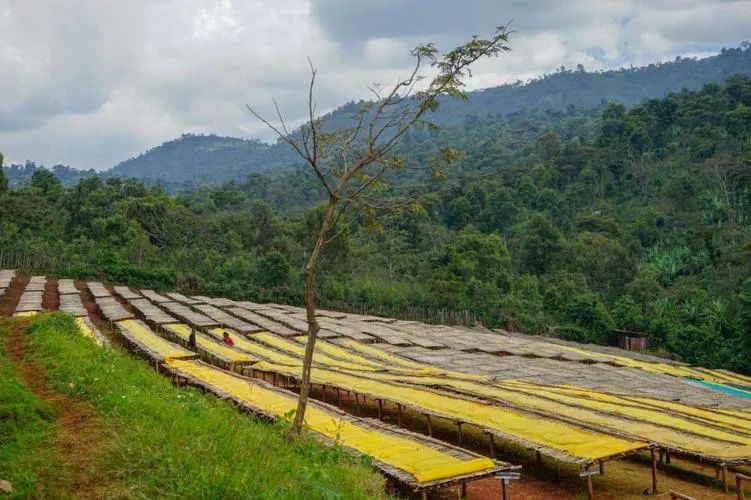
Coffee-producing areas are mostly concentrated in southwestern Ethiopia. Although the country is near the equator and belongs to the tropics, the overall terrain is high, with coffee cultivation at altitudes of about 1,100 to 2,350 meters, and there is a clear temperature difference between day and night. Such conditions can slow down the ripening pace of the coffee fruit and allow more flavors to accumulate; at the same time, the higher the altitude, the smaller the density and the higher the hardness of the coffee beans. Together with the microclimates formed by the complex terrain, all of this helps local coffee develop fruity flavors and aromas such as citrus and berries.
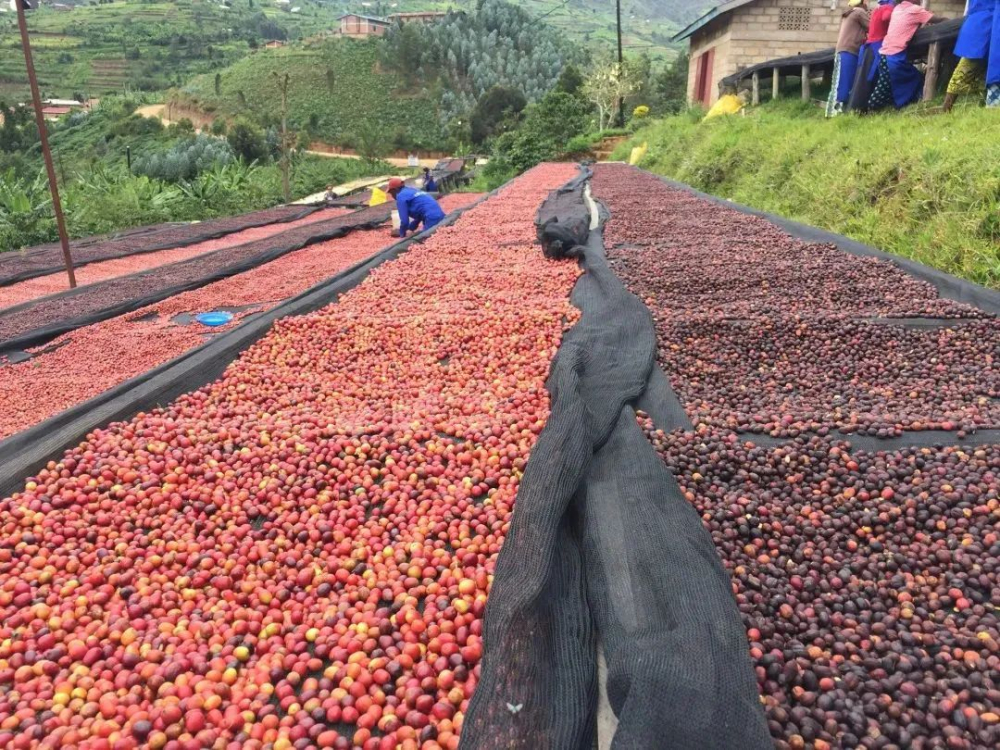
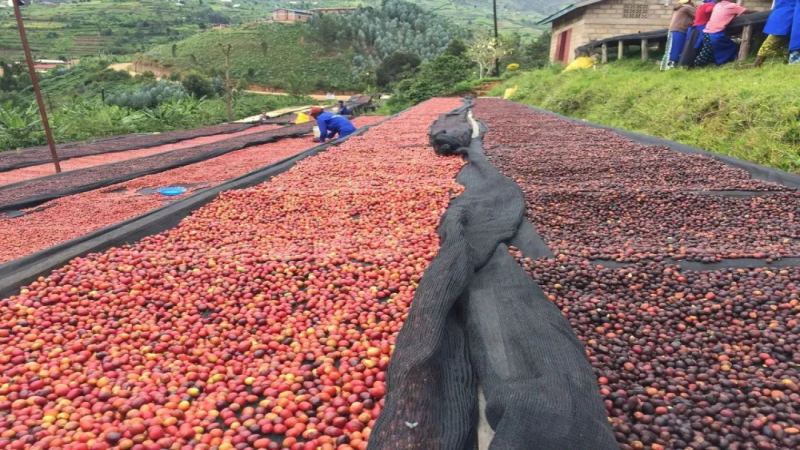
Because the climate is relatively dry, Ethiopia mainly uses natural and washed processing methods. Natural processing is to spread the coffee fruit out directly to dry in the sun, and the whole process lasts three to four weeks. During this period, the whole fruit participates in fermentation, so the coffee beans absorb sugars from the pulp and mucilage layer, and the flavor expression leans sweeter. Moreover, coffee itself is a fruit and naturally has a fruity flavor base, and during drying it also absorbs the fruity aroma of the pulp.
At first, Ethiopia used the ancient natural processing method, and it was not until 1972 that washed processing was introduced. The washing process uses a large amount of water and can reduce the defect rate of coffee, making the flavor cleaner, so many local people are willing to use washed processing.
Washed processing first requires removing the skin of the coffee fruit, then putting it into a fermentation tank to stir and soak for 12 to 48 hours, during which the mucilage layer is separated, after which the coffee beans are rinsed clean with fresh water, and finally dried in the sun. Therefore, during the drying stage, only the coffee beans themselves participate in fermentation, without the pulp, and after being treated with a large amount of fresh water, the cleanliness is higher, and the flavor expression leans more acidic.
In addition, Ethiopia's coffee cultivation patterns are mainly divided into garden cultivation, estate cultivation, and forest cultivation, among which garden cultivation is the most common. Coffee farmers plant coffee trees in their own backyards and farmland, and the area for each household is not large. During the harvest season, after picking, farmers deliver the coffee uniformly to nearby processing stations or cooperatives for processing and export.
As for the forest cultivation pattern, coffee trees grow naturally in the forest, and only when they reach maturity do farmers go into the forest to collect coffee fruit, which is then processed before export. Because the coffee varieties grown in Ethiopia are extremely rich, more than ten thousand kinds, but most have not been identified and subdivided, and farmers find it difficult to distinguish them, they are uniformly labeled locally as "Heirloom," which in Chinese is called native species or heirloom. For this reason, Ethiopian coffee beans often show the characteristics of varying shapes and uneven sizes.
Because Ethiopian coffee beans vary in size, light roasting is usually used during roasting to prevent the small beans from being scorched. Light roasting also allows Ethiopian coffee beans to retain more floral and fruity acidity.
Take the Ethiopian Yirgacheffe coffee beans of Front Street Coffee as an example. They use the washed processing method and light roasting, and are extracted by pour-over, which can highlight jasmine floral notes, present citrus and berry fruity flavors and lemon-like acidity, with a clean and refreshing mouthfeel.
If you want to learn more about coffee origins, please scan the QR code to follow: Coffee Review
Long-press the QR code to follow:
The above content is compiled by CoffeeHunters, a coffee news website.


