







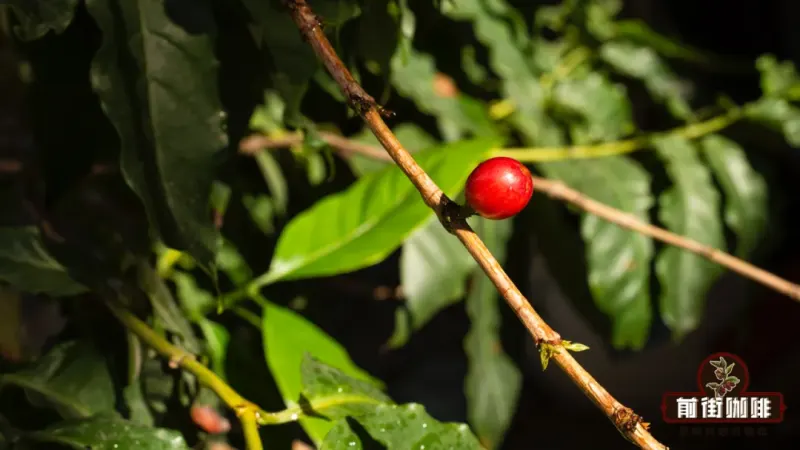
Why does whole-ripe-cherry picking matter for specialty coffee?
Whole-ripe-cherry picking, often promoted as all-red cherry, is not a processing method but a harvesting practice: farmers select only cherries that have turned deep red and ripe. Ripe cherries have completed their internal transformation, so sugars have developed and acidity has dropped. That selection raises cup quality and requires more manual labor, which is why it is highlighted in specialty coffee.
The Operation Cherry Red project, started in 2007 by Dutch green bean trader Trabocca, paid higher prices for high-quality cherry. It broke the cycle between farmers and traders by rewarding ripeness, benefiting growers, merchants, and consumers. Because processing of coffee beans cannot fix underripe fruit, harvesting ripe cherries first gives later steps a better starting point. Some varieties ripen to other colors and need separate handling.
In coffee bean promotions, we often see phrases like "all-red cherry sun-dried," but all-red cherry is not actually the name of a processing method; rather, it refers to the way the coffee cherries were harvested—using the all-red cherry picking method. So, why is all-red cherry picking so important? What story of industry transformation lies behind it? This article will analyze, from the perspective of Front Street, the impact of all-red cherry picking on coffee quality, review the evolution of harvesting methods in the early days of specialty coffee, and introduce the "Operation Cherry Red" initiated in 2007 by the Dutch green bean trader Trabocca, examining how it broke the vicious cycle between coffee farmers and green bean traders by raising the purchase price for high-quality coffee, ultimately achieving a win-win-win for farmers, merchants, and consumers.
In fact, all-red cherry is not the name of a processing technique; it describes the method used during the harvesting stage for a batch of coffee—"all-red cherry picking." In other words, coffee farmers select only those ripe cherries that have turned deep red when picking. Of course, some coffee varieties show other colors when ripe, and that situation requires separate discussion.
So why do many coffee beans specifically highlight this point in their promotions?
Perhaps clever readers have already guessed the answer: it means that more manual labor was invested in harvesting this batch of coffee beans, and the quality is superior. Today, Front Street will talk with everyone about why the short phrase "all-red cherry" can carry such rich meaning.
Why does coffee emphasize all-red cherry?
Deep red cherries not only indicate that the coffee is ripe, but also show that the internal transformation of substances in the fruit has been completed. Front Street believes everyone has eaten bananas, persimmons, or plums that are not yet fully ripe; their taste is almost the same: astringent and sour. The reason is that the organic acids in the fruit have not yet been converted into sugars, so the acidity is very high and it does not taste good. The same principle applies to coffee cherries. Although coffee cherries are not mainly used for direct consumption, sugar is still crucial for coffee beans. If the beans do not have enough sugar, even with the best processing methods and roasting profiles, it is difficult to develop elegant and charming aromas, and the brewed coffee naturally cannot taste good. Therefore, coffee beans processed from unripe cherries are classified as defective beans. The white-eye beans or unripe beans mentioned by Front Street yesterday refer to this category.
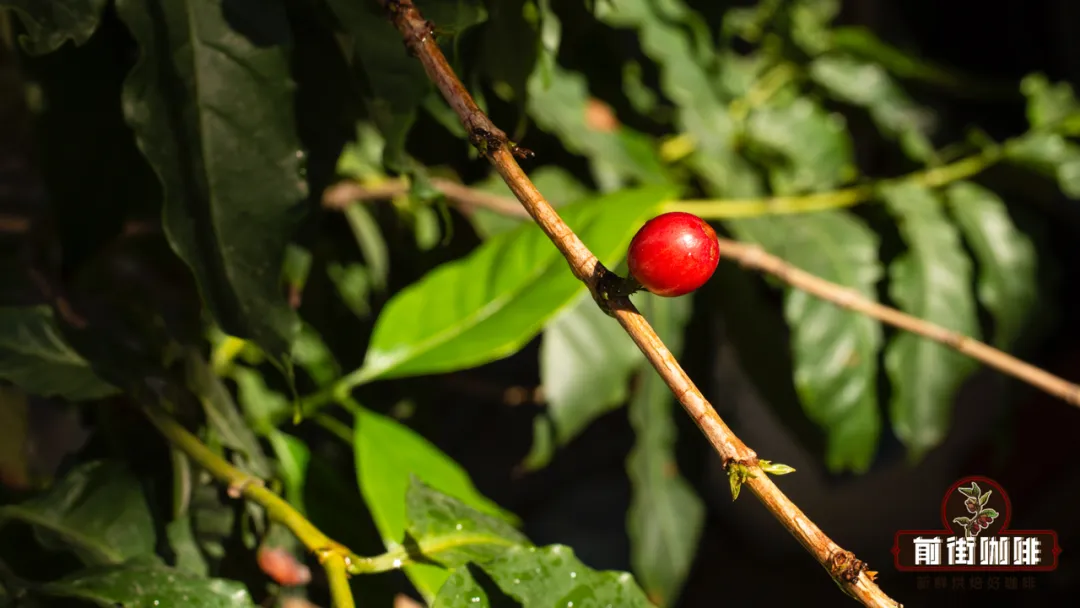
For this reason, in order to ensure coffee quality, the vast majority of producing regions today practice all-red cherry harvesting (with a few exceptions, but those will screen out unripe cherries during processing). This sounds like a matter of course, but in the early days, all-red cherry harvesting was not a given. The coffee harvest period can last as long as three months, during which the cherries on the trees ripen one after another. That is to say, the cherries on the same tree do not ripen at the same time; some are early and some are late. Therefore, on branches full of fruit, we often see a scene of mixed red and green.
In this situation, if one wants to pick only red cherries, it must be done by hand, selecting one by one, a process that is both cumbersome and time-consuming. In an era when the concept of specialty coffee had not yet become widespread, coffee purchasing in almost all producing regions focused only on weight, not quality. In order to exchange for more income, coffee farmers would pick all the cherries regardless of whether they were ripe. This harvesting method was very fast; one only needed to place a hand at the end of the branch and strip along it, and all the cherries would fall off.
Because large numbers of unripe cherries were mixed in, the quality of coffee beans at that time was uneven, and whether they were good or bad depended entirely on the proportion of ripe cherries in the harvest. Coffee beans of unstable quality not only increased the time cost of manual sorting, but also affected flavor performance and selling price. In order to obtain more profit, green bean traders could only further lower the purchase price of coffee cherries. This in turn forced coffee farmers to pick more unripe cherries, because if they did not do so, they could not earn enough income to make a living. In this way, a vicious cycle persisted for a long time at that time, especially in Ethiopia, where smallholder harvesting was dominant, and the situation was most serious.
It was not until 2007 that Trabocca, the largest green bean trader in the Netherlands, proposed "Operation Cherry Red," which broke this deadlock. Operation Cherry Red encouraged coffee farmers to treat the harvesting of coffee cherries and the processing of coffee beans more carefully by raising the purchase price of high-quality green coffee beans. The coffee beans produced in this way were of higher quality and sold at a better price, coffee farmers' incomes increased accordingly, and consumers could also taste more delicious coffee. It can be said that this is a win-win-win project. (For detailed content about Operation Cherry Red, please refer to the article "What Is Operation Cherry Red?")
The above content is compiled by CoffeeHunters, a coffee news website.


