







What Does Ristretto Mean in Coffee Bean Preparation?
Ristretto is an espresso restricted to a shorter, more concentrated extraction: the same dose of coffee grounds, but less water pushed through them. The name comes from Italian for "restricted," and the result is a denser, sweeter shot with less bitterness. It often appears on chain menus under names such as short extraction or Italian extra-strength coffee.
Reducing the yield alone does not make a good ristretto. Espresso parameters are set for a full shot, and coffee is roughly 30 percent soluble material and 70 percent insoluble woody fiber, so a shortened pull can turn astringent from under-extraction. Coffee bean preparation here means adjusting the ratio, not just cutting the volume, and ristretto is also a common base for a flat white.
On the menus of many chain coffee brands, besides the usual espresso, there is often an option called "Ristretto." This name sounds fresh, but it is actually what the coffee world commonly calls Ristretto. Ristretto comes from Italian, meaning "restricted." It is also a type of espresso, but due to different extraction methods, its flavor profile and concentration differ from regular espresso. This article will explain from Front Street Coffee's perspective what Ristretto exactly is, how to properly make a cup of Ristretto, and its relationship with Flat White, helping coffee enthusiasts avoid detours in their daily brewing.
Recently, a friend noticed on a chain brand's menu that besides espresso, there is also an option called "Ristretto." So today, Front Street Coffee will talk about: what exactly is Ristretto?
What exactly does Ristretto mean? Actually, the so-called Ristretto is what Front Street Coffee often mentions when introducing Flat White—"Ristretto." This word carries the meaning of "restricted." It falls under the category of espresso, but due to differences in preparation methods, Ristretto differs somewhat from regular espresso in taste and concentration.
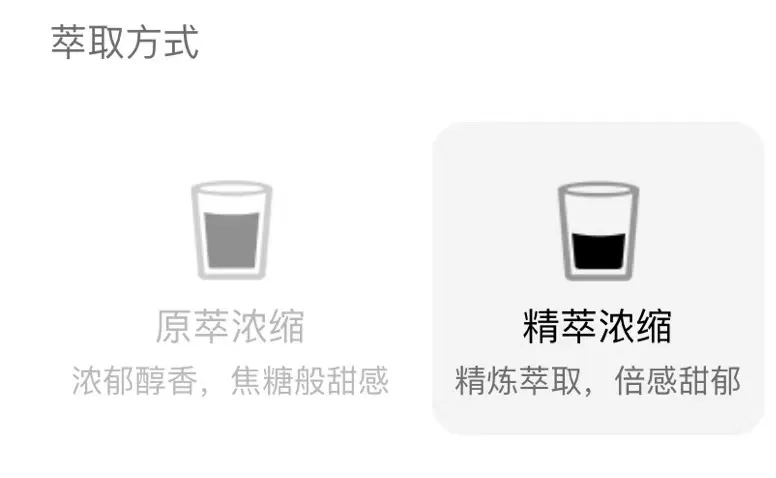
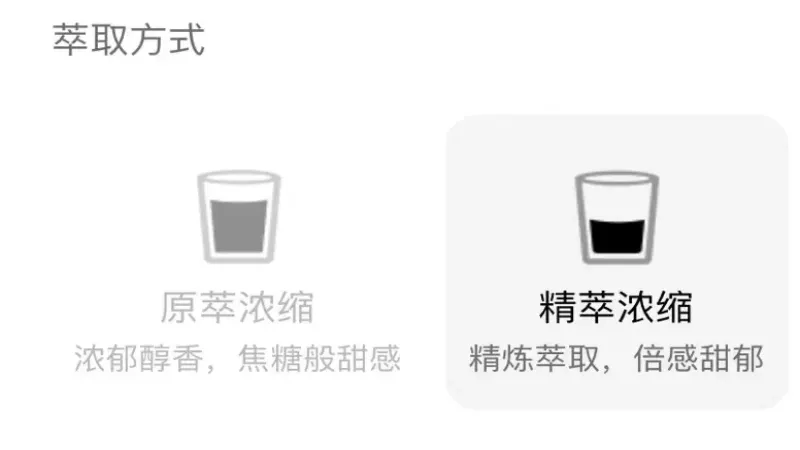
The specific operation is not complicated: while keeping the original dose of coffee grounds unchanged, you adjust the powder-to-water ratio during extraction to increase the coffee's concentration while reducing the release of bitter substances. Therefore, the "restriction" in this cup of coffee can be understood as controlling the amount of extracted liquid. The name "Ristretto" is just an alternative name given by chain brands to make it easier for customers to understand. Besides this, it is also called short extraction, Italian extra-strength coffee, Ristretto, and other names.
However, many people fail to make a good cup of Ristretto because most people think that Ristretto only requires reducing the extraction liquid volume based on the original espresso parameters. Although this is not wrong—the coffee concentration does increase—it also easily causes astringency due to under-extraction. The reason is simple: the parameters we use for extracting espresso are originally set for extracting a complete espresso.
The soluble substances in coffee beans account for only 30% of the whole, while the remaining 70% is insoluble woody fiber. According to the Golden Cup theory, among this 30%, only two-thirds is pleasant in flavor. So, to make a good cup of coffee, we need to control the release of soluble substances to about two-thirds. And this is related to every parameter—dose, grind size, ratio, time—none can be omitted.
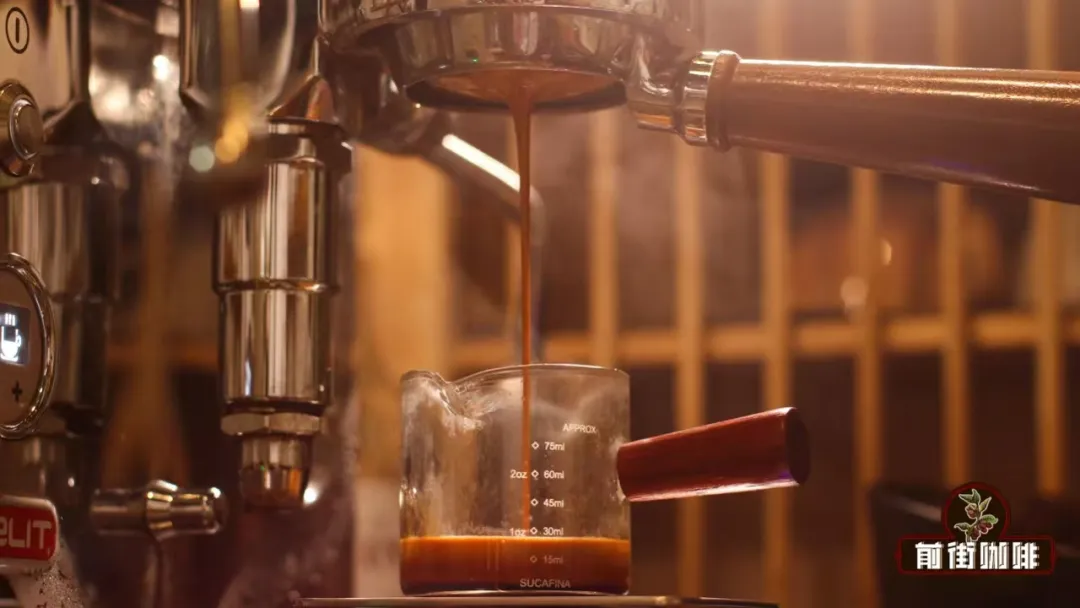
Taking Front Street Coffee as an example, the parameters usually used for extracting espresso are 20 grams of coffee grounds, extracting 40 milliliters of liquid weight within 30 seconds, which is a powder-to-water ratio of 1:2, with time controlled at around 30 seconds. This set of parameters can ensure that the coffee extracted with this liquid volume has good performance in both taste and concentration.

The above content is compiled by CoffeeHunters, a coffee news website.


