







Why is arabica coffee under pressure in Brazil?
Two traders under the Montesanto Tavares group, Atlantica and Cafebras, have filed for debt restructuring after cash flow strain, involving about 500,000 bags of delayed coffee deliveries. Brazilian banks face roughly 1.1 billion reais in credit risk as the real stays weak near 6.05 per dollar alongside rising arabica futures.
Domestic Brazilian coffee spot prices have reached a 26-year high. A weaker real makes exports more competitive but raises costs for imported fertilizer and pesticides, and drives exporters to hedge on futures, which lifts futures prices further. Drought, shipping delays and geopolitical remarks add pressure to coffee production by country totals.
The continuous weakening of the Brazilian real, combined with rising Arabica futures, shipping disruptions, and drought-related crop reductions, is putting unprecedented pressure on the country's coffee export chain. Two traders under the Montesanto Tavares group, Atlantica and Cafebras, have applied for debt restructuring due to cash flow strain, involving about 500,000 bags of coffee with delayed delivery and exposing Brazilian banks to approximately 1.1 billion reais in credit risk. Meanwhile, domestic Brazilian coffee spot prices have hit a 26-year high, and concerns about future supply and export share are intensifying in the market.
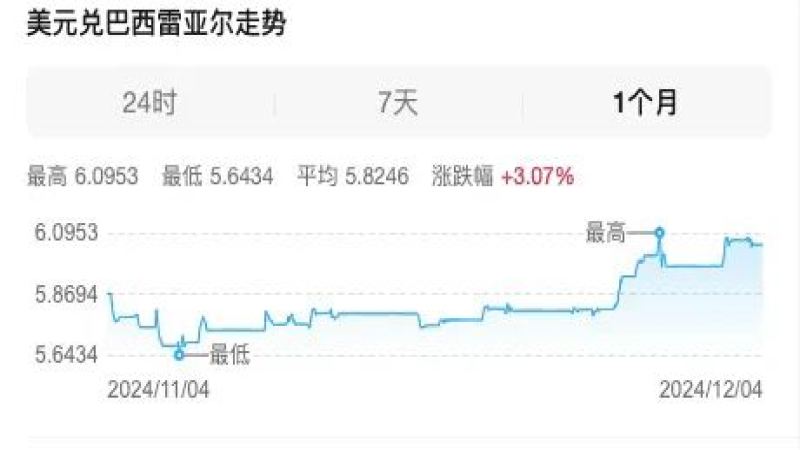
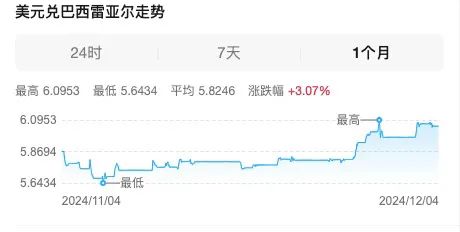
According to relevant media reports, dragged down by Brazil's fiscal problems, the country's currency, the real, has continued to weaken recently. Although the real edged up 0.21% at yesterday's close, the USD/BRL exchange rate remains at 6.056.
After rising for five consecutive trading days and hitting a record high, the USD/BRL exchange rate has entered a relatively stable phase. Although the US dollar has retreated globally, market concerns about Brazil's fiscal policy persist, and combined with Trump's remarks targeting BRICS nations, the exchange rate remains in a high range above 6.00.
This situation has brought multiple challenges to Brazil's coffee industry. Exchange rate fluctuations make export revenue difficult to predict, placing a considerable financial burden on growers and exporters. While the depreciation of the real does make Brazilian coffee more price-competitive in the international market, it also raises domestic production costs. As the local currency weakens and geopolitical factors intensify, the prices of imported materials such as fertilizers and pesticides have risen significantly, further increasing cultivation and operating expenses.
For exporters, the depreciation of the real also means amplified exchange rate risk. To buffer the impact of exchange rate fluctuations, many exporters are forced to use financial instruments such as coffee futures for hedging. While this reduces potential losses, it also drives up futures prices and increases daily operating expenses.
Recent reports show that due to a combination of factors including exchange rate issues, persistently high Arabica coffee futures, shipping delays, and drought affecting harvests, two Brazilian traders, Atlantica and Cafebras, have delayed deliveries and initiated debt restructuring procedures, sparking widespread concern in the market.
According to reports, these two exporters currently owe buyers about 500,000 bags of coffee, equivalent to approximately 30,000 tons. The two trading companies have filed debt restructuring applications with the court, exposing Brazilian banks to approximately 1.1 billion reais (about 118 million USD) in credit exposure, with these funds originating from advance payment accounts (ACC) linked to future coffee exports provided by banks.
Public information shows that Atlantica Coffee, Cafebras, and Ally Coffee are all subsidiaries of the Montesanto Tavares group, mainly engaged in Brazilian coffee trading, holding a significant position in the country's coffee market and collectively accounting for 8% of Brazil's coffee sales.
In documents submitted to the court, Atlantica and Cafebras stated that the recent sharp price increases have become the latest challenge in their operations, as the surge in prices triggered margin calls on hedging transactions, causing cash flow to tighten. Currently, both companies are still operating but have requested negotiations on most of their debts under the court framework; if negotiations fail to reach agreement, bankruptcy proceedings may be triggered. This prospect has made the coffee market uneasy, with many importers beginning to worry about whether orders can be delivered on time.
In addition, domestic Brazilian coffee spot prices have also been rising, reaching their highest level in 26 years. In the first half of November, Arabica coffee spot prices were around 1,500 reais per bag, then surged significantly to 1,805.68 reais per bag in the second half of the month; Robusta coffee also rose to 1,570.79 reais per bag during the same period.
The market is therefore concerned that if prices remain high, other Brazilian exporters may also fall into financial difficulties, which could in turn affect coffee supply and push prices further up. At the same time, instability in prices and exchange rates may prompt international buyers to push for lower prices or turn to other relatively stable origins for procurement. As a result, exporters' profit margins will be further squeezed, and Brazil's share of the international coffee market may also decline.
To learn more about coffee origin news and information, please scan the QR code to follow: KaPing
Long-press the QR code to follow:
The above content is compiled by CoffeeHunters, a coffee news website.


