








How does the new pricing affect coffee production in Ethiopia?
The Ethiopian Commodity Exchange has started using a floating pricing system for green coffee exports. Weekly prices now reference Arabica futures on the New York ICE exchange plus the real-time Commercial Bank of Ethiopia exchange rate. The change follows the National Bank of Ethiopia's July foreign exchange liberalization and is meant to give farmers a larger share of export earnings. It applies only to commercial coffee beans, not specialty coffee.
A minimum export price from 2020 regulations stays in place, while the ceiling moves with futures and currency rates. Export prices have long sat below domestic first-sale prices, so the shift aims to close that gap. Volatile futures and EUDR rules remain the main risks for coffee production and trade.
The Ethiopian Commodity Exchange is rolling out a brand-new pricing method for green coffee exports. From now on, green coffee prices will be calculated weekly by referencing Arabica futures on the New York ICE Intercontinental Exchange and the real-time exchange rate of the Commercial Bank of Ethiopia. This change is expected to let local coffee farmers share in more of the profits, but it also faces a double test from volatile international futures and the EU's EUDR regulations. The new mechanism applies only to commercial coffee beans; specialty coffee is not included for the time being. Front Street Coffee will continue to follow developments in the origin and bring first-hand information to enthusiasts.
According to reports, the Ethiopian Commodity Exchange (ECX) has recently begun putting into use a brand-new pricing system for green coffee exports. Under this arrangement, the weekly green coffee price will be generated based on the Arabica coffee futures price on the New York ICE Intercontinental Exchange and the current exchange rate of the Commercial Bank of Ethiopia, with the aim of giving coffee-growing farmers more substantial economic returns.
The ECX noted that at the end of July this year, the National Bank of Ethiopia introduced a new foreign exchange policy, and the foreign exchange market subsequently moved toward liberalization, creating the conditions for adopting the new pricing method. Green coffee pricing in Ethiopia will switch from the previous fixed model to a floating one.
In addition, under the framework of the new mechanism, the Ethiopian Coffee and Tea Authority (ECTA) and the ECX will continue the 2020 regulations and keep enforcing a minimum export price for green coffee trade, while the price ceiling will be adjusted in line with changes in international futures and exchange rates.

However, the statement also mentioned that the new pricing mechanism is mainly aimed at commercial coffee beans. The reason for adjusting export pricing is that, under the combined influence of multiple policies, coffee export prices have long been lower than the domestic first-sale price. The new mechanism is expected to raise Ethiopia's coffee export prices, but for now it will not cover specialty coffee.
It is understood that, according to relevant Ethiopian laws, the coffee export system is divided into three paths: the largest, export through bidding on the ECX platform; export by cooperatives; and independent export by single farms. Among these, cooperatives and single farms do not need to go through the ECX and can export directly through vertical integration. The ECX has long claimed that it has opened up market channels for 2.4 million smallholder farmers through rural cooperatives.
As early as July this year, Ethiopia launched a new round of foreign exchange reform, hoping to ease foreign exchange shortages, strengthen export competitiveness, attract foreign direct investment, and, in coordination with other macroeconomic reforms, create more favorable conditions for the growth and prosperity of the private sector in Ethiopia's economy.
This reform can allow millions of Ethiopians to benefit from multiple foreign-exchange-earning industries, such as farmers involved in the production of export crops including coffee, sesame, beans, and flowers; herders exporting cattle and meat; workers engaged in mining; and thousands of enterprises in the service and tourism sectors.
After the new foreign exchange reform took effect, the exchange rate fell sharply. Although the depreciation of Ethiopia's currency, the birr, helps enhance the international competitiveness of Ethiopian coffee and other goods and benefits exports, it has also caused local prices to rise sharply, with some increases reaching 50% to 100%. For many coffee growers, the cost of cultivation has risen accordingly.
Therefore, the current new pricing mechanism can be said to have both pros and cons for coffee growing. On the positive side, when Arabica coffee futures prices rise, coffee farmers can earn more income through floating prices; but if prices are too high, it may weaken buyers' willingness to purchase and prompt them to turn to other coffee origins for alternatives.
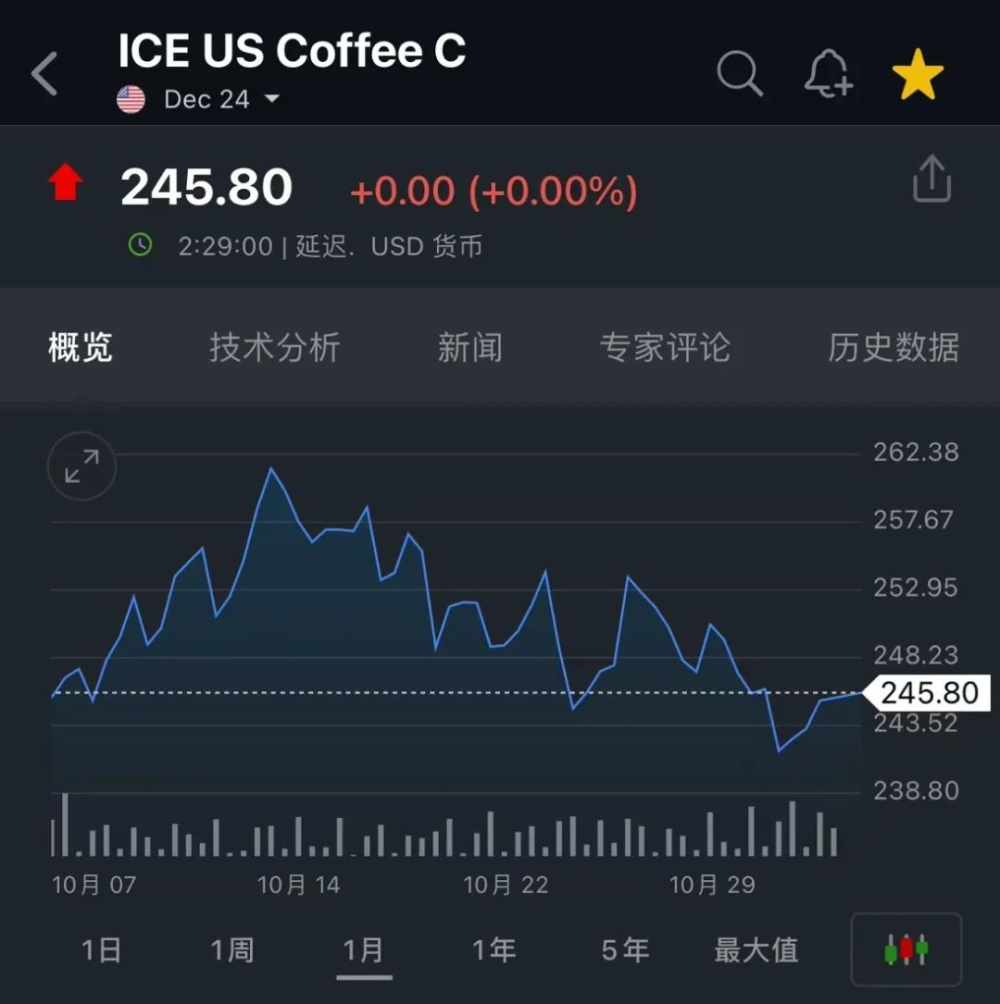
Moreover, international coffee futures prices are highly susceptible to fluctuation due to multiple factors. For example, recent news from Brazil, a major global coffee-producing country, that rainfall has recovered, the impact of drought has eased, and output is expected to rebound, together with growth in Colombia's coffee production and the EU's plan to delay EUDR by one year, has put pressure on coffee futures prices and pushed them downward. At this time, local coffee prices in Ethiopia, due to high prices, are instead unfavorable for exports.
In addition, local coffee exports are currently more worried about the implementation of the EUDR. The European Union is Ethiopia's largest coffee market, accounting for more than 30% of its coffee bean exports, but most of Ethiopia's coffee production is hard-pressed to meet the EUDR requirements, and the government has not yet taken substantive action.
To learn more information about coffee origins, please scan the QR code to follow: Coffee Review
Long-press the QR code to follow:
TRANSLATE with
x
English
Arabic Hebrew Polish Bulgarian Hindi Portuguese Catalan Hmong Daw Romanian Chinese Simplified Hungarian Russian Chinese Traditional Indonesian Slovak Czech Italian Slovenian Danish Japanese Spanish Dutch Klingon Swedish English Korean Thai Estonian Latvian Turkish Finnish Lithuanian Ukrainian French Malay Urdu German Maltese Vietnamese Greek Norwegian Welsh Haitian Creole Persian
TRANSLATE with
COPY THE URL BELOW
Back
EMBED THE SNIPPET BELOW IN YOUR SITE Bing Webmaster Portal
Back
The above content is compiled by CoffeeHunters, a coffee news website.


