







Why Is Blue Mountain Coffee So Expensive Compared With Other Origins?
Jamaican Blue Mountain coffee commands high prices because of history, geography, and tight rules. Only Typica grown in St. Andrew, St. Thomas, Portland, and St. Mary, at elevations between 915 and 1,700 meters, may carry the Blue Mountain name. JACRA controls bean specifications, defect rates, moisture, and cupping, and requires barrel shipping.
The price also reflects a late-20th-century turning point. After hurricanes devastated Jamaica's coffee industry, Japanese trading companies including UCC Ueshima provided loans and signed a 30-year contract that took 90 percent of the quota, then marketed the coffee heavily. Blue Mountain No. 1 from Clifton Mount Estate, washed and balanced in the cup, is a current example of the style.
Jamaican Blue Mountain coffee has long been known as the "Emperor of Coffee," and its price has remained high for a long time. Behind this phenomenon is a mix of historical twists, geographical conditions, and strict quality control. At the end of the 20th century, hurricanes devastated Jamaica's coffee industry, and Japanese trading companies took the opportunity to provide loans and sign a 30-year contract, taking 90% of the quota and driving prices up through marketing hype. The Blue Mountain region has volcanic soil and a humid, foggy climate, but only Typica grown in the four parishes of St. Andrew, St. Thomas, Portland, and St. Mary at elevations between 915 and 1,700 meters can be labeled Blue Mountain. JACRA strictly controls green bean specifications, defect rates, moisture content, and cupping, and insists on barrel shipping. Front Street Coffee currently uses Blue Mountain No. 1 from Clifton Estate in the St. Andrew production area, washed processing, with a balanced flavor.
In the last century, Jamaican Blue Mountain coffee was highly regarded in the coffee market for its limited production, outstanding quality, and enchanting aroma, and was even crowned with the title "Emperor of Coffee." Because of this, Blue Mountain coffee has long been associated with high prices. Why is Jamaican Blue Mountain coffee so expensive? Front Street Coffee believes this must be explained starting from Jamaica's local historical background, natural conditions, and the country's standards for specialty coffee.
Jamaica is an island nation that introduced coffee cultivation as early as the 18th century, and the industry subsequently grew rapidly. During its most glorious period, there were more than 600 coffee plantations across the island, producing excellent-quality coffee that won the favor of consumers worldwide.
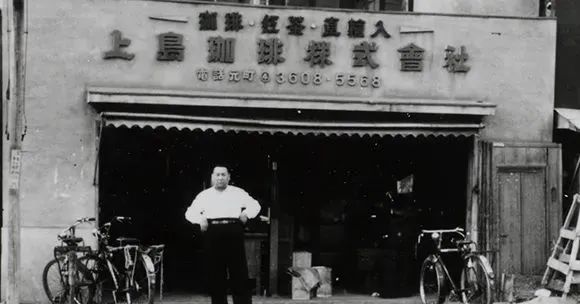
However, this good fortune did not last long. At the end of the 20th century, a hurricane swept across the entire island of Jamaica, causing heavy losses. Coffee and other crops were destroyed, and the coffee industry never recovered. At exactly this time, Japan's economy was in a boom phase and was especially fond of Blue Mountain coffee, so several Japanese trading companies (including the well-known UCC Ueshima Coffee Company) jointly issued loans to some plantations in the Blue Mountain region to help Jamaica get out of trouble.
In exchange, the Jamaican government signed a 30-year agreement with the Japanese side, supplying 90% of the Blue Mountain coffee quota to Japan, with the remainder sold to Europe, the United States, and other places. After Japan gained a monopoly position, it used marketing and publicity to set off a "Blue Mountain craze," and many neighboring countries also joined in the pursuit. With production already limited, plus Japan's successful market operations, prices naturally climbed all the way up. However, the contract between Jamaica and Japan has now expired, allowing Blue Mountain coffee to be sold to more countries and making it more common domestically than before.
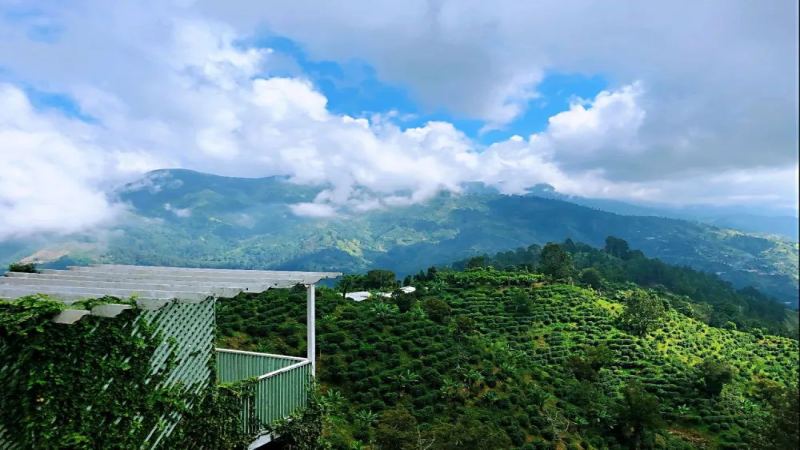
Of course, the uniqueness of Blue Mountain coffee is also inseparable from the country's superior geographical conditions. The Jamaican Blue Mountain region is crisscrossed by mountain ranges and lies on the Pacific Ring of Fire, with fertile volcanic soil. In addition, the humid climate, abundant rainfall, and year-round fog make it very suitable for the growth of coffee and other crops.
But not all coffee grown in the entire Blue Mountain area can be called Blue Mountain coffee. The Jamaica Agricultural Commodities Regulatory Authority (JACRA) has a strict definition: only Typica grown in the four parishes of St. Andrew, St. Thomas, Portland, and St. Mary, and at elevations between 915 and 1,700 meters, is eligible to be named Jamaica Blue Mountain coffee. Coffee produced in other areas can only be exported under the names Jamaica High Mountain coffee or Jamaica Supreme coffee.
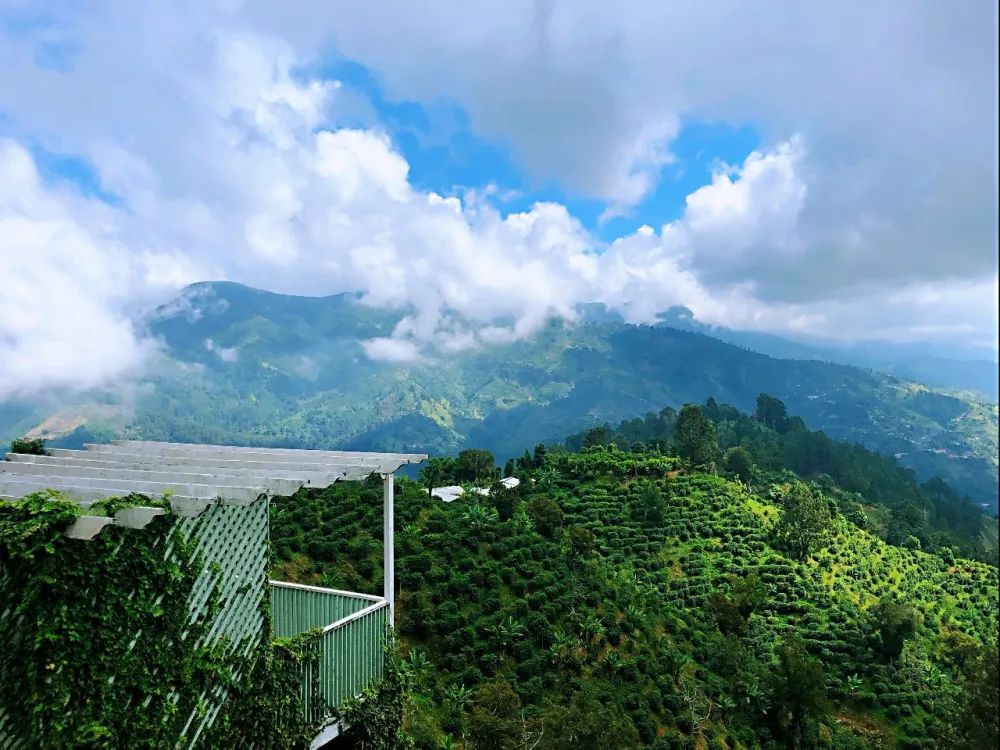
The production area is limited, so output is naturally not high; the higher elevation also makes cultivation management and harvesting more difficult. Picking is almost entirely done by local skilled female workers, who select coffee cherries at just the right ripeness. Special personnel are also responsible for quality supervision in the subsequent processing stages. The entire production process is strictly regulated to ensure the coffee's high quality, and the price is correspondingly higher.
In addition, JACRA also grades coffee according to indicators such as green bean specifications, defect rate, and cupping flavor. Blue Mountain coffee is divided into four grades: No. 1, No. 2, No. 3, and hand-selected PB. All exported products must pass JACRA's quality inspection: a 300-gram green bean sample is taken, requiring 96% of the beans to be between 17 and 18 screen sizes, a defect rate below 2%, a moisture content of about 10% to 12.5%, and cupping flavor up to standard, before it can become top-grade Jamaica Blue Mountain No. 1 coffee.
To further ensure quality, Jamaica also insists on using traditional wooden barrels for the packaging and transport of premium Blue Mountain coffee, in specifications of 70 kg, 30 kg, and 15 kg. The rest is shipped in 60 kg burlap bags.
At present, Front Street Coffee is using Blue Mountain No. 1 coffee, produced at Clifton Estate in the St. Andrew production area, washed processing. After brewing, it presents flavors of dark chocolate, nuts, and caramel, with a creamy, silky mouthfeel, moderate body, a sweet finish, and an overall balanced and gentle character.
To learn more about coffee origin information, please scan the QR code to follow: Coffee Review
Long-press the QR code to follow:
TRANSLATE with
x
English
Arabic Hebrew Polish Bulgarian Hindi Portuguese Catalan Hmong Daw Romanian Chinese Simplified Hungarian Russian Chinese Traditional Indonesian Slovak Czech Italian Slovenian Danish Japanese Spanish Dutch Klingon Swedish English Korean Thai Estonian Latvian Turkish Finnish Lithuanian Ukrainian French Malay Urdu German Maltese Vietnamese Greek Norwegian Welsh Haitian Creole Persian
TRANSLATE with
COPY THE URL BELOW
Back
EMBED THE SNIPPET BELOW IN YOUR SITE Bing Webmaster Portal
Back
The above content is compiled by CoffeeHunters, a coffee news website.


