








What do AA and AB mean on Tanzanian arabica coffee?
The AA and AB markings on Tanzanian coffee packaging are grade codes for arabica coffee beans, set under a British imperial screen-size system similar to Kenya's but applied differently. Tanzania's authorities assume larger bean size means better quality, so AAA, AA, A, B, and other grades are divided by the screen size of green beans.
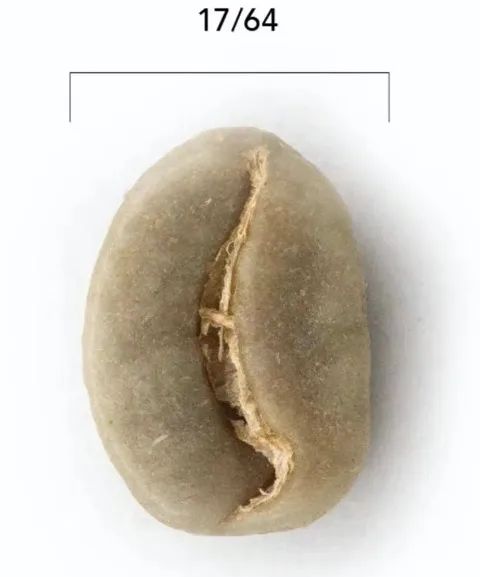
AA grade requires beans predominantly at 17 to 18 screen size, while AB grade is a mix of A and B grade beans and does not officially exist as a distinct class. AAA grade needs 19 screen size or above and is rarely seen on the market. The arabica beans meaning behind these letters rests on size, not on cup quality alone.
Tanzania, as one of Africa's Big Three coffee producers, has performed increasingly brilliantly in the global specialty coffee market in recent years. When buying Tanzanian coffee beans, what exactly do the "AA", "AB" and other markings commonly seen on packaging represent? These letters are actually grade codes for Tanzanian Arabica coffee beans, using a British imperial grading method similar to Kenya's, though the specific standards differ. Tanzanian authorities base grading on coffee bean screen size, assuming that larger size means better quality, and divide coffee beans into multiple grades such as AAA, AA, A, B, PB, C, E, F, AF, and TT. Among these, AA grade requires predominantly 17 to 18 screen size, while AB grade is actually a mixture of A grade and B grade—officially, no such grade exists. This article will explain in detail the specific screen size requirements and screening standards for each grade, helping coffee enthusiasts decipher the grade code of Tanzanian coffee beans.
The African continent is home to numerous coffee-producing countries, and in terms of current international market recognition, Ethiopia and Kenya clearly occupy more prominent positions. However, in recent years, Tanzania, leveraging its favorable natural conditions, has produced batch after batch of high-quality coffee beans, rising to become one of the three major coffee-producing countries in Africa.
When selecting Tanzanian coffee beans, letter combinations like "AA" and "AB" are often seen on packaging. What information do these markings actually convey? It should be understood that Tanzania cultivates both Arabica and Robusta varieties, and codes like "AA" are used specifically for grading Tanzanian Arabica coffee beans. Although this system, like Kenya's coffee bean grading, also adopts the British imperial grading method, the specific implementation standards of the two countries are not entirely consistent.
According to Tanzania's official grading rules, a core logic is: the larger the coffee bean size, the better the quality is considered to be. Based on the screen size of green beans, different grades are divided in order: AAA, AA, A, B, PB, C, E, F, AF, TT, and so on.

AAA grade green beans must reach 19 screen size or above, but the output of coffee beans in this range is extremely low, making them quite rare on the market.
AA grade green beans are concentrated between 17 and 18 screen size, with 18-screen beans required to account for over 90%, 17-screen beans accounting for over 8%, and no green bean below 15 screen size.
AF grade green beans range from 14 to 17 screen size, with 17-screen beans required to account for over 90%, 15 to 16-screen beans accounting for over 8%, and all green beans at 14 screen size or above.
A grade green beans are between 14 and 15 screen size, with 15-screen beans required to account for over 98%, and no green bean below 14 screen size.
B grade green beans are also between 14 and 15 screen size, with 15-screen beans required to account for over 90%, and all green beans at 14 screen size or above.
PB grade refers to round green beans—these coffee cherries contain only one round bean instead of the usual two flat beans. 14-screen beans must account for over 95%, and floating beans are allowed but must not exceed 5%.
C grade green beans are mainly concentrated at 14 screen size, with 14-screen beans required to account for over 90%.
The full name of E grade green beans is Elephant, commonly known as "elephant beans." They share similarities with round beans and are abnormally developed specialty coffee beans—two coffee beans become intertwined during growth, ultimately forming one abnormally large bean. This grade requires over 90% of green beans to reach 18 screen size, with the remaining 10% falling within the 15 to 18 screen size range.
TT grade green beans are between 14 and 16 screen size, with 15 to 16-screen beans accounting for at least 90% and 14-screen beans accounting for at most 10%.
F grade refers to defective beans removed during the screening of other grades.
The most commonly seen markings in the domestic market are "AA" and "AB." But in fact, there is no independent "AB" grade in Tanzania's official grading system. Because the regulations for A grade and B grade are very close, the so-called "AB" is actually a product of mixing A grade and B grade, with its screen size requirement based on no less than B grade.
It is worth mentioning that the Tanzania Coffee Board once designed another grading system in earlier years, comprehensively considering factors such as screen size, defect rate, and cup quality of Arabica coffee beans, dividing them into 17 grades. For example, coffee in the range of grades 4 to 6 corresponds to the "FAQ" standard. However, this system was not truly implemented for various reasons and lacked rigor, so most Tanzanian coffee beans currently circulating on the market still use the conventional bean size grading method.
For more information about coffee origins, scan the QR code to follow: Coffee Review
Long-press the QR code to follow:
The above content is compiled by CoffeeHunters, a coffee news website.


