







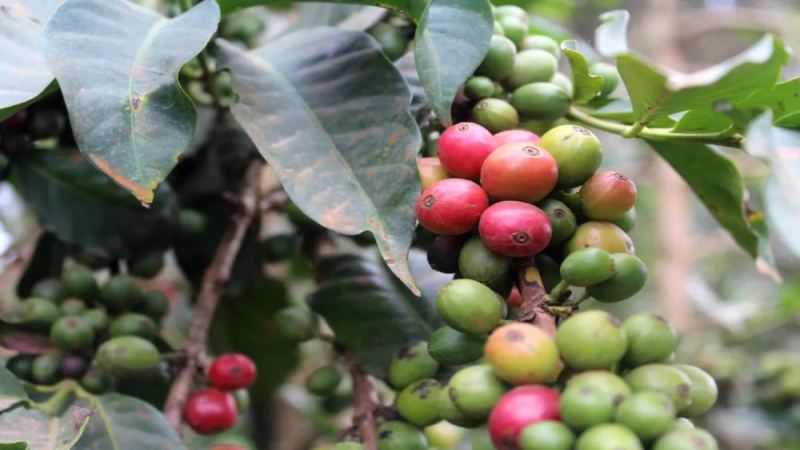
Which Kenyan coffee trees shaped the country's famous flavor?
Kenya's clean, bright cup and full fruit acidity come from high-altitude volcanic soil rich in phosphoric acid and from a century of variety selection. French missionaries introduced Bourbon seeds from Réunion in the late 19th century; Kenya later trialed Kent from India and Blue Mountain Typica from Jamaica, both with poor results.
The Scott Laboratories, now NARL, collected 42 coffee trees and selected SL28 and SL34 for yield, quality, and disease resistance, while Ruiru 11 and Batian were bred to fight berry disease. These coffee trees remain central to Kenyan coffee cultivation in regions sitting 1,600 to 2,100 meters above sea level within the coffee belt.
Kenyan coffee is renowned for its clean, translucent cup and vivid, full-bodied fruit acidity. Behind this signature flavor lies both the gift of high altitudes and phosphorus-rich volcanic soil and a century of variety selection. From the Bourbon seeds of Réunion brought by French missionaries in the late 19th century, to SL28 and SL34 selected by the Scott Agricultural Laboratories from 42 lines, to Ruiru 11 and Batian bred to combat berry disease, the history of Kenyan coffee varieties is a history of grappling with disease, yield, and flavor. This article will review the genetic origins, cultivation performance, and flavor differences of the main cultivated varieties, and introduce Front Street Coffee's Kenyan beans from the Thika region—featuring SL28 and SL34, processed with the K72 washed method, and displaying notes of cherry tomato and smoked plum.
Kenyan coffee has long enjoyed an extremely high reputation worldwide, with a clean and translucent cup, a refreshing mouthfeel, and a thick yet bright fruit acidity, highly praised by coffee professionals and enthusiasts alike. This rich flavor expression is first and foremost thanks to Kenya's exceptional natural conditions. The country lies within the "coffee belt," and its climate is highly suitable for coffee cultivation. Its producing regions are mostly distributed across volcanic mountain areas at altitudes of 1,600 to 2,100 meters, where the volcanic soil is rich in phosphoric acid, giving the coffee fruit abundant fruity acidity.
Of course, terroir alone is not enough—variety is also a key factor determining flavor. At the end of the 19th century, French missionaries first introduced coffee to Kenya, using seeds of the Bourbon variety from Réunion. Afterward, Kenya introduced Kent from India and Blue Mountain Typica from Jamaica for trial planting, but their performance was unsatisfactory. It was not until new varieties emerged later that Kenyan coffee truly became world-famous.
The SL Series
Because the varieties introduced earlier had low yields and were susceptible to coffee diseases, Kenya commissioned the Scott Laboratory (now renamed the Kenya National Agricultural Laboratory, NARL) to carry out variety selection. Over the following four years, the laboratory collected 42 coffee trees from different origins and conducted research on indicators such as yield, quality, and disease resistance. These 42 lines were uniformly named with the prefix SL, the abbreviation of the laboratory's name, followed by a number. In the end, SL14, SL28, and SL34 stood out.
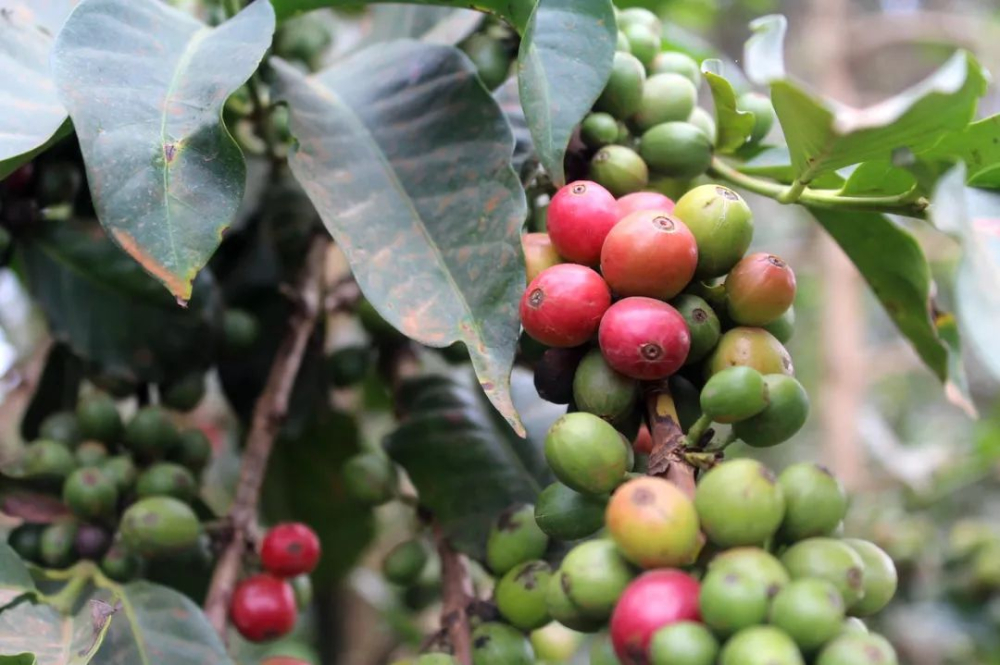
Genetic testing in recent years has confirmed that SL28 is related to the Bourbon genome, while SL14 and SL34 are related to the Typica genome. SL28 and SL34 are quite similar in cultivation characteristics: high yield, easy to cultivate, suitable for medium- to high-altitude areas, and excellent in flavor performance. Although both are relatively susceptible to disease, their high yield and outstanding flavor have kept them favored by farmers, making them the two most sought-after varieties in Kenya. By contrast, SL14 has the advantages of drought resistance and high yield, but its flavor is slightly inferior to SL28 and SL34. As a result, only a few people in Kenya cultivate it, while it has instead been promoted more widely in Uganda.
Ruriu 11
Although the SL series is widely popular, its disease and pest resistance is relatively weak. In 1968, coffee berry disease (CBD) dealt a devastating blow to more than half of Kenya's coffee production capacity, prompting the government to develop varieties with stronger disease resistance and greater climate adaptability, one of which was Ruiru 11. This variety was bred by Kenyan agricultural experts at the Ruiru laboratory, hence the name Ruiru. It was the first variety independently developed by Kenya and belongs to a single cross, with the two "1"s together forming the name "11."
Ruiru 11 is a composite variety combining several varieties such as Catimor, Rume Sudan, Bourbon, K7, N39, SL28, and SL34. It has extremely strong disease resistance and high yield, but its flavor still cannot compare with SL28 and SL34, and large-scale cultivation requires manual pollination, making it very difficult to produce enough seeds to meet farmers' demand.
Batian
By 2010, the Kenyan coffee research center released a new variety, Batian, which was bred by backcrossing progeny of Ruiru 11 with SL28 and SL34. It is a reconstructed composite variety and likewise has strong disease resistance and high yield, with decent flavor performance, so it was named after Batian, Kenya's highest peak. Although Batian performs excellently, most Kenyan farmers still prefer the traditional SL28 and SL34, and this variety has not yet achieved large-scale cultivation.
For this reason, Kenyan coffee beans currently on the market are still mainly SL28 and SL34. Front Street's Kenyan coffee comes from the Thika region, uses the SL28 and SL34 varieties, and adopts the K72 washed process. After brewing, it presents flavors of cherry tomato and smoked plum, with bright acidity, prominent sweetness, a juicy feel, and a clean mouthfeel.
To learn more about coffee origin information, please scan the QR code to follow: Coffee Review
Long-press the QR code to follow:
TRANSLATE with
x
English
Arabic Hebrew Polish Bulgarian Hindi Portuguese Catalan Hmong Daw Romanian Chinese Simplified Hungarian Russian Chinese Traditional Indonesian Slovak Czech Italian Slovenian Danish Japanese Spanish Dutch Klingon Swedish English Korean Thai Estonian Latvian Turkish Finnish Lithuanian Ukrainian French Malay Urdu German Maltese Vietnamese Greek Norwegian Welsh Haitian Creole Persian
TRANSLATE with
COPY THE URL BELOW
Back
EMBED THE SNIPPET BELOW IN YOUR SITE Bing Webmaster Portal
Back
The above content is compiled by CoffeeHunters, a coffee news website.


