








Why Do Coffee Trees in Alo Village Grow So High?
Alo Coffee comes from Alo Village in Bensa Town, Sidama Region, Ethiopia, where coffee trees grow between 2,200 and 2,400 meters above sea level. Founder Tamiru Tadesse Tesema won the 2021 COE competition with an anaerobic natural 74165, bringing this small high-altitude area to wider attention in specialty coffee.
In Bensa Woreda, planting altitudes generally range from 1,800 to 2,300 meters, so the village sits near the top of that band. Slow ripening at high elevation gives the beans higher density and a more complex aroma structure. Cupping notes include magnolia, passion fruit, pineapple, mango and fermented tones.
Alo Coffee is an Ethiopian green bean brand that has attracted much attention in the specialty coffee scene in recent years, originating from Alo Village in Bensa Town, Sidama Region. Founder Tamiru Tadesse Tesema won the 2021 COE competition with an anaerobic natural 74165, quickly putting this high-altitude small producing area in the spotlight. Coffee trees in Alo Village grow between 2,200 and 2,400 meters above sea level, where slow ripening brings higher density and more complex aromas. This article will sort out Alo Coffee's brand background, producing area location, processing station layout, and natural processing details, and combine them with Front Street's cupping experience to present the flavor layers of this bean from magnolia, passion fruit to yellow peach and dried apricot, helping coffee lovers fully understand the unique charm of Alo Village.

Flavor: magnolia, passion fruit, pineapple, mango, fermented notes
What does Alo mean?
Alo Coffee (Alo Coffee PLC) is an Ethiopian coffee trading company founded in 2020, mainly engaged in exporting coffee beans from the Bensa producing area, and is therefore also regarded in the industry as a green bean brand.
In the second year after the brand was founded, company founder Tamiru Tadesse Tesema took beans grown and processed in Alo Village to the 2021 COE competition, winning first place (anaerobic natural 74165) and fifth place (natural 74158) in one fell swoop. Since then, Alo Coffee and Alo Village have quickly become famous in coffee circles, becoming the focus of attention for many enthusiasts.
Where is Alo Village located?
On the map, Alo Village is located in the northeastern direction of the Sidama producing area, on the highest slope in Bensa Woreda. The Bensa area is known for its unique geographical conditions, with planting altitudes ranging from 1,800 to 2,300 meters. Compared with many classic Ethiopian producing areas, many coffee trees in Bensa Woreda grow at altitudes of 2,200 to 2,350 meters, and the renowned Alo Village stands out even more, with an altitude as high as 2,400 meters.
Front Street mentioned in a previous article that for specialty coffee, the higher the planting altitude, the slower the development of the coffee fruit, and the later the ripening and harvest time compared with other areas. As a result, the green beans have higher density, and the aroma structure is more complex and intense. On the other hand, high altitude lengthens the drying cycle of the coffee fruit, and the fermentation after picking proceeds at relatively low temperatures, thereby cultivating fuller floral and fruity aromas.
The man behind Alo Coffee
Tamiru is a native of Bensa, born in Alo Village. He studied engineering in university, stayed on to teach for two years after graduation, and then devoted himself to the specialty coffee industry. In 2020, when he saw that a friend who was also a grower from Bensa Woreda had won an award at COE, he realized that the specialty coffee produced in this land had huge potential, but due to limited scale and the backward conditions of farmers, it was difficult to commercialize the product. So he made up his mind to bring the high-quality "taste of Bensa" to the world, and immediately founded Alo Coffee.
In the same year, he built a green bean processing station in Alo Village and set up a dedicated transportation system to collect and process coffee cherries grown by more than 200 nearby smallholder farmers. At the same time, he provided farmers with professional knowledge training and technical guidance, strictly controlled every detail of green bean processing, and ensured full traceability. In daily life, Tamiru is also a caring person. He uses part of the company's revenue to establish schools and create better educational conditions for local children.
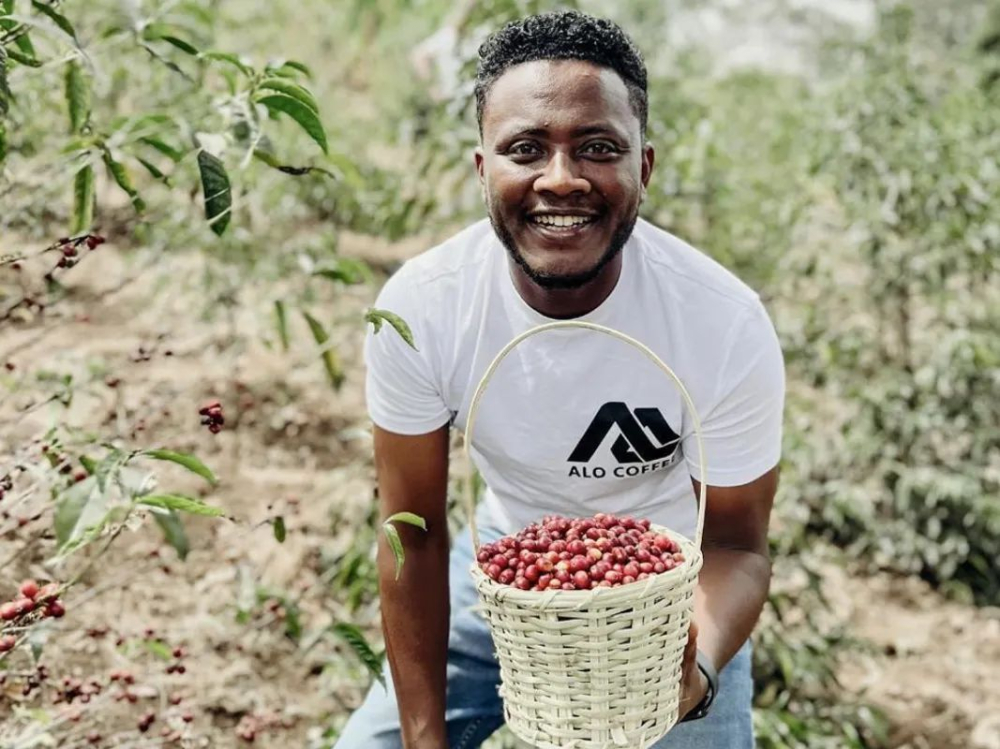
Front Street believes that Alo Coffee's ability to win its reputation today is first due to Tamiru's full passion for his hometown Bensa producing area, and second due to his persistence in high-quality coffee and strict control over green bean quality.
Understanding Alo Coffee's production footprint
At present, Alo Coffee's harvesting business mainly revolves around the Bensa Woreda area under the Sidama producing region. Divided by village, in addition to the most famous Alo Village, there are also batches on the market from Bombe Village, Murago Village, Bashiro Gute (in Bona Zuria Woreda), and other villages, each about 20 minutes' drive from one another.
After consulting the materials, Front Street learned that the main processing stations Main, Hatessa, and Chilaka are all located in Bensa, Morke is in Bura, Mewa and Hurro are both in Nensebo, and Gute is in Bona Zuria. All processing stations are set up near coffee farms so that post-processing can be carried out more quickly, while also ensuring the freshness of the coffee cherries.
Natural processing
Before formal natural processing, coffee farmers first hand-pick fully ripe fresh coffee cherries and transport them uniformly to the Hatessa processing station for the first round of sorting. Then, before washing, the fruit is classified again. By observing the color of the skin, overripe or insufficiently ripe fresh fruit is removed, and only after ensuring consistent color does it enter the natural drying stage.
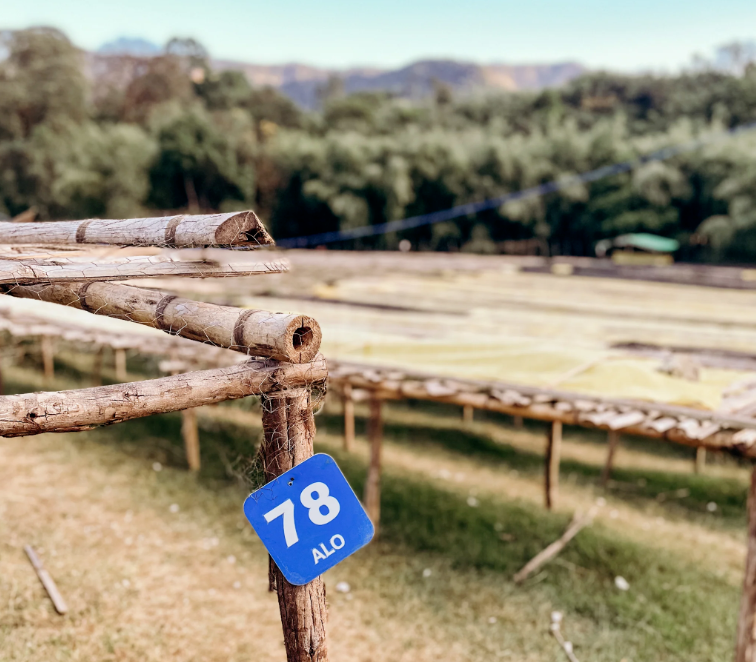
For natural coffee, the coffee farmers responsible for post-processing must frequently turn the fruit on the drying beds during the first three days, because at this time the coffee cherries have a very high moisture content. If they are not turned in time, they will not only easily become moldy, but also develop unpleasant sourness or rotten fruit flavors due to uneven heating. Throughout the process, the fresh coffee cherries are spread in only a thin layer, in order to give them better ventilation and drying conditions. After 14 to 18 days, once the moisture content drops to the target level, they can be bagged and sent to the warehouse.
Through cupping, Front Street first perceived this Alo's sweet floral and fruity aroma. The dry fragrance has obvious notes of magnolia, pineapple, yellow peach, small Taiwan mango, and so on, accompanied by a fresh sweet fermentation aroma, very pleasant to smell.
When sipping, the entry is full of tropical fruit sweetness and acidity. Flavors such as ripe pineapple, passion fruit, and perfumed lemon are especially prominent, accompanied by a slight black tea note. The gentle fermented note plus light floral fragrance make one unable to resist taking another sip. As the temperature drops slightly, the coffee begins to tend toward stone fruit characteristics such as yellow peach and dried apricot. The fruit acidity is clear and bright without losing layering, very unique.
The above content is compiled by CoffeeHunters, a coffee news website.


