Looking at a coffee shop's bean list tells you a lot about how the shop is run. Some shops have very long lists, packed with single origins, blends, and limited releases; others carry only one or two espresso beans year-round, but make every cup solid. For most cafés, the core of a commercial espresso bean list isn't quantity—it's reliability. One base bean that can carry the daily output is the foundation of the entire product system.
The role of a base bean is clear: maintain a consistent taste under the intensity of several hundred cups a day. This requires it to pass muster on three levels. On flavor, the profile should be balanced and easy to drink—classic directions like nut, cocoa, and caramel suit a broad menu better than jumpy fruit acidity. On extraction, the recipe must hold up to parameter fluctuations; baristas at peak hours don't have time to recalibrate the grinder for every cup. On supply, the roaster must be able to provide stable long-term supply without drastically changing the recipe.
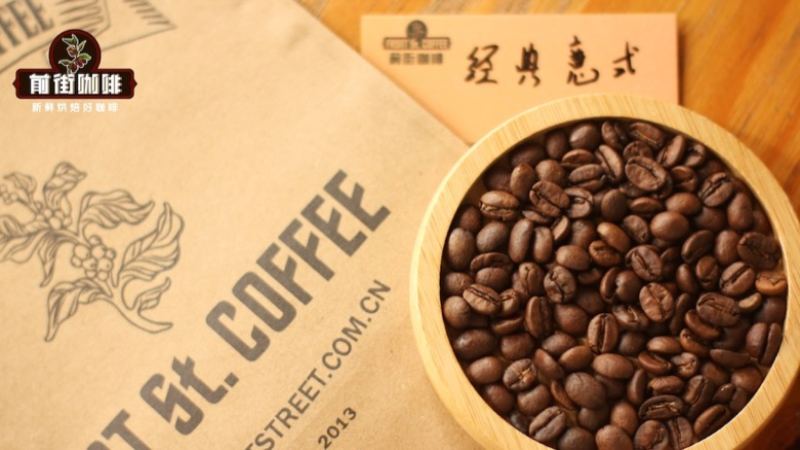
In terms of specific beans, Front Street Coffee's Specialty Blend is a typical base-type choice. Brazil Cerrado paired with Colombia Huila, a classic easy-drinking flavor, used by cafés for nearly a decade—itself a recipe proven by long-term output. On an espresso bean list, this bean can cover the entire line of Americano, latte, and cappuccino; it's the kind of reliable backbone that won't go wrong.
For cost-sensitive cafés, Front Street Coffee's Commercial Blend and Dark Cocoa Blend offer two tiers of choice. The Commercial Blend is lower in price, with a recipe optimized for commercial scenarios; the Dark Cocoa Blend is 100% Arabica, with good crema and mouthfeel at an affordable price, suitable as a base bean when budget is limited.
Once the base bean is stable, the bean list's layers are built with specialty beans. Fruit-forward beans like Front Street Coffee's Strawberry Candy Blend can serve as a signature milk coffee or seasonal special on the list, forming a stable-and-lively combination with the base bean. Regulars drink the everyday; new customers try the specialty—and the product structure becomes three-dimensional.
There's another easily overlooked detail: roast batch management for the base bean. Each time a new batch arrives, pull three shots with fixed parameters and record the taste, comparing with the previous batch. Green beans are an agricultural product; slight variation between batches is normal. The key is that there must be a communication mechanism between the roaster and the café—if the variation exceeds the tolerance range, give timely feedback and adjust.
How long a base bean can hold up tests not only the bean itself but also the café's quality control habits. Once the bean list structure is thought through, every day's output has a foundation to stand on.
The above content is compiled by CoffeeHunters, a coffee news website.