







How Will Brazil's Heavy Rain Affect Coffee Production?
Heavy rainfall struck south-central Brazil, hitting southern Mato Grosso and Sao Paulo state with flooding, fallen trees, and power outages that left tens of thousands of households without electricity. Multiple institutions predict coffee production in the worst-affected areas will fall by 20% to 30%, with the 2024/25 and 2025/26 seasons both affected.
The rain follows a severe drought and forest fires in Minas Gerais, where rainfall remains below historical averages, damaging coffee cultivation. Concentrated flowering occurred in October, but whether those flowers set fruit will not be clear until December. For arabica, the timing matters, because the crop that survives flowering determines how much of Brazil's output reaches the market.
Brazil's central and southern regions recently experienced heavy rainfall, with southern Mato Grosso and São Paulo state severely affected, and both transportation and power supply impacted. Meanwhile, rainfall in Minas Gerais remains below historical averages, and the worst drought and forest fires in nearly 70 years have already caused deep damage to coffee cultivation. Although concentrated flowering occurred in October, whether the flowers can turn into fruit remains to be observed in December. Multiple institutions predict that coffee production in the most severely affected areas will decline by 20% to 30%, with the production potential for both the 2024/25 and 2025/26 seasons affected.
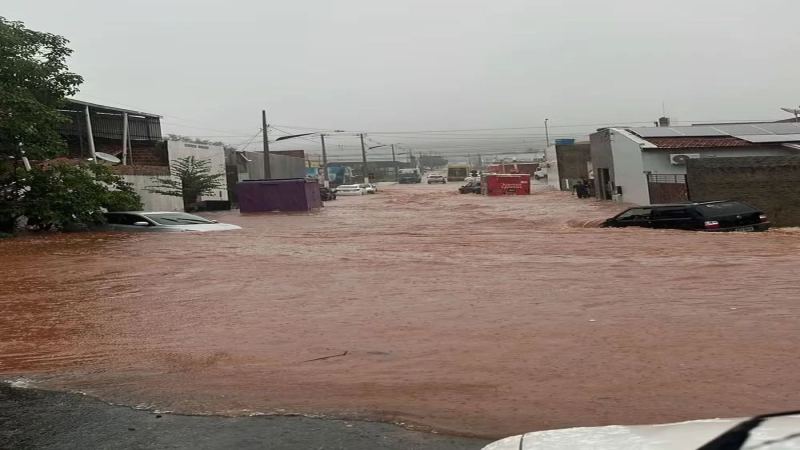
According to reports from local Brazilian media, strong rainfall has recently occurred in southern and central-southern Brazil, and the heavy rain has already brought significant impacts to several southern regions, mainly affecting Mato Grosso state and São Paulo state in the central-south.
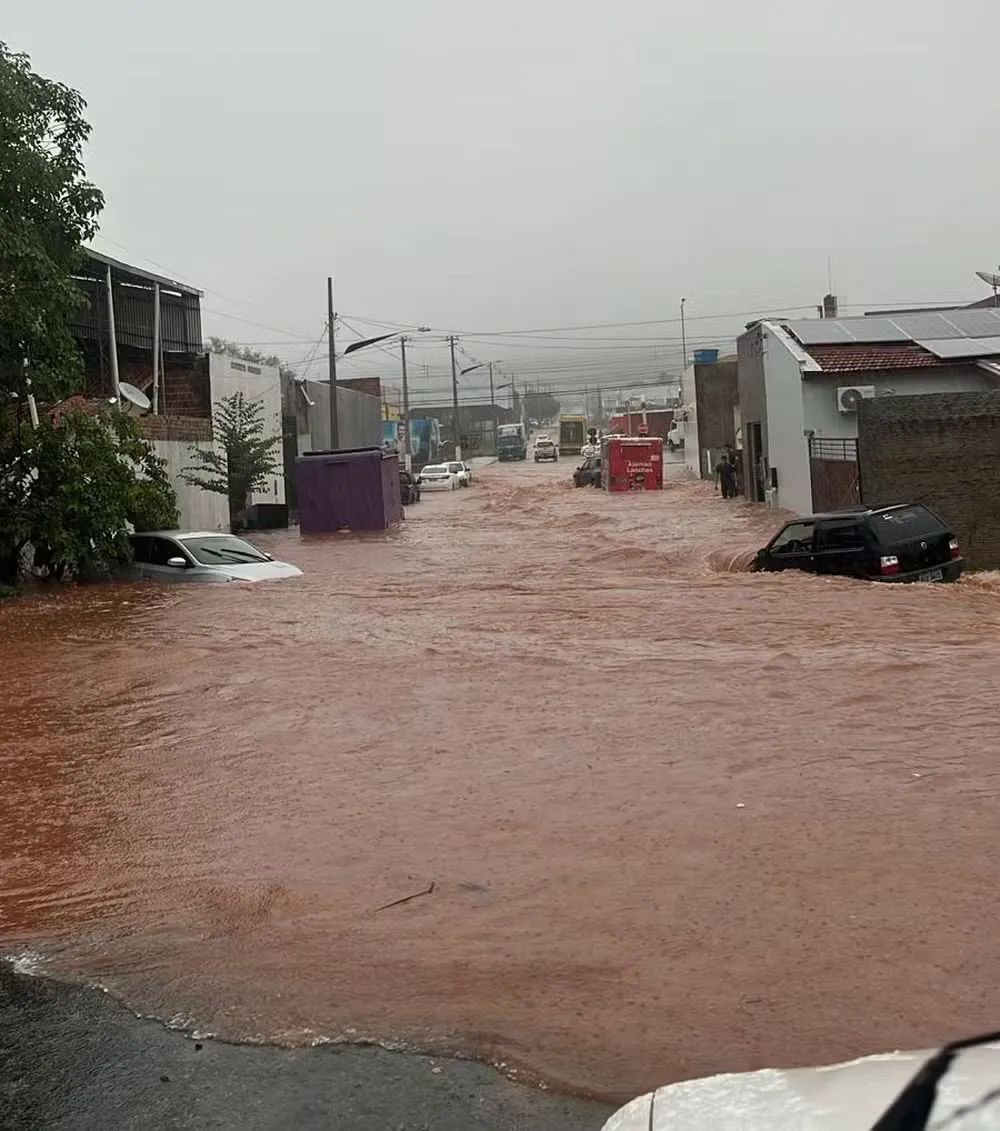
In Mato Grosso state, violent storms have struck one after another, causing flooding in some cities, trapping vehicles, and bringing water depth on some streets and avenues to one meter, severely disrupting traffic. Local government officials revealed that this round of rainfall was the strongest in recent times, with precipitation exceeding 100 millimeters in less than an hour. The most prominent current problem is concentrated along stream banks, where rising river water has overflowed and threatens nearby homes, and the government is currently tallying the major losses caused by the storms.
The situation in São Paulo state is equally grim. At first there was only scattered light rain and moderate rain, but it then directly escalated into torrential rain with a wide impact range, and the government has entered a state of alert. Civil defense agencies said the fire department received a total of 21 reports of fallen trees, flooding occurred in multiple areas, and the power supply system was once again damaged, leaving tens of thousands of households without electricity.
The meteorological department pointed out that hot, humid air remains dominant in the southern region, rainfall will be relatively frequent and heavy, and will continue for some time, with precipitation expected to reach 50 millimeters and gusts of up to 40 kilometers per hour. Brazil's disaster prevention agency warned that rainfall may be stronger in certain periods and areas, and precautions are needed against floods and other extreme weather.
In Minas Gerais state, adjacent to São Paulo state, the situation remains unfavorable. Local reports show that rain has resumed in Minas Gerais, but the amount is far less than in São Paulo state, with average precipitation of 27.4 millimeters over the past week, only equivalent to 64% of the historical average.
Previously, Brazil had just experienced its worst drought in nearly 70 years. In major agricultural planting areas such as coffee, temperatures were high and there was almost no rain. In the hardest-hit places, there was no precipitation for six consecutive months, rivers and reservoirs dried up, water levels dropped, and water resources were severely scarce.
In addition, the high temperatures and drought also triggered forest fires. Data shows that about 22.38 million hectares of forest land in Brazil were burned by fires, including coffee plantations. This ultimately led to a decline in coffee production for the 2024/25 season and damaged the planting conditions and production potential for the new 2025/26 season. Therefore, many Brazilian coffee institutions are lowering their production forecasts for the new season, expecting a decline of more than 6.8%.
Originally, many producers thought the situation would improve once Brazil entered the rainy season after the drought, but the abundant rainfall did not help much, and even excessive rain can cause certain harm. It is understood that Brazil's arabica coffee-producing regions should have entered the flowering period and bloomed by the end of September, but the prolonged drought delayed large-scale flowering until October.
The head of Cooxupe, Brazil's largest coffee cooperative, said this was a concentrated flowering and the flower volume was very large, but flowers are not coffee fruit; how many coffee flowers can turn into cherries is the key. A clearer conclusion on the specific fruit set will only be possible by mid-December.
Some institutions said that although the current rainfall helps replenish water in severely water-deficient soil and ensures that coffee tree roots are not under stress, it cannot make up for the damage caused to some coffee trees by the earlier drought and fires. Because the climate is still unstable, it is estimated that coffee production in the most severely affected areas will drop sharply by 20% to 30%.
To learn more coffee origin news and information, please scan the QR code to follow: Coffee Review
Long-press the QR code to follow:
TRANSLATE with
x
English
Arabic Hebrew Polish Bulgarian Hindi Portuguese Catalan Hmong Daw Romanian Chinese Simplified Hungarian Russian Chinese Traditional Indonesian Slovak Czech Italian Slovenian Danish Japanese Spanish Dutch Klingon Swedish English Korean Thai Estonian Latvian Turkish Finnish Lithuanian Ukrainian French Malay Urdu German Maltese Vietnamese Greek Norwegian Welsh Haitian Creole Persian
TRANSLATE with
COPY THE URL BELOW
Back
EMBED THE SNIPPET BELOW IN YOUR SITE Bing Webmaster Portal
Back
The above content is compiled by CoffeeHunters, a coffee news website.


