







What Is Pressuring the Ethiopian Coffee Industry Right Now?
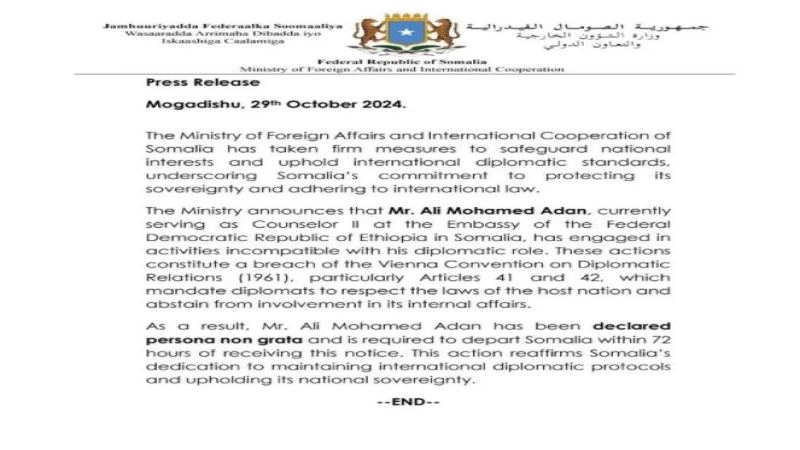
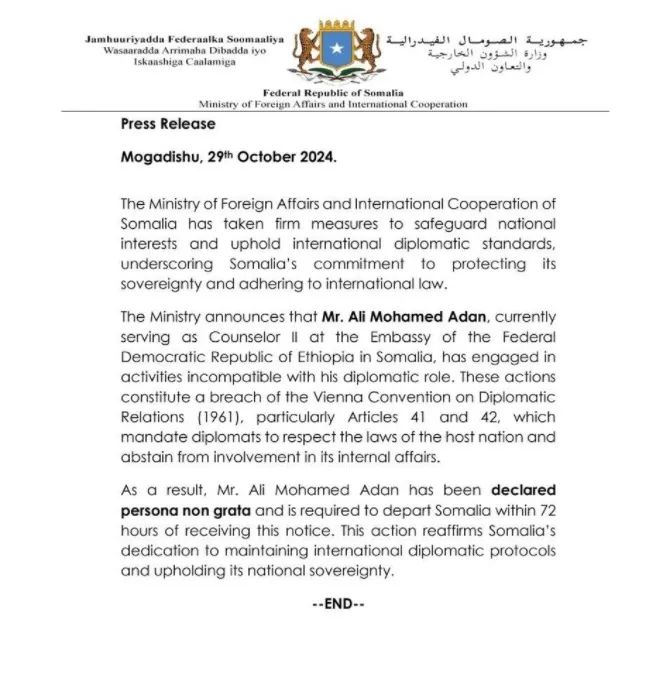
Somalia expelled Ethiopia's second-ranking diplomat, counselor Ali Mohamed Adan, ordering him out within 72 hours under Articles 41 and 42 of the Vienna Convention on Diplomatic Relations. It follows the April expulsion of Ethiopia's ambassador, with tensions rooted in the January port memorandum with Somaliland.
For the coffee industry, the Red Sea crisis has cut throughput at Djibouti's port, disrupting export routes for Ethiopian goods. Peak-season shipping rate increases, the depreciating birr, and the postponed EU deforestation regulation have pushed coffee bean prices up, squeezing exporters and farmers alike in a key coffee beans origin country.
Diplomatic friction between Ethiopia and Somalia continues to escalate. Somalia recently expelled Ethiopia's second-ranking diplomat in the country, and relations between the two nations are growing increasingly tense over the Somaliland port agreement. Meanwhile, the Red Sea crisis has caused throughput at Djibouti's port to decline, severely disrupting import and export operations for major Ethiopian commodities such as coffee. Combined with peak-season shipping rate hikes, the depreciation of the birr, and the postponement of the EU's EUDR, Ethiopian coffee bean prices have risen across the board, and the local coffee industry is facing dual pressure on exports and costs.
According to Ethiopian media reports, bilateral relations between the country and its neighbor Somalia are steadily deteriorating. Somalia's Ministry of Foreign Affairs and International Cooperation recently announced that it had designated Ali Mohamed Adan, the second-ranking counselor at the Ethiopian embassy in Somalia, as persona non grata and demanded that he leave the country.
In its statement, Somali officials pointed out that the diplomat had engaged in activities incompatible with his diplomatic status and had violated Articles 41 and 42 of the Vienna Convention on Diplomatic Relations. These two provisions explicitly require diplomatic personnel to respect the laws of the host country and refrain from interfering in or meddling with its internal affairs. Based on these grounds, Somalia ordered the Ethiopian diplomat to leave the country within 72 hours.
In fact, this is not the first time Somalia has taken expulsion action against Ethiopian diplomatic personnel. In April of this year, Somalia's Ministry of Foreign Affairs issued a statement confirming that Ethiopia's ambassador to Somalia must leave the country within 72 hours. At the same time, Somalia also announced the recall of its ambassador to Addis Ababa for comprehensive consultations at home.
The reason relations between Somalia and Ethiopia have remained so strained traces back to a memorandum of understanding signed by the two sides in January of this year. At that time, Ethiopia reached an agreement with Somaliland (one of the autonomous regions of the Federal Republic of Somalia, which has declared "independence" on its own but has never received international recognition), under which Ethiopia would lease the port of Berbera on the Gulf of Aden in exchange for Ethiopia's recognition of Somaliland as an independent state at the international level.
The Somali government is extremely dissatisfied with this agreement, believing that it seriously violates Somalia's national sovereignty. Since January, Somalia has taken multiple measures to pressure Ethiopia in an effort to put it on the back foot.
During this period, Somalia has cooperated with Eritrea and Egypt. Egypt recently delivered two batches of military aid to Somalia, including heavy artillery, anti-tank weapons, and armored vehicles, aimed at strengthening Somalia's "ability to defend its land and maritime borders." In response, Ethiopia believes that ammunition and weapons provided by external forces could further exacerbate the already fragile security situation in the region.
As relations between the two countries continue to deteriorate, Ethiopia has still not obtained the right to use the port of Berbera in Somaliland as stipulated in the memorandum of understanding. At the same time, the ports of Mogadishu and Kismayo in southern Somalia are also unavailable to Ethiopia, leaving the country able to continue relying only on Djibouti's port to handle its import and export business.
However, Djibouti's port is located at the southern entrance to the Red Sea and has been hard hit recently by the Red Sea crisis. Since the outbreak of the Israeli-Palestinian conflict last October, the Houthis, seeking to pressure Israel into halting its military operations, have continued to attack foreign merchant ships passing through the Red Sea, with more than 180 vessels attacked in total. Affected by this, shipping companies have opted to reroute or suspend routes in the region, and throughput at Djibouti's port has declined accordingly, disrupting the export and import operations of major Ethiopian commodities such as coffee.
Nevertheless, Ethiopian Prime Minister Abiy said in a recent parliamentary address that, based on any law and the experience of any country, Ethiopia should have the right to access the Red Sea, as this concerns the country's core interests, but Ethiopia will not seek this goal through war or force.

In his speech, Abiy also mentioned Ethiopia's relations with Somalia, saying the two countries are brotherly nations and that Ethiopia has no agenda against Somalia. He said Somalia still has time to "reexamine and prioritize" its own national interests, and that Ethiopia will "remain patient," will not go to war with any party, and has no interest in war.
As for Ethiopia's current coffee industry, exports and costs are the two core challenges. On the export side, because relations with neighboring countries remain tense, Ethiopia cannot open new access routes to the sea and can only continue using Djibouti's two ports, while the Red Sea crisis continues to obstruct imports and exports. At the same time, poor imports have also driven up the prices of some imported goods within Ethiopia.
In addition, as the shipping peak season arrives in the second half of the year and shipment volumes surge, shipping companies are expected to raise freight rates, causing shipping costs to climb further. Coupled with Ethiopia's previously introduced new fiscal regulations, the exchange rate of the country's currency, the birr, has continued to decline, local prices have only risen without falling, and coffee cultivation costs have also continued to rise. At present, Ethiopian coffee bean prices have been adjusted across the board, with an increase of 0.5%. Meanwhile, with the postponement of the EU's EUDR implementation, EU buyers have slowed the pace of their purchases of Ethiopian coffee beans. Taken together, these multiple factors may push Ethiopian coffee prices even higher in the future.
To learn more about coffee origin news and information, please scan the QR code to follow: Ka Ping
Long-press the QR code to follow:
The above content is compiled by CoffeeHunters, a coffee news website.


