







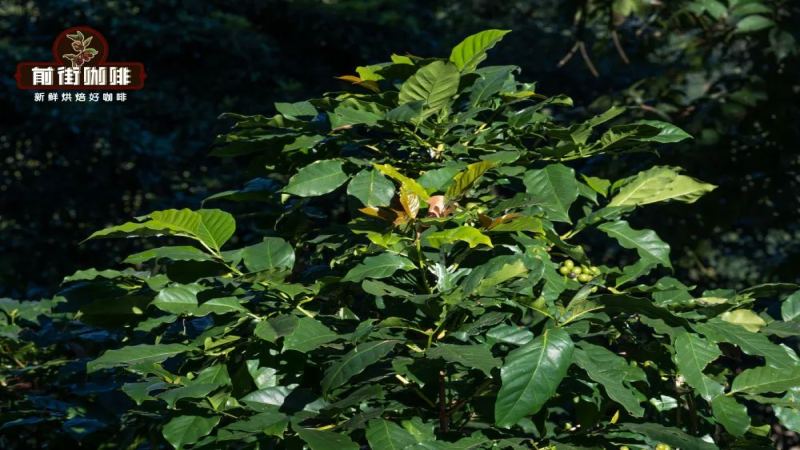
What Does Typica Coffee Look Like and Where Did It Come From?
Typica is one of the oldest varieties of Arabica coffee, and its scientific name, Coffea arabica L. var. typica Cramer, dates to 1913. The plant grows into a slender, conical tree with thin branches set at a 50 to 70 degree angle to the main stem, and old trees can reach about 5 meters (16.5 feet) tall.
Because of that height and the long lateral branches, growers must leave generous spacing between plants. Among arabica coffee varieties, Typica is easy to recognize: the young leaves at the top show a reddish bronze color, which earned it the nickname red-top coffee. Its roots trace to southwestern Ethiopia, the birthplace of coffee.
Typica is one of the oldest and most representative varieties of Arabica coffee. Not only does it have an elegant flavor, but its appearance is also quite distinctive, which has attracted many coffee enthusiasts to learn more about its origins and characteristics. This article will introduce Typica's origins, the origin of its scientific name, plant morphology, cup profile, and growing conditions, while also discussing the cultivation challenges posed by its weak disease resistance, and why Jamaican Blue Mountain Typica has been able to evolve better disease resistance and consistent quality under its specific terroir.
As one of the oldest varieties in the Arabica family, Typica occupies a pivotal position in the history of coffee development. It often displays stunning flavors in the cup, and with its highly recognizable signature appearance, many coffee enthusiasts are motivated to explore the story behind this classic variety.
The industry generally believes that Typica is the prototype of all Arabica coffee varieties, with its roots traceable to the coffee birthplace in southwestern Ethiopia, making it one of the most important varieties of Arabica coffee.
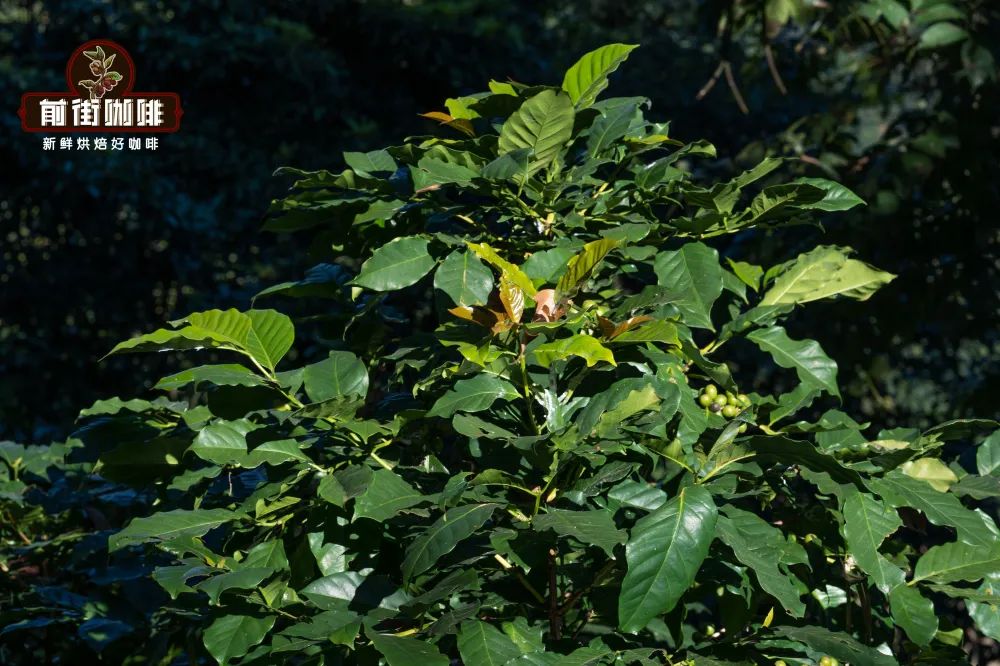
Although Typica originated in Ethiopia and spread to the Arabian Peninsula in the 9th century, it was not until after 1913 that it acquired its own scientific name "Coffea arabica L. var. typica Cramer." The meaning of this name is: Coffea genus, arabica species, named by Linnaeus, variety, typica, named by Cramer. The namer intended to indicate that it is the typical representative of Arabica, thus giving it the name typica to express the meaning of "typical."
Because the coffee tree itself has very distinctive characteristics, Typica is also recognized as one of the easiest varieties to identify. Compared with other Arabica coffees, Typica's most prominent feature is that the young leaves at the top display a reddish bronze color, which is why it is also called "red-top coffee."
In addition, Typica has a conical tree shape with slightly inclined branches, and the angle between lateral branches and the vertical main stem is 50 to 70 degrees. Overall, the trunk is relatively slender and the branches are also thin. Combined with its height and long-branch characteristics, sufficient spacing must be left between plants when growing Typica. Old Typica plants can reach about 5 meters (16.5 feet) in height, making manual harvesting quite difficult. This height also means that, compared with other varieties, the distance between branches and between two nodes on the same branch is longer in Typica trees.
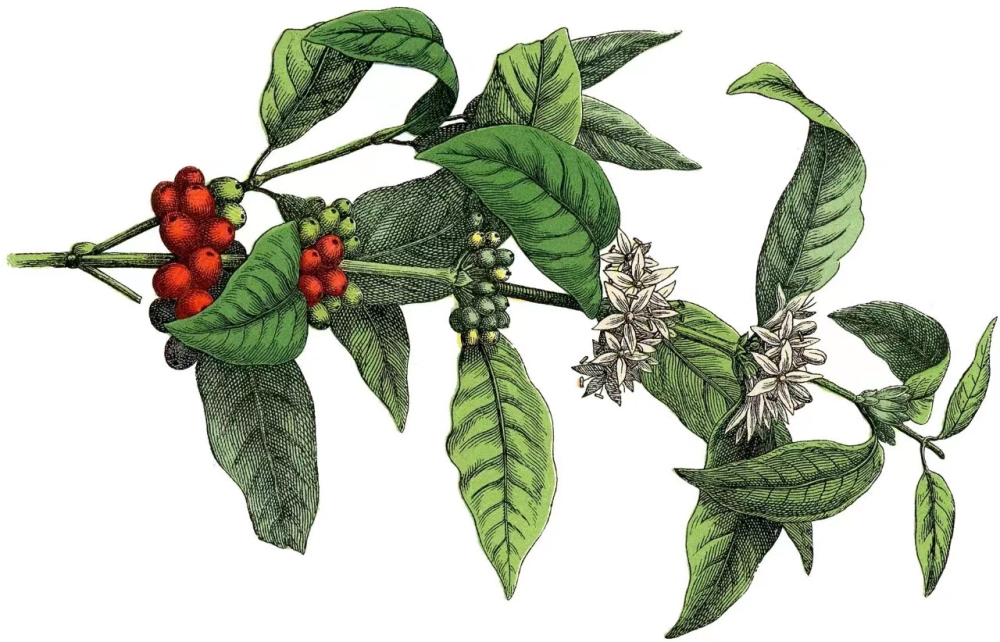
The coffee beans produced by Typica are relatively large and elongated, with pointed, upturned ends, somewhat resembling an egg in shape. In cupping, it often presents fruity acidity such as citrus, with a sweet lingering finish, and is praised by many as an elegant and clean coffee bean. Its shortcomings are that Typica has low yield, has certain altitude requirements, and has very poor disease resistance, making it difficult to withstand the most common diseases such as leaf rust and coffee berry disease.
Leaf rust is the most serious plant disease, first appearing in 1861 in the coffee-growing region around Lake Victoria in East Africa. In 1970, leaf rust broke out in the Bahia region of Brazil, and since then cases of leaf rust have been discovered in all coffee-producing regions around the world. Once a coffee tree is infected with leaf rust, it is equivalent to contracting an incurable disease, and it will eventually wither and even die. As a cash crop, Typica, with its low yield and frail constitution, naturally struggles to be profitable, so many growers chose to give up and switch to varieties with stronger disease resistance.
Unlike many coffee varieties, the "delicate" Typica is extremely particular about its growing environment and needs to be planted in frost-free highland areas. The higher the altitude, the more significant the temperature difference, which delays the ripening of coffee cherries, helping the coffee accumulate flavor compounds and develop fuller aroma. In addition to high altitude, Typica also needs abundant rainfall, sufficient sunlight, loose, well-drained soil, and fertile soil. From a cultivation perspective, its regional requirements are very strict. As a high-quality coffee variety with a rich aroma, Typica is still grown in small quantities around the world today, the most famous of which is undoubtedly Jamaican Blue Mountain coffee.
Growing Typica coffee beans with an elegant and pure flavor is not easy. Every step—innate terroir conditions, plant management, cherry harvesting, and post-processing—must be fully ensured so that the coffee beans can develop positive flavors and mouthfeel. This also means that producing high-quality Typica requires more labor costs and technical expertise, so there are reasons why Blue Mountain coffee and Kona coffee are so precious.
Unlike many other coffee-producing regions, Jamaica is a relatively closed island nation, while also being naturally endowed with exceptional microclimatic conditions. Through more than two hundred years of domestication and adaptation, Blue Mountain Typica has evolved better disease resistance, especially greater resistance to coffee berry disease than ordinary Typica, and its yield and quality are also more stable. Therefore, in Front Street Coffee's view, the reason Blue Mountain Typica can possess such refined aroma is not only due to the efforts of Jamaican growers, but most crucially thanks to the excellent terroir of the Blue Mountain range.
- END -
The above content is compiled by CoffeeHunters, a coffee news website.


