








Which arabica coffee bean varieties does Diamond Mountain use?
Hacienda La Esmeralda's Diamond Mountain line is built on the Catuai variety, not Geisha. The beans come from the Cañas Verdes and Jaramillo estates, at an average altitude of 1,400 to 1,700 meters in Boquete, Chiriquí Province, Panama. In the cup, the profile pairs citrus candy sweetness with a honey-like mouthfeel and a cocoa finish.
Diamond Mountain works as an independent product line, similar in structure to Geisha's Red and Green Labels. Brewing it well comes down to filter cup choice, grind size, water temperature, coffee-to-water ratio and staged pouring, which together build the layering the flat-tasting cup was missing. Knowing what is arabica coffee beans and how variety shapes flavor helps explain the difference from Geisha lots.
In 2004, after Hacienda Esmeralda won the BOP with Geisha, it almost became synonymous with Geisha, but this legendary estate actually produces other varieties as well, among which the Diamond Mountain series is particularly noteworthy. The main line of Diamond Mountain is Catuai, planted at two high-altitude estates, Cañas Verdes and Jaramillo, with an average altitude of 1,400 to 1,700 meters. This article will introduce you to the varietal background and processing methods of Diamond Mountain, and share Front Street Coffee's pour-over brewing plan for Panama Diamond Mountain, covering filter cup selection, grind size, water temperature, coffee-to-water ratio, and staged pouring technique, to help you brew a cup with rich layers combining citrus candy sweetness, honey-like mouthfeel, and a cocoa finish.


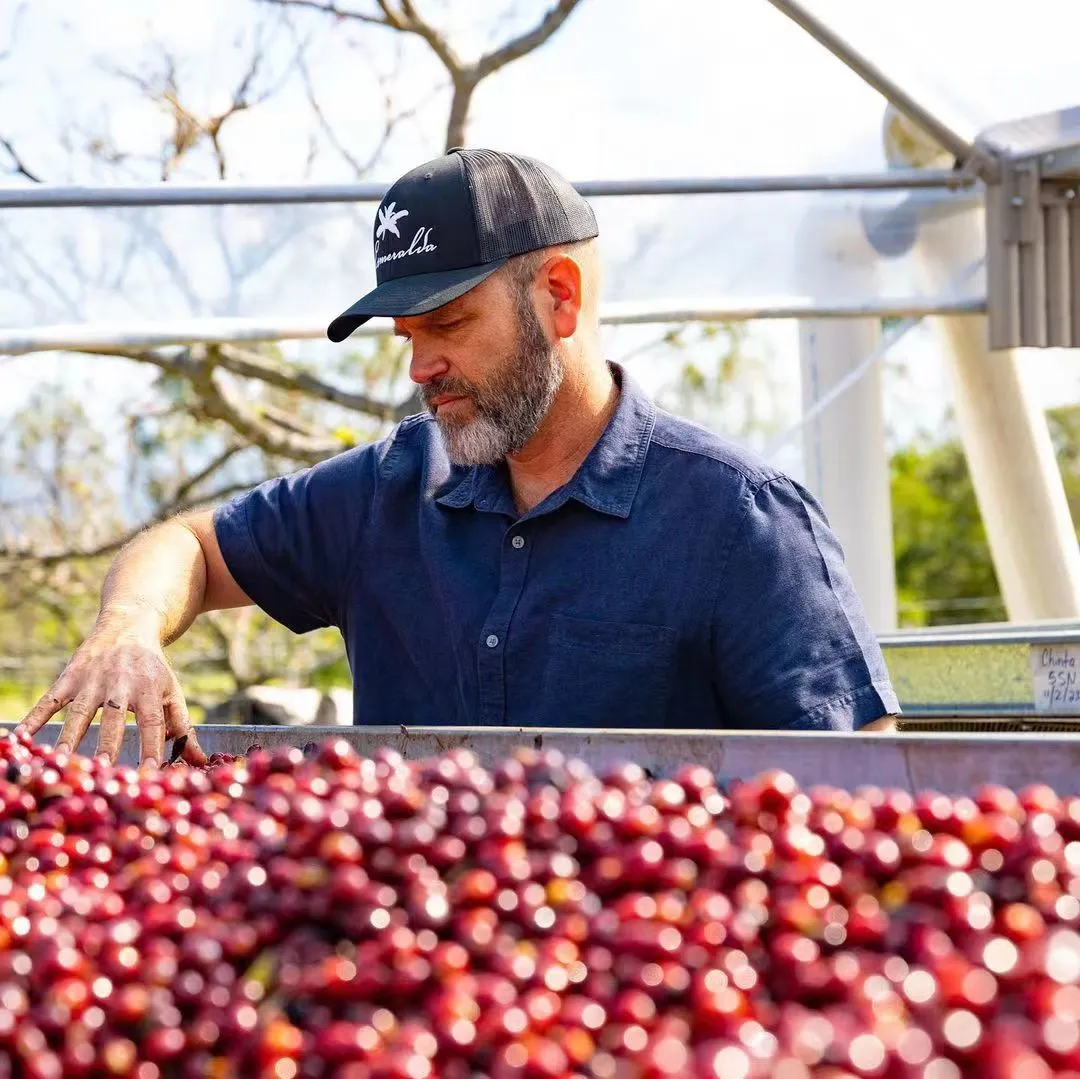

After Hacienda Esmeralda won the BOP championship with Geisha in 2004, both its reputation and strength were confirmed, and it also made the global coffee community rediscover the charm of Geisha. Because of this, whenever Hacienda Esmeralda is mentioned, the first thing that comes to mind for most people is often Geisha.
But you may not know that Hacienda Esmeralda's product line is not limited to Geisha. Under it there is also a similarly well-known series, namely Diamond Mountain. Recently, in Front Street Coffee's monthly event, many friends purchased Front Street Panama Diamond Mountain, but after getting the beans, they found that the flavor always seemed to be missing something—put plainly, it performed flatly and lacked complexity. Don't worry, today Front Street Coffee will talk about how to brew this Front Street Panama Diamond Mountain well.
What Is Front Street Diamond Mountain?
Front Street Diamond Mountain is actually a series sold externally by Hacienda Esmeralda, similar in nature to Geisha's Red Label and Green Label, belonging to an independent product line. This Diamond Mountain product line mainly sells the Catuai variety, with beans from the two highest-altitude estates under Hacienda Esmeralda—"Cañas Verdes" and "Jaramillo"—with an average growing altitude of 1,400 to 1,700 meters.
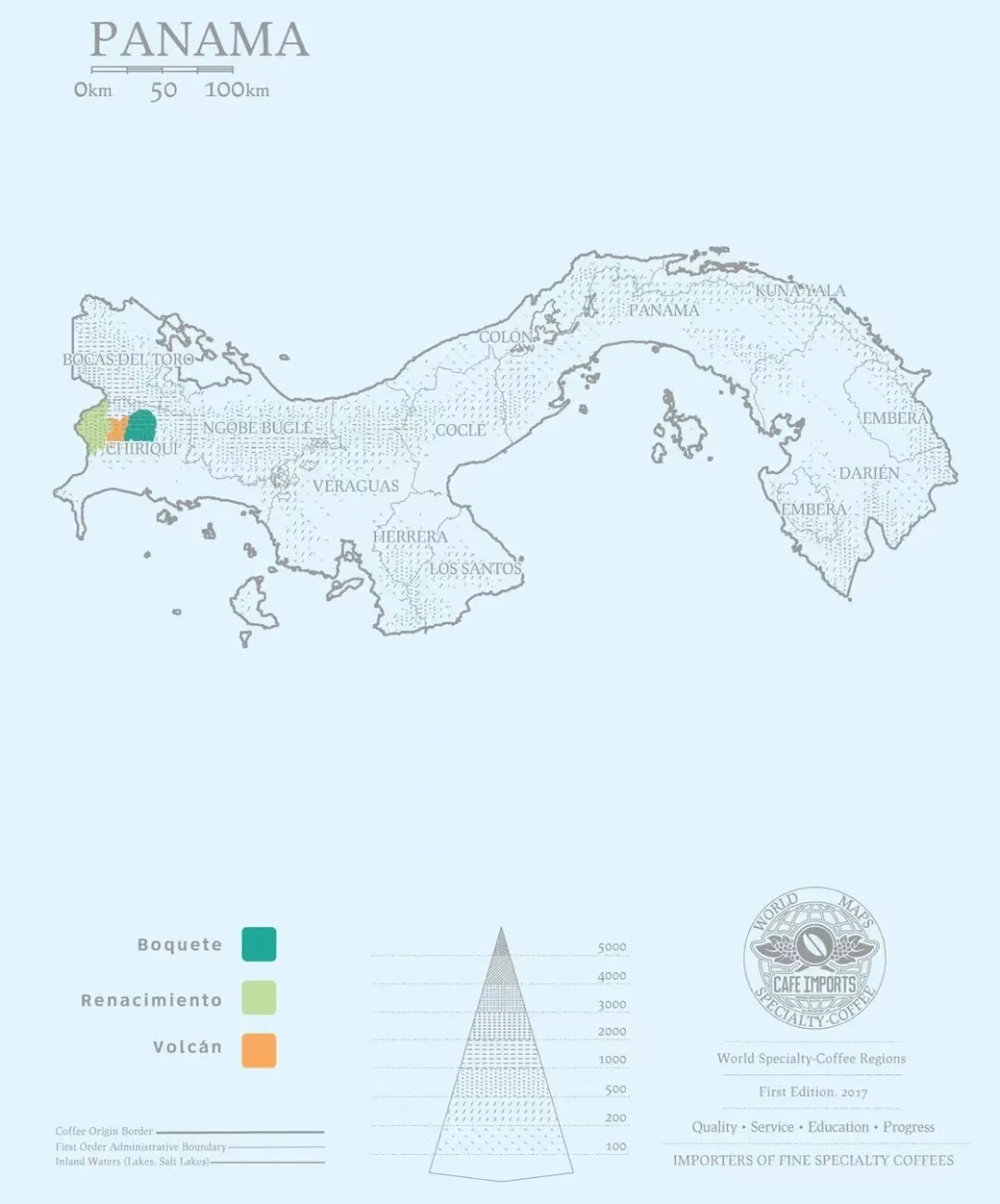
Since Front Street Diamond Mountain comes from Hacienda Esmeralda, its region is naturally the famous Boquete. Boquete is a small town in Chiriquí Province, Panama, with an altitude between 1,400 and 1,900 meters. It is located in the border area between Panama and Costa Rica, adjacent to the Central Range, so it has abundant rainfall throughout the year and extremely diverse microclimates. In addition, this region benefits from Barú Volcano, and the soil is rich in volcanic minerals, which is truly advantageous for coffee growing.
Catuai
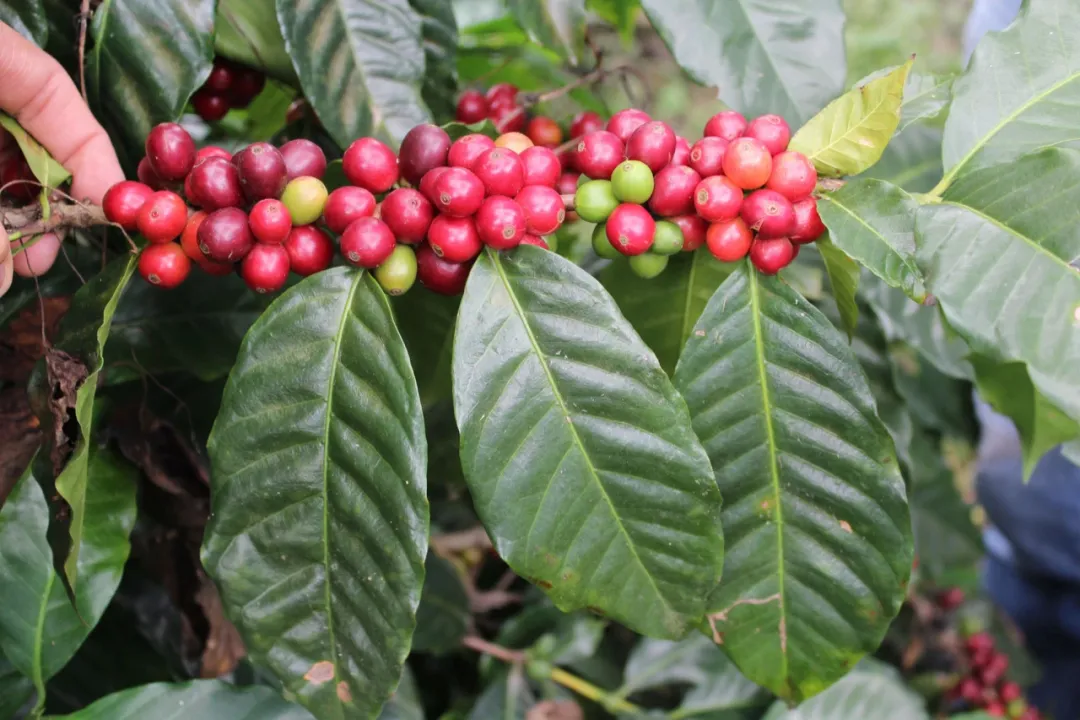
Now let's talk about Catuai. The name Catuai comes from the Guarani phrase "Molto mom," meaning "very good." It was created by crossing Yellow Caturra and Mundo Novo, and was initially named "H-2011." Judging from its actual performance, Catuai truly deserves this name.
Compared with conventional Arabica varieties, Catuai not only has excellent flavor performance but also offers advantages such as high yield and strong disease resistance, and its requirements for growing altitude and environment are relatively less strict. Therefore, many famous coffee estates plant Catuai on plots that are not quite suitable for Geisha.
But one point is worth noting: Catuai is high-yielding because its plants are much shorter than those of other Arabica varieties. Once the plants are smaller, the spacing between plants can be shortened, and planting density can reach twice that of conventional Arabica varieties such as Bourbon, so the yield naturally doubles.
Processing Method
This Front Street Diamond Mountain that Front Street Coffee obtained uses natural processing.
Natural processing means drying the whole coffee cherry, skin and bean together, in sunlight throughout the entire process until the beans are dried to a certain degree (about 20 days). Because more sugary substances participate in fermentation during the natural process, the beans develop richer aromas and a very soft vinous note.
For such a bean, Front Street Coffee chose a medium-light roast so that the rich aromas can be perceived more fully. Next, Front Street Coffee will share the brewing method for this Front Street Panama Diamond Mountain.
About Brewing
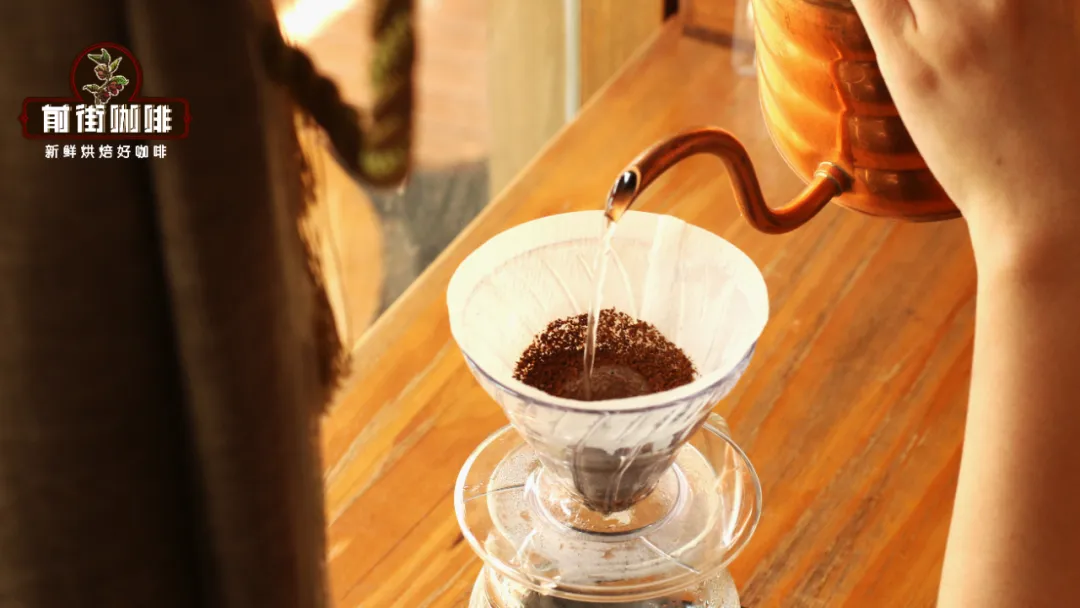
As for the filter cup, Front Street Coffee uses V60 to handle this bean.
The fast flow rate of the V60, combined with its conical structure, makes the extraction less even than with slower-flow filter cups, thereby making the overall layering richer. But because it is a medium-light roast, it needs to be paired with a finer grind to ensure hot water can more easily dissolve the coffee's flavor compounds. The grind size is controlled at 80% passing a No. 20 sieve, that is, the particle size of fine granulated sugar. For water temperature, Front Street Coffee uses 92°C to 93°C, and the coffee-to-water ratio is also 1:15. At this ratio, the brewed coffee has just the right concentration and prominent flavor.
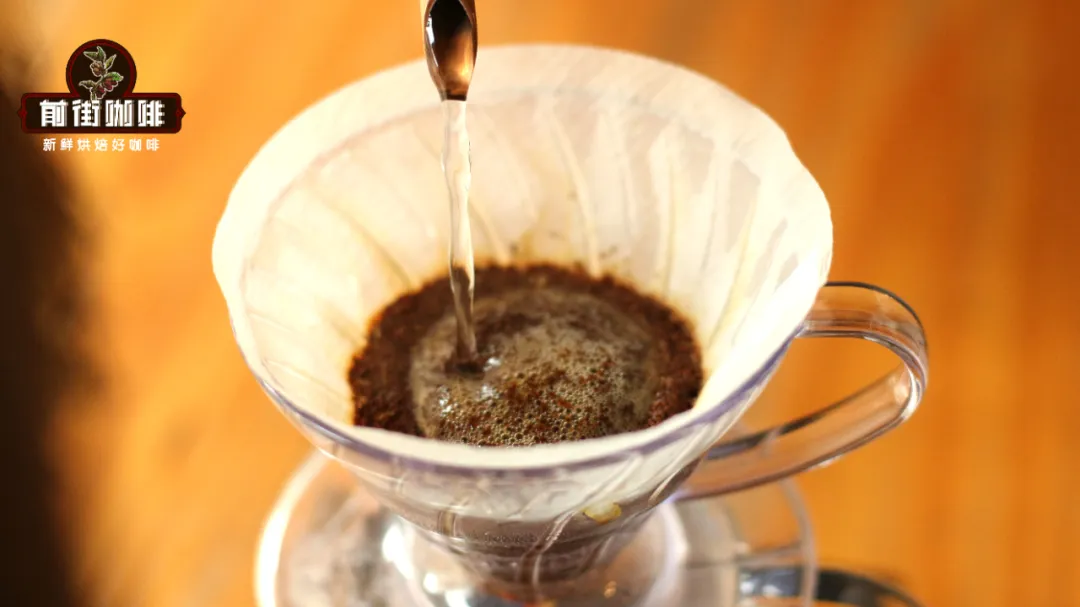
In the blooming stage, Front Street Coffee uses 25 ml of hot water to complete a 30-second bloom and wetting.
Because this Front Street Panama Diamond Mountain uses a medium-light roast, the beans do not expand much and absorb water relatively weakly, so too much hot water can easily be wasted and encourage bypass water. During blooming, we can slow the pouring speed and circle from the center outward, so the hot water can better penetrate all the coffee grounds and degassing works better.
After the bloom ends, pour the second stage of hot water. At this point, you need to use a strong stream to raise the coffee bed so that the hot water poured afterward can directly contact the coffee grounds at the bottom. In this stage, pour 130 ml of hot water, also from the center outward with a strong stream. Finish pouring at around 1 minute, then wait for the water level to drop before pouring the final stage of hot water.
(As long as your pouring technique is fine, you will soon see a deep coffee bed indentation.)
At around 1 minute 20 seconds, when the water level has dropped almost fully, pour again in small circles with a strong stream. Finish pouring at around 1 minute 35 seconds. Finally, after the coffee finishes dripping, remove the filter cup and enjoy.
Brewed this way, Front Street Diamond Mountain will have very rich layering. High sweetness like citrus candy, a honey-like mouthfeel, and a cocoa finish; the vinous aroma from natural fermentation is not strong but very soft. Delicious.
- END -
The above content is compiled by CoffeeHunters, a coffee news website.


