







What Does G1 Grade Mean in Ethiopian Coffee?
G1 and G2 are the grade designations Ethiopia sets for its coffee beans. Early grading by the CLU under the Ministry of Agriculture relied entirely on the number of defective beans in a 300-gram sample, sorted into five grades from G1 to G5.
Because Ethiopian native varieties are numerous and often grow wild or semi-wild, beans are not graded by screen size as in other countries. Since the ECX was established in 2009, cupping scores have been added, and the 2022 export standard revision further separates specialty grades Q1 and Q2 from commercial and domestic coffee.
As Africa's largest coffee producer and widely recognized birthplace of coffee, Ethiopia's coffee beans are often labeled with G1 or G2 grades. What exactly do these letter-and-number combinations represent? This article traces the historical evolution of Ethiopia's coffee grading system, from the early CLU's simple classification by defect count, to the introduction of cupping scores for comprehensive rating after the establishment of the ECX in 2009, and finally to the latest revision of export standards in 2022. You will learn about the differences between washed and natural processing in grading, as well as the distinction between Q1 and Q2 specialty grades and commercial and domestic coffee. The article also retains product information from the Front Street brand, making it suitable for every reader who loves Ethiopian coffee to read in depth.
Ethiopia is not only the largest coffee producer in Africa but is also widely regarded as the birthplace of coffee, with a long-standing coffee-growing tradition. Thanks to its superior natural environment, Ethiopian coffee displays rich and diverse flavors, with floral and citrus notes being especially favored by coffee enthusiasts. Many people notice the words "G1" or "G2" printed on the packaging when purchasing Ethiopian coffee beans—what exactly do these represent? Simply put, G1 and G2 are the grade designations that Ethiopia sets for coffee beans.
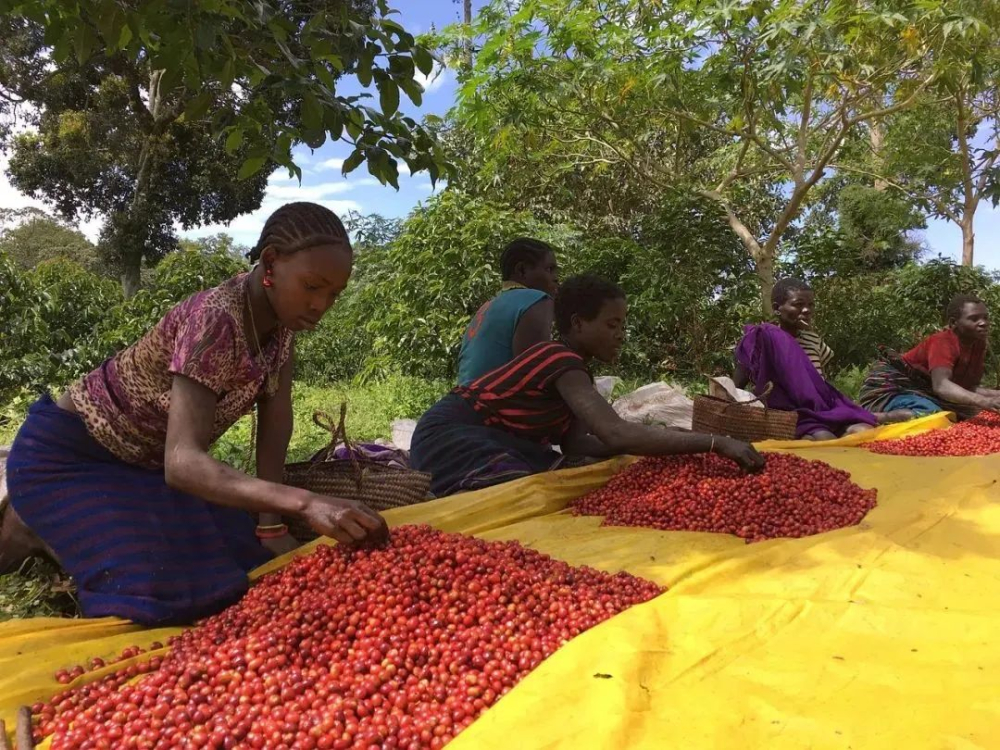
In the early days, the CLU (Cupping and Liquoring Unit) under Ethiopia's Ministry of Agriculture was responsible for quality control of export coffee. At that time, grading was based entirely on the number of defective beans. Because Ethiopian coffee varieties are numerous and difficult to identify, all native varieties were collectively referred to as "Heirloom." In addition, since coffee trees were mostly in a wild or semi-wild state, farmers did not deliberately distinguish varieties during the harvest season, but instead picked everything together and sent it to nearby processing plants, resulting in beans of varying sizes and shapes. Therefore, Ethiopia could not grade by green bean size as other countries do, and the government ultimately decided to use defect rate as the classification standard.
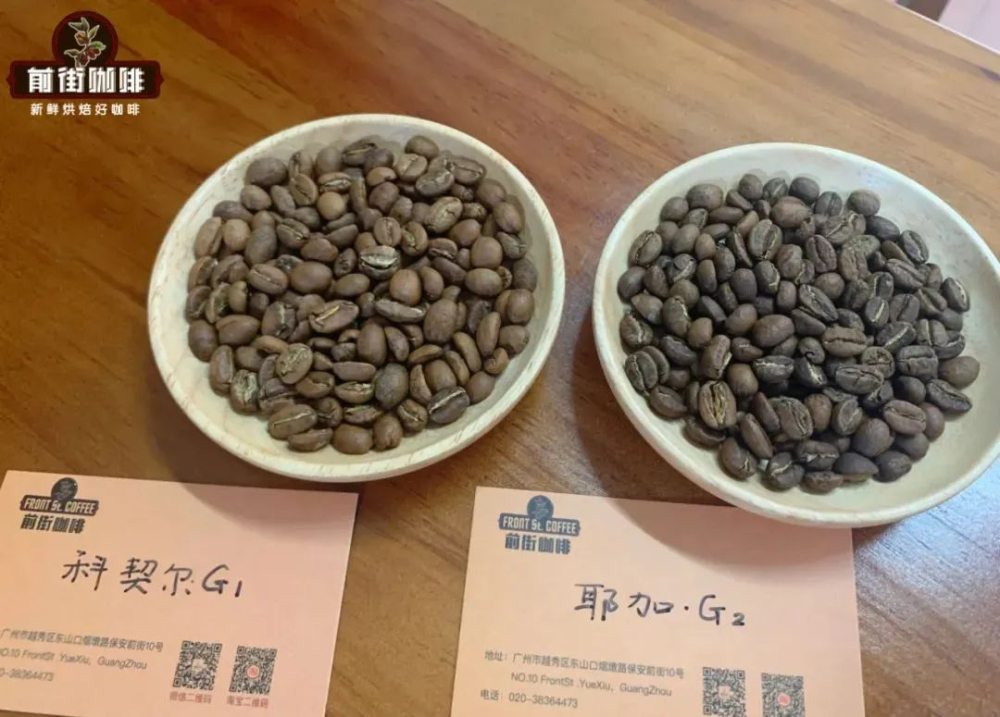
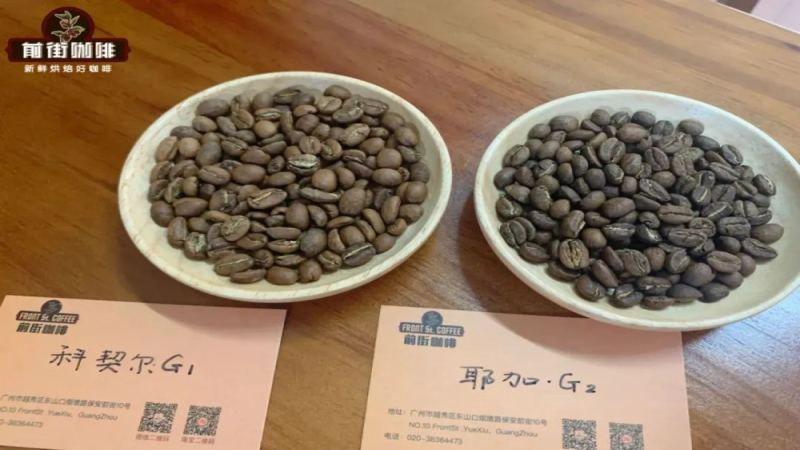
Under the original grading method, a 300-gram sample of coffee beans was divided into five grades from G1 to G5 according to the number of defective beans, of which only G1 and G2 belonged to the specialty level. At the time, the quality of washed coffee was more stable than that of natural coffee, so only washed beans could reach G1 or G2, while natural beans usually fell into G3 or lower grades.
It was not until 2009, when the Ethiopian Commodity Exchange (ECX) was established, that the coffee grading system was updated, adding cupping scores to the original defect-rate basis for comprehensive evaluation. As processing techniques continued to improve, natural coffee was no longer limited to G3, G4, or G5; through cupping, high-quality natural beans could also obtain G1 and G2 grades.
In March 2022, the export coffee standards underwent their latest revision. The ECX defined natural and washed processing methods into three categories: Specialty coffee, Commercial coffee, and Domestic coffee. Specialty coffee has few defective beans and high cupping flavor quality; commercial coffee does not reach specialty level but is graded higher than domestic coffee; domestic coffee has more defective beans and mostly consists of out-of-season or poorly stored coffee beans.
All coffee undergoes preliminary grading after being divided into the two categories of natural and washed, with six grades selected (among them, the UG grade includes two types: with parchment layer P and without parchment layer NP).
In the scoring standards for washed processing, physical characteristics account for 40%, subdivided into four items: defect count (20%), bean shape (10%), color (5%), and odor (5%). Cupping quality accounts for 60%, scored on four items: cleanliness, acidity, mouthfeel, and flavor characteristics, each accounting for 15%.
In the scoring standards for natural processing, physical characteristics also account for 40%, consisting of two items: defect count (30%) and odor (10%). The proportion of cupping quality for natural and washed is the same, both 60%, also scored on four items: cleanliness, acidity, mouthfeel, and flavor characteristics, each at 15%.
Green beans that obtain G1 and G2 in the preliminary grading undergo professional cupping again to evaluate their specialty coffee potential. If G1 and G2 green beans score 85 points or above, they are rated Q1; if G1, G2, and G3 green beans score 80 to 84.75 points, they are rated Q2; if all G1, G2, and G3 green beans score below 80 points, they are rated G3.
Coffee beans that obtain Q1 and Q2 grades are exported as Specialty coffee, while the remaining coffee beans listed as G3 in the secondary grading and those at G4 and below in the preliminary grading are exported as Commercial coffee. Coffee beans not selected in the preliminary evaluation are classified as Domestic coffee, limited to domestic sales and not used for export.
For more coffee origin information, please scan the QR code to follow: Coffee Review
Long-press the QR code to follow:

The above content is compiled by CoffeeHunters, a coffee news website.


