







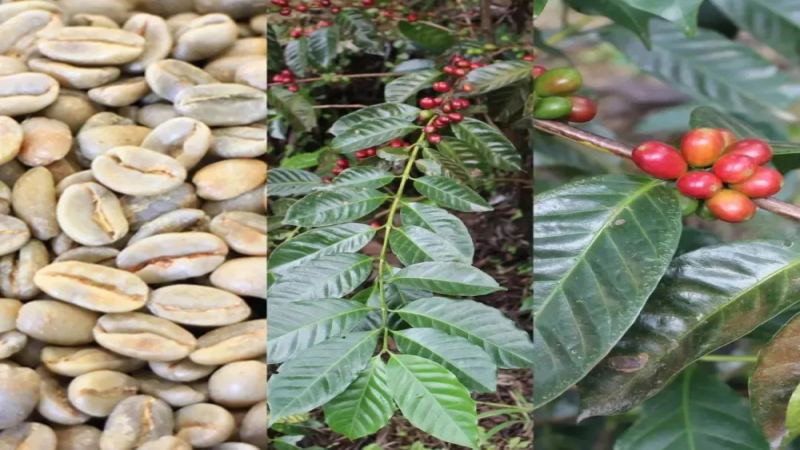
How Did Geisha Coffee Travel From the Kaffa Forest?
Geisha coffee began in the forests of southwestern Ethiopia, not Panama. The variety was found in the 1930s in the Gesha area near the Kaffa forest, later accessioned by CATIE in Costa Rica as geisha T2722, and finally carried to Panama. Its fame came at Hacienda La Esmeralda through a reliable of Panama competition and auction.
Ethiopia's Gesha Village estate grows three varieties: Gesha 1931, Gori Gesha, and Illubabor Forest 1974. Founders Adam Overton and Rachel Samuel met Panama's Willem in 2009 and returned to the Kaffa forest region to collect seeds from native trees. These selections differ from the Panama Geisha lineage, which shapes cup profile and price.
Geisha is now a star variety in the specialty coffee world, but its roots actually lie deep in the primeval forests of southwestern Ethiopia. This article begins with the history of Geisha's discovery, tracing how it traveled from the Kaffa forest through many countries, eventually rose to fame in Panama, and then returns to the journey of Adam Overton and his wife in establishing the Gesha Village estate in the Bench Maji region. The article also introduces in detail the three varieties currently grown at Gesha Village—Gesha 1931, Gori Gesha, and Illubabor Forest 1974—as well as the essential varietal differences between Gesha Village and Panama Geisha. Finally, it presents Front Street Coffee's brewing and flavor description of Red Label Geisha, helping enthusiasts gain a more comprehensive understanding of the origins and story of this legendary producing region.
When people mention Geisha, most immediately think of Panama. In its early days, this variety received little attention because of its delicate tree vigor, high cultivation difficulty, and limited yield. The turning point came at Hacienda La Esmeralda in Panama, where, through the stage of the Best of Panama (BOP) competition and auction, Geisha was suddenly recognized by the global market and then gradually spread to neighboring estates and even other countries.
Tracing its roots, Geisha's homeland is actually Ethiopia, widely recognized as the birthplace of coffee. In the 1930s, it was discovered in the Gesha area near the Kaffa forest in southwestern Ethiopia. Because of its resistance to leaf rust, this variety was carried to multiple countries, later accessioned by Costa Rica's Tropical Agricultural Research and Higher Education Center (CATIE) under the number "geisha T2722," and only eventually made its way to Panama.
As Geisha rose to fame, many estates and countries introduced and cultivated it. Director Adam Overton and his photographer wife Rachel Samuel were among those drawn to it. In 2007, the couple was commissioned by the Ethiopian government to film a coffee documentary. While shooting in the Bench Maji region, they happened upon the Gori Gesha Forest and immediately conceived the idea of establishing a coffee estate.
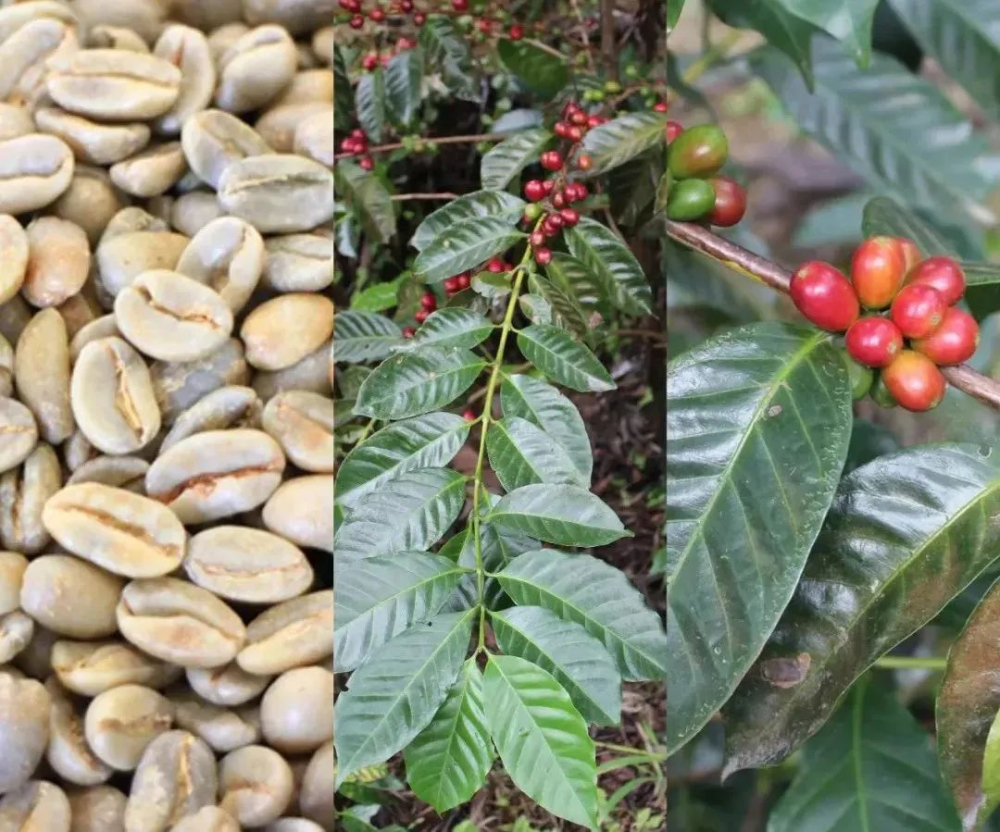
In 2009, they met Willem, the owner of Hacienda La Mula in Panama, and the three of them returned to Ethiopia together, embarking on a journey to find Geisha's place of origin. In a place in Bench Maji called Gesha Village, they found the population most likely to belong to the original Geisha. They collected seeds from native Geisha trees, selected them, and began planting them in Gesha Village. In the end, they decided to establish an estate there, naming it Gesha Village.
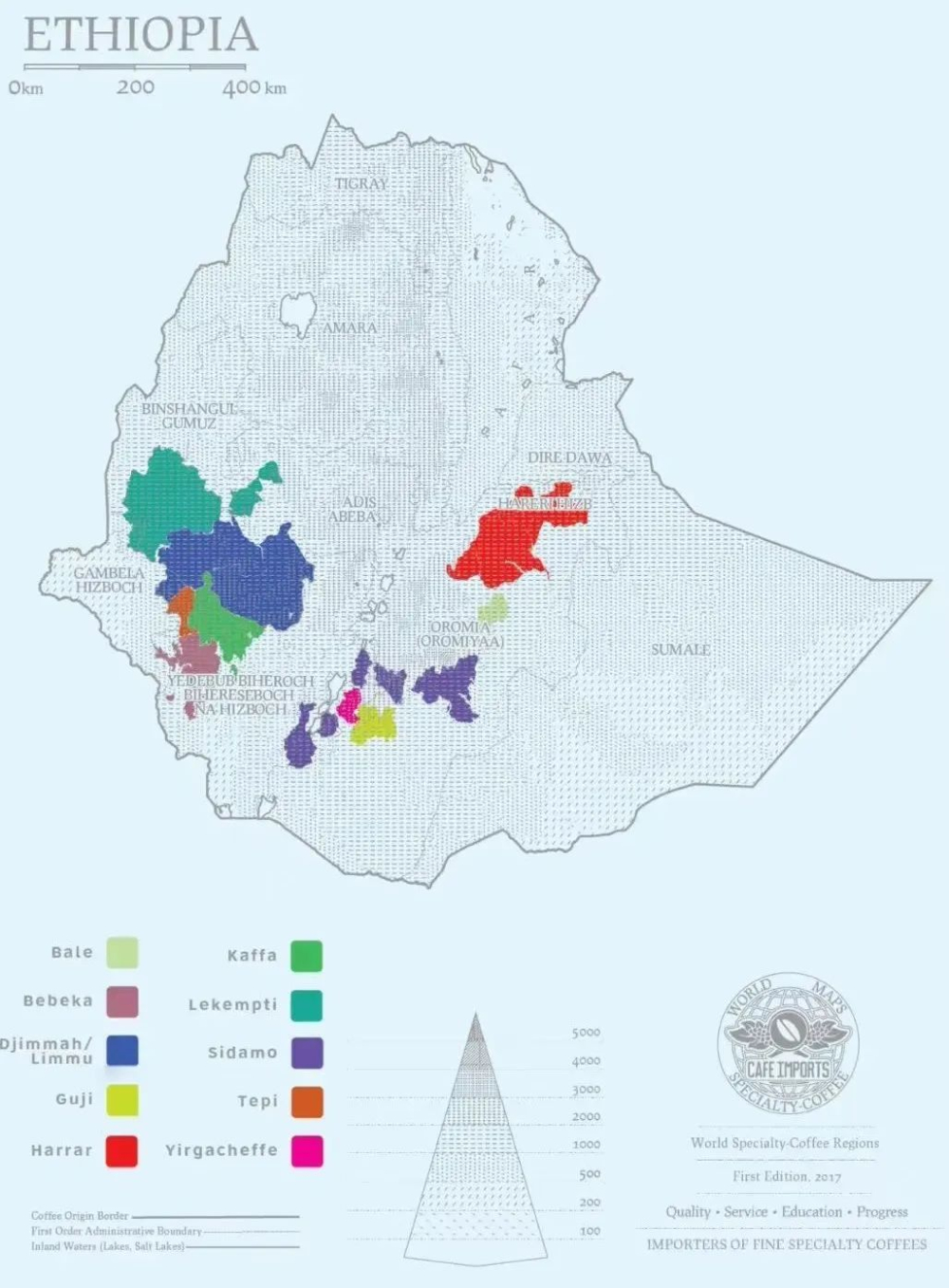
Ethiopia currently has 12 regional states and 2 chartered administrative cities, while its coffee-producing areas are divided into 10 regions, many with world-famous names such as Sidamo, Jima, Harrar, Guji, and Yirgacheffe. It is worth noting that Guji and Yirgacheffe were originally both part of the Sidamo producing region, and only later, because of their distinctive flavor profiles, were they separately designated as independent coffee-producing regions.
However, when people talk about Ethiopian coffee, the names that first come to mind are often Sidamo, Guji, and Yirgacheffe, while the place where coffee was first discovered is actually the Kaffa Zone in southwestern Ethiopia, where countless mother trees of Arabica coffee still grow to this day.
The Kaffa Zone now belongs to the South West Ethiopia Peoples' Region. This region was originally part of the Southern Nations, Nationalities, and Peoples' Region and became independent through a referendum in 2021. The Kaffa Zone is located in the northern part of the region. It is dominated by humid, mild rainforest landscapes, and its most famous feature is the Kafa Biosphere Reserve, whose natural resources are extremely abundant.
To the west of the Kafa Biosphere Reserve is Bench Maji (also called Bench Sheko in some areas), which is also home to the Gesha National Forest Priority Area, and this is precisely where the Geisha variety originated. However, in the coffee-producing region classification system, Bench Maji is included in the Bebeka producing region, and Bebeka is also the capital of the Bench Maji Zone. Because it is remote and underdeveloped, coffee here almost still maintains an original ecological forest-growing model.
Research by French biologist Jean-Pierre Labouisse shows that the batch of coffee beans originally labeled as Geisha actually came from different local coffee trees. In other words, Geisha is not a single variety; there are still multiple different "Geisha types" distributed locally in Ethiopia, and Panama Geisha is only one of them.

For this reason, the Geisha currently planted at the Bench Maji Gesha Village estate is not the same variety as Panama Geisha. Gesha Village currently cultivates Gesha 1931 and Gori Gesha.
Gesha 1931 is a native Geisha variety found by the estate owners in the Gesha forest. Genetic comparison shows that it is extremely close to the Panama Geisha discovered in 1931, hence the name Gesha 1931. Gori Gesha, on the other hand, is a bean variety resembling Geisha that the estate owners discovered in the Gori forest, 12 miles from the estate, after Gesha Village was established in 2011, and it was therefore named Gori Gesha.
In addition, Gesha Village has also joined hands with the Ethiopian research center to cultivate Illubabor Forest 1974, a resistant variety bred by that center. This variety was first discovered in the Illubabor forest in 1974, and its name comes from that.
FrontStreet Coffee also offers a Red Label Geisha coffee from Gesha Village. This Geisha belongs to the Gori Gesha variety and is naturally processed. After brewing, one can smell the aroma of jasmine and ripe fruit; on the palate it presents flavors of citrus, grapes, and wild ginger flower, with delicate fruit acidity and a fruity sweetness in the finish, making the overall cup clean and balanced.
To learn more about coffee origins and related information, please scan the QR code to follow: Coffee Review
Long-press the QR code to follow:
The above content is compiled by CoffeeHunters, a coffee news website.


